
Pre emergent versus post emergent lawn weed control
Keeping weeds out of a lawn is about timing and using the right tool for the job. Pre-emergent and post-emergent weed controls do very different things, and mixing them up is a common reason people waste money on products that "don't work."
Quick answer: pre-emergent vs post-emergent
Pre-emergent weed control prevents new weeds from successfully sprouting; post-emergent weed control kills weeds that are already up and growing. Pre-emergent products create a thin chemical barrier in the soil that stops germinating weed seeds from developing roots. Post-emergent products are sprayed or spread over visible weeds and move into the plant through leaves (systemic) or green tissue they touch (contact), killing the existing plant.
In practice, most lawn programs use both: pre-emergent in early spring and sometimes fall to block annual weeds, then post-emergent spot treatments through the season for any weeds that slip through.
How pre-emergent weed control works
Pre-emergent (often written "preemergent") herbicides are all about prevention:
- Target: Germinating weed seeds and tiny seedlings, especially annual grassy weeds like crabgrass and goosegrass, plus some broadleaf species.
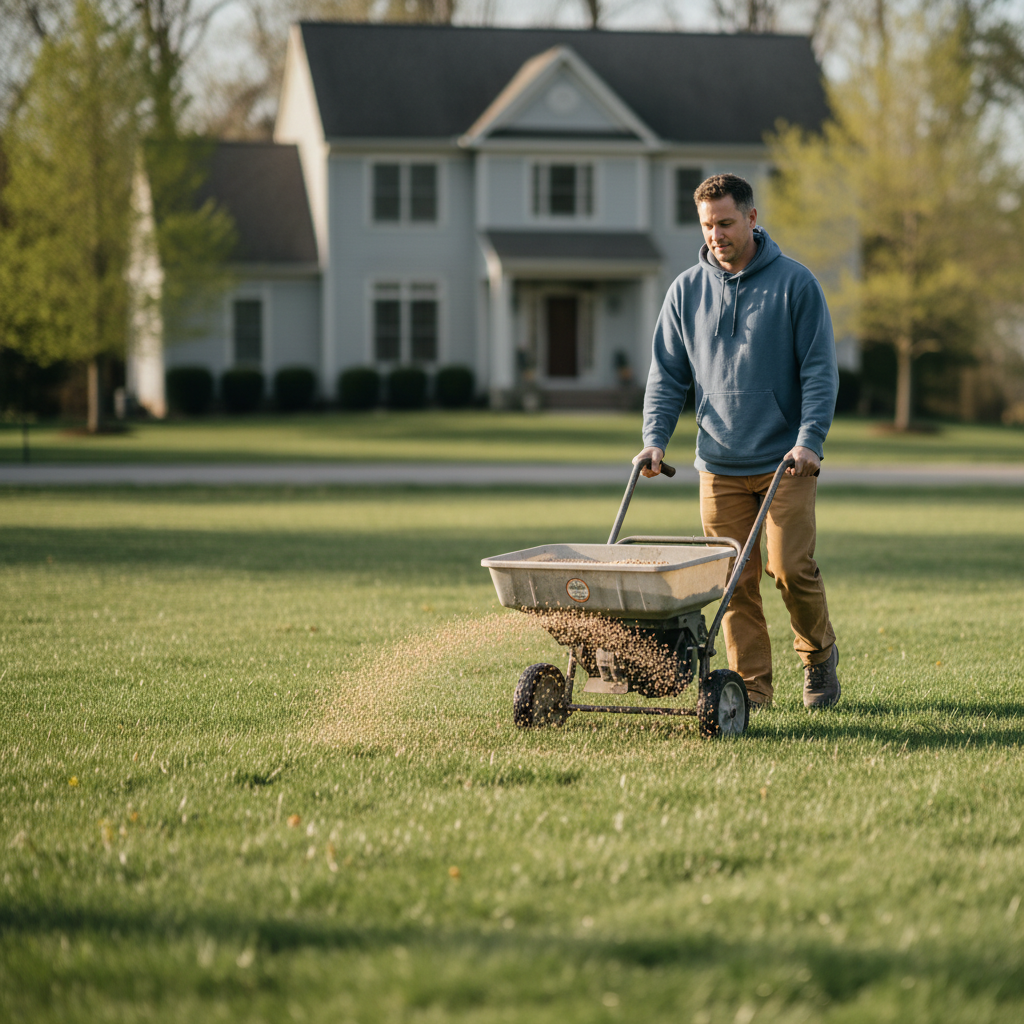
- How they work: After you apply and water them in, they form a very thin zone of herbicide near the soil surface. As new weeds sprout and try to push roots through that zone, they absorb the herbicide and die.
- What they don't do: They do not kill established weeds with existing root systems, and they won't make older crabgrass disappear.
Timing for pre-emergent applications
For summer annual weeds like crabgrass, the key is getting product down before weed germination, not before a specific calendar date. Many university turf programs recommend timing based on soil temperature: pre-emergent is most effective when applied as soil at the 0-2 inch depth is consistently around 50-55°F, before it warms into the 60-70°F range where most crabgrass seeds actually germinate.1
In practical homeowner terms (USA):
- Cool-season lawns (fescue, bluegrass, ryegrass):
- Early spring: Apply pre-emergent once soil is thawed and before soil consistently reaches the mid-60s°F.
- In many regions, this lines up roughly with early to mid-spring, but local soil temps matter more than the calendar.
- Warm-season lawns (bermudagrass, zoysiagrass, St. Augustine):
- Late winter to early spring: Similar soil-temperature window, but grass green-up and weed timing may shift slightly earlier in warmer climates.
Some lawns also get a fall pre-emergent to suppress winter annuals (like annual bluegrass or chickweed) that germinate as temperatures cool.
Pre-emergent and seeding conflicts
An important catch: most pre-emergent herbicides can't tell the difference between a crabgrass seed and your desirable turfgrass seed. They block roots on both. Extension turf specialists note that many common pre-emergent products stay active in soil for up to about 120 days, so you typically cannot overseed successfully for several months after application.2
Rules of thumb (always check the specific product label):
- Don't apply standard pre-emergent to an area you plan to seed or overseed soon.
- If you must seed, look for specialty products labeled as safe at seeding (there are a few exceptions, mainly for cool-season turf).
How post-emergent weed control works
Post-emergent (postemergent) herbicides are for weeds you can already see above the soil.
Key concepts:
- Target: Existing weeds-broadleaf, grassy, or sedges-depending on the product.
- Selective vs non-selective:
- Selective products kill certain weeds (for example, dandelions and clover) while leaving turfgrass mostly unharmed.
- Non-selective products kill almost any green plant they touch, so they're better for driveways, patios, or lawn renovation.
- Systemic vs contact:
- Systemic herbicides move through the plant and are best for deep-rooted or hard-to-kill perennials.
- Contact herbicides burn off the green tissue they touch and work best on small, tender weeds.
Timing for post-emergent applications
Post-emergent products work best when weeds are young and actively growing. Extension guidance for home lawns consistently recommends applying broadleaf post-emergent herbicides to small, non-stressed weeds rather than large or drought-stressed plants.3
Practical pointers:
- Aim for mid to late spring for most emerged summer annual weeds.
- Use fall (often October-November) for many emerged winter annuals and broadleaf weeds; they're moving energy into roots then, which helps systemic herbicides work better.4
- Avoid spraying when:
- Weeds are wilted from drought or heat.
- Lawn is waterlogged or frozen.
- Heavy rain or irrigation is expected shortly after application (it can wash products off leaves before they're absorbed).
Typical seasonal timing: pre vs post
Exact dates vary by climate, but this rough pattern holds for many U.S. lawns:
Spring
- Pre-emergent:
- Apply once soil temps are consistently in the 50-55°F range and before they reach the mid-60s°F.
- Focus on summer annual grasses (crabgrass, goosegrass) and some broadleaf annuals.1
- Post-emergent:
- Spot-treat winter annuals that survived winter and early emerging broadleaf weeds.
- Treat any early flushes of visible crabgrass or broadleaf weeds that escaped pre-emergent.
Summer
- Pre-emergent:
- Barrier from spring application is still working, though it weakens later in the season.
- In high-pressure areas, some programs use a split application (second, lighter pre-emergent dose per label directions).
- Post-emergent:
- Spot-treat scattered broadleaf weeds and patches of crabgrass while plants are still small.
- Avoid spraying selective herbicides during extreme heat or drought stress when possible.
Fall
- Pre-emergent (optional but powerful):
- In many regions, a fall pre-emergent helps block winter annual weeds (like annual bluegrass, henbit, chickweed) that germinate as temperatures cool.
- Post-emergent:
- Broadleaf weed control is often at its best in fall; many species move herbicide to their roots very efficiently at this time.4
Winter
- Little herbicide activity in colder climates.
- Focus is more on planning next year's program and improving cultural practices (mowing height, fertilization schedule, irrigation).
How to choose: which does your lawn need?
Use these steps to decide what to apply and when:
-
Look at what's actually happening now.
- Bare areas but no visible weeds yet? Think pre-emergent (unless you plan to seed).
- A mix of visible dandelions, clover, or crabgrass? Think post-emergent spot treatments.
-
Identify the weed type (broadleaf vs grassy vs sedge).
- Broadleaf weeds (dandelion, plantain, clover) are usually handled with selective broadleaf post-emergent products.
- Grassy weeds (crabgrass, goosegrass) are often best prevented with spring pre-emergent, then spot-treated with specialty grassy weed post-emergents if needed.
-
Consider seeding or overseeding plans.
- If you plan to seed in the next few months, be very cautious with pre-emergent; most products will also block your grass seed from establishing for a long window.2
- In that case, rely more on post-emergent spot treatments and cultural practices until the new grass is fully established.
-
Layer cultural practices with herbicides.
- Mow at the recommended height for your grass type.
- Fertilize appropriately to keep turf thick and competitive.
- Water deeply but infrequently.
- A dense, healthy lawn naturally shades the soil and leaves less room for weeds to germinate.
Conclusion
Pre-emergent weed control is about blocking new weeds before they sprout, while post-emergent control is about killing the weeds you can already see-using both, at the right times, is the foundation of a clean, healthy lawn.
Sources
Footnotes
-
Michigan State University Extension - guidance on timing crabgrass pre-emergence herbicide applications based on soil temperatures and growing degree days. https://www.canr.msu.edu/news/timing_crabgrass_pre_emergence_applications ↩ ↩2
-
Purdue University Turfgrass Science - notes on pre-emergent herbicides remaining active in soil up to about 120 days and their effect on turfgrass seedling establishment. https://turf.purdue.edu/seeding-into-areas-where-preemergence-herbicide-was-applied-this-spring/ ↩ ↩2
-
Kansas State University Research and Extension - recommendations for using postemergence broadleaf herbicides on young, actively growing weeds and waiting until new turf has been mowed several times. https://www.k-state.edu/turf/resources/lawn-problem-solver/problem-solver/weeds/broadleaf/chemical-control.html ↩
-
Oklahoma State University Extension - home lawn weed control guidance, including seasonal recommendations for postemergent control of summer and winter annual weeds. https://extension.okstate.edu/fact-sheets/controlling-weeds-in-home-lawns.html ↩ ↩2