Find the Best Fence Installers for Your Business
No obligation • Fast responses • Nationwide coverage

Why you can trust Landscape Atlas
Landscape Atlas is a leading United States resource for evaluating landscaping, lawn care, and outdoor service providers. Our team researches each category in depth, focusing on service quality, safety, and customer experience. Listings and rankings are based on independent criteria and user feedback, and companies cannot pay to influence our assessments or recommendations.
Search providers near you
Best Fence Installers in South Carolina Ranked
Installing a fence is a significant home improvement project that enhances privacy, security, and curb appeal. In South Carolina, a successful installation depends on navigating a mix of local zoning codes, material choices, and practical considerations. This guide provides clear, practical information to help you understand the rules, costs, and steps for installing a fence on your property, empowering you to make informed decisions and connect with qualified local professionals.
Understanding Local Fence Regulations
Before you purchase a single post, understanding local rules is the most critical step. Fence regulations in South Carolina are not uniform; they are set by individual cities, towns, and counties. Ignoring these rules can lead to costly fines or being forced to remove or modify your new fence.
Height Restrictions
Height limits are the most common regulation. Generally, for residential properties:
- Front Yards: Fences are often restricted to 3 or 4 feet in height. For example, the City of Columbia allows fences up to 4 feet in front yards.
- Back and Side Yards: Fences are typically permitted up to 6 feet, though some municipalities may allow up to 7 or 8 feet for certain materials or with specific permits.
These are general guidelines. Specifics can vary dramatically. For instance, regulations in coastal areas like Folly Beach or planned communities like Tega Cay have their own detailed requirements 1. Always verify the exact limits with your local planning or zoning department.
Permit Requirements
South Carolina does not have a statewide fence permit mandate, but most local governments do require one. Permits are typically necessary for:
- Fences exceeding a certain height (often over 4-6 feet).
- Solid masonry or brick walls.
- Fences in historic districts or other specially zoned areas.
The City of Sumter, Berkeley County, and Columbia all explicitly require permits for many fence projects 2. The permit process ensures your plans comply with zoning codes and sometimes involves submitting a site plan. Skipping this step risks non-compliance.
Homeowners Association (HOA) Rules
If your property is part of a Homeowners Association, their covenants, conditions, and restrictions (CC&Rs) will almost certainly apply. HOA rules are separate from city codes and are often more stringent, governing not just height and placement but also style, material, color, and even the type of fasteners used. You must obtain written approval from your HOA before proceeding with any installation.
Property Lines, Placement, and Neighbor Considerations
Proper placement is essential to avoid disputes and legal issues.
Installing on the Property Line
In many cases, a fence can be installed directly on the property line. However, this is a significant decision with implications for ownership and maintenance. Key considerations include:
- Setbacks: Some local codes require fences to be set back a certain distance from the property line, especially near street corners or shared driveways. For example, Tega Cay requires a 2-foot setback from common driveways for visibility3.
- Utility Easements: You cannot build a permanent structure that blocks access to utility easements, which are strips of land where utility companies have the right to install and maintain lines.
- Drainage: Fences must not obstruct natural drainage patterns. Altering water flow onto a neighbor's property can create liability issues4.
The single most important action is to have your property lines professionally surveyed. Relying on old markers or approximations can lead to expensive mistakes.
Good Neighbor Practices
Even if not legally required, it's considered good practice to discuss your fencing plans with adjacent neighbors. Clarifying the placement, style, and which side will face outward can prevent misunderstandings and foster good community relations.
Find the perfect fence installers for your needs
Get personalized recommendations and expert advice
Choosing the Right Fence Material
The material you choose impacts cost, maintenance, durability, and appearance. Here's a breakdown of common options in the South Carolina market:
Wood Fencing
A classic choice offering a natural, versatile look.
- Types: Pressure-treated pine is economical; cedar and redwood offer better natural resistance to insects and decay.
- Cost: Installed costs typically range from $10 to $45+ per linear foot, depending on wood type, height, and style (e.g., privacy, picket)5.
- Pros: Customizable, can be stained or painted.
- Cons: Requires regular maintenance (sealing, staining) to withstand South Carolina's humidity, heat, and insects.
Vinyl (PVC) Fencing
Extremely popular for its durability and low upkeep.
- Cost: Installed costs are generally in the range of $15 to $40+ per linear foot.
- Pros: Virtually no maintenance (no painting or staining), resistant to rot and insects, available in various styles and colors.
- Cons: Higher upfront cost than basic wood; can become brittle in extreme cold or fade slightly over many years in intense sun.
Chain Link Fencing
A practical, economical option for security and boundary definition.
- Cost: The most budget-friendly option, with installed costs around $8 to $40+ per linear foot, depending on gauge (thickness) and height 6 7.
- Pros: Low cost, durable, requires minimal maintenance, provides security without blocking views or wind.
- Cons: Offers little privacy unless slats are added; considered less aesthetically pleasing for residential settings.
Ornamental Metal Fencing
Includes aluminum and wrought iron, offering strength and decorative appeal.
- Cost: Installed costs are higher, generally starting around $25 to $90+ per linear foot, with custom wrought iron work at the top end8 9.
- Pros: Very strong, secure, and elegant with a long lifespan. Modern aluminum versions mimic wrought iron but are lighter and rust-resistant.
- Cons: Significant upfront investment; wrought iron requires periodic painting to prevent rust.
Masonry Walls
Brick, stone, or concrete block walls provide maximum privacy, security, and sound buffering.
- Considerations: These are major construction projects. They almost always require a building permit and a proper foundation (footer). Costs are high and highly variable based on materials and design.
The Fence Installation Process: A Step-by-Step Guide
Following a logical process will ensure a smooth project from conception to completion.
- Research and Plan: Define your goals (privacy, security, pet containment, aesthetics) and establish a preliminary budget.
- Check Local Codes & HOA Rules: Contact your city or county planning department to get the specific zoning ordinance for fences. Simultaneously, review your HOA's architectural guidelines and submit plans for approval if required10 11.
- Locate Utilities: This is a non-negotiable safety and legal step. At least a few days before any digging, call 811 to have all public underground utility lines marked for free12.
- Get a Property Survey: If there is any doubt about your property lines, hire a licensed surveyor to mark them. This protects your investment and neighborly relations.
- Choose a Material and Get Quotes: Solicit detailed written estimates from several licensed and insured fence contractors. Ensure quotes include material specifications, labor, permit fees (if handled by the contractor), and a clear timeline.
- Secure Permits: Once you have a contractor and final plans, apply for any required local permits. Your contractor may handle this for you.
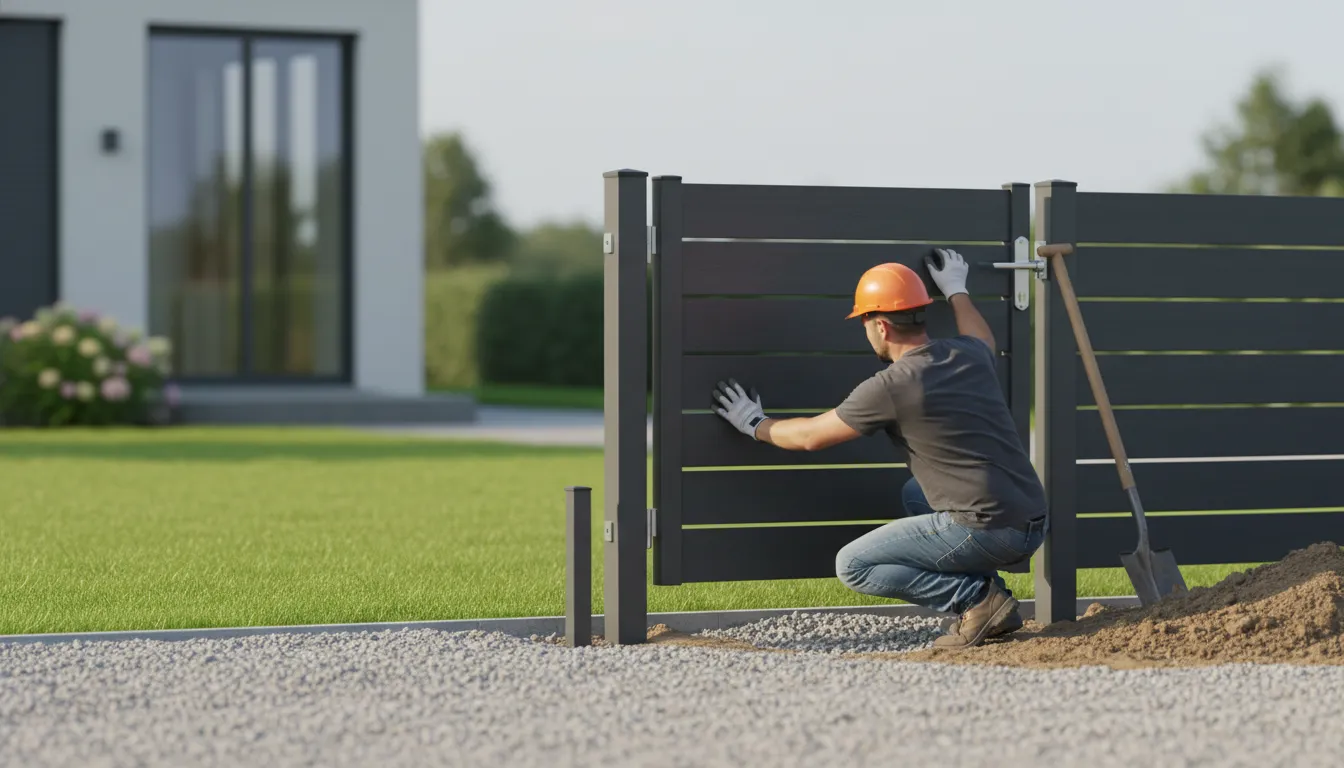
- Installation: A professional crew will set posts, attach panels or rails, and install gates. They should ensure the fence is plumb, follows the property line, and does not impede drainage.
- Final Inspection: Some municipalities require a final inspection to ensure the installed fence complies with the approved permit.
Frequently asked questions
Sources
Footnotes
-
§ 166.09-08 Appearance of Fences and Walls. - https://codelibrary.amlegal.com/codes/follybeach/latest/follyb_sc/0-0-0-30615 ↩
-
Fence/Wall Permit - https://planninganddevelopment.columbiasc.gov/wp-content/uploads/2023/05/FencePermitApp23.pdf ↩
-
fencing requirements - Tega Cay, SC - https://www.tegacaysc.org/DocumentCenter/View/15991/Fence-Requirements-August-2021 ↩
-
Frequently Asked Questions - CivicPlus.CMS.FAQ - https://www.gtcounty.org/FAQ.aspx?QID=120 ↩
-
FENCES - City of Sumter - https://www.sumtersc.gov/sites/default/files/uploads/Departments/Planning/fence_fact_sheet_rev.8.7.23.pdf ↩
-
Chain Link Fence Height Regulations: What You Need to Know ... - https://fenceitforu.com/chain-link-fence-height-regulations-what-you-need-to-know-before-installing/ ↩
-
How Much Does It Cost to Fence a Yard? (2025) - https://homeguide.com/costs/fencing-prices ↩
-
Buildings and Building Regulations - Berkeley County Government - https://berkeleycountysc.gov/wp-content/uploads/docs/Buildings-and-Building-Regulations.pdf ↩
-
How to Determine Your Fence Project Budget in Charlotte, NC - https://www.standstrongfencing.com/rock-hill-sc/about-us/blog/categories/guide/how-to-determine-your-fence-project-budget-in-ch/ ↩
-
Essential Guide to SC Fencing Laws and Property Boundaries - https://qualityfenceandcustomoutdoors.com/understanding-fencing-laws-and-property-lines-in-south-carolina/ ↩
-
Do I Need a Permit to Build a Fence in South Carolina? - https://southern-fence.com/blog/do-i-need-a-permit-to-build-a-fence-in-south-carolina/ ↩
-
Can a Fence Be Installed Directly On a Property Line? - https://supremeservicessc.com/can-a-fence-be-installed-directly-on-a-property-line/ ↩