Find the Best Fence Installers for Your Business
No obligation • Fast responses • Nationwide coverage

Why you can trust Landscape Atlas
Landscape Atlas is a leading United States resource for evaluating landscaping, lawn care, and outdoor service providers. Our team researches each category in depth, focusing on service quality, safety, and customer experience. Listings and rankings are based on independent criteria and user feedback, and companies cannot pay to influence our assessments or recommendations.
Search providers near you
Best Fence Installers in Utah Ranked
Installing a fence is a significant investment that enhances privacy, security, and curb appeal for your Utah property. Navigating local regulations, material choices, and cost considerations can be complex. This guide provides essential information on fence installation in Utah, helping you understand the rules, select the right materials, and plan your project effectively. Use this resource to make informed decisions and connect with qualified local professionals for your fencing needs.
Understanding Utah Fence Regulations
Fence rules in Utah are primarily governed by city and county codes, not a single statewide law. This means regulations on height, location, and materials can vary significantly between municipalities like Salt Lake City, Ogden, and Springville. The most critical step before any installation is to contact your local building or community development department to obtain the specific requirements and necessary permits.
Generally, permits are required for fences exceeding a certain height, often 6 to 7 feet tall 1. Even for shorter fences, a permit may be needed if the structure is on a property line or in a regulated zone. Failure to secure a permit can result in fines or being forced to remove the non-compliant structure.
Height and Placement Rules
Utah cities typically divide regulations by yard location:
- Front Yards: Height is most restricted here, usually between 3 to 4 feet for solid fences. "See-through" fences (with openings like pickets or wrought iron) may be allowed up to 4 feet to maintain visibility and a streetscape aesthetic.
- Side and Rear Yards: Regulations are more lenient, commonly allowing fences from 6 feet up to 8 feet in height, providing the privacy many homeowners seek 2 3.
- Corner Lots: Special "sight triangle" rules apply at street intersections to ensure driver visibility. Within this triangle (often a 10-foot area from the property corner), fence height is severely limited, typically to 2 or 3 feet 4.
Property Lines and Shared Fences
A fence must generally be built entirely on your property. Installing a fence directly on the boundary line creates a "boundary fence," which may be considered shared property under Utah law. It is highly advisable to have a professional survey conducted to confirm your property lines before construction begins.
For shared or boundary fences, Utah law encourages neighborly agreements. While there are statutes addressing cost-sharing for fences that enclose agricultural land, residential disputes are often governed by local ordinances or require mutual agreement. Open communication and a written agreement with your neighbor before construction can prevent future legal disputes 5.
Find the perfect fence installers for your needs
Get personalized recommendations and expert advice
Popular Fencing Materials for Utah's Climate
Choosing the right material is crucial for durability, maintenance, and aesthetics. Utah's climate, with its hot summers, cold winters, and varying snowfall, demands materials that can withstand temperature swings and seasonal moisture.
- Wood (Cedar & Pine): A classic and popular choice for privacy fences, especially the 6-foot tall dog-ear picket style. Cedar is naturally resistant to rot and insects, making it a durable option. Wood offers a traditional look but requires periodic staining or sealing to maintain its appearance and longevity against Utah's sun and snow.
- Vinyl/Composite: These low-maintenance options are growing in popularity. They won't rot, warp, or need painting, resisting Utah's intense UV rays well. While the initial cost can be higher than wood, the long-term savings on maintenance and replacement can make them a cost-effective choice 6.
- Chain Link: An affordable and durable option for security and defining property boundaries. It's low-maintenance and allows for visibility. However, many Utah cities have restrictions on using chain link in front yards due to aesthetic codes 7.
- Masonry/Block/Stone: These materials offer superior durability, privacy, and sound buffering. They are common for building retaining walls or solid perimeter barriers. Masonry fences have a high initial cost but provide a permanent, low-maintenance solution that stands up to all Utah weather conditions 8.
Cost Expectations for Fence Installation
The total cost of your fence project depends on material, linear footage, height, terrain, and labor rates. Costs are typically quoted per linear foot.
- Chain Link Fencing: Generally the most affordable option, ranging from approximately $8 to $40 per linear foot installed, depending on gauge (thickness) and height.
- Wood Fencing: A mid-range option, with costs varying from about $20 to over $50 per linear foot. Pressure-treated pine is often on the lower end, while premium cedar or redwood commands a higher price.
- Vinyl & Composite Fencing: These fall into a higher price bracket, often comparable to or exceeding the cost of premium wood, due to material and installation expenses.
- Ornamental Iron & Masonry: These are premium options with costs that can start at $50+ per linear foot and rise significantly based on design complexity.
For a standard 6-foot tall residential privacy fence, the average installed cost in Utah often centers around $23 per linear foot 9. Always obtain detailed, written estimates from several licensed contractors that break down material, labor, permit fees, and any potential extra costs for gate installation or difficult terrain.
The Installation Process: Steps to Success
A well-executed fence installation follows a clear process:
- Research & Planning: Determine your goals (privacy, security, pet containment, aesthetics). Review your HOA covenants (if applicable) in addition to city codes.
- Check Regulations & Obtain Permits: Contact your local city planning department with your property address and planned fence details (height, material, location) to confirm rules and apply for a permit. This step is non-negotiable.
- Property Survey: Hire a surveyor to mark your exact property lines if there is any uncertainty.
- Utility Locate Service: Call 811 at least a few business days before digging. This free service marks the location of underground utility lines to prevent dangerous and costly strikes.
- Select a Contractor: Choose a licensed, insured, and experienced local fence installer. Check references, read reviews, and verify their familiarity with your city's specific codes.
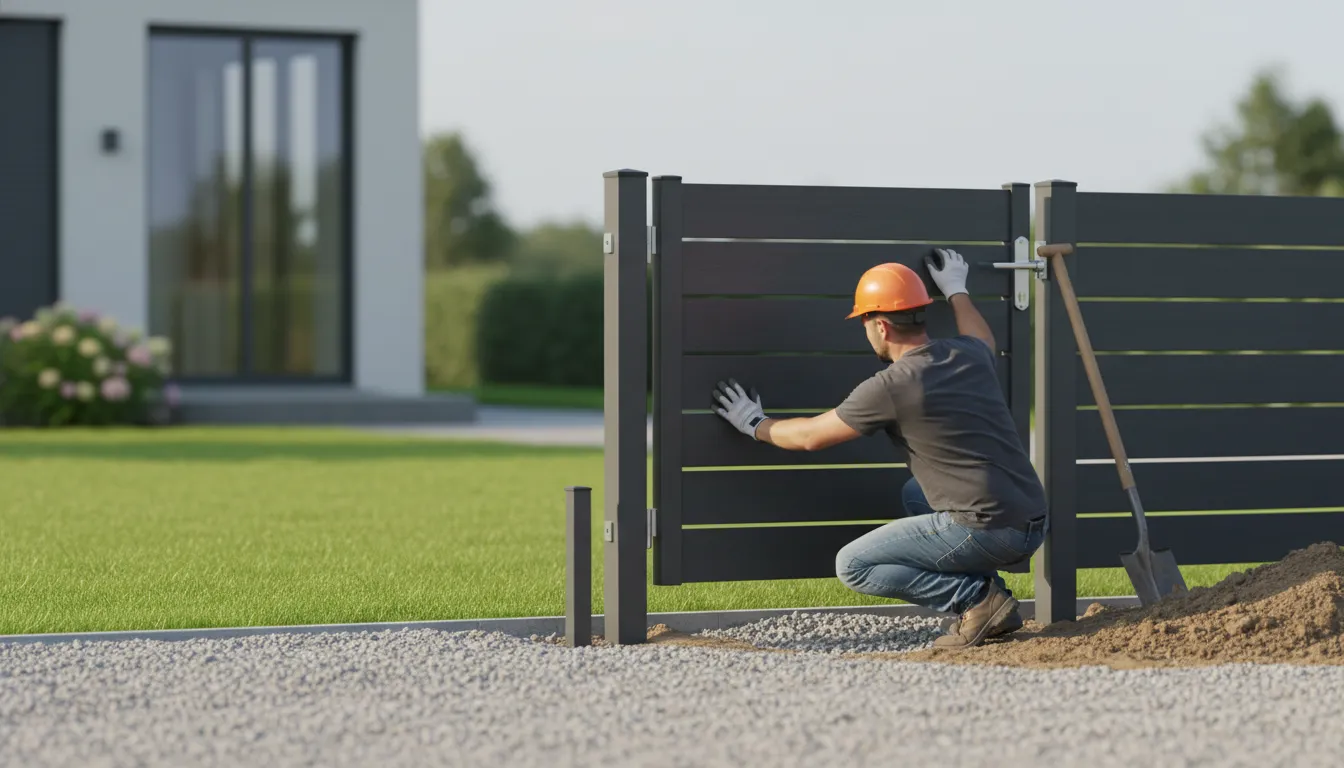
- Installation: The contractor will set posts, attach rails and pickets (or panels), and install gates. Proper post-setting in concrete is critical for fence longevity.
- Final Inspection: Many cities require a final inspection once the fence is complete to ensure it meets all code requirements.
Key Takeaways for Utah Homeowners
The most important rule for fence installation in Utah is to always check your specific city's municipal code 10 11 12. What is allowed in Salt Lake City may differ from rules in Provo, St. George, or Park City. Assuming the rules are the same can lead to costly mistakes.
Secondly, get a permit before you build. The permit process exists to ensure safety, adherence to zoning laws, and avoidance of property line disputes. A reputable fence contractor will usually handle the permit application on your behalf, but it is ultimately the homeowner's responsibility to ensure it is acquired.
Finally, invest in quality materials and professional installation. A properly installed fence with materials suited for Utah's climate will provide security, beauty, and value to your property for decades.
Frequently asked questions
Sources
Footnotes
-
residential fence regulations and permit requirements - Springville.org - https://www.springville.org/community-development/forms/fence-regulations/ ↩
-
Fence Regulations | Ogden, UT - https://www.ogdencity.gov/2468/Fence-Regulations ↩
-
Fencing Code | Saratoga Springs, UT - https://www.saratogasprings-ut.gov/2310/Fencing-Code ↩
-
10-15-38: FENCING STANDARDS: - American Legal Publishing - https://codelibrary.amlegal.com/codes/pleasantgroveut/latest/pleasantgrove_ut/0-0-0-25793 ↩
-
Utah Property Line and Fence Laws - FindLaw - https://www.findlaw.com/state/utah-law/utah-property-line-and-fence-laws.html ↩
-
Salt Lake City Fence Regulations - https://fenceanddeckutah.com/salt-lake-city-fence-regulations/ ↩
-
Chapter 19.95 FENCING, WALLS, AND RETAINING WALLS - https://www.utah.gov/pmn/files/569619.pdf ↩
-
Best Fence Materials for Utah - Haven Yards - https://havenfence.com/best-fence-materials-for-utah/ ↩
-
Fence cost per linear foot: 7 Powerful Facts for 2025 - Brentwood Fence - https://www.brentwoodfence.com/blog/fence-cost-per-linear-foot-nh-ma-me ↩
-
Residential Fence Requirements - SJC.Utah.gov - https://www.sjc.utah.gov/DocumentCenter/View/821/Fencing-Requirements-PDF ↩
-
ordinance no. 24-25 - Murray.utah.gov - https://www.murray.utah.gov/DocumentCenter/View/16043 ↩
-
Residential Fences, Walls and Hedges - http://www.slcdocs.com/building/Residential%20Fences,%20Walls%20&%20Hedges_ENG.pdf ↩