Find the Best Fence Installers for Your Business
No obligation • Fast responses • Nationwide coverage

Why you can trust Landscape Atlas
Landscape Atlas is a leading United States resource for evaluating landscaping, lawn care, and outdoor service providers. Our team researches each category in depth, focusing on service quality, safety, and customer experience. Listings and rankings are based on independent criteria and user feedback, and companies cannot pay to influence our assessments or recommendations.
Search providers near you
Best Fence Installers in Vermont Ranked
Installing a fence in Vermont is a practical way to define your property, enhance privacy, and improve curb appeal. This project involves more than just choosing a style; it requires navigating local zoning bylaws, selecting the right material for Vermont's climate, and understanding the associated costs. The following guide provides a detailed overview of what you need to know to plan a successful fencing project, from initial research to final installation, and can help you connect with experienced local professionals.
Understanding Vermont's Fence Regulations
Before you purchase a single post, your first step is to understand the local rules that govern fence installation. Regulations can vary significantly from one town to the next, so checking with your specific municipality is essential.
Permit Requirements: In many Vermont towns, a permit is required for fences over a certain height, typically 4 to 6 feet. For fences exceeding 8 feet, you may need approval from a local Development Review Board (DRB) 1 2. For example, in South Burlington, a permit is required for any fence over 6 feet tall 1.
Height and Placement Limits: Common residential fence height limits are 4 to 6 feet for side and rear yards. Front yard fences often have stricter limits, such as 3 feet in Burlington, to maintain visibility and an open streetscape. "Sight triangles" at driveway entrances and street corners also have strict low-height requirements for safety.
The "Good Neighbor" Rule: A standard regulation across Vermont is that the smooth, finished side of the fence must face your neighbor's property or the public street, with the structural posts and rails on the inside 3. This is both a courtesy and a common code requirement.
Property Lines and Setbacks: Your fence must be built entirely within your property line, not directly on it. Towns often require a setback (e.g., a few inches to a foot) from the official boundary to allow for maintenance and to avoid disputes. It's highly recommended to have a professional survey done to confirm your property lines before installation begins.
Choosing the Right Fence Material for Vermont
Vermont's weather-with its cold winters, frost heaves, and ample moisture-demands durable materials. Your choice will impact the fence's longevity, maintenance needs, and overall cost.
Wood Fencing:
- Types: Pressure-treated pine is the most affordable and rot-resistant option. Cedar is a popular premium choice for its natural beauty, insect resistance, and classic New England aesthetic 4.
- Pros: Natural look, can be stained or painted, generally lower material cost.
- Cons: Requires regular maintenance (staining/sealing every few years), can warp or rot over time if not properly cared for.
Vinyl Fencing:
- Types: Available in styles mimicking wood (privacy, picket) and in various colors.
- Pros: Extremely durable, low-maintenance (only needs occasional washing), resists rot, insects, and moisture 5.
- Cons: Higher initial cost than wood, can become brittle in extreme cold, and color cannot be changed.
Chain-Link Fencing:
- Types: Galvanized steel or vinyl-coated.
- Pros: Most affordable option, durable, requires virtually no maintenance, provides security without blocking views.
- Cons: Offers little privacy or aesthetic enhancement unless paired with privacy slats.
Other Considerations: For a rustic or agricultural look, split-rail fences are common. Aluminum offers a low-maintenance, ornamental option but is less common for full privacy installations.
Cost Breakdown for Fence Installation
The total cost of your fence depends on three primary factors: material, linear footage, and labor. In New England, installation costs can run 15-25% higher than national averages due to labor rates and weather-related construction challenges.
Cost Per Linear Foot: On average, installed fence costs in Vermont range from $25 to $60 per linear foot 6. A basic 4-foot chain-link fence will be at the lower end, while a 6-foot tall cedar or vinyl privacy fence will be at the higher end 7 8.
Typical Project Cost: For a standard 150-linear-foot privacy fence, total costs typically fall between $3,150 and $4,950 9. This aligns with the per-foot estimates and includes both materials and professional installation.
Cost Components:
- Materials: Account for roughly 30-50% of the total cost. Material-only prices can range from $6 to $35 per linear foot depending on type and quality.
- Labor: Typically constitutes 50-70% of the project cost. This covers site preparation, post-hole digging, installation, and cleanup 10.
- Additional Costs: Don't forget to budget for permits, a potential property survey, and the cost of calling 811 for utility marking (which is free but essential).
Find the perfect fence installers for your needs
Get personalized recommendations and expert advice
The Professional Installation Process
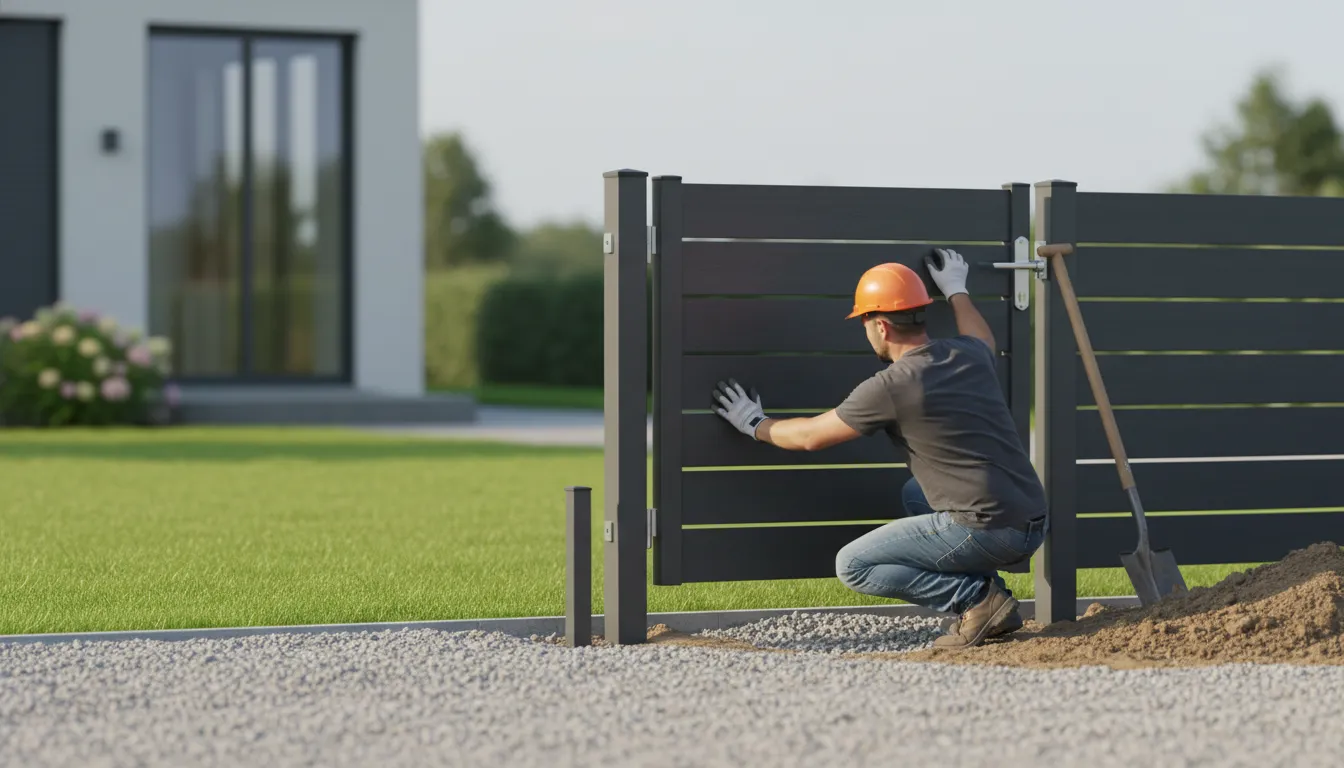
Hiring a professional ensures your fence is built correctly, complies with all codes, and stands the test of time. Here's what a standard installation process looks like:
- Consultation and Estimate: A reputable installer will visit your property to discuss your goals, take measurements, assess the terrain, and provide a detailed written estimate.
- Planning and Permits: Your contractor should help identify local permit requirements and may handle the permit application process on your behalf. They will also schedule the utility locate (Call 811).
- Site Preparation: The crew will mark the fence line based on your agreed-upon layout and the property survey.
- Post Installation: This is the most critical step in Vermont. Posts must be set below the frost line, which is approximately 4 feet deep in much of the state, to prevent heaving during freeze-thaw cycles. Holes are dug, posts are set in concrete, and aligned.
- Fencing Installation: Once posts are secure, rails and pickets (or chain-link fabric) are attached. Gates are hung and hardware is installed.
- Final Inspection and Cleanup: The installer will do a final walk-through with you, ensure gates function properly, and clean the work area of all debris.
Key Considerations for Vermont Homeowners
- Call Before You Dig: It is state law and critical for safety. Call 811 at least three business days before any digging to have underground utility lines marked for free 11.
- Talk to Your Neighbors: Even if not legally required, a courteous conversation with adjacent neighbors about your plans can prevent future disputes and foster good relationships.
- Consider Terrain and Drainage: Vermont properties are often sloped or have wet areas. Your fence design and installation method may need to accommodate this (e.g., stepped or racked panels for slopes).
- Maintenance Planning: Factor in the long-term care of your fence. A wood fence requires a commitment to periodic maintenance, while vinyl offers a "set it and forget it" advantage.
Frequently asked questions
Sources
Footnotes
-
Do I need a permit to install a fence? - South Burlington, VT - https://www.southburlingtonvt.gov/FAQ.aspx?QID=95 ↩ ↩2
-
Apply for a Fence Permit - South Burlington, VT - https://www.southburlingtonvt.gov/DocumentCenter/View/299/How-to-Apply-for-a-Fence-Permit-PDF ↩
-
Fences | Burlington, VT - https://www.burlingtonvt.gov/DocumentCenter/View/3160/DG-Fences ↩
-
Single Sided Vermont Fences | Interstate Wholesale Fence - https://interstatevisions.com/fences/custom-wood/wood-single-sided/vermont-wood/ ↩
-
Fence Installation Quotes: A Quick Guide for Homeowners - https://agvinylfencing.com/fence-installation-quote-guide/ ↩
-
Residential Fencing Options: 10 Best Choices for 2025 - https://www.brentwoodfence.com/blog/residential-fencing-options-nh-ma-me ↩
-
How Much Does Fence Installation and Replacement Cost? - https://modernize.com/fencing/cost ↩
-
Your Guide to Fence Installation Cost by Material and Size - https://jhlandscapes.com/your-guide-to-fence-installation-cost-by-material-and-size/ ↩
-
6 ft privacy fence installation cost: Smart 2025 Guide - https://www.brentwoodfence.com/blog/6-ft-privacy-fence-install-cost-guide ↩
-
Fence cost per linear foot: 7 Powerful Facts for 2025 - https://www.brentwoodfence.com/blog/fence-cost-per-linear-foot-nh-ma-me ↩
-
Property Line Fence Regulations: Legal Placement & Permit Rules - https://barrierbossusa.com/blogs/news/property-line-fence-rules-guide ↩