Find the Best Fence Installers for Your Business
No obligation • Fast responses • Nationwide coverage

Why you can trust Landscape Atlas
Landscape Atlas is a leading United States resource for evaluating landscaping, lawn care, and outdoor service providers. Our team researches each category in depth, focusing on service quality, safety, and customer experience. Listings and rankings are based on independent criteria and user feedback, and companies cannot pay to influence our assessments or recommendations.
Search providers near you
Best Fence Installers in Wyoming Ranked
Installing a fence on your Wyoming property is a practical project that enhances privacy, security, and curb appeal. However, navigating the state's unique "fence-out" laws and varying local regulations is essential for a successful, compliant installation. This guide provides clear, actionable information to help you understand the rules, choose the right materials, and connect with qualified local professionals who can handle the permitting and construction process.
Understanding Wyoming's Fence Laws and Regulations
Before you purchase a single post, it's crucial to understand the legal landscape. Wyoming operates under a "fence-out" doctrine for livestock 1. This means if you want to keep animals like cattle or bison off your property, the responsibility is on you to construct an adequate fence. The law does not require livestock owners to fence their animals in. This is a key consideration for rural and suburban properties adjacent to open range or agricultural land.
Beyond state law, your project will be governed by local municipal codes. These ordinances, which vary significantly from city to city, dictate the critical details of your installation.
Key Local Code Considerations
Local zoning and planning departments enforce rules that commonly address:
- Height Limits: Most cities differentiate between front yards and other areas (side/rear yards). Front yard fences are typically restricted to lower heights (often 3-4 feet) to maintain sightlines and an open streetscape, while fences elsewhere can be taller.
- Setback Requirements: This is the required distance your fence must be built from the property line, sidewalk, or street. Setbacks prevent disputes with neighbors and ensure public right-of-way access. They commonly range from 1 to 3 feet from the property line.
- Materials and Design: Some codes regulate materials (e.g., prohibiting barbed wire in residential areas) or require "open" designs (like picket or split-rail) in front yards to avoid a solid visual barrier.
- Permit Requirements: Most cities require a permit for fence installation. The process involves submitting an application, site plan, and paying a fee, which can range from $50 to over $500 depending on the jurisdiction 2.
Examples of City-Specific Rules
- Casper: Front yard fences cannot exceed 4 feet in height. Any portion over 3 feet must be at least 40% open. Fences in side and rear yards can be up to 8 feet tall 3.
- Cody: The maximum height for a front yard fence is 4 feet (with the same 40% openness rule for portions over 3 feet). In other yard areas, the maximum height is 7 feet 4.
- Rawlins: Fences in front and side yards are limited to 4 feet in height 5.
Your first step should always be to contact your local city or county planning department to obtain the specific rules and permit application for your address.
The Essential Pre-Installation Checklist
A smooth project starts with proper preparation. Follow these steps before any construction begins:
- Verify Your Property Lines: Never guess where your property ends. Hire a professional land surveyor to mark the exact boundaries. Building a fence on a neighbor's land can lead to costly legal disputes and the potential need to remove the structure 6.
- Check Local Codes and Obtain Permits: As outlined above, gather the specific regulations from your local municipality and submit your permit application. Reputable installation professionals will often manage this process for you.
- Discuss with Neighbors: It's a good practice to inform adjoining property owners of your plans, especially if the fence will be near the shared boundary. This fosters good relations and can help avoid future conflicts.
- Finalize Design and Material Choice: Consider your primary goals (privacy, security, pet containment, aesthetics) and budget to select the best fencing material for your needs.
Choosing the Right Fencing Material for Wyoming
Wyoming's climate-with its strong winds, snow, and temperature swings-demands durable materials. Here are the most common options for residential properties:
- Wood Fencing: A classic choice offering natural beauty and good privacy. Pressure-treated pine and cedar are popular for their resistance to rot and insects. However, wood requires regular maintenance like staining or sealing to withstand the elements.
- Vinyl Fencing: Extremely low-maintenance and resistant to weathering, rotting, and insects. It won't warp or fade significantly and is easy to clean. While the upfront cost is higher than basic wood, it can be more economical over time due to minimal upkeep.
- Chain Link Fencing: A highly affordable and durable option for security and pet containment. It's low-maintenance and allows for clear visibility. While not typically chosen for privacy, it can be paired with privacy slats or climbing plants.
- Ornamental Metal (Aluminum/Wrought Iron): Provides a high-end, secure, and decorative look. Modern aluminum systems are rust-resistant and require little maintenance. This is often used for decorative front yard borders or pool fencing.
Find the perfect fence installers for your needs
Get personalized recommendations and expert advice
The Installation Process: What to Expect
When you hire a professional, the installation typically follows a structured path:
- Site Preparation: The crew will clear the fence line of debris, rocks, and vegetation. They will use your property survey to precisely locate the layout.
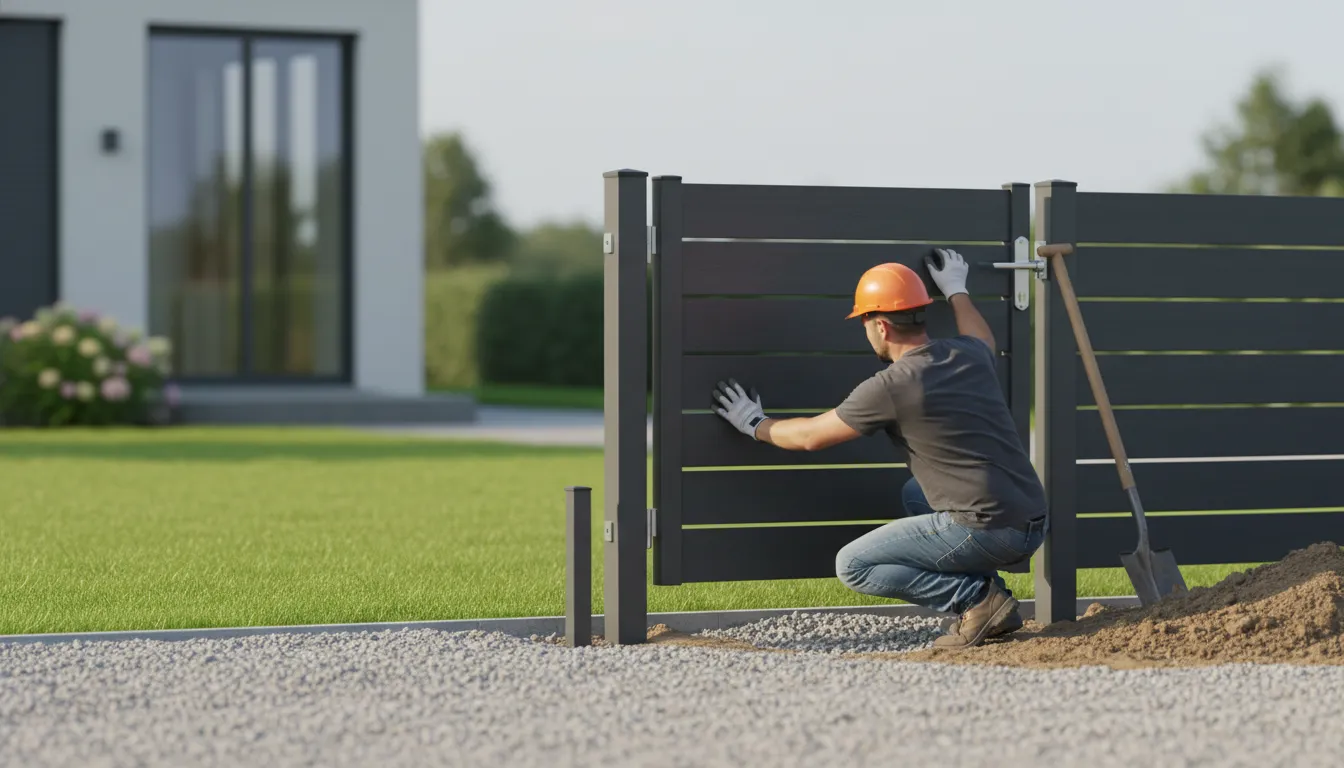
- Post Installation: This is the most critical step for fence longevity. Posts are set in holes dug below the frost line (crucial in Wyoming to prevent heaving) and secured with concrete. Proper alignment and plumb setting are essential.
- Framework and Pickets/Panels: Rails are attached to the posts, and then the pickets (for wood) or pre-assembled panels (for vinyl and some wood styles) are secured.
- Gate Installation: Gates are hung with heavy-duty hardware to ensure smooth operation and durability, especially important for wider drive gates.
- Final Inspection and Cleanup: The installer will ensure the fence is level, sturdy, and meets all aesthetic standards. They should also clean up the job site, removing all construction debris. In many jurisdictions, a final inspection by the city is required to close out the permit.
Cost Considerations for Fencing in Wyoming
The total cost of your fence project depends on several variables: material, linear footage, height, terrain, and labor rates. Costs are generally quoted per linear foot, installed.
- Chain Link: As a budget-friendly option, you might expect to pay between $2,000 and $3,500 for a standard 200-foot residential installation 7.
- Wood Privacy Fence: This is a mid-range option, with costs varying based on wood type. Pressure-treated pine is more economical, while cedar commands a higher price.
- Vinyl Privacy Fence: Typically represents a higher initial investment than wood, but offers long-term savings on maintenance.
As a broad range, total installed costs in Wyoming can span from $10 to over $30 per linear foot, with complex terrain, custom designs, and premium materials driving the price toward the higher end. Always get detailed, written estimates from multiple contractors that break down material and labor costs.
Wildlife Considerations for Wyoming Landowners
For properties in more rural or wildland-interface areas, your fence design can impact local wildlife. The Wyoming Game and Fish Department provides guidelines for "wildlife-friendly" fencing 8 9. Key principles include:
- Using smooth wire instead of barbed wire on the top and bottom strands.
- Ensuring the bottom wire is at least 16-18 inches above the ground to allow fawns and other small animals to pass underneath.
- Making fences highly visible to prevent collisions by animals like pronghorn.
- Considering the need for wildlife passage in migration corridors. A professional familiar with local ecology can advise on these important factors.
Frequently asked questions
Sources
Footnotes
-
Property Line and Fence Laws in Wyoming - FindLaw - https://www.findlaw.com/state/wyoming-law/property-line-and-fence-laws-in-wyoming.html ↩
-
Fence Permit Guide for Contractors | Requirements & Costs - https://www.permitflow.com/blog/fence-permit ↩
-
Fences - Casper, WY - https://www.casperwy.gov/services/code_enforcement/fences.php ↩
-
FENCE PERMITTING PROCESS - Cody, WY - https://www.codywy.gov/DocumentCenter/View/6194/Fence-Permitting-Process-2025 ↩
-
Fencing - Rawlins, WY - https://www.rawlinswy.gov/DocumentCenter/View/15433/Ordinance-No-10A-2020-Amend-Title-1940050---Fencing ↩
-
Property Line Fence Regulations: Legal Placement & Permit Rules - https://barrierbossusa.com/blogs/news/property-line-fence-rules-guide ↩
-
How Much Does It Cost For 200 Feet Of Fencing? - https://cerosfencecontractors.com/how-much-does-it-cost-for-200-feet-of-fencing/ ↩
-
A Wyoming Landowner's Handbook to - Fences & Wildlife - https://plainsconservation.org/wp-content/uploads/2025/06/2025-Wyoming-Fences-Wildlife-Handbook-031725.pdf ↩
-
A Landowner's Guide to Fences and Wildlife - https://wgfd.wyo.gov/sites/default/files/content/PDF/A_Landowners_Guide_to_Fences_and_Wildlife.pdf ↩