Find the Best Hardscaping Contractors for Your Business
No obligation • Fast responses • Nationwide coverage

Why you can trust Landscape Atlas
Landscape Atlas is a leading United States resource for evaluating landscaping, lawn care, and outdoor service providers. Our team researches each category in depth, focusing on service quality, safety, and customer experience. Listings and rankings are based on independent criteria and user feedback, and companies cannot pay to influence our assessments or recommendations.
Search providers near you
Top Hardscaping Contractors in Pompano Beach, Florida Ranked
Transforming your outdoor space with permanent, non-living features is a powerful way to enhance your property's beauty, functionality, and value. Hardscaping, which includes elements like patios, walkways, and retaining walls, creates the essential framework for your landscape. In Pompano Beach, this work requires specialized knowledge of our unique coastal environment, from sandy soil to high water tables. This guide will help you understand the local considerations, materials, and processes for successful hardscape installation, empowering you to connect with qualified professionals who can bring your vision to life.
Monster Grass South Florida
1145 S 28th Ave, Hollywood, FL 33020
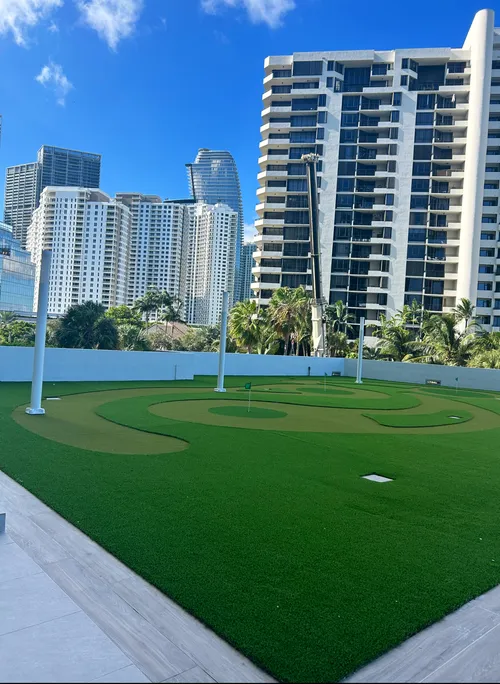
Monster Grass South Florida is a Miami-based company specializing in artificial grass and synthetic turf installation. They offer a variety of outdoor transformation services including artificial putting greens, pet turf, ivy walls, pavers, and concrete driveways. With over 15 years of experience, they provide durable, eco-friendly, and low-maintenance solutions designed to withstand South Florida's climate. Their expertise includes custom installations tailored for residential and commercial properties across Miami. The company emphasizes sustainable outdoor living spaces and offers financing options through Home Depot.
American Artificial Grass
1670 NE 205th Terrace, Miami, FL 33179
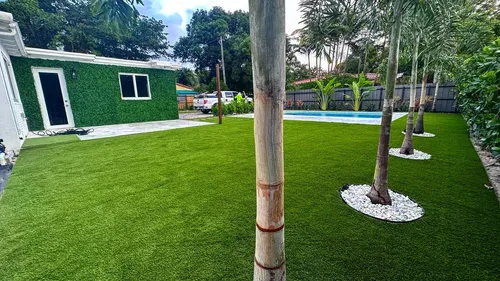
American Artificial Grass is a landscaping company based in Miami, FL, specializing in synthetic turf installation and comprehensive landscape design. They provide eco-friendly, low-maintenance alternatives to traditional lawns, enhancing outdoor spaces with services that include planting flower beds, installing pathways, patios, and other hardscaping features. Their work focuses on sustainability and water conservation, creating attractive and functional yards that require minimal upkeep.
Epic Landscaping / Nursery
6650 SW 189th Way, Southwest Ranches, FL 33332
Epic Landscaping / Nursery is a landscape design and maintenance company based in Miami, FL. They provide a wide range of services including landscape design, tree removal, stump grinding, sprinkler installation and repair, lawn care, and hardscaping such as pavers and retaining walls. With over 20 years of experience in South Florida, they have completed more than 10,000 landscaping projects for both residential and commercial clients. Their team is known for their expertise in creating functional and attractive outdoor spaces, including irrigation systems and detailed tree care.
Canet Group Inc - Fencing, Concrete, Deck & Pools
14504 NW 87th Pl, Miami Lakes, FL 33018
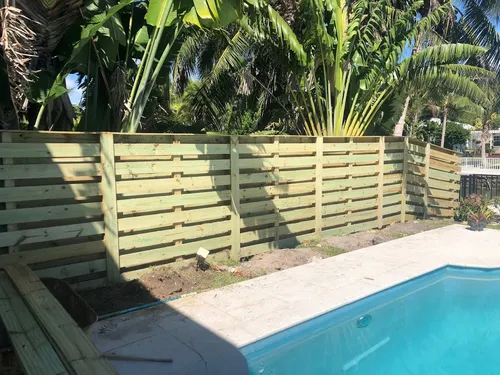
Canet Group Inc - Fencing, Concrete, Deck & Pools is a contractor based in Miami, FL, specializing in fence installation and hardscaping services including pavers and retaining walls. They focus on transforming outdoor spaces for residential and commercial properties, creating durable and attractive areas that withstand Florida weather. Their work enhances the usability and appearance of outdoor environments, making them more enjoyable and functional.
C S Designer Landscaping LLC
500 S Federal Hwy Apt #2592, Hallandale Beach, FL 33008
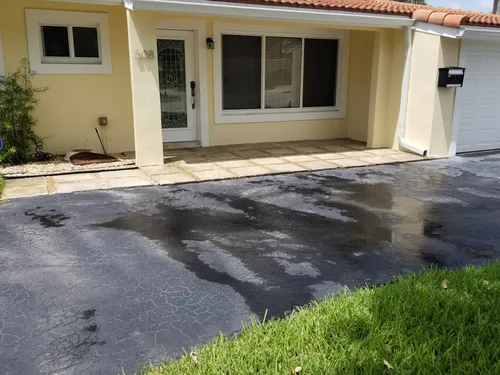
C S Designer Landscaping LLC is a landscaping company based in Miami, FL, offering a wide range of services for residential and commercial properties. Their expertise includes lawn maintenance, landscape design, sod and artificial grass installation, tree services, sprinkler installation and repair, and hardscaping such as pavers and retaining walls. With over 20 years of experience, they provide custom plans and installations tailored to client needs across Miami and surrounding counties. The company handles projects of various sizes and focuses on delivering consistent quality in all aspects of landscaping.
Understanding Pompano Beach's Hardscape Environment
Successful outdoor construction in South Florida starts with understanding the ground beneath your feet. Pompano Beach presents specific environmental factors that directly influence the design, materials, and installation techniques for any hardscape project.
Sandy Soil & Stability: Our prevalent sandy soil offers excellent natural drainage, which is a major advantage. However, sand is a poor base for compaction. Without a properly engineered base, heavy pavers or concrete can shift and settle over time. Professional contractors address this by excavating to a stable depth and installing a compacted base of gravel and sand, creating a solid foundation that prevents movement and cracking.
Water Management is Paramount: Between heavy seasonal rains and the region's characteristically high water table, managing water is the single most critical aspect of hardscaping here. Proper grading-sloping surfaces away from your home-is essential. For patios and walkways, contractors often integrate sub-surface drainage solutions like French drains or catch basins to channel water away from the structure, preventing pooling, erosion, and potential flooding of adjacent areas.
A Frost-Free Advantage: One significant simplification for Pompano Beach hardscaping is the absence of frost. In northern climates, the freeze-thaw cycle requires deep, extensive base preparation to prevent heaving. Here, base requirements are focused solely on stability and drainage, which can simplify some aspects of construction and reduce material needs compared to colder regions.
Popular Hardscape Materials for Coastal Florida
Choosing the right materials ensures your project is not only beautiful but also durable enough to withstand the South Florida sun and rain.
Patio and Walkway Surfaces:
- Interlocking Pavers: A top choice for their versatility, durability, and excellent drainage. Water filters through the joints, reducing runoff. Options include concrete pavers in countless shapes and colors, classic brick, and elegant travertine.
- Stamped or Stained Concrete: Offers a cost-effective way to achieve the look of stone, brick, or tile with a seamless surface. Modern staining and stamping techniques can create highly realistic and attractive finishes.
- Natural Stone: For a luxurious, timeless look, materials like flagstone or natural stone pavers are unmatched. They are incredibly durable but often sit at a higher price point. Their natural texture provides good slip resistance, which is a bonus in rainy weather.
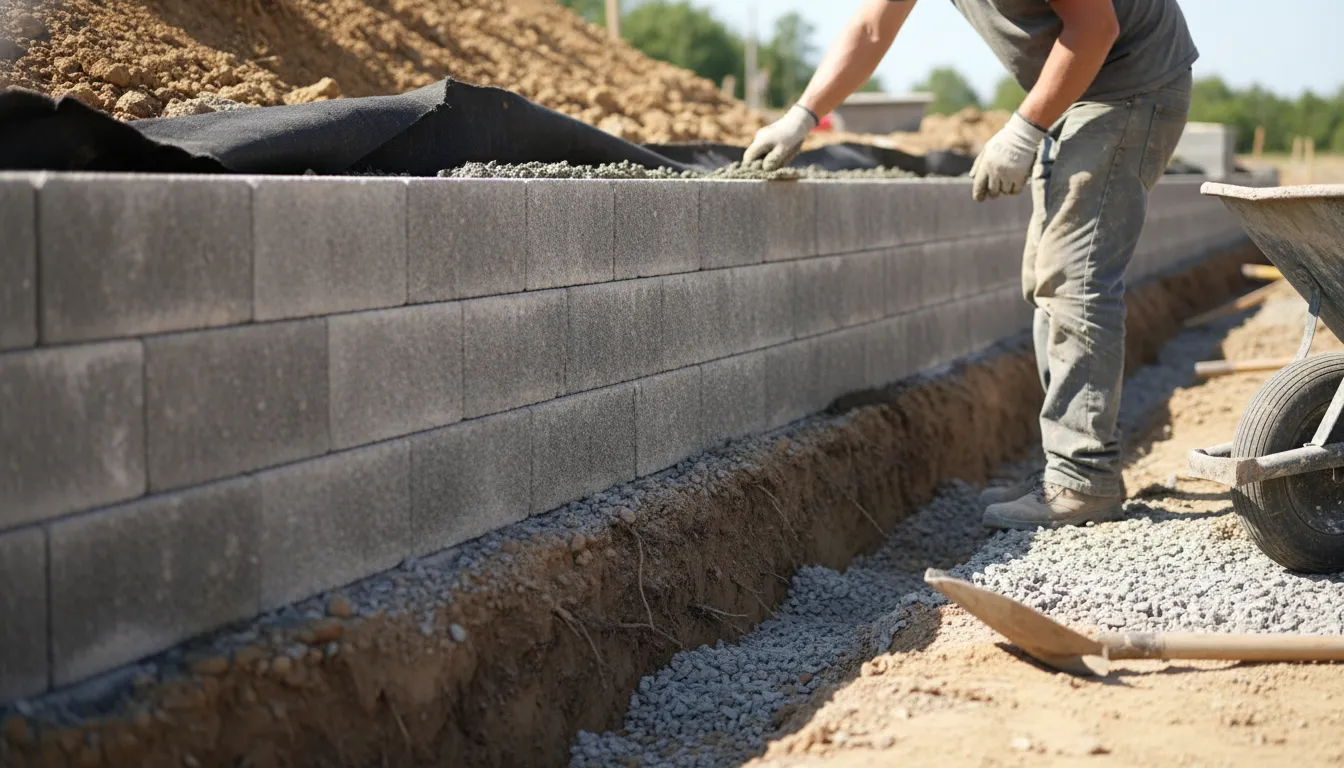
Retaining Wall Systems: Walls are crucial for managing slopes, creating level terraces, and preventing soil erosion on properties with elevation changes.
- Segmental Retaining Wall (SRW) Blocks: These are the most common choice for residential projects. They are modular concrete blocks designed to interlock, are available in various textures and colors, and are engineered for strength and easy installation.
- Poured Concrete Walls: Offer a solid, monolithic appearance and are typically used for taller, structural walls or where a very specific finish is desired. They often require forming and reinforcing with steel.
- Keystone or Concrete Block Systems: Similar to SRWs, these are robust, engineered systems that provide a clean, uniform look and are built to handle significant soil pressure.
Find the perfect hardscaping contractors for your needs
Get personalized recommendations and expert advice
Key Design Considerations and Project Types
Integrating hardscape features thoughtfully maximizes both their utility and aesthetic appeal.
Creating Functional Outdoor Rooms: A well-designed patio serves as an extension of your living space. Consider how you'll use it-for dining, lounging, or outdoor cooking-and size it accordingly. Incorporating defined walkways guides traffic flow and protects your lawn. For pool decks, choosing a material that stays cool underfoot, like certain light-colored pavers, is a smart comfort consideration.
Solving Slope with Retaining Walls: If your property has a slope, retaining walls are not just aesthetic; they are functional engineering solutions. They can create flat, usable areas for gardens or seating on a hillside. It is vital that these walls are designed with proper drainage (weep holes and gravel backfill) to relieve hydrostatic pressure from the soil and water behind them.
Drainage as a Design Feature: Instead of hiding drainage, it can be incorporated into the design. Channel drains can run discretely along edges, while decorative grate covers on catch basins can blend seamlessly with your paver pattern. Proper planning ensures water is managed effectively without compromising the look of your space.
The Professional Installation Process
Understanding the steps a reputable contractor will follow can help you gauge the quality and timeline of your project.
- Consultation and Design: The process begins with an on-site consultation to discuss your goals, assess the land, and take measurements. A detailed design plan and quote should follow.
- Permitting and Planning: Depending on the project's scope (especially for retaining walls over a certain height), your contractor may need to pull permits from the City of Pompano Beach or Broward County.
- Site Preparation and Excavation: The area is marked and excavated to the required depth, which is deeper than you might think to accommodate the base materials.
- Base Installation and Compaction: This is the most critical phase for longevity. Layers of aggregate base (like crushed rock) are laid and mechanically compacted to create an unyielding foundation.
- Material Installation: Pavers are laid, concrete is poured and stamped, or wall blocks are stacked and secured. Precision at this stage ensures a level surface and straight lines.
- Finishing and Drainage: Joint sand is swept into paver joints and compacted. All drainage systems are finalized and tested. For walls, backfill with gravel is completed.
- Clean-up and Final Walkthrough: The site is cleaned, and the contractor should walk you through the completed project, explaining maintenance and care.
Investment and Cost Considerations
The cost of a hardscaping project in Pompano Beach varies widely based on materials, size, complexity, and site accessibility. Here is a general overview of price ranges, though obtaining detailed, project-specific quotes from contractors is essential.
-
Patios and Walkways:
-
Pavers: Typically range from $15 to $30+ per square foot installed, with basic concrete pavers at the lower end and premium natural stone or intricate patterns at the higher end.
-
Stamped/Stained Concrete: Generally falls between $12 to $25+ per square foot, depending on the complexity of the pattern and coloring.
-
Natural Stone: Often starts around $20 and can exceed $40 per square foot for material and installation.
-
Retaining Walls: Costs are usually calculated per linear foot and are heavily dependent on the wall's height and material.
-
Segmental Retaining Wall (SRW) Blocks: A common choice, with installation costs typically ranging from $20 to $40 per linear foot, increasing with height and engineering requirements.
- Poured Concrete or Engineered Block Walls: For more complex or structural needs, costs can range from $30 to $60+ per linear foot 1.
Remember, these figures are for the hardscape installation itself. Additional costs for design, permits, demolition of existing surfaces, drainage systems, or landscaping integration should be factored into your overall budget.
Frequently asked questions
Sources
Footnotes
-
Retaining Walls Concrete Pompano Beach Construction - https://pompanobeachconcretesolutions.com/retaining-walls/ ↩