Find the Best Hardscaping Contractors for Your Business
No obligation • Fast responses • Nationwide coverage

Why you can trust Landscape Atlas
Landscape Atlas is a leading United States resource for evaluating landscaping, lawn care, and outdoor service providers. Our team researches each category in depth, focusing on service quality, safety, and customer experience. Listings and rankings are based on independent criteria and user feedback, and companies cannot pay to influence our assessments or recommendations.
Search providers near you
Top Hardscaping Contractors in Minnetonka, Minnesota Ranked
Hardscaping is the art of incorporating non-living elements into your outdoor space, creating structure, function, and year-round beauty. In Minnetonka, this means building patios, walkways, retaining walls, and other features that are specifically engineered to withstand our challenging climate. A well-designed hardscape expands your living area, solves drainage issues, and significantly boosts property value. This guide will help you understand the local considerations, materials, and processes for a successful project, connecting you with the expertise needed to bring your vision to life.
Cortez Landscaping
Minneapolis, MN
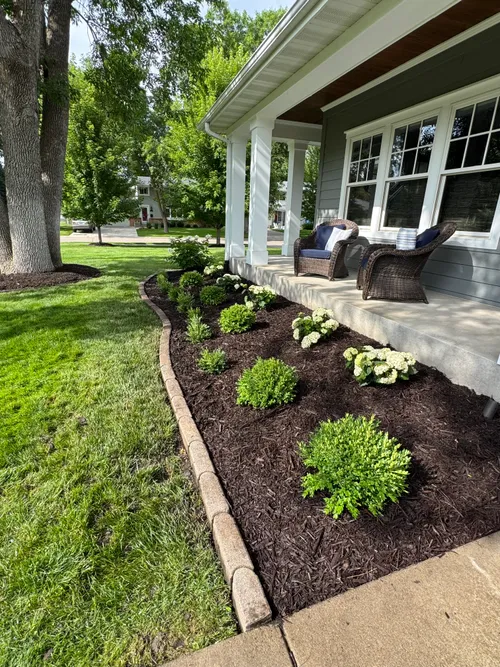
Cortez Landscaping is a landscaping company based in Minneapolis, MN. They provide a range of services including sod installation, artificial turf installation, hardscaping with pavers and retaining walls, as well as hedge trimming, mulch installation, edging, and rock installations. Their portfolio showcases recent projects such as paver patios and retaining walls, highlighting their capability in both landscaping and hardscaping.
Pioneer Landscaping LLC
1694 Ivory Ave N, Lake Elmo, MN 55042
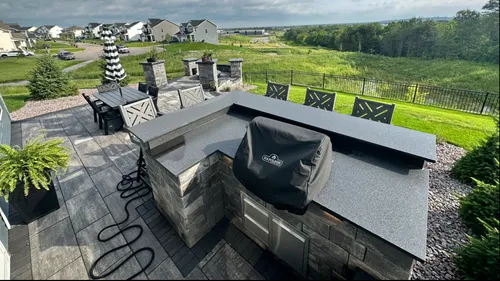
Pioneer Landscaping LLC is a full-service landscaping company based in St Paul, MN, offering a wide range of services including hardscaping, outdoor living spaces, sod and irrigation installation, sport court and pool installation, and year-round property maintenance for both residential and commercial clients. They serve the St Paul area along with nearby communities such as Lake Elmo, Woodbury, Stillwater, and White Bear Lake. Founded in 2020, the company emphasizes dedicated crews and specialized managers to deliver precise results and sustainable practices. Pioneer Landscaping also provides 24/7 emergency services, ensuring support through all seasons.

Dean Bjorkstrand Landscaping
5508 Clinton Ave, Minneapolis, MN 55419
Dean Bjorkstrand Landscaping is a landscaping and design company based in Minneapolis, MN, serving the Twin Cities metro area and beyond. Since 1983, the company has specialized in creating unique outdoor living spaces including patios, retaining walls, walkways, gardens, water features, and outdoor lighting. They understand the local weather and soil conditions, ensuring landscapes that remain vibrant and functional through cold winters and warm summers. Dean Bjorkstrand personally oversees each project from concept to completion, providing expert guidance and supervision throughout the process.
Sota Landscaping
Minneapolis, MN
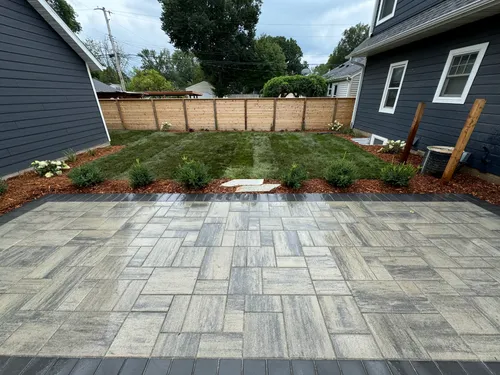
Sota Landscaping is a full-service landscaping company based in Minneapolis, MN. They provide a wide range of services including sod installation, artificial turf installation, landscape design, lawn care, hardscaping such as pavers and retaining walls, and commercial property maintenance. The company also offers snow and ice management services to handle winter weather conditions. Sota Landscaping emphasizes clear communication and client satisfaction throughout each project, ensuring outdoor spaces are both beautiful and functional.
Outdoor Aesthetix LLC
616 Summit Ave, St Paul, MN 55102
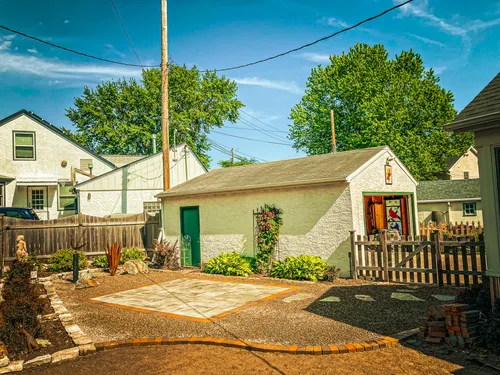
Outdoor Aesthetix LLC is a landscape design and installation company based in St Paul, MN. They serve Eastern Minnesota and Western Wisconsin, offering services that include landscape design, yard renovations, grading, retaining walls, patios, and seasonal maintenance. Their work combines natural beauty with thoughtful design, focusing on native plants and sustainable materials to create functional and attractive outdoor spaces. The company emphasizes detailed craftsmanship and long-term client relationships.
Why Hardscaping is Different in Minnetonka
Building a lasting outdoor structure here isn't just about aesthetics; it's a battle against the elements. Minnetonka's unique environmental factors demand a specialized approach from any skilled hardscape contractor.
- Clay Soil & Drainage: The prevalent heavy clay soil in our area compacts easily and drains water very slowly. Without proper planning, water will pool around or under your hardscape, leading to erosion, settling, and frost damage. Effective water management isn't an optional upgrade-it's the foundation of the project.
- Freeze-Thaw Cycles & Frost Heave: Minnesota's dramatic seasonal temperature swings are the primary enemy of hardscapes. When water trapped in the soil freezes, it expands and can lift (or "heave") pavers, concrete slabs, and retaining wall blocks. The only defense is to build below the frost line with meticulous base preparation.
- The Frost Line Imperative: To prevent frost heave, excavation for hardscape bases must extend deep-typically 8 to 12 inches or more-to reach stable ground below the frost line 1. This deep, compacted base of gravel and sand is what allows your patio or walkway to remain level and intact for decades.
Essential Design and Engineering Principles
Local hardscaping professionals follow core engineering principles to ensure longevity. Ignoring these is a primary reason projects fail within a few seasons.
Non-Negotiable Drainage Solutions
Since clay soil sheds water poorly, directing water away is the first step in design. Key strategies include:
- Positive Slope: All surfaces must be graded with a minimum 1-2% slope (about 1/4 inch per foot) away from your home's foundation and other structures 2 3.
- Subsurface Drains: For areas with persistent water, contractors often install French drains or channel drains beneath or alongside the hardscape to capture and redirect groundwater.
- Dry Creek Beds & Swales: These attractive landscape features can be integrated with hardscaping to manage surface runoff naturally, turning a problem into a decorative asset 4.
Robust Base Construction
The material you walk on is only as good as what's underneath it. A proper base consists of:
- Excavation to the required depth below frost line.
- Compacted Subgrade of the native soil.
- Gravel Base Layer (often crushed rock or Class 5 gravel) installed in layers and mechanically compacted to create an unyielding, well-draining foundation.
- Sand Setting Bed a level layer of coarse sand or stone dust that allows for precise placement and leveling of pavers or stones.
Find the perfect hardscaping contractors for your needs
Get personalized recommendations and expert advice
Choosing the Right Materials for Our Climate
Your choice of material impacts cost, maintenance, and aesthetics. Here's how popular options perform in Minnetonka's conditions.
Budget-Friendly & Durable
- Poured Concrete: A cost-effective choice that can be stamped and stained to mimic more expensive materials. When installed with control joints and a proper base, it performs well. Prices often range from $6 to $18 per square foot installed.
- Gravel: An excellent permeable option for pathways and informal spaces. It requires edging to contain the stones and occasional regrading.
Mid-Range & Versatile
- Brick or Concrete Pavers: The most popular choice for patios and walkways. Pavers are flexible; if frost heave occurs, individual units can be re-leveled. They come in endless colors and patterns. Installed costs typically range from $5 to $25+ per square foot.
- Pressure-Treated Wood: A classic for decks and low retaining walls. It requires regular sealing but is a reliable, cost-effective structural material 5.
High-End & Luxury
- Natural Stone (Bluestone, Flagstone, Granite): Offers unparalleled beauty and uniqueness. Stone is extremely durable but requires expert installation on a perfect base. It is the premium choice, with installed costs often ranging from $15 to over $50 per square foot.
- Composite Decking & Pavers: Made from wood fibers and plastic, these materials offer the look of wood without the staining, sealing, or splintering. They are a low-maintenance, long-lasting premium option.
Common Hardscape Projects and Considerations
Patios and Walkways
These are the most common hardscape additions. Beyond material choice, consider the transition to your lawn (using sturdy edging), how the space will be used (requiring different load-bearing capacities), and how it integrates with existing landscaping and drainage patterns.
Retaining Walls
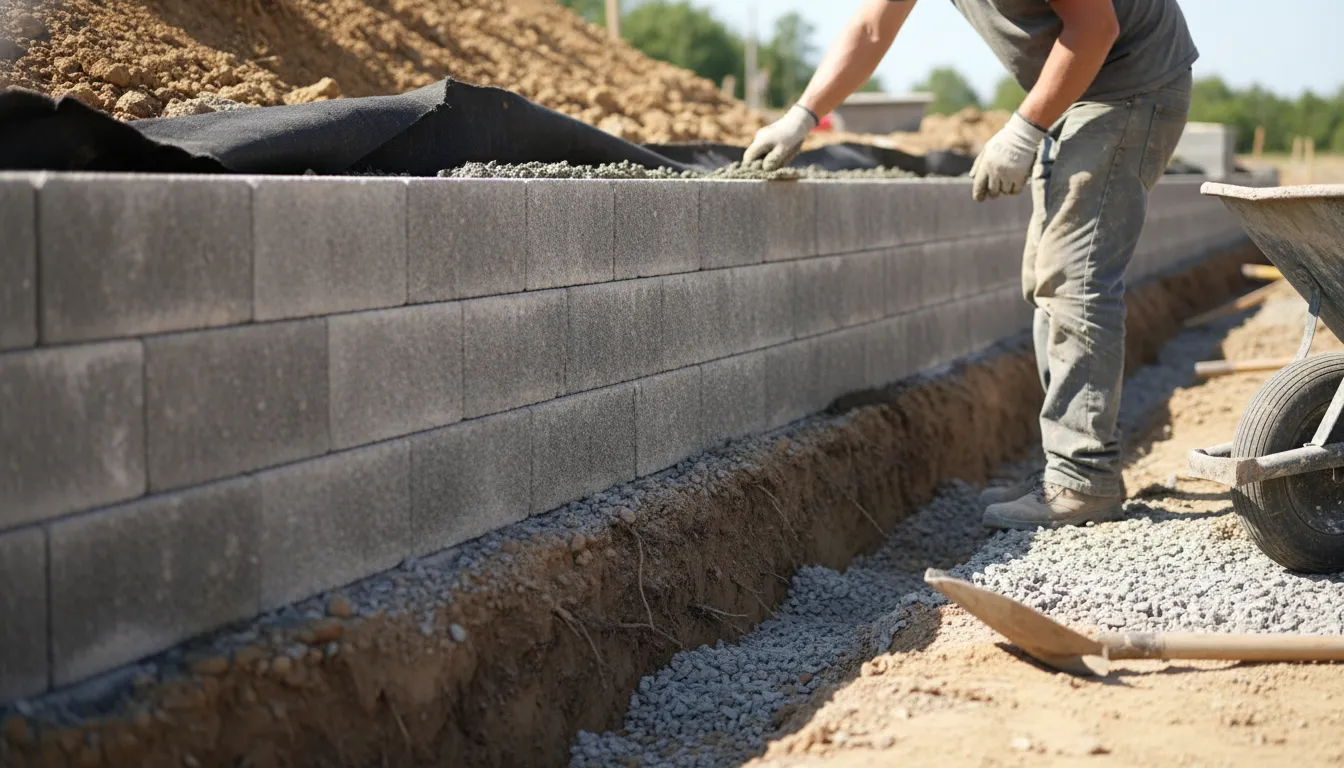
Walls are both functional and aesthetic, used to manage slopes, prevent erosion, and create level planting areas. In Minnetonka, walls over a few feet tall often require engineering. Proper construction includes digging a trench for the first course below grade, using a gravel backfill for drainage, and sometimes even tying the wall back into the hill with geogrid fabric. Costs vary widely by material and height, but stone or block walls often range from $20 to $50+ per square foot of face installed 6.
Other Features
- Outdoor Kitchens & Fire Features: These require additional planning for utility lines (gas, electricity), non-combustible surfaces, and adherence to local fire codes.
- Stairs and Step Systems: Must be built with consistent riser height for safety and often incorporate lighting.
- Driveway Extensions & Parking Pads: Require even more robust base construction to handle vehicle weight and frequent freeze-thaw stress.
The Path to a Successful Project
A successful hardscaping project in Minnetonka hinges on a partnership with a knowledgeable local contractor. Start with a clear vision and budget. Look for professionals who ask detailed questions about your property's drainage, show examples of past work that have endured multiple winters, and provide clear, written estimates that detail the excavation depth, base materials, and drainage solutions included. Investing in proper engineering and installation from the start is the surest way to enjoy a beautiful, functional, and trouble-free outdoor living space for years to come.
Frequently asked questions
Sources
Footnotes
-
Landscaper in Minnetonka, MN - https://lnlandscaping.com/landscapers-near-me/minnetonka-mn/ ↩
-
Hardscape Installation: 7 Benefits in 2025 - Task Masters - https://tmimn.com/what-is-hardscape-installation/ ↩
-
Landscaping & Lawn Care in Minnetonka, MN - https://www.lawncareminneapolismn.com/landscaping-in-minnetonka-mn ↩
-
Outdoor Drainage Solutions | Minnetonka, MN - KG Landscape - https://www.kglandscape.com/service-area/minnetonka-mn/outdoor-drainage-solutions ↩
-
Best Materials for Hardscaping in Minnesota - LNG-Hartigan - https://lnglandscapes.com/best-materials-for-hardscaping-pathways/ ↩
-
Hardscape Costs 2025: Budgeting Guide by Task Masters - https://tmimn.com/hardscape-installation-cost/ ↩