Find the Best Hardscaping Contractors for Your Business
No obligation • Fast responses • Nationwide coverage

Why you can trust Landscape Atlas
Landscape Atlas is a leading United States resource for evaluating landscaping, lawn care, and outdoor service providers. Our team researches each category in depth, focusing on service quality, safety, and customer experience. Listings and rankings are based on independent criteria and user feedback, and companies cannot pay to influence our assessments or recommendations.
Search providers near you
Top Hardscaping Contractors in Pawtucket, Rhode Island Ranked
Transforming your outdoor space with stone, concrete, or pavers can dramatically increase your property's beauty, functionality, and value. Hardscaping-the non-living, structural elements of your landscape-requires specialized knowledge, especially in a climate like Pawtucket's. This guide explains the key considerations for successful patio, walkway, and retaining wall projects in the area, helping you understand local challenges, material choices, and how to connect with skilled professionals who can bring your vision to life.
Pat Gibbs Landscape Design & Construction, Inc.
Boston, MA
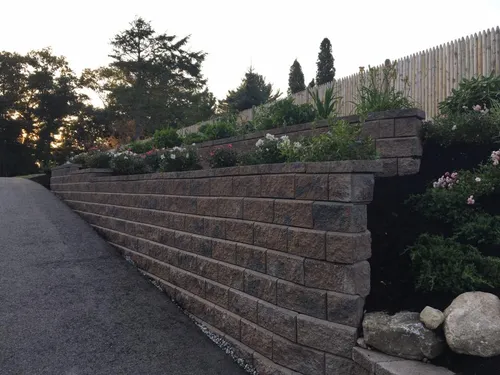
Pat Gibbs Landscape Design & Construction, Inc. is a landscaping and construction company serving Boston, MA, and the surrounding areas. With over 25 years of experience, they offer a wide range of services including lawn maintenance, landscaping, hardscaping, excavating, fencing installation, outdoor living spaces, tick and mosquito spray, bathroom remodeling, dumpster rental, and snow removal. The company uses quality materials such as Techo Block and Uni-Lock for durable and attractive hardscaping projects and provides a 25-year warranty on hardscaping work. They also offer a 10% discount for military and first responders on seasonal contracts and hardscaping.
Land Design Associates
1415 Main St, Walpole, MA 02081
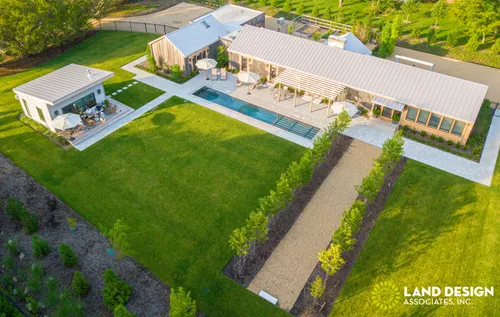
Land Design Associates is a landscaping and hardscaping company serving Boston, MA, and the surrounding Greater Boston area, including Norwood, Newton, Wellesley, Needham, Westwood, and Walpole. They offer comprehensive services from landscape design and installation to ongoing maintenance, working closely with clients to develop and execute personalized outdoor spaces. The company has over 30 years of experience and is known for managing projects from concept to completion, including specialized stonework and retaining walls.
Stein Masonry & Hardscape Boston
190 Pine St, Holbrook, MA 02343
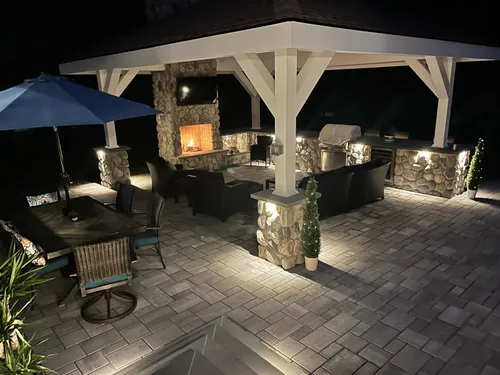
Stein Masonry & Hardscape Boston is a hardscaping contractor serving Boston, MA, and surrounding areas. They specialize in building retaining walls, patios, walkways, driveways, outdoor kitchens, pool areas, and custom outdoor stairs. Their services also include brick and stone repointing, stone veneers and pillars, basement floor and foundation repairs, chimneys, and 3D design visualization to help clients plan their outdoor spaces. With over 10 years of experience, Stein Masonry & Hardscape Boston combines skilled craftsmanship with quality materials to create durable and visually appealing outdoor environments. The company is fully licensed and insured, ensuring compliance with safety and quality standards throughout their projects.
Duarte Landscaping Corp
77 West St, Randolph, MA 02368
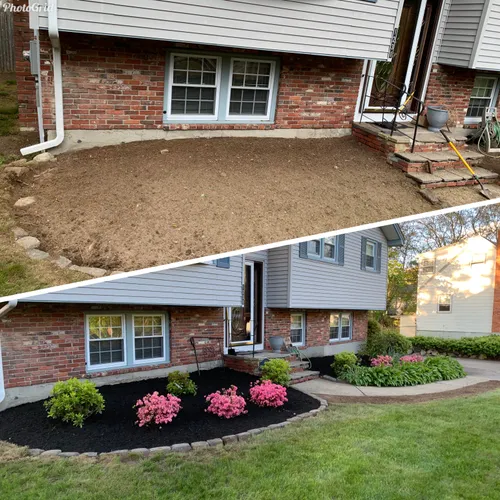
Duarte Landscaping Corp is a family-run landscaping company serving Boston, MA. Founded in 2003, they offer a range of services including lawn mowing, seasonal cleanups, gutter cleaning, landscaping and lawn maintenance, hardscaping, tree planting, and planting annuals and perennials. They specialize in creating and maintaining attractive lawns and gardens for both residential and commercial clients. One of their key capabilities is hardscaping, such as installing stone patios. With over 20 years of experience, Duarte Landscaping Corp is committed to quality work and customer satisfaction.
Omar Masonry And Painting LLC
39 Alpena Ave, Dedham, MA 02026
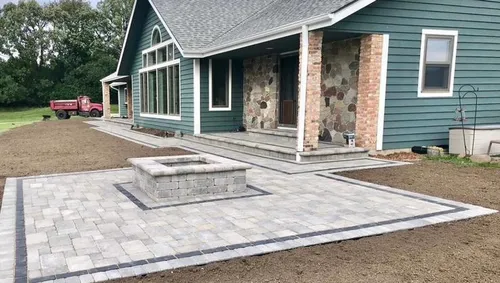
Omar Masonry And Painting LLC is a landscaping and hardscaping company based in Boston, MA. They offer a wide range of services including landscape design, yard drainage, grading, lawn care, and hardscaping such as patios, walkways, and retaining walls. The company also provides masonry, painting, basement cleanouts, demolition, power washing, gutter repair, and carpentry services. Omar Masonry And Painting LLC serves both residential and commercial clients in the Boston area, focusing on enhancing outdoor spaces with durable and functional designs.
Understanding Pawtucket's Hardscaping Challenges
Successful outdoor construction in Pawtucket isn't just about aesthetics; it's about engineering a solution that can withstand the local environment. The two most critical factors are soil composition and climate, which directly influence every decision from design to drainage.
Clay Soils and Drainage: The soil in and around Pawtucket often contains high clay content and glacial deposits. Clay is dense and has very poor permeability, meaning it holds water instead of allowing it to drain through. This creates a persistent challenge: standing water. In your yard, this leads to soggy lawns, but under a hardscape, trapped water can cause severe problems. When this water freezes in winter, it expands, leading to cracks, heaves, and uneven surfaces in patios and walkways. For retaining walls, water pressure (hydrostatic pressure) building up behind the wall is a primary cause of failure.
The Freeze-Thaw Cycle and Frost Line: Rhode Island experiences significant freeze-thaw cycles throughout the winter and early spring. Water that has seeped into cracks or porous materials freezes and expands, then thaws and contracts. This cycle relentlessly breaks down inadequately prepared or sealed surfaces. Furthermore, any permanent structural element, such as the footing for a retaining wall, pergola, or staircase, must extend below the frost line to prevent "frost heave" from lifting it out of the ground. In mainland Rhode Island, including Pawtucket, the building code requires footings to reach a minimum depth of 40 inches 1. Ignoring this is a common and costly mistake.
Selecting Durable Materials for the New England Climate
Choosing the right materials is paramount for longevity. The ideal hardscaping materials for Pawtucket must resist moisture, salt (from de-icing), and the physical stress of freezing and thawing 2 3.
Concrete Pavers: These are a supremely popular choice for patios and walkways for good reason. They are manufactured to be highly durable and, when installed correctly with a proper gravel base and polymeric sand, they offer excellent drainage. If a section settles or is damaged, individual pavers can be removed and replaced without tearing up the entire patio. Permeable paver systems are an especially smart solution, designed to allow water to pass through the joints and into a stone reservoir below, significantly reducing runoff and managing water at the source 4.
Poured Concrete: A classic and often budget-friendly option. For a basic slab, poured concrete can be cost-effective. Stamped and colored concrete offers more aesthetic variety. The critical factor for durability in our climate is the mix and finish. Air-entraining agents should be used to create microscopic bubbles that allow for expansion during freezing, and a high-quality sealer is essential to protect against water penetration and salt damage 5.
Natural Stone: Nothing beats the timeless beauty of natural stone. However, not all stone is created equal for New England winters. Bluestone and granite are excellent choices as they are dense, non-porous, and handle freeze-thaw cycles and salt exposure very well 6. Softer, more porous stones like sandstone or limestone are not recommended for primary walking surfaces in Pawtucket, as they are prone to cracking and spalling (flaking) in the cold 6.
Gravel and Aggregates: While often used as a finished surface for pathways or drainage beds, gravel's primary role in hardscaping is beneath the surface. A properly compacted base of crushed stone (typically 3/4" crushed gravel) is the unsung hero of any stable patio or walkway. It provides a solid, well-draining foundation that prevents settling. Gravel is also the essential backfill material behind retaining walls, facilitating crucial drainage 7.
Mastering Drainage: The Key to Longevity
Given the clay soil and precipitation, designing for water management isn't an optional upgrade-it's the core of a successful project. A multi-layered approach is often necessary.
1. Surface Grading: This is the first and most fundamental step. Any paved surface must be sloped to direct water away from your home's foundation and toward a suitable discharge point. A standard slope is a 2% grade, or about 1/4 inch of drop per foot 8. For a patio, this means ensuring it tilts away from the house.
2. Subsurface Drainage Systems: When grading alone isn't enough, subsurface systems are installed to intercept and redirect groundwater.
- French Drains: A perforated pipe wrapped in fabric and buried in a trench filled with gravel. It collects water from saturated soil and channels it away from the problem area 9.
- Catch Basins: These are in-ground boxes with grates (often placed at low points or where downspouts empty) that collect surface water and connect to underground drain pipes.
- Dry Wells: A large underground pit filled with gravel or a specialized chamber that collects drainage water and allows it to slowly percolate into the surrounding soil, away from structures 10.
3. Permeable Pavement Systems: As mentioned, these are a best-practice solution. The entire system-from the permeable pavers themselves to the specific gravel layers beneath-is engineered to handle stormwater on-site, reducing the burden on municipal systems and virtually eliminating puddling on your patio 11 12.
Find the perfect hardscaping contractors for your needs
Get personalized recommendations and expert advice
Retaining Walls: Engineering for Stability and Style
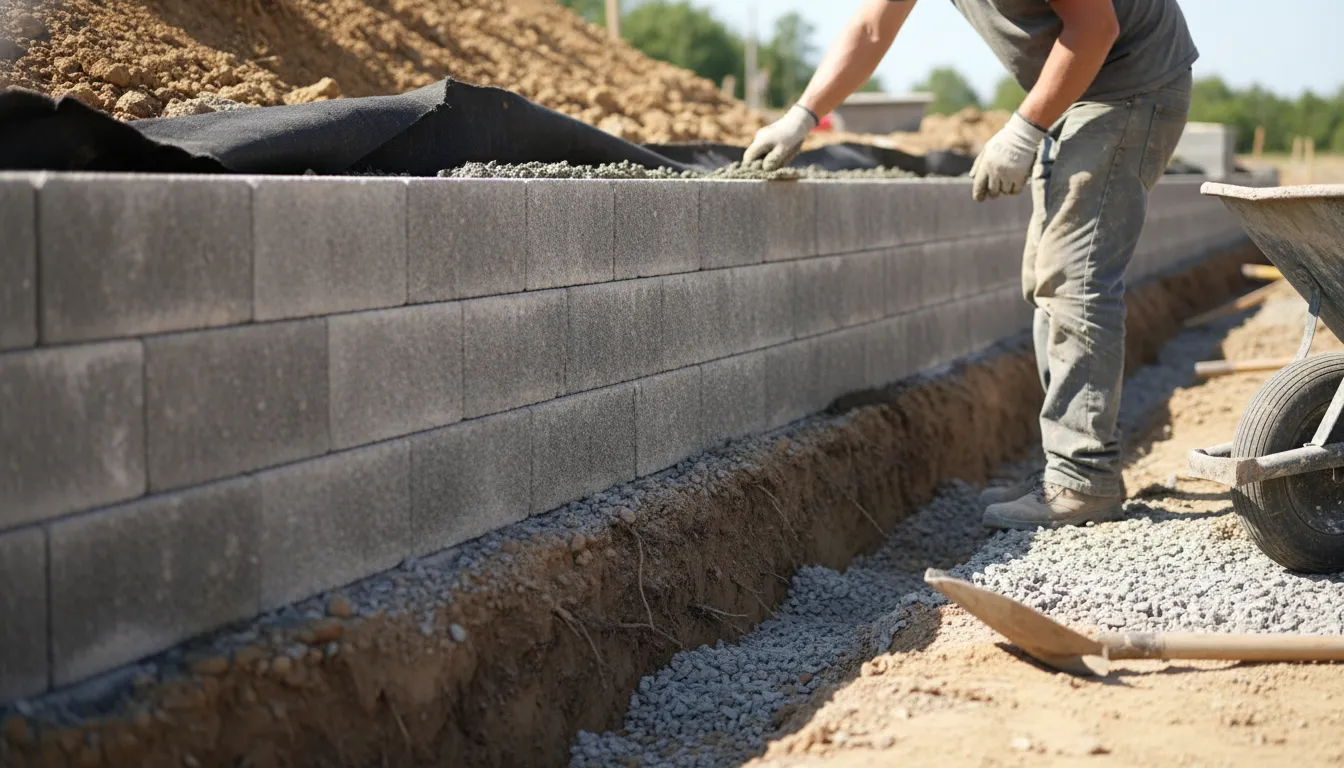
Retaining walls are both functional and aesthetic, turning sloped, unusable yards into flat, purposeful spaces like terraced gardens or patios. In Pawtucket, their design is heavily governed by the need to manage the very forces they are holding back: soil and water.
Why Drainage is Non-Negotiable: A retaining wall's primary enemy is water pressure. Without a way for water to escape, it builds up behind the wall (hydrostatic pressure), dramatically increasing the load and leading to bulging, cracking, or complete collapse. Every properly built retaining wall in this area must include:
- Perforated Drain Pipe: Installed along the base of the wall, behind the first course of blocks or stones.
- Gravel Backfill: The space behind the wall should be filled with clean, crushed stone (not soil), which allows water to flow freely down to the drain pipe.
- Weep Holes: Outlets that allow the water collected by the drain pipe to safely exit the front of the wall 13.
Frost Line Compliance: Any retaining wall over a certain height (often around 3-4 feet, but always check local code) will require a concrete footing. As with any foundation, this footing must extend below the 40-inch frost line to prevent the entire wall from being lifted by frost heave.
Understanding Project Costs in Pawtucket
Pricing for masonry and hardscape work varies significantly based on material selection, site complexity, accessibility, and the scope of necessary drainage work. The following are general estimates to help set expectations; a detailed, itemized quote from a local contractor will provide accurate figures for your specific project 14 15 16.
Patios and Walkways:
- Concrete Pavers: Installed costs typically range from $15 to $30+ per square foot. Factors like paver style (simple vs. intricate), pattern complexity, and the need for extensive base work or drainage will influence the final price 17 18.
- Natural Stone (e.g., Bluestone): As a premium material, natural stone installation is more expensive, often ranging from $30 to $50+ per square foot 19 20.
- Poured Concrete: A basic broom-finished concrete slab is generally the most budget-friendly surface. Stamped, colored, or stained concrete will cost more, moving it closer to the lower end of the paver price range 21.
Retaining Walls: Costs for walls are usually calculated per square foot of the wall's face. A short, simple segment wall will cost less per unit than a tall, curved, or terraced wall requiring deep footings and complex drainage. Installed costs can range from $40 to $80+ per square foot of wall face, with higher-end natural stone or complex designs at the upper end of the spectrum 22 23 24.
Frequently asked questions
Sources
Footnotes
-
Foundation Requirements for Rhode Island: Frost Line, Coastal - https://www.rockhouseconstruction.com/foundation-requirements-for-rhode-island-frost-line-coastal ↩
-
Discover the Art of Hardscaping in Rhode Island - https://www.landscapesolutionsri.com/discover-the-art-of-hardscaping-in-rhode-island/ ↩
-
The Complete Guide to Commercial Landscaping: Design, Maintenance, and Cost Savings - https://festivalturf.com/blog/commercial-landscaping/ ↩
-
What's Better for Rhode Island: Wood Deck or Stone Patio? - https://www.rockhouseconstruction.com/whats-better-for-rhode-island-wood-deck-or-stone-patio ↩
-
Mistakes Rhode Islanders Make When Building a Patio - https://www.rockhouseconstruction.com/mistakes-rhode-islanders-make-when-building-a-patio ↩
-
Patio Drainage Solutions for Your Rhode Island Backyard - https://www.rockhouseconstruction.com/patio-drainage-solutions-for-your-rhode-island-backyard ↩ ↩2
-
Gravel Delivery & Aggregates in Pawtucket, Rhode Island - https://mygravelmonkey.com/locations/rhode-island/pawtucket/ ↩
-
Mistakes Rhode Islanders Make When Building a Patio - https://www.rockhouseconstruction.com/mistakes-rhode-islanders-make-when-building-a-patio ↩
-
Residential Drainage Systems: Common Lawn ... - J&J Materials - https://jjmaterials.com/residential-drainage-systems-common-lawn-drainage-problems/ ↩
-
Raised Patios vs. Ground-Level Patios in Rhode Island - https://www.rockhouseconstruction.com/raised-patios-vs-ground-level-patios-in-rhode-island ↩
-
Patio Drainage Solutions for Your Rhode Island Backyard - https://www.rockhouseconstruction.com/patio-drainage-solutions-for-your-rhode-island-backyard ↩
-
How To Drain Low Spot in Yard, Do It Yourself, for Homeowners. Better than French Drain. - https://www.youtube.com/watch?v=4f6_O7NuOGM ↩
-
Retaining Wall Drainage Requirements in Rhode Island - https://www.rockhouseconstruction.com/retaining-wall-drainage-requirements-in-rhode-island ↩
-
Hardscaping and Landscaping | J and G Masonry | Rhode ... - https://www.jandgmasonry.com/ ↩
-
How Much Does Hardscaping Cost in 2024 for your home? - https://www.triadassociatesinc.com/how-much-does-hardscaping-cost-in-2024/ ↩
-
Blog | How Much Does Hardscaping Cost? A Comprehensive Breakdown - https://precisionlandscaping.ca/blog/how-much-does-hardscaping-cost ↩
-
Pavers vs. Concrete for Your Patio: Which is Better? - https://meadowslandscapes.com/pavers-vs-concrete-for-your-patio-which-is-better/ ↩
-
Paver vs. Concrete Patio: Compare & Choose (Jersey Shore) - https://jerseyshorepavers.com/paver-patio-vs-concrete-patio/ ↩
-
How Much Does a New Patio Cost? A Breakdown by Material ... - https://www.landscapesolutionsri.com/how-much-does-a-new-patio-cost-rhode-island/ ↩
-
Best Natural Stone for Pool Coping | Easy Cost Guide - https://petrosstone.com/best-natural-coping-stone-cost/ ↩
-
Picking Your Ideal Outdoor Flooring - https://backyard.exmark.com/video/discover-outdoor-flooring-ideas/ ↩
-
Retaining Wall Installation in Rhode Island: A Complete Guide - https://www.landscapesolutionsri.com/retaining-wall-installation-in-rhode-island-a-complete-guide/ ↩
-
Retaining Walls in RI: When to Build, Styles, & Maintenance - https://www.landscapesolutionsri.com/retaining-walls-in-ri/ ↩
-
A Comprehensive guide to backyard Hardscaping: Tips and Ideas - https://outdoormakeover.net/the-ultimate-guide-to-hardscaping-creating-durable-beauty-in-your-backyard/ ↩