Find the Best Hardscaping Contractors for Your Business
No obligation • Fast responses • Nationwide coverage

Why you can trust Landscape Atlas
Landscape Atlas is a leading United States resource for evaluating landscaping, lawn care, and outdoor service providers. Our team researches each category in depth, focusing on service quality, safety, and customer experience. Listings and rankings are based on independent criteria and user feedback, and companies cannot pay to influence our assessments or recommendations.
Search providers near you
Best Hardscaping Contractors in South Dakota Ranked
Hardscaping transforms your South Dakota property with durable, functional outdoor structures like patios, walkways, driveways, and retaining walls. These permanent installations add significant value and usability to your landscape, but in South Dakota's challenging climate, proper design and expert installation are non-negotiable for longevity. This guide helps you understand the key considerations for hardscaping projects in the state, from material selection to local regulations, so you can make informed decisions when planning your project.
Understanding Hardscape Projects in South Dakota
Hardscaping refers to the non-living, structural elements of your landscape. In South Dakota, this typically includes projects built to withstand the region's extreme weather, serving both practical and aesthetic purposes. Common installations are designed to manage the land, provide stable surfaces, and create defined outdoor living spaces.
The most popular projects include:
- Patios & Walkways: Often constructed from interlocking concrete pavers, natural stone, or stamped concrete to create durable, attractive surfaces for entertaining and circulation.
- Driveways: Upgraded from basic asphalt or concrete to more decorative and durable paver driveways, which can also offer better permeability.
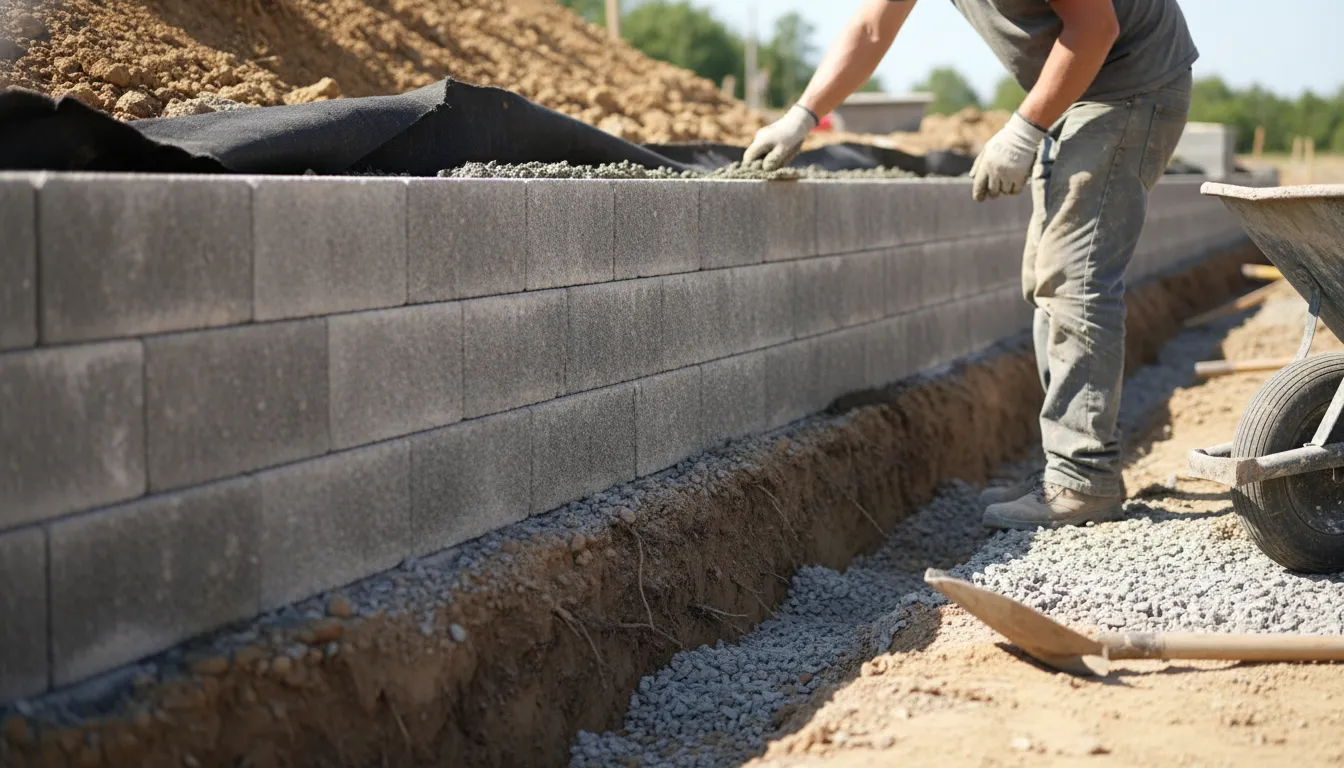
- Retaining Walls: Essential for managing sloped terrain, preventing soil erosion, and creating usable flat areas. These are frequently built with segmental concrete blocks or natural stone.
Each of these projects requires careful planning, with South Dakota's specific environmental and regulatory conditions in mind to ensure a successful, long-lasting result.
Climate Considerations: Building for South Dakota Winters
South Dakota's climate, characterized by hot summers and bitterly cold winters with significant freeze-thaw cycles, is the single most important factor in hardscape design and construction. A project that would succeed in a milder climate can fail quickly here without proper techniques.
The Freeze-Thaw Challenge
When water trapped in or under hardscape materials freezes, it expands. This expansion can cause pavers to heave, concrete to crack, and retaining walls to shift or bulge. The key to prevention lies beneath the surface. A robust, deep base is critical. For patios, walkways, and driveways, this often means excavating 8-12 inches of soil and replacing it with a compacted layer of gravel, followed by a leveling layer of sand. This base acts as a stable, well-draining foundation that resists movement.
Drainage is Paramount
Water must be directed away from hardscape structures and your home's foundation. Proper slope (or "pitch") is engineered into patios and walkways. For retaining walls, a crucial component is the inclusion of weep holes and drainage tile (perforated pipe) behind the wall to relieve hydrostatic pressure from groundwater. Without this, water buildup behind a wall during a spring thaw can cause catastrophic failure.
Material Selection for Durability
Choosing the right materials is a direct response to the climate:
- Concrete Pavers: High-quality, high-compressive strength pavers are manufactured to resist cracking from freeze-thaw cycles. Their interlocking design also allows for slight flexibility.
- Concrete Mixes: For poured concrete, air-entrained mixes are used, which create microscopic bubbles that give expanding water room to move without damaging the slab.
- Natural Stone: Dense, frost-resistant stones like certain granites and bluestones are excellent choices.
- Wall Blocks: Segmental retaining wall systems (like Allan Block or Versa-Lok) are engineered for strength and include built-in drainage considerations.
Investing in professional installation that prioritizes these climate-specific techniques saves money and hassle in the long run, preventing costly repairs or replacements 1.
Find the perfect hardscaping contractors for your needs
Get personalized recommendations and expert advice
Navigating Local Regulations and Building Codes
Before breaking ground on any significant hardscaping project, it's essential to understand local rules. Regulations exist to ensure safety, proper drainage, and adherence to community standards. Ignoring them can result in fines or being forced to remove a non-compliant structure.
Common Permit Triggers
Local city or county building codes often require permits for projects that:
- Retaining Walls: Most municipalities require a permit for any retaining wall over a certain height, typically 3 to 4 feet. Engineering may be required for taller walls.
- Driveways: Permits are common, especially if you are altering curb cuts or the entrance from a public right-of-way.
- Large Paved Areas: Projects over a certain square footage may trigger permits due to stormwater runoff implications.
- Structural Elements: Any project involving footings or significant excavation near property lines or utilities may need review.
Zoning and Setbacks
Zoning laws dictate where you can build on your property. Setbacks are the required distances a structure must be from property lines, easements, and streets. For example, a new patio or retaining wall may need to be several feet away from your neighbor's lot line. These rules vary widely between Sioux Falls, Rapid City, Aberdeen, and rural counties 2.
The Best First Step
Always contact your local city or county planning and zoning department before finalizing plans. They can provide you with the specific permit requirements, application forms, and setback information for your address. A reputable hardscaping contractor will also be familiar with the local codes in the areas they serve and can often manage the permit process for you.
Cost Considerations for Hardscaping in South Dakota
The cost of a hardscaping project in South Dakota varies significantly based on materials, project complexity, site accessibility, and labor. While upfront cost is a factor, remember that a properly installed hardscape is a long-term investment that enhances property value.
Here is a general overview of estimated cost ranges (materials and professional installation):
- Patios & Walkways: $10 - $25+ per square foot. Basic stamped concrete falls on the lower end, while intricate natural stone or high-end paver patterns can exceed the upper range.
- Driveways: $20 - $40+ per square foot. A standard concrete driveway is typically less expensive than a durable, permeable paver driveway, which requires more labor and material.
- Retaining Walls: $25 - $60+ per square foot (face area). Cost increases with wall height, length, and the need for engineered solutions or complex drainage. Simple, short garden walls cost less; tall, structural walls cost more 3 4 5.
Factors Influencing Your Final Price:
- Site Preparation: Is the area sloped, rocky, or covered in tree roots? Extensive excavation and grading add cost.
- Material Choice: Imported natural stone is more expensive than local quarry stone or concrete products.
- Project Scale & Design: Curves, patterns, steps, and integrated features like lighting or seating walls increase complexity and price.
- Drainage Work: The need for additional subsurface drainage systems or tie-ins to existing drainage will affect the budget.
- Access & Logistics: Easy access for machinery keeps costs down. Tight urban lots or rear yards with no gate access may require manual labor.
Getting multiple detailed quotes from established contractors is the best way to understand the market rate for your specific vision and location.
Choosing the Right Hardscaping Professional
Given the technical and permanent nature of hardscaping, selecting a qualified contractor is crucial. Look for a professional with specific experience building in South Dakota's climate.
Key credentials and questions to ask:
- Licensing & Insurance: Verify they are licensed to work in your city (if required) and carry both liability insurance and workers' compensation.
- Local Experience & Portfolio: Ask for photos of completed projects in your area, specifically ones that are several years old, to see how they have held up.
- Process & Materials: A trustworthy contractor will gladly explain their installation process, emphasizing base preparation, drainage plans, and the type of materials they use and why.
- References: Ask for and contact recent client references.
- Warranty: Inquire about workmanship warranties. A contractor confident in their climate-specific methods will stand behind their work.
Taking the time to choose the right partner ensures your investment becomes a durable, beautiful, and valuable part of your South Dakota home for decades to come.
Frequently asked questions
Sources
Footnotes
-
Living Landscapes in South Dakota: A Guide to Native ... - https://nrcs.usda.gov/plantmaterials/ndpmcbk7831.pdf ↩
-
TITLE 4 ZONING - Brown County South Dakota - https://www.brown.sd.us/sites/default/files/2024-04/202201title4zoning2.pdf ↩
-
Hardscaping Services: Patios, Walkways & Retaining Walls in ... - https://www.treefarminc.com/hardscaping ↩
-
Aberdeen South Dakota - Hardscapes - Dakotascape Outdoor Design - https://dakotascape.com/hardscapes ↩
-
Best Patio Cost Burlington MA 2025: Expert Guide - https://stevesservicesllc.com/patio-cost-burlington-ma/ ↩