Find the Best Land Clearing Contractors for Your Business
No obligation • Fast responses • Nationwide coverage

Why you can trust Landscape Atlas
Landscape Atlas is a leading United States resource for evaluating landscaping, lawn care, and outdoor service providers. Our team researches each category in depth, focusing on service quality, safety, and customer experience. Listings and rankings are based on independent criteria and user feedback, and companies cannot pay to influence our assessments or recommendations.
Search providers near you
Best Land Clearing Contractors in Alabama Ranked
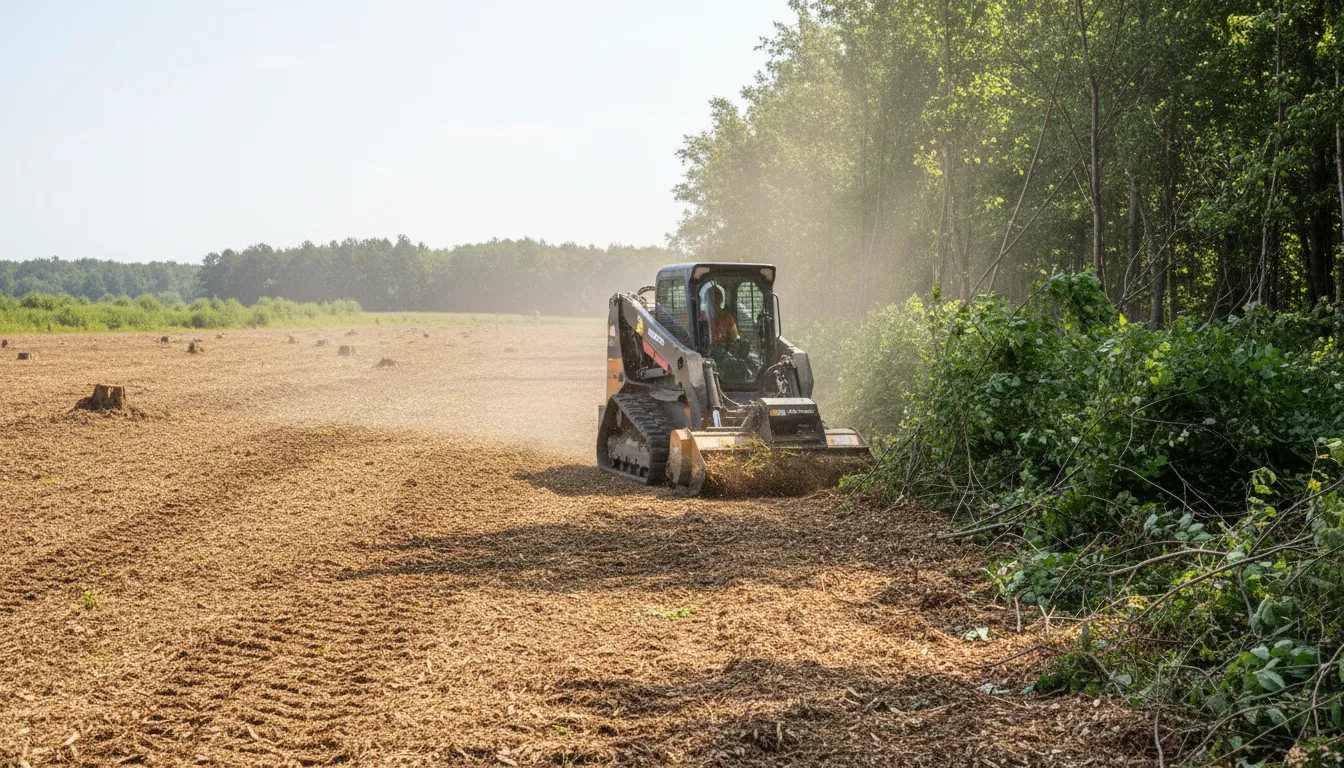
Land clearing is a significant first step for many property development, agricultural, or landscaping projects in Alabama. It involves the removal of trees, brush, stumps, and other obstacles to prepare a site for construction, farming, or other uses. Understanding the specific regulations, environmental protections, and cost factors in Alabama is crucial to ensure your project is compliant, cost-effective, and environmentally responsible. This guide provides the essential information you need to navigate land clearing in Alabama and connect with experienced local professionals who understand state and local requirements.
Understanding Alabama's Land Clearing Regulations
Before any machinery arrives on-site, it's imperative to understand the regulatory landscape. Alabama has established rules primarily to protect water quality from sediment runoff, which is the state's leading source of non-point source water pollution. The key regulatory body is the Alabama Department of Environmental Management (ADEM).
The primary rule is that any land-disturbing activity that will affect one acre or more of land generally requires a permit from ADEM1. This isn't just for massive commercial sites; it can apply to cumulative disturbances on residential lots. Along with the permit, you will need a site-specific Erosion and Sediment Control (ESC) Plan. This detailed plan must be approved by your local government-typically the county or city stormwater management office-before ADEM will issue the permit.
For projects disturbing less than one acre, you are not automatically exempt. Local municipal ordinances often have their own, sometimes stricter, requirements. Cities like Phenix City and Auburn have explicit policies requiring erosion control measures on any significant land-disturbing activity2. The first call for any property owner should be to their local planning or public works department to determine the exact requirements for their parcel.
Critical Environmental Protections: SMZs and Wetlands
Two of the most important environmental considerations are Stream Management Zones and wetlands.
- Stream Management Zones (SMZs): Alabama's Best Management Practices (BMPs) for forestry and land clearing mandate maintaining a vegetated buffer along all perennial and intermittent streams3. The minimum buffer is 35 feet, but this should be increased to 50 feet or more on steep slopes or highly erodible soils. The purpose of an SMZ is to filter out sediment and pollutants before they reach the water, stabilize banks, and provide shade and habitat for aquatic life 3. Clearing within an SMZ is heavily restricted and often prohibited.
- Wetlands: Federal and state laws provide strong protection for wetlands. Identifying wetlands requires professional assessment. Unauthorized clearing or filling of wetlands can result in severe penalties and costly restoration orders. If your property has low-lying, frequently saturated areas, a wetland delineation study is a necessary first step.
Implementing Effective Erosion Control
An approved ESC Plan will outline the specific Best Management Practices (BMPs) required for your site. Common and effective BMPs include4 5 6:
- Silt Fences: Temporary sediment barriers made of filter fabric installed downhill of disturbed areas.
- Sediment Basins/Traps: Small ponds designed to capture runoff and allow sediment to settle out before water leaves the site.
- Stabilized Construction Entrances: Using gravel pads to minimize mud being tracked onto public roads.
- Mulching or Seeding: Quickly applying straw mulch, hydroseed, or other ground cover to exposed soil to prevent erosion.
- Inlet Protection: Placing barriers around storm drain inlets to prevent sediment from entering the municipal drainage system.
The goal is to minimize the extent and duration of soil exposure. A reputable land clearing contractor will be familiar with these practices and will factor their installation and maintenance into the project plan and timeline.
Cost Factors for Land Clearing in Alabama
The cost to clear land in Alabama is highly variable and depends on several key factors. Prices are typically quoted per acre for larger tracts, while smaller residential lots may be priced by the hour or as a flat project fee.
- Vegetation Density and Type: This is the biggest cost driver. A lightly wooded lot with small pines and brush will cost significantly less than a densely forested acre with large hardwood trees and thick undergrowth.
- Stump Removal: Grinding or excavating stumps adds considerable expense. Some projects may only require "cut and leave" where trees are felled and left, while others need complete stump removal for construction.
- Terrain and Accessibility: Steep, rocky, or wet terrain is more challenging and time-consuming for equipment, increasing costs. Easy access for large machinery helps keep prices down.
- Debris Disposal: Hauling away or chipping brush and logs adds to the cost. Some contractors may offer to leave wood stacked for the owner's use.
- Permitting and Compliance: The time and materials needed to install and maintain required erosion controls are part of the project cost.
General Price Ranges (Per Acre):
- Lightly Wooded Land: $700 - $2,300
- Moderately to Densely Wooded Land: $3,400 - $6,200+7 8 9
- Small Lot / Per Project: For projects under an acre, costs can range from a few hundred to several thousand dollars depending on the scope.
Find the perfect land clearing contractors for your needs
Get personalized recommendations and expert advice
The Land Clearing Process: What to Expect
A well-executed land clearing project follows a logical sequence:
- Site Evaluation & Planning: A professional will assess your property, identify SMZs, wetlands, and other constraints, and discuss your end goals.
- Permitting & ESC Plan: For projects near or over one acre, this step is formal. Your contractor or a civil engineer can help prepare the necessary ESC Plan for local approval and ADEM permitting.
- Mobilization & Clearing: Equipment arrives. Clearing typically progresses from the interior outward, felling trees, and moving them to a processing area.
- Erosion Control Installation: BMPs like silt fences and sediment basins are installed before or concurrently with major earth disturbance.
- Stump Removal & Grading: Once vegetation is removed, stumps are addressed, and the site may be graded to the desired contour.
- Debris Management & Final Stabilization: Brush is chipped, logs are hauled or stacked, and all exposed soil is seeded and mulched as the final, crucial step to prevent erosion.
Choosing a Qualified Land Clearing Contractor in Alabama
Selecting the right professional is critical for a compliant and successful project. Look for a contractor who:
- Understands Local & State Regulations: They should be able to speak knowledgeably about ADEM permits, local ordinances, and BMPs.
- Has Proven Experience: Ask for references and examples of similar projects, especially those requiring formal ESC Plans.
- Carries Proper Insurance: Verify they have comprehensive liability and workers' compensation insurance.
- Uses Appropriate Equipment: They should have the right-sized machinery (e.g., excavators, bulldozers, forestry mulchers) for your specific job.
- Prioritizes Safety: This includes safety for their crew, your property, and adjacent utilities. For work near power lines, they must follow ANSI Z133 and OSHA standards10.