Find the Best Land Clearing Contractors for Your Business
No obligation • Fast responses • Nationwide coverage

Why you can trust Landscape Atlas
Landscape Atlas is a leading United States resource for evaluating landscaping, lawn care, and outdoor service providers. Our team researches each category in depth, focusing on service quality, safety, and customer experience. Listings and rankings are based on independent criteria and user feedback, and companies cannot pay to influence our assessments or recommendations.
Search providers near you
Best Land Clearing Contractors in Arkansas Ranked
Land clearing is the essential first step for many property development, agricultural, and wildfire mitigation projects in Arkansas. It involves the removal of trees, brush, stumps, and other obstacles to prepare a site for construction, farming, or restoration. Navigating the process successfully requires understanding state and local regulations, environmental protections, and cost factors. This guide provides a clear overview of what to expect when planning a site clearing project in The Natural State, helping you connect with knowledgeable local professionals who can ensure your work is done safely, legally, and efficiently.
Understanding Arkansas Land Clearing Regulations
Before any machinery arrives on-site, the most critical step is understanding the regulatory landscape. Arkansas has specific rules to manage erosion, protect waterways, and preserve sensitive habitats, which directly impact how clearing projects are planned and executed.
Permit Requirements: A permit is often mandatory, especially for projects disturbing more than one acre of land. You will likely need approval from the Arkansas Department of Energy & Environment (ADEQ) for an erosion and sediment control plan, known as a Stormwater Pollution Prevention Plan (SWPPP) 1. Additionally, local city or county planning departments frequently require their own grading and excavation permits. Always check with both state and local authorities before starting work.
Protected Areas: Arkansas's diverse ecosystems include wetlands, floodplains, and habitats for endangered species, such as the Ozark Hellbender. Clearing in or near these environmentally sensitive areas triggers strict regulations and may require additional permits or specialized planning to avoid significant fines and project delays.
Environmental Protection and Erosion Control
Given Arkansas's varied terrain and rainfall, controlling erosion and sediment runoff is a primary concern for regulators and a key marker of a professional clearing operation.
Mandatory Control Measures: State rules require projects to implement effective erosion protection measures to prevent excessive sediment from leaving the site 2. Common practices include:
- Installing silt fences and sediment basins to trap runoff.
- Creating stabilized construction entrances to minimize mud on roads.
- Using temporary or permanent vegetation to hold soil in place.
Post-Clearing Restoration: You often cannot simply clear land and leave it bare. Regulations frequently require vegetation restoration, which involves establishing permanent grasses, ground cover, or other plants to stabilize the soil permanently3 4. Final inspections may be required, and some jurisdictions might ask for a performance bond to ensure restoration is completed satisfactorily.
Cost Factors for Clearing Land in Arkansas
The price for lot clearing in Arkansas is not a flat fee; it varies significantly based on project scope, location, and site conditions. Understanding these variables helps in budgeting and comparing estimates.
Primary Cost Drivers:
- Vegetation Density and Type: Clearing a lightly brushed acre costs far less than clearing a densely forested one with large hardwood trees.
- Terrain and Accessibility: Steep slopes, rocky ground, or poor access for heavy equipment increase labor, time, and equipment costs.
- Debris Disposal: The method of dealing with removed material-whether it's chipped on-site, hauled away, burned (where permitted), or sold as timber-greatly affects the bottom line.
- Additional Services: Costs add up for stump grinding, root raking, final grading, or mulching.
General Price Ranges: While every project is unique, general estimates can provide a starting point5 6 7:
- Light Clearing (brush, small trees): $3,000 - $6,000 per acre.
- Heavy Clearing (dense forest, difficult terrain): $6,000 - $12,000+ per acre.
- Individual Tree Removal: $400 - $2,000+ per tree, depending on size and location.
- Stump Removal/Grinding: $150 - $800+ per stump.
Regional differences also exist. For example, clearing in the flat, often agriculturally focused Delta region may involve different challenges and cost structures compared to projects in the mountainous Ozarks8.
Find the perfect land clearing contractors for your needs
Get personalized recommendations and expert advice
The Professional Clearing Process
Working with an experienced land clearing contractor ensures the job is done correctly. A standard professional process typically includes:
- Site Consultation and Assessment: A reputable contractor will visit your property to evaluate vegetation density, terrain, soil type, and potential regulatory hurdles.
- Permit Guidance and Planning: They should help identify necessary permits from ADEQ and local authorities and may assist in developing the required erosion control plans.
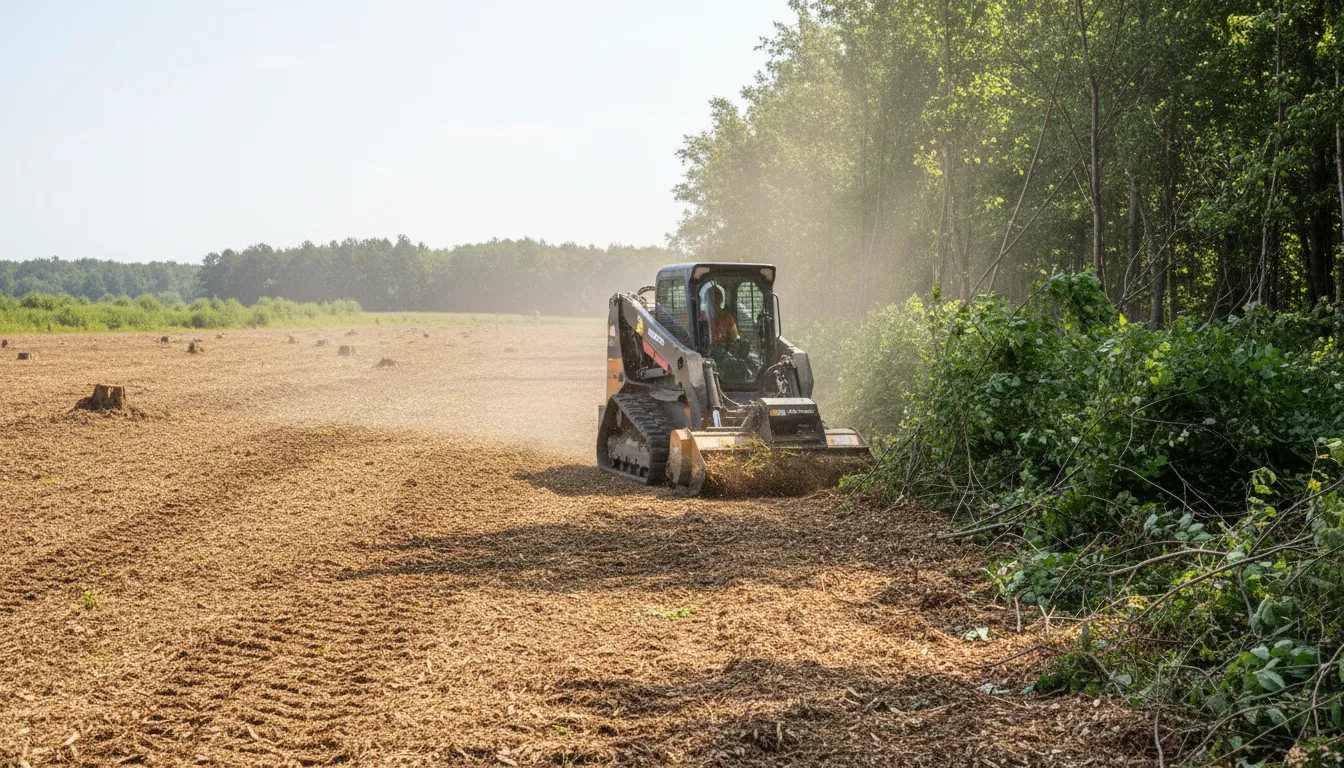
- Method Selection: Professionals use various methods, such as mechanical clearing with bulldozers and excavators, forestry mulching (which grinds vegetation into mulch on-site), or a combination of techniques suited to your goals and the environment.
- Execution with Controls: The physical clearing is performed while implementing the agreed-upon erosion and sediment controls, such as silt fences, to protect adjacent properties and waterways.
- Site Restoration and Cleanup: The process concludes with final grading, debris removal, and the establishment of any required permanent stabilization vegetation.
Special Considerations: Trees, Fire Mitigation, and Habitat
Tree Preservation: Local ordinances may protect certain mature or specimen trees. Even without a specific ordinance, a thoughtful contractor can often delineate areas to preserve for aesthetics, shade, or windbreaks, integrating clearing with your long-term landscape vision.
Wildfire Mitigation: In wildfire-prone areas, selective clearing to create defensible space around structures is a critical service. This involves strategically removing flammable vegetation while preserving soil stability, and costs can vary based on the slope and vegetation type9.
Habitat Awareness: A key part of responsible site preparation is identifying sensitive habitats. Disturbing areas with endangered species or critical wetlands without approval can lead to severe legal penalties. A thorough initial assessment is vital.
Choosing a Service Provider in Arkansas
Selecting the right partner is crucial for a smooth project. Look for providers who demonstrate:
- Local Knowledge: Familiarity with Arkansas's specific regulations, county-by-county permit processes, and common environmental concerns.
- Proper Licensing and Insurance: Verify they carry adequate liability insurance and workers' compensation.
- Transparent Estimates: Detailed quotes that break down costs for clearing, hauling, permits, and restoration, helping you avoid unexpected charges.
- Environmental Stewardship: A commitment to following best practices for erosion control and habitat protection, as outlined by the Arkansas Forestry Commission and other agencies10.
By understanding the regulations, costs, and process outlined here, you are well-equipped to plan your Arkansas land clearing project effectively. The next step is to consult with local professionals who can provide site-specific advice and precise estimates tailored to your property's unique characteristics.
Frequently asked questions
Sources
Footnotes
-
2016 Erosion and Sediment Control Design and Construction ... - https://ardot.gov/wp-content/uploads/2021/02/Erosion-and-Sediment-Control-Manual-12-6-16-Current.pdf ↩
-
15 CAR § 23-604. Erosion protection - Code of Arkansas Rules - https://codeofarrules.arkansas.gov/Rules/Rule?levelType=section&titleID=15&chapterID=42&subChapterID=95&partID=387&subPartID=3622§ionID=22363 ↩
-
15 CAR § 23-1106. Erosion protection - Code of Arkansas Rules - https://codeofarrules.arkansas.gov/Rules/Rule?levelType=section&titleID=15&chapterID=42&subChapterID=95&partID=387&subPartID=3627§ionID=22392 ↩
-
Grading and Excavation Code - Sherwood, AR - https://www.sherwoodar.gov/DocumentCenter/View/40/Grading-and-ExcavationCode-PDF ↩
-
Commercial Land Clearing Guide - https://strongholdtexas.com/a-complete-guide-to-commercial-land-clearing/ ↩
-
Arkansas Land Clearing Permits And Associated Fees ... - https://markslandclearing.com/all-about-arkansas-land-clearing-pricing/arkansas-land-clearing-permits-and-associated-fees-explained/ ↩
-
Arkansas Residential Vs Commercial Clearing Price Differences ... - https://markslandclearing.com/all-about-arkansas-land-clearing-pricing/arkansas-residential-vs-commercial-clearing-price-differences-explained/ ↩
-
Arkansas Delta Region Land Clearing Expenses Explained - https://markslandclearing.com/all-about-arkansas-land-clearing-pricing/arkansas-delta-region-land-clearing-expenses-explained/ ↩
-
Arkansas Fire Mitigation Clearing Costs Explained - https://markslandclearing.com/all-about-arkansas-land-clearing-pricing/arkansas-fire-mitigation-clearing-costs-explained/ ↩
-
Arkansas Forestry Commission Land Clearing Recommendations ... - https://markslandclearing.com/all-about-arkansas-land-clearing-pricing/arkansas-forestry-commission-land-clearing-recommendations-for-better-practices/ ↩