Find the Best Land Clearing Contractors for Your Business
No obligation • Fast responses • Nationwide coverage

Why you can trust Landscape Atlas
Landscape Atlas is a leading United States resource for evaluating landscaping, lawn care, and outdoor service providers. Our team researches each category in depth, focusing on service quality, safety, and customer experience. Listings and rankings are based on independent criteria and user feedback, and companies cannot pay to influence our assessments or recommendations.
Search providers near you
Best Land Clearing Contractors in Connecticut Ranked
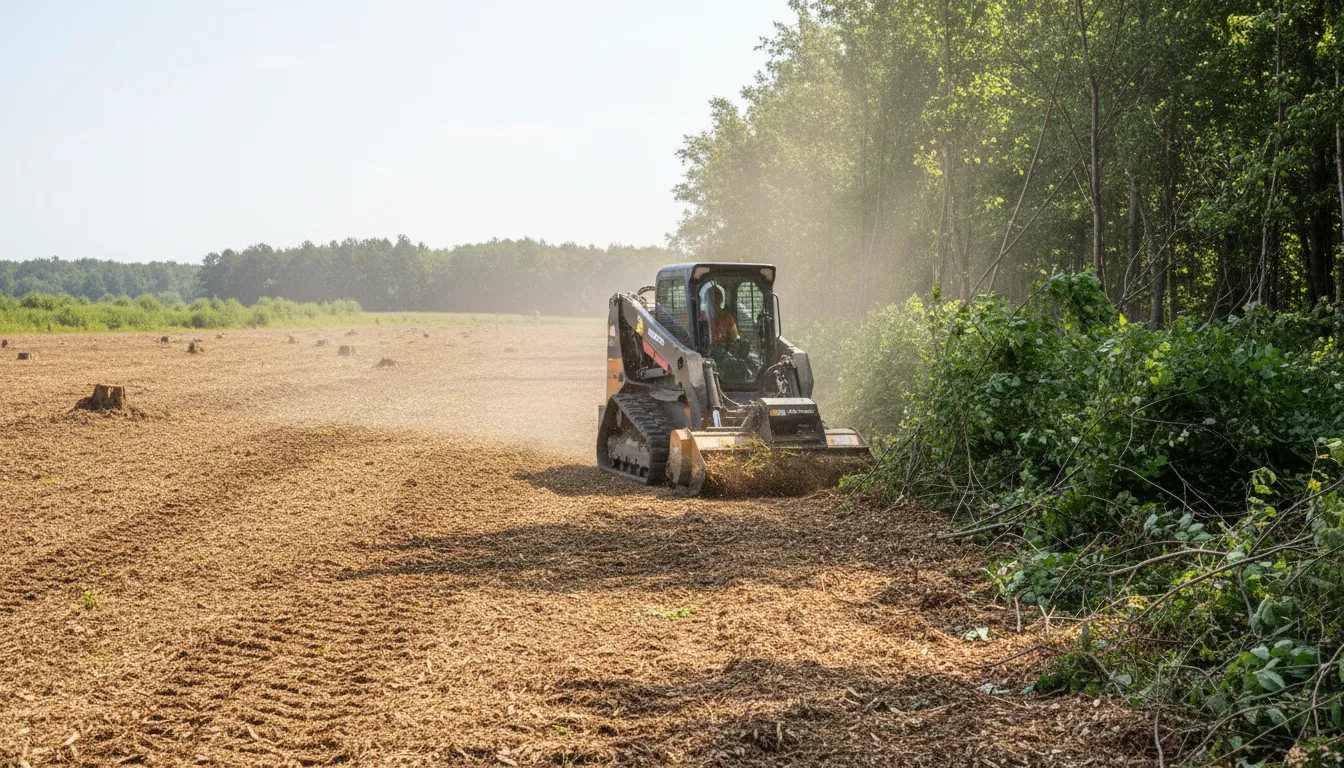
Land clearing is the process of removing trees, brush, stumps, and other obstacles to prepare a site for construction, agriculture, or landscaping. In Connecticut, this work is more than just heavy machinery; it involves navigating a complex web of state and local environmental regulations designed to protect the state's delicate ecosystems, water quality, and scenic character. This guide explains the key considerations, rules, and costs for land clearing projects in Connecticut, helping you plan effectively and connect with experienced local professionals who understand the regulatory landscape.
Understanding Connecticut's Regulatory Framework
Before any equipment arrives on-site, understanding the permitting and regulatory requirements is the most critical step. Connecticut has stringent rules to minimize erosion, protect water resources, and preserve valuable trees.
Local Permits and Zoning: Your first point of contact should always be your town's Planning, Zoning, and/or Conservation Department 1 2. Municipalities often have their own ordinances that are stricter than state guidelines. These can include:
- Tree Removal Permits: Often required for removing trees on municipal property or within designated zones.
- Zoning Approvals: Necessary for any clearing associated with new development, lot subdivision, or significant grading.
- Conservation Commission Review: Mandatory for work near wetlands, watercourses, or steep slopes.
State Guidelines (CT DEEP): The Connecticut Department of Energy and Environmental Protection (DEEP) sets the baseline standards. Key regulations include:
- Erosion and Sediment Control Plans (ESCPs): An ESCP is required for any project that will disturb one-half acre or more of land 3. For sites larger than 5 acres, the project must be registered with the DEEP 3. These detailed plans outline how silt fencing, sediment basins, and stabilization measures will be used to prevent soil from leaving the site.
- Forest Practices Act: Commercial logging operations require certification from the DEEP 4. This ensures sustainable practices are followed.
- Protected Resources: State guidelines emphasize avoiding disturbance to wetlands, streams, and areas with slopes over 25% 5. Special rules also govern vegetation management near utility lines 6.
Site Assessment and Ecological Considerations
A responsible clearing project in Connecticut starts with a thorough site assessment to identify what needs to be removed and, just as importantly, what should be preserved.
Identifying Sensitive Areas: A professional will map out:
- Wetlands and Watercourses: These are protected by state and federal law. Work within a regulated area requires specific permits from the local conservation commission and/or DEEP.
- Steep Slopes: Clearing on slopes increases erosion risk dramatically and often faces stricter scrutiny.
- Specimen Trees: Connecticut encourages the preservation of mature, high-value trees like oaks, beech, and hickory 7. Their root systems also play a vital role in soil stability.
Designing for Minimal Impact: The goal is to limit disturbance only to the area necessary for the project's purpose. This "phased" or "targeted" approach preserves natural vegetation buffers, which are your best natural defense against erosion and sediment runoff 8 9.
The Erosion and Sediment Control Plan (ESCP) Process
For projects over half an acre, the ESCP is not a suggestion-it's a legal requirement. Here's what it entails:
Plan Development: A qualified professional (often a civil engineer or certified erosion and sediment control specialist) must prepare the plan. It includes site maps, sequence of construction operations, and detailed descriptions of all control measures to be installed and maintained.
Key Control Measures: The plan will specify practices such as:
- Silt Fencing: Placed downhill from disturbed areas to filter sediment.
- Sediment Basins/Traps: Small ponds that capture runoff and allow sediment to settle.
- Stabilization: Seeding, mulching, or using erosion control blankets on exposed soil immediately after grading.
- Entrance/Exit Stabilization: Using stone pads to prevent tracking mud onto public roads.
Certification and Approval: The completed ESCP must be certified as adequate by the preparer. It is then submitted for approval to the local enforcing authority (often the town engineer or land use office) before work begins 10.
Find the perfect land clearing contractors for your needs
Get personalized recommendations and expert advice
Cost Factors for Land Clearing in Connecticut
Costs can vary enormously based on site conditions. Statewide averages provide a starting point, but a site-specific quote is essential.
Primary Cost Drivers:
- Vegetation Density: Light brush clearing is far less expensive than removing dense woodland.
- Tree Size and Stumps: Large-diameter trees and the need for stump grinding or removal add significant cost and time.
- Terrain and Accessibility: Steep, rocky, or wet sites are more challenging and require specialized equipment.
- Disposal: Hauling away debris (brush, logs, stumps) adds to the cost, though some material may be chipped for mulch or sold as firewood.
- Permitting and Planning: The cost of engineering for an ESCP and permit fees must be factored into the total project budget.
Estimated Cost Ranges: These are broad estimates; always get multiple local quotes 11.
- Per Acre (Light Brush/Grass): $700 - $2,000
- Per Acre (Heavily Wooded): $3,500 - $8,000+
- Per Square Foot: $1 - $2 for relatively flat land with small trees, $6 - $8+ for large trees, rocky terrain, or steep slopes.
Hiring a Qualified Professional
Given the regulatory complexity, hiring an experienced contractor is crucial. Look for a provider who:
- Understands Local Laws: They should be familiar with your town's specific zoning and conservation rules.
- Has DEEP Experience: They can navigate state guidelines and help with ESCP preparation if needed.
- Carries Proper Insurance: Verify they have general liability and workers' compensation insurance.
- Provides Detailed Quotes: A good quote breaks down costs for clearing, grubbing, stump removal, grading, and debris disposal separately.
- Emphasizes Preservation: They should discuss options to preserve specimen trees and natural buffers.
Final Checklist Before You Begin:
- Contacted local Planning/Zoning and Conservation Commission.
- Had a licensed surveyor mark property boundaries.
- Identified wetlands or watercourses on-site.
- Determined if an ESCP is needed (>1/2 acre disturbance).
- Obtained written quotes and verified contractor licenses/insurance.
- Secured all required local and state permits.
Frequently asked questions
Sources
Footnotes
-
Municipal Regulation of Forest Practices - CGA.ct.gov - https://www.cga.ct.gov/2006/rpt/2006-R-0242.htm ↩
-
Preparing For Tree Removal in Connecticut - What to Know - https://www.rayzorsedgetreeservice.com/preparing-for-tree-removal/ ↩
-
Chapter 1 − Purpose and Function of the Guidelines - CT.gov - https://portal.ct.gov/-/media/DEEP/water/water_quality_management/Guidance/SESCG_2023_1_2.pdf ↩ ↩2
-
Laws Affecting Forestry Operations - CT.gov - https://portal.ct.gov/-/media/DEEP/forestry/best_management_practices/DLawsAffectingForestryOperationspdf.pdf ↩
-
Chapter 4 - CT.gov - https://portal.ct.gov/-/media/DEEP/water_regulating_and_discharges/stormwater/manual/Chapter4pdf.pdf ↩
-
Utility Tree Trimming and Vegetation Management Laws - https://www.cga.ct.gov/2021/rpt/pdf/2021-R-0024.pdf ↩
-
2002 Connecticut Guidelines for Soil Erosion and Sediment Control - https://portal.ct.gov/-/media/DEEP/water/sesc/secsappendixakpdf.pdf ↩
-
Vegetation, Landscape & DRAINAGE preservation - https://norwalkct.gov/DocumentCenter/View/29587/Zoning-Reg-flyer---grading ↩
-
Chapter 5 − The Functional Groups and Measures - CT.gov - https://portal.ct.gov/-/media/DEEP/water/water_quality_management/Guidance/SESCG_2022_Draft_5.pdf ↩
-
Chapter 3 − Erosion and Sediment Control Plans - CT.gov - https://portal.ct.gov/-/media/DEEP/water/water_quality_management/Guidance/SESCG_2022_Draft_3_4.pdf ↩
-
Land Clearing Cost Per Square Foot: Why $1-$8 Only Tells Half the ... - https://www.bucktowngradingandconstruction.com/land-clearing-cost-per-square-foot-why-1-8-only-tells-half-the-story/ ↩