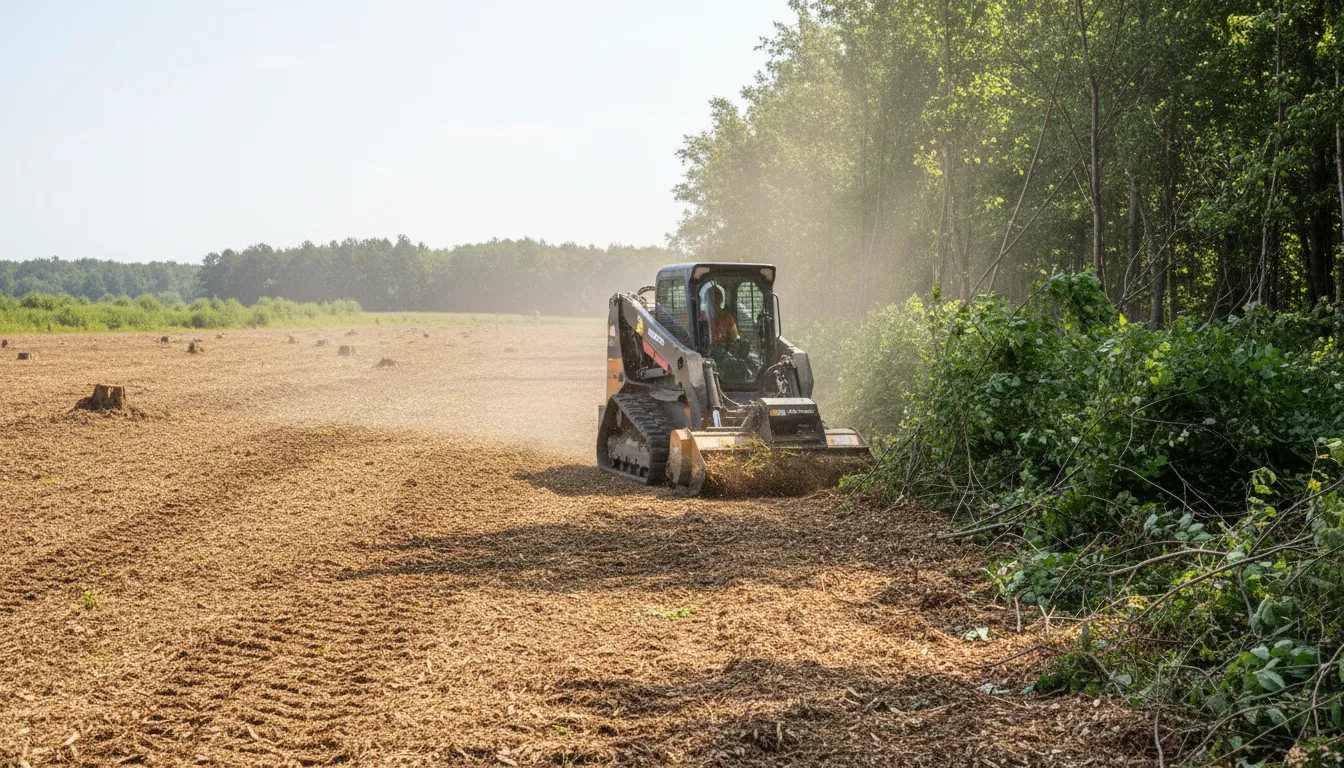
Find the Best Land Clearing Contractors for Your Business
No obligation • Fast responses • Nationwide coverage

Why you can trust Landscape Atlas
Landscape Atlas is a leading United States resource for evaluating landscaping, lawn care, and outdoor service providers. Our team researches each category in depth, focusing on service quality, safety, and customer experience. Listings and rankings are based on independent criteria and user feedback, and companies cannot pay to influence our assessments or recommendations.
Search providers near you
Best Land Clearing Contractors in Hawaii Ranked
Preparing land for a new home, agricultural use, or simply reclaiming your property from overgrowth in Hawaii is a unique undertaking. The state's sensitive ecosystems, strict environmental regulations, and diverse terrain make professional guidance essential. This resource connects you with local experts who understand the specific permitting, ecological, and practical challenges of site clearing across the Hawaiian Islands, ensuring your project is done correctly, safely, and in compliance with all local and state rules.
Starfarm Tree Service Hawaii
Honolulu, HI
Starfarm Tree Service Hawaii provides tree trimming, removal, stump grinding, and land clearing services in Honolulu, HI. They specialize in eco-conscious tree care, including non-toxic, bee-friendly Coconut Rhinoceros Beetle (CRB) removal. The company is fully licensed and insured, serving residential and commercial properties with a focus on safety and environmental care.
Aloha hydroseed
Keolu Dr, Kailua, HI 96734
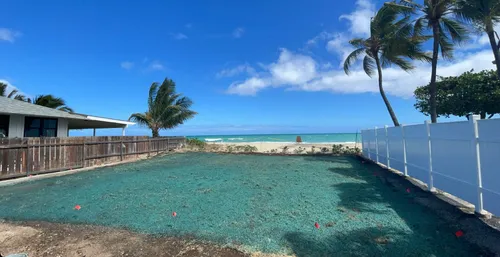
Aloha Hydroseed is a lawn care company based in Honolulu, HI, specializing in hydroseeding as a cost-effective alternative to sod installation. They provide services including lawn fertilization, weed control, yard drainage, grading, sprinkler installation and repair, irrigation, land clearing, and brush removal. Their hydroseeding process involves thorough site preparation, irrigation setup, and fertilizing to promote healthy grass growth, with expertise in various grass types such as Eltoro Zoysia, St Augustine, Bermuda, and Seashore Pestpalm. The company emphasizes proper watering and weed management to ensure successful lawn establishment.
Glad's Landscaping & Tree Trimming Inc.
41-830 Mahiku Pl, Waimanalo, HI 96795
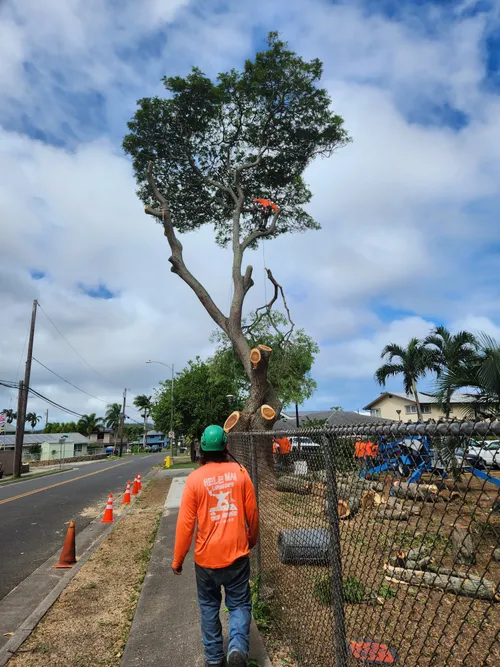
Glad's Landscaping & Tree Trimming Inc. is a family-owned business serving Honolulu, HI, since 1975. They provide tree services including removal, stump grinding, and trimming, as well as land clearing and landscaping. Their certified arborists and landscaping crew handle projects for government, corporate, and private clients, using specialized equipment like excavators, cranes, and skid steers. The company also manages power line clearance and offers tree sculpting and coconut removal services.
Treescape Hawaii
6202B Ibis Ave, Ewa Beach, HI 96706
Treescape Hawaii is a full-service tree and landscaping company based in Honolulu, HI. Serving Oahu since 2000, they provide a range of services including tree pruning, removal, stump grinding, land clearing, brush removal, landscaping, and hardscaping such as pavers and retaining walls. The company has over two generations of experience and offers customized solutions for residential, commercial, and municipal clients. Treescape Hawaii emphasizes safety, professionalism, and keeping clients informed throughout their projects.
A&K Landscape Services, LLC
Honolulu, HI
A&K Landscape Services, LLC is a full-service landscaping company based in Honolulu, HI, serving residential, commercial, and resort properties across Oahu. Their offerings include landscape design, installation, and maintenance, along with specialized services such as irrigation, low voltage lighting, large tree transplanting, drainage solutions, and hardscaping features like pavers and natural stone. With over 10 years of industry experience, A&K emphasizes quality workmanship and works closely with clients to meet their landscaping needs.
Understanding Hawaii's Land Clearing Regulations
Land clearing in Hawaii is more than just removing vegetation; it's a regulated activity designed to protect the islands' fragile environment. The process is governed by a combination of state and county rules that vary based on your property's location, size, and the scope of your project.
Key activities like grubbing (uprooting vegetation and roots) and grading (moving earth to alter topography) often require formal approval, especially for larger projects. For instance, significant disturbance, such as clearing over 15,000 square feet for development, typically triggers permit requirements. The most critical first step is determining if your land falls within a state Conservation District, as work in these areas requires a special permit from the Department of Land and Natural Resources (DLNR) and involves the strictest level of review.
The Permit Process: County and State Coordination
Navigating the permit landscape is a fundamental part of planning your project. You will likely need to coordinate with both your county planning department and state agencies.
- County Permits: For most projects in Urban or Agricultural districts, your county (Honolulu, Maui, Kauaʻi, or Hawaiʻi) will be your primary point of contact. They issue permits like Grading and Grubbing Permits or Site Development Permits. Counties enforce their own codes regarding erosion control, drainage, and vegetation removal.
- State Permits: The DLNR's Office of Conservation and Coastal Lands (OCCL) manages permits for any land-disturbing activity within State Conservation Districts. A Conservation District Use Permit (CDUP) is mandatory here and involves a detailed application assessing environmental impact.
- Shoreline Rules: Projects near the ocean may also require a Special Management Area (SMA) Permit from the county, adding another layer of review to protect coastal resources.
Starting with a call to your local county planning department is the best way to identify exactly which permits apply to your specific situation.
Protecting Native Ecosystems and Avoiding Invasive Species
Hawaii is home to countless endemic plant species found nowhere else on Earth. Regulations strongly prioritize the protection of these native plants. Removing protected species without authorization is illegal 1. A qualified professional can conduct a site assessment to identify any sensitive flora before work begins.
Furthermore, the spread of invasive plant species is a major ecological threat. The law prohibits the introduction or propagation of invasive species. As part of a responsible clearing project, replanting disturbed areas with approved native or non-invasive plants is often a permit condition to prevent erosion and restore habitat 2. Your project plan should include a strategy for what happens after the clearing is complete.
Mandatory Erosion and Sediment Control Plans
Given Hawaii's steep slopes and heavy rainfall, controlling erosion and preventing sediment from entering streams and the ocean is a top priority. For any permitted land disturbance, you are required to have an approved Erosion and Sediment Control Plan (ESCP).
This plan is not a suggestion-it's a mandatory document that details how you will manage stormwater runoff during and after construction. It must outline the use of Best Management Practices (BMPs) such as:
- Silt fences and silt curtains to trap sediment.
- Mulching and temporary seeding to stabilize bare soil.
- Sediment basins to capture runoff.
- Construction entrances to keep mud off roads.
The plan must also address long-term, post-construction water quality through concepts like Low-Impact Development (LID) 3. Hiring a specialist to prepare and implement your ESCP is a standard and necessary part of a compliant project in Hawaii.
Find the perfect land clearing contractors for your needs
Get personalized recommendations and expert advice
Cost Factors for Land Clearing in Hawaii
The cost to clear land in Hawaii varies dramatically based on several key factors. While mainland averages provide a baseline, island-specific challenges like access, vegetation density, and regulatory costs play a huge role.
- Project Scale & Vegetation Density: A simple clearing of grass and light brush on a flat, accessible acre may start around $1,200 to $4,000 4. However, dense jungle, large trees (
ōhia, koa), or numerous stumps can escalate costs to $5,000 or more per acre. Small, selective clearing of a 500-square-foot area for a garden might cost a few hundred dollars in labor 4 5. - Equipment and Labor: The type of equipment needed-from handheld brush cutters for sensitive areas to tracked mulchers, excavators, or bulldozers for larger tracts-significantly impacts the price. Labor costs in Hawaii are also typically higher than the national average.
- Site Access and Slope: Difficult access for heavy machinery or steep, unstable slopes will increase time, complexity, and cost.
- Permitting and Compliance: Don't forget to budget for permit application fees, potential consulting fees for ecological surveys or ESCP design, and the cost of implementing required erosion controls like silt fencing. These are not optional extras but integral parts of the project cost.
Hiring the Right Professionals for the Job
Given the complexities, choosing the right team is critical for a successful and legal project.
- Site Assessment & Planning: Start with a consultant or contractor who can assess your land, identify regulatory constraints (Conservation District, protected species), and outline a realistic path forward.
- Specialized Contractors: For the physical clearing, look for contractors with extensive local experience. They should understand how to operate equipment on Hawaiian terrain and handle local vegetation.
- Arborist for Tree Work: If your project involves trees, always hire an ISA Certified Arborist. They can determine if a tree is protected, recommend removal or preservation, and ensure the work is done safely without harming surrounding trees.
- Erosion Control Specialist: For any project requiring an ESCP, you may need a civil engineer or specialized environmental contractor to design and install the proper controls 6.
A qualified local provider will view your project through the necessary lenses of regulation, ecology, and practical execution.
Best Practices for a Successful Project
To navigate your land clearing project smoothly, follow these steps:
- Identify Your Land Type: Confirm your property's zoning (e.g., Urban, Agricultural, Conservation) with your county and check with the DLNR-OCCL for Conservation District status 7 8.
- Consult Early: Engage a local professional during the initial planning phase, not after you've run into a regulatory issue.
- Secure Permits First: Never begin clearing work before having all necessary approvals in hand. Fines for unpermitted work can be substantial.
- Plan for Erosion Control: Integrate your ESCP and BMPs into the project from day one. Temporary controls should be installed before any ground is broken 9 10.
- Budget Comprehensively: Include all costs-permits, professional services, actual clearing, erosion controls, and site restoration (replanting).
By respecting Hawaii's unique environment and regulations, you can complete your land clearing project effectively while contributing to the preservation of the islands' natural beauty.
Frequently asked questions
Sources
Footnotes
-
Item K-2 - Department of Land and Natural Resources - Hawaii.gov - https://dlnr.hawaii.gov/wp-content/uploads/2025/09/K-2.pdf ↩
-
HAR§13-5 - Department of Land and Natural Resources - https://dlnr.hawaii.gov/occl/files/2013/08/HAR-13-5-2021.pdf ↩
-
Erosion & Sediment Control Plans - Honolulu.gov - https://www.honolulu.gov/swq/wp-content/uploads/sites/32/2023/10/Erosion_and_Sediment_Control_Plans_Booklet_Reduced_Size.pdf ↩
-
How Much Does it Cost to Clear Land in 2026? - Lawn Love - https://lawnlove.com/blog/land-clearing-cost/ ↩ ↩2
-
Land Clearing Cost Per Acre: A Complete Guide - Jack Cooper - https://www.jackcooper.com/land-clearing-cost-per-acre-a-complete-guide/ ↩
-
§ 18A-1.6 Erosion and sediment control plans. - https://codelibrary.amlegal.com/codes/honolulu/latest/honolulu/0-0-0-17519 ↩
-
ENF - Department of Land and Natural Resources - https://dlnr.hawaii.gov/wp-content/uploads/2018/06/K-2.pdf ↩
-
Department of Land and Natural Resources - Hawaii.gov - https://dlnr.hawaii.gov/wp-content/uploads/2024/09/K-1.pdf ↩
-
state of hawaii - https://files.hawaii.gov/dlnr/meeting/submittals/140411/K-3.pdf ↩
-
SECTION 201 - CLEARING AND GRUBBING - https://hidot.hawaii.gov/highways/files/2013/01/201A__Clearing-and-Grubbing__Print.pdf ↩