Find the Best Land Clearing Contractors for Your Business
No obligation • Fast responses • Nationwide coverage

Why you can trust Landscape Atlas
Landscape Atlas is a leading United States resource for evaluating landscaping, lawn care, and outdoor service providers. Our team researches each category in depth, focusing on service quality, safety, and customer experience. Listings and rankings are based on independent criteria and user feedback, and companies cannot pay to influence our assessments or recommendations.
Search providers near you
Top Land Clearing Contractors in Kansas City, Kansas Ranked
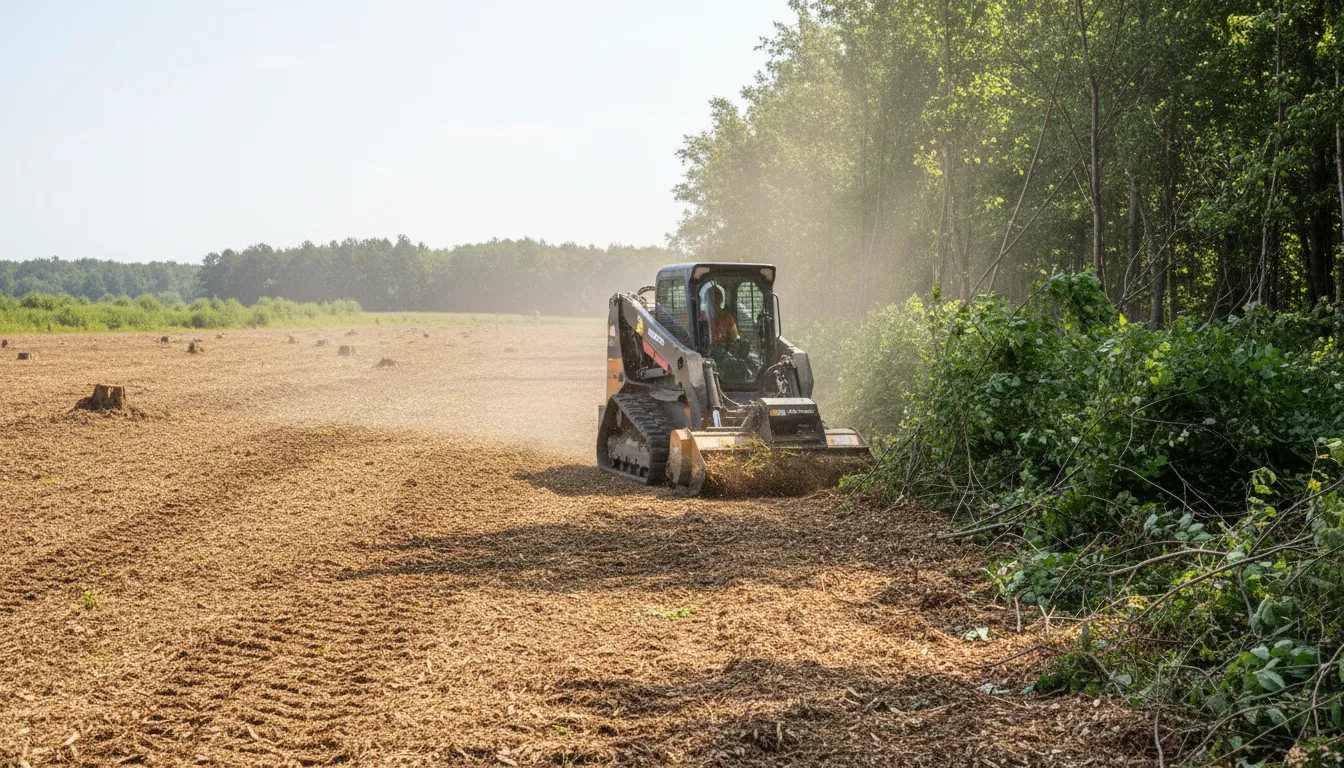
Land clearing is the process of removing trees, brush, stumps, and other obstacles from a piece of land to prepare it for construction, agriculture, or landscaping. In Kansas, this work is more than just heavy machinery; it involves navigating specific local regulations, protecting the environment, and managing soil stability. Understanding the rules and best practices is crucial to avoid fines, protect waterways, and ensure your project is successful. This guide provides the essential information you need to plan your land clearing project in Kansas and connect with qualified local professionals who understand these requirements.
Timberline Tree Services
5751 Mccoy St, Kansas City, MO 64133
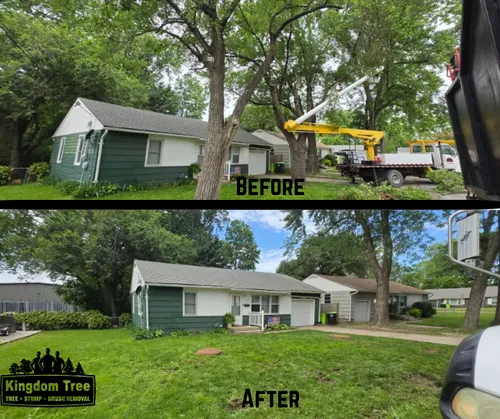
Timberline Tree Services is a family-owned tree care company based in Kansas City, MO. Founded in 2023, they provide a range of services including tree trimming, tree removal, stump grinding, brush removal, and land clearing. The company uses modern equipment like grapple saws to safely remove large trees piece by piece, and they also offer emergency storm response services to address urgent tree damage. Timberline emphasizes safety, customer satisfaction, and honest practices in all their work.
Reliable Tree Service LLC
15050 W 138th St #3501, Olathe, KS 66062
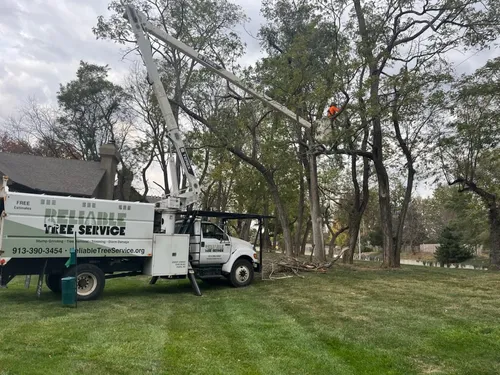
Reliable Tree Service LLC provides comprehensive tree care and land clearing services in Kansas City, MO. Their offerings include tree removal, stump grinding, pruning, and trimming, as well as land clearing and brush removal to prepare properties efficiently. They also provide emergency services for storm damage and hazardous trees, along with plant health care to support tree vitality. The company emphasizes safe and expert tree care to maintain and improve landscapes.
Arbor Masters of Parkville
5030 NW Waukomis Dr Suite B, Kansas City, MO 64151
Arbor Masters of Parkville is a third-generation, family-owned tree care company serving Kansas City, MO, and the surrounding Northland communities. With over 60 years of experience, they offer a wide range of services including tree removal, pruning, stump grinding, land clearing, pest and disease management, and tree preservation. The company is known for its certified arborists and provides 24/7 emergency tree services to address urgent situations such as storm damage. Arbor Masters merged with Walker Tree Service in 2024, continuing their legacy of trusted tree care in the area.
MP Outdoors
17301 Jamison Rd, Leavenworth, KS 66048
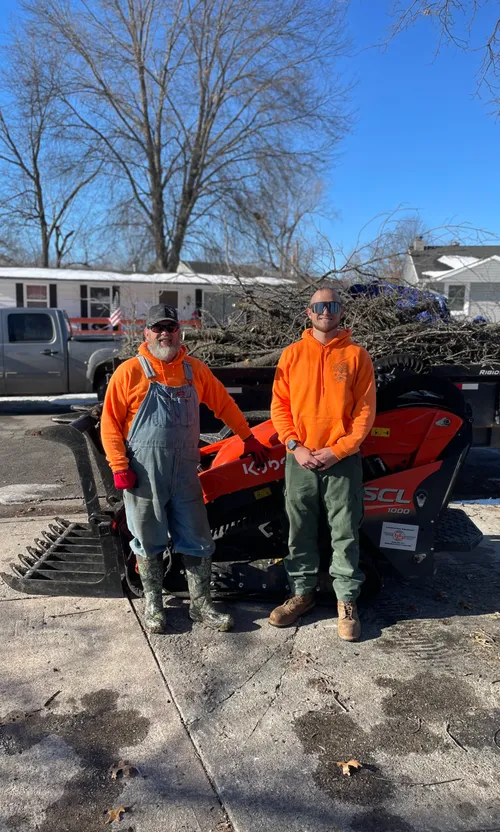
MP Outdoors is a veteran-owned and locally operated tree service company based near Kansas City, MO. They provide a range of services including tree removal, trimming, storm cleanup, land clearing, and brush removal. The company emphasizes safe and efficient tree care, including emergency tree removal and commercial spraying. MP Outdoors is family-run with two generations working together, bringing hands-on experience and a strong work ethic to their work in Leavenworth County and the surrounding area.
Arntson Thē Arborist
12342 Walmer St, Leawood, KS 66209
Arntson Thē Arborist is a tree service and land clearing contractor based in Kansas City, MO. They offer tree trimming, tree removal, stump grinding, brush removal, and storm debris clearing to help maintain healthy yards. Their services include storm removal available year-round, ensuring properties are cleared after severe weather. The company focuses on beneficial trimming to promote long-term tree health and yard cleanliness.
Understanding Kansas Land Clearing Regulations
Before any equipment arrives on-site, securing the proper permits is your first and most critical step. Kansas regulations are designed to minimize the environmental impact of disturbing the land, particularly concerning soil erosion and water quality.
Key Regulatory Bodies:
- Local Governments: Your city or county government almost always requires a land disturbance or grading permit. Requirements vary, so always check with your local planning or public works department first 1 2.
- Kansas Department of Health and Environment (KDHE): For projects that will disturb one acre or more of land, a state-level Construction Stormwater Permit from the KDHE is mandatory. This is a non-negotiable requirement for larger-scale clearing, farming, or development projects.
The permit application process forces you to plan for erosion control from day one. You'll need to demonstrate how you will prevent sediment from leaving your property and entering storm drains, streams, or neighboring land.
The Critical Role of Erosion and Sediment Control
In Kansas, controlling erosion isn't just a good idea-it's the law. When vegetation is removed, the exposed soil is vulnerable to being washed away by rain, leading to muddy waterways, clogged drains, and property damage. Your permit will require you to implement a plan, often called a Stormwater Pollution Prevention Plan (SWPPP) for larger sites 3.
Common Required Controls Include:
- Silt Fences: Temporary barriers of filter fabric installed downhill of disturbed areas to trap sediment.
- Straw Wattles: Long tubes of straw netting placed on slopes to slow water flow and filter sediment.
- Inlet Protection: Covers or barriers over storm drain inlets to prevent silt and debris from entering the municipal system.
- Seeding and Mulching: Quickly establishing new vegetation (grass) or applying mulch to bare soil is required for permanent stabilization after grading is complete.
Failure to install and maintain these controls can result in significant fines from both local and state authorities. Some municipalities, like Prairie Village, may even require a bond or surety to cover the potential cost of fixing any erosion problems that occur 4.
Protecting Kansas's Natural Resources During Clearing
Responsible land clearing in Kansas means being mindful of the existing ecosystem. Regulations often mandate the protection of certain natural features.
Tree Preservation: Many localities have guidelines for protecting mature, healthy trees. You may be required to establish a "Tree Protection Zone" - an area around the tree (often with a radius twice the spread of its branches) where no grading, trenching, or soil compaction is allowed. Simply clearing everything is rarely the approved approach.
Waterway Buffers: Special rules apply to clearing near streams, rivers, wetlands, and lakes. There are often mandatory setback requirements where vegetation must be left intact to filter runoff and stabilize banks. Disturbing these areas without specific permits can lead to severe penalties 5.
Minimizing the Footprint: A best practice, and often a permit condition, is to only clear the area absolutely necessary for your project. Limiting the extent of disturbed soil simplifies erosion control and reduces your environmental impact 6.
Find the perfect land clearing contractors for your needs
Get personalized recommendations and expert advice
Cost Factors for Land Clearing in Kansas
The cost to clear land in Kansas is highly variable and depends on several key factors. While online estimates can provide a starting point, getting quotes from local professionals is essential for an accurate budget.
Primary Cost Drivers:
- Acreage and Terrain: Larger, steeper, or rocky sites cost more to clear than small, flat parcels.
- Vegetation Density: A heavily wooded lot with large trees and thick brush is more expensive to clear than an overgrown field. Tree removal, stump grinding, and debris disposal add significant cost.
- Accessibility: Easy access for large equipment keeps costs down. Remote or tightly confined sites may require specialized, smaller equipment.
- Regulatory Requirements: The cost of permits, SWPPP development, and the installation of mandated erosion controls (silt fences, seeding, etc.) must be factored in. For a basic clearing and grubbing operation, costs can start around $1,200 per acre in some regions, but this is a bare minimum and can increase substantially with complexity.
Equipment Considerations: Many contractors use heavy equipment like bulldozers, excavators, and forestry mulchers. Rental rates for such machinery can range from $300 to over $1,800 per day, which influences the project's total cost 7. A professional will assess the site and choose the most efficient method.
The Land Clearing Process: Step-by-Step
A well-executed project follows a logical sequence. Here's what you can typically expect:
- Site Assessment & Planning: A professional will visit your property to evaluate vegetation, topography, drainage, and any protected areas. This is when the scope of work and necessary permits are determined.
- Permitting & Plan Submission: Your contractor or you will submit applications to the local jurisdiction and the KDHE (if over 1 acre), including the erosion control plan.
- Erosion Control Installation: Before any clearing begins, perimeter silt fences and other required sediment barriers are installed 8.
- Clearing & Grubbing: Trees are felled, brush is removed, and stumps are excavated or ground. This is the main physical work phase.
- Debris Management: Removed vegetation is either chipped on-site, hauled away, burned (where permitted), or piled for later disposal.
- Grading (if needed): The land is shaped to the desired contour for its future use.
- Final Stabilization: This critical final step involves seeding, mulching, or sodding all disturbed areas to establish permanent, erosion-resistant ground cover 9. Inspectors will check for this before considering the project complete.
Choosing a Land Clearing Professional in Kansas
Given the regulatory complexity, hiring an experienced local professional is strongly advised. Look for a service provider with:
- Proven Local Experience: They should be familiar with the permit processes in your specific county or city.
- Knowledge of KDHE Regulations: For projects over an acre, this is non-negotiable.
- Proper Insurance and Licensing: Verify they carry adequate liability and workers' compensation insurance.
- References and Portfolio: Ask for examples of past projects similar in size and scope to yours.
- Focus on Best Practices: They should proactively discuss erosion control, tree protection, and debris recycling/disposal.
Frequently asked questions
Sources
Footnotes
-
Understanding Land Clearing Regulations in Kansas - https://pblandmgt.com/understanding-land-clearing-regulations-in-kansas/ ↩
-
Erosion and Sediment Control | Johnson County Kansas - https://www.jocogov.org/department/public-works/permits-and-regulations/erosion-and-sediment-control ↩
-
KANSAS DEPARTMENT OF HEALTH AND ENVIRONMENT - https://www.kdhe.ks.gov/DocumentCenter/View/6304/Construction-Stormwater-Permit-Packet-PDF ↩
-
ARTICLE 5. - EROSION AND SEDIMENT CONTROL | Code of ... - https://library.municode.com/ks/prairie_village/codes/code_of_ordinances?nodeId=COOR_CHXIVST_ART5ERSECO ↩
-
Land Clearing Permits in Kansas & Missouri: What to Know - Tidd Tree - https://tiddtree.com/land-clearing-permits-kansas-missouri/ ↩
-
Land Disturbance - Johnson County Kansas - https://www.jocogov.org/department/public-works/permits-and-regulations/land-disturbance ↩
-
What is the cost per acre to clear and pile land in SE Kansas? - https://www.facebook.com/groups/1204160716406221/posts/2672641172891494/ ↩
-
Erosion Prevention and Sediment Control Field Guide - Merriam - https://www.merriam.org/files/sharedassets/public/v/1/comdev/stormwater/erosion-prevention-and-sediment-control-field-guide.pdf ↩
-
Soil Erosion | Bel Aire, KS - https://www.belaireks.gov/187/Soil-Erosion ↩