Find the Best Land Clearing Contractors for Your Business
No obligation • Fast responses • Nationwide coverage

Why you can trust Landscape Atlas
Landscape Atlas is a leading United States resource for evaluating landscaping, lawn care, and outdoor service providers. Our team researches each category in depth, focusing on service quality, safety, and customer experience. Listings and rankings are based on independent criteria and user feedback, and companies cannot pay to influence our assessments or recommendations.
Search providers near you
Best Land Clearing Contractors in Minnesota Ranked
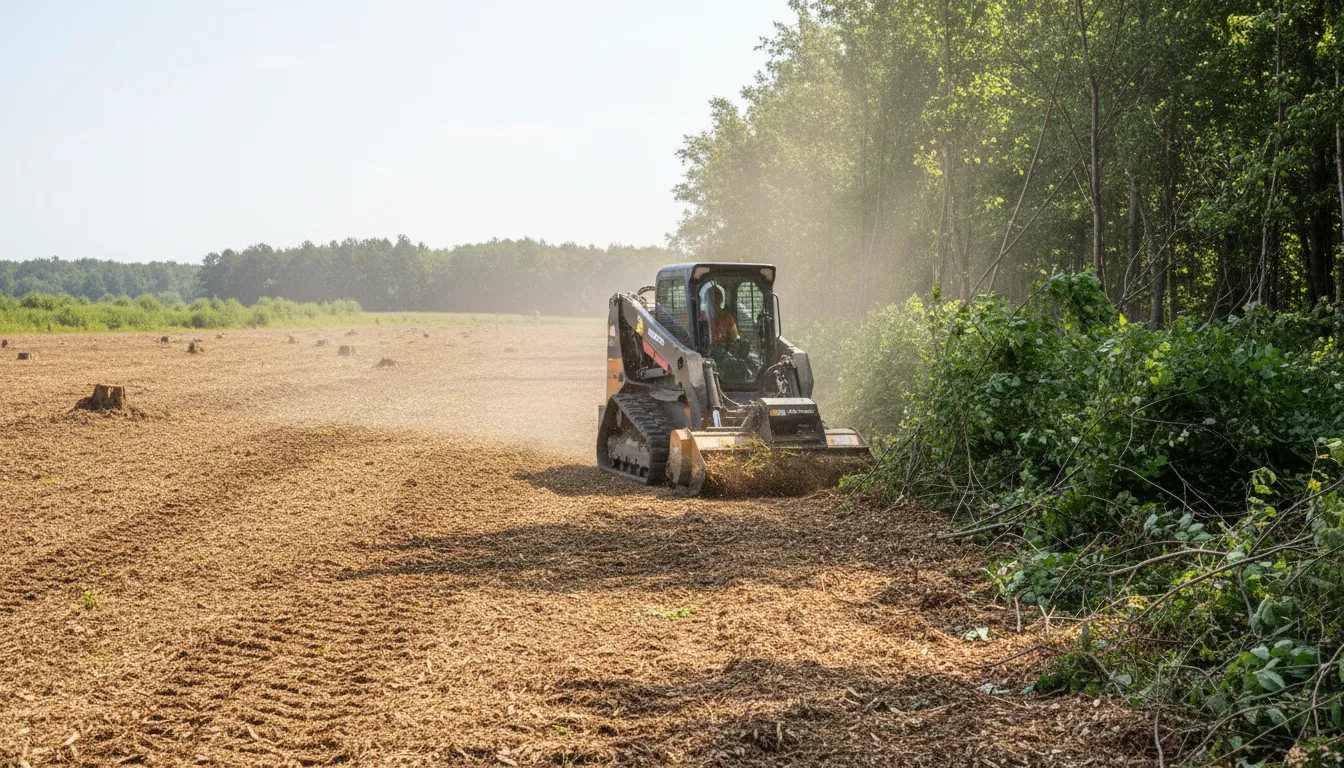
Land clearing is the process of removing trees, stumps, brush, and other obstacles from a property to prepare it for construction, agriculture, or landscaping. In Minnesota, this work is more than just heavy machinery; it's a carefully regulated activity that balances development needs with the state's strong commitment to preserving its natural landscapes, shorelines, and soil health. Understanding local rules, environmental protections, and best practices is essential for a successful project. This guide provides a clear overview of what to expect, helping you connect with experienced local professionals who can navigate Minnesota's specific requirements for site preparation and vegetation management.
NWI Tree Service & Landscaping
St Paul, MN
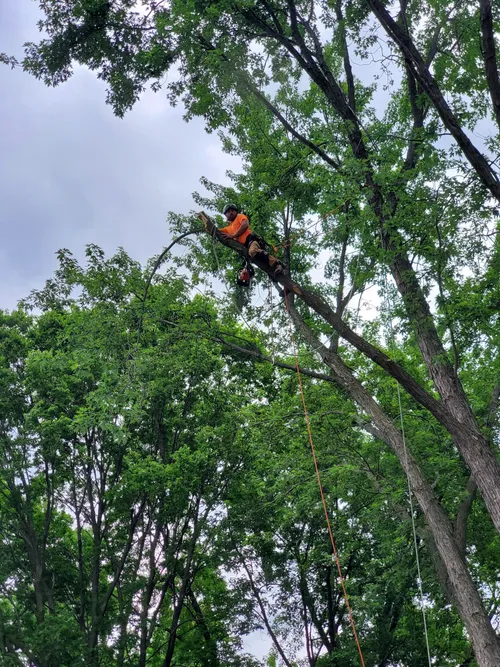
NWI Tree Service & Landscaping is a family-owned company serving St Paul, MN, and the surrounding St. Croix Valley and Western Wisconsin areas. Since 2013, they have provided comprehensive tree care, landscaping, land clearing, and property maintenance services to residential and commercial clients. Their certified arborists offer tree removal, trimming, planting, stump grinding, and plant health care, along with commercial property assessments and emergency tree services. NWI emphasizes safety and thorough cleanup, ensuring each project is completed efficiently and with attention to detail.

Scott Lorenz Tree Service
4741 Gettysburg Ave N, Minneapolis, MN 55428
Scott Lorenz Tree Service is a family-owned business based in Minneapolis, MN, offering tree trimming, removal, stump grinding, and land clearing services. With over 35 years of experience, they serve Central Minnesota and the Twin Cities area, focusing on careful property protection and thorough cleanup. Their team uses proven techniques to ensure safety and efficiency while treating each project with respect and precision.
Twisted Limb Tree Works LLC
Minneapolis, MN
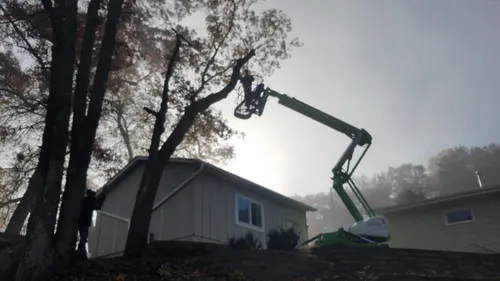
Twisted Limb Tree Works LLC is a tree service company based in Minneapolis, MN, specializing in tree removal, trimming, stump grinding, and land clearing. They serve several nearby communities including Maplewood, Oakdale, White Bear Lake, Roseville, North St. Paul, and Woodbury. With over 20 years of experience in the tree care industry, the company focuses on quality workmanship and customer satisfaction. Their services include technical tree removals and lot clearing, with an emphasis on careful site cleanup after each job.
Mancini Tree Service
St Paul, MN
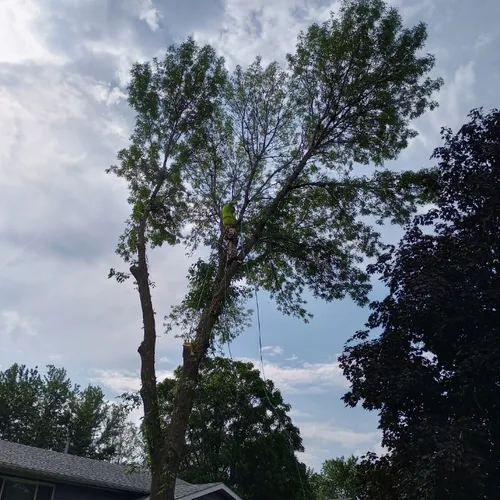
Mancini Tree Service provides professional tree care and land clearing services in St Paul, MN. Their skilled arborists offer tree trimming, removal, stump grinding, brush removal, and specialized ash tree removal to maintain the health and safety of landscapes. They also handle land clearing for construction or agricultural projects and offer rapid storm damage removal to restore properties efficiently. With years of experience, Mancini Tree Service focuses on delivering quality solutions tailored to each client's needs.

Randal Tree Service LLC
St Paul, MN
Randal Tree Service LLC is a professional tree trimming and removal company based in St Paul, MN. They serve residential, commercial, and municipal clients throughout eastern Minnesota and western Wisconsin. Their services include tree removal, tree pruning, land clearing, stump grinding, and storm damage cleanup. The company uses advanced, turf-friendly equipment and is licensed, insured, and certified. They also handle insurance claims for their customers.
Understanding Minnesota's Approach to Vegetation Management
Minnesota's approach to land clearing is defined by a preference for minimal disturbance. The goal is to achieve your project objectives while protecting the ecological functions of the land. This often means that complete clear-cutting is discouraged in favor of selective clearing or "open cutting," which maintains a significant portion of the tree canopy and native vegetation. This philosophy is embedded in many local ordinances and is particularly stringent in environmentally sensitive areas.
The state's regulations are designed to prevent soil erosion, protect water quality, and preserve wildlife habitats. Before any significant clearing begins, it's crucial to understand that your project will likely be subject to a review process focused on how you will minimize impact and restore the site afterward.
Key Regulations and Permit Requirements
Navigating the regulatory landscape is a critical first step. Requirements can vary significantly between counties and municipalities, but several common themes apply across Minnesota.
Local Permits
Most cities and counties require a permit for substantial vegetation removal or land clearing, especially when it precedes new construction. The application process typically requires you to submit a site plan showing what vegetation will be removed, the proposed work area, and your plans for erosion control and site restoration. The local planning or building department can provide specific application materials and checklists.
Shoreland and Bluff Protection Zones
If your property is located near a lake, river, or stream, or on a bluff, it falls under the Minnesota Department of Natural Resources (DNR) Shoreland Management Rules or local bluffland ordinances 1 2. These rules are exceptionally protective. Clearing in these areas is heavily restricted to preserve natural scenic beauty, prevent erosion, and protect water quality. Permits are mandatory, and the standards for vegetation preservation, setback requirements, and restoration plans are much stricter 1 3.
Protected Species and Woodland Preservation
Some local ordinances include specific "tree preservation" or "woodland conservation" sections. These rules may protect trees over a certain diameter, designate specific species as protected, or require that a percentage of existing tree cover be maintained. In some cases, you may be required to replant native trees or shrubs to compensate for those removed. Always check with your local government to see if such rules apply to your parcel.
State Erosion Control Laws
The Minnesota Soil Erosion Law (Chapter 103F) mandates that land-disturbing activities use best management practices (BMPs) to prevent sediment from polluting waterways 4. This law applies statewide and is enforced locally. Your clearing plan will need to incorporate these BMPs from the very start of the project.
Essential Best Management Practices (BMPs)
Implementing effective erosion and sediment control is not optional; it's a legal and environmental necessity. These practices protect your property, your neighbor's property, and local water resources.
- Phased Clearing: Instead of clearing the entire site at once, work in stages. Clear, grade, and immediately stabilize one section before moving to the next. This dramatically reduces the amount of bare soil exposed to wind and rain at any given time 5.
- Temporary Seeding & Stabilization: As soon as an area is cleared and graded, it should be seeded with a fast-growing annual grass or covered with an erosion control blanket. This holds the soil in place until permanent landscaping or construction begins.
- Perimeter Controls: Installing silt fences, straw wattles, or sediment basins around the downhill perimeter of the work area is standard practice. These barriers trap sediment on-site before it can run off into storm drains or waterways 6.
- Minimizing Bare Soil: The core principle is to limit the duration and extent of disturbed soil. The quicker vegetation or other cover is re-established, the lower the risk of erosion and regulatory issues.
Find the perfect land clearing contractors for your needs
Get personalized recommendations and expert advice
Cost Factors for Land Clearing in Minnesota
The cost of clearing land in Minnesota varies widely based on the site's characteristics and the scope of work. While prices can fluctuate, here are general estimates and the primary factors that influence them:
- Small Lots (Up to 1 acre): Costs can range from $500 to over $2,000. The final price depends heavily on the density of trees and brush, the presence of large stumps, and the terrain accessibility 7.
- Medium Lots (1-5 acres): For this size, homeowners can expect estimates between $2,000 and $10,000. The method of clearing (e.g., mulching vs. excavation) becomes a major cost driver 8.
- Large Lots (5+ acres): Projects of this scale often range from $10,000 to $30,000 or more. Efficiency with larger equipment and the logistics of debris disposal play significant roles in pricing 9.
What Drives the Price?
- Vegetation Density and Type: A densely wooded lot with large hardwood trees is far more expensive to clear than a brushy field. Large stumps require specialized grinding or excavation for removal.
- Terrain and Accessibility: Steep slopes, wetlands, or rocky ground complicate equipment access and operation, increasing time and cost.
- Clearing Method: Different techniques have different price points. Mulching (using a forestry mulcher to grind vegetation in-place) is often efficient for brush and small trees. Excavation (using bulldozers and excavators to push and pile material) is used for larger trees and full site grading. Hand Clearing is labor-intensive and costly but may be necessary in sensitive or tight areas.
- Debris Disposal: Hauling away logs, brush, and stumps adds to the cost. Some contractors may offer to chip debris on-site for use as mulch, which can reduce disposal fees.
- Permitting and Restoration: Don't forget to budget for permit fees and the cost of implementing required erosion control measures (silt fencing, seeding) and any mandatory replanting 10.
The Typical Project Process
A well-managed land clearing project in Minnesota follows a logical sequence:
- Site Assessment & Planning: A professional will visit your property to evaluate vegetation, topography, soil type, and any environmental sensitivities. This is when the feasibility of your goals is determined.
- Regulatory Research & Permitting: Your contractor or you will identify all necessary local and state permits, submit the required plans, and obtain approvals before work begins.
- Implementation of Erosion Controls: Before any trees are cut, perimeter silt fences and other required BMPs are installed.
- Selective Clearing & Grubbing: Vegetation is removed according to the approved plan, using the chosen method (mulching, excavation, etc.). Stumps are ground or removed.
- Grading (if needed): The site is graded to the desired contour for its future use.
- Site Stabilization: Immediately following grading, the soil is stabilized with temporary seeding, mulch, or erosion blankets to prevent erosion 11.
- Final Inspection & Restoration: After clearing, a local inspector may verify compliance with the permit. Any final restoration work, such as permanent landscaping or buffer plantings, is completed.
Choosing a Qualified Professional
Given the regulatory complexity, hiring an experienced local professional is highly advisable. Look for a provider with:
- Proven Experience in Minnesota: They should understand local ordinances, DNR rules, and the nuances of working in different regions of the state.
- Knowledge of BMPs: They should readily discuss their standard erosion and sediment control practices.
- Proper Insurance and Licensing: Verify they carry adequate liability and workers' compensation insurance.
- Clear Communication: They should walk you through the permit process, provide a detailed written estimate, and explain the project timeline.
Frequently asked questions
Sources
Footnotes
-
Bluff Protection Standards in Minnesota - MN DNR - https://www.dnr.state.mn.us/waters/watermgmt_section/shoreland/bluff-standards.html ↩ ↩2
-
Summary of MRCCA Rules - files - https://files.dnr.state.mn.us/waters/watermgmt_section/critical_area/summary_rules.pdf ↩
-
6105.0150 - MN Rules Part - https://www.revisor.mn.gov/rules/6105.0150/ ↩
-
Minnesota Statutes Chapter 103F Soil Erosion Law - https://bwsr.state.mn.us/sites/default/files/2018-11/SLL%20paper%20Feb%202014%20final.pdf ↩
-
§ 152.077 TREE REMOVAL/WOODLAND PRESERVATION ... - https://codelibrary.amlegal.com/codes/emily/latest/emily_mn/0-0-0-3781 ↩
-
Single Family Residential Construction Erosion/Sediment Control Standards - https://www.hamlakemn.gov/sites/default/files/files/EROSION%20SEDIMENT%20CONTROL%205-2017%20web.pdf ↩
-
Cost of Land Clearing in Duluth, MN - https://duluthlandclearingservice.com/cost-of-land-clearing-in-duluth-mn ↩
-
How Much Does Land Clearing Cost - https://aceproforestry.com/how-much-is-land-clearing/ ↩
-
How Much Does it Cost to Clear Land in 2026? - Lawn Love - https://lawnlove.com/blog/land-clearing-cost/ ↩
-
Property Owner Guidance for Vegetation Clearing Permits in the ... - https://ci.champlin.mn.us/DocumentCenter/View/839/Property-Owner-Guide---Vegetation-Clearing-Permit ↩
-
Erosion prevention practices - temporary seeding and ... - https://stormwater.pca.state.mn.us/erosion_prevention_practices_temporary_seeding_and_stabilization ↩