Find the Best Land Clearing Contractors for Your Business
No obligation • Fast responses • Nationwide coverage

Why you can trust Landscape Atlas
Landscape Atlas is a leading United States resource for evaluating landscaping, lawn care, and outdoor service providers. Our team researches each category in depth, focusing on service quality, safety, and customer experience. Listings and rankings are based on independent criteria and user feedback, and companies cannot pay to influence our assessments or recommendations.
Search providers near you
Best Land Clearing Contractors in Montana Ranked
Land clearing is the essential first step in preparing a site for construction, agriculture, or landscape renovation. In Montana, this process is more than just removing trees and brush; it's a careful balancing act between development and environmental stewardship. Proper planning ensures your project meets state and local regulations, protects water quality, and controls erosion on our varied terrain. This guide helps you understand the key considerations, rules, and costs for land clearing in Montana, so you can plan effectively and connect with qualified local professionals.
Understanding Montana's Land Clearing Regulations
Before any equipment arrives on-site, understanding the regulatory landscape is crucial. Montana's natural beauty comes with responsibilities to protect its waterways, wetlands, and sensitive habitats. Site preparation often requires permits, especially near streams, wetlands, or on steep slopes.
Key regulatory bodies and rules include:
- Local Ordinances: County and city codes, like those in Great Falls, often have specific erosion control and land disturbance requirements for projects over a certain size 1.
- Montana Department of Natural Resources and Conservation (DNRC): Manages forestry practices and protections for riparian areas (land adjacent to streams).
- Federal Guidelines: The Environmental Protection Agency (EPA) and Natural Resources Conservation Service (NRCS) provide frameworks for protecting water quality during land development.
The general rule is to retain natural vegetation buffers wherever possible, particularly around watercourses. Always check with your local building department and the DNRC to determine the specific permits needed for your parcel.
Best Management Practices (BMPs) for Erosion Control
Erosion and sediment control is not just a good idea-it's often a legal requirement in Montana. Implementing Best Management Practices (BMPs) from the start protects your investment and the environment by preventing soil loss and runoff into waterways 2.
Effective BMPs for site preparation include:
- Selective Clearing: Removing only the vegetation necessary for the project, leaving ground cover intact in stable areas.
- Mulching and Ground Cover: Applying mulch from cleared vegetation can maintain 80-90% ground cover, which is highly effective at stabilizing soil 3.
- Contour Grading: Shaping the land to follow its natural contours slows water flow and reduces erosion.
- Erosion Control Blankets: Using biodegradable mats on steep slopes or other vulnerable areas to hold soil in place until new vegetation establishes.
- Strategic Timing: Avoiding work in wet conditions or during peak runoff seasons to minimize soil compaction and disturbance.
The goal is to minimize the "disturbed area" and protect the natural drainage patterns of the land throughout the entire project timeline 4.
Project Planning: From Brush to Trees
A successful clearing project starts with a detailed plan. Assess your site's specific characteristics to determine the scope of work and necessary equipment.
Vegetation Type & Density:
- Light Brush/Grassland: Typically requires mowing, mulching, or light excavation.
- Heavy Brush and Small Trees: May need heavier machinery like forestry mulchers or excavators with shear attachments.
- Forested Land with Large Trees: Involves professional tree felling, stump grinding or removal, and significant debris processing.
Terrain and Accessibility: Flat, accessible land is the most straightforward and cost-effective to clear. Steep slopes, rocky ground, or poor access can complicate equipment use, increase labor time, and raise costs significantly. Always locate access roads on stable geology and avoid slide-prone zones 5.
Debris Management: Decide the end goal for cleared material. Options include:
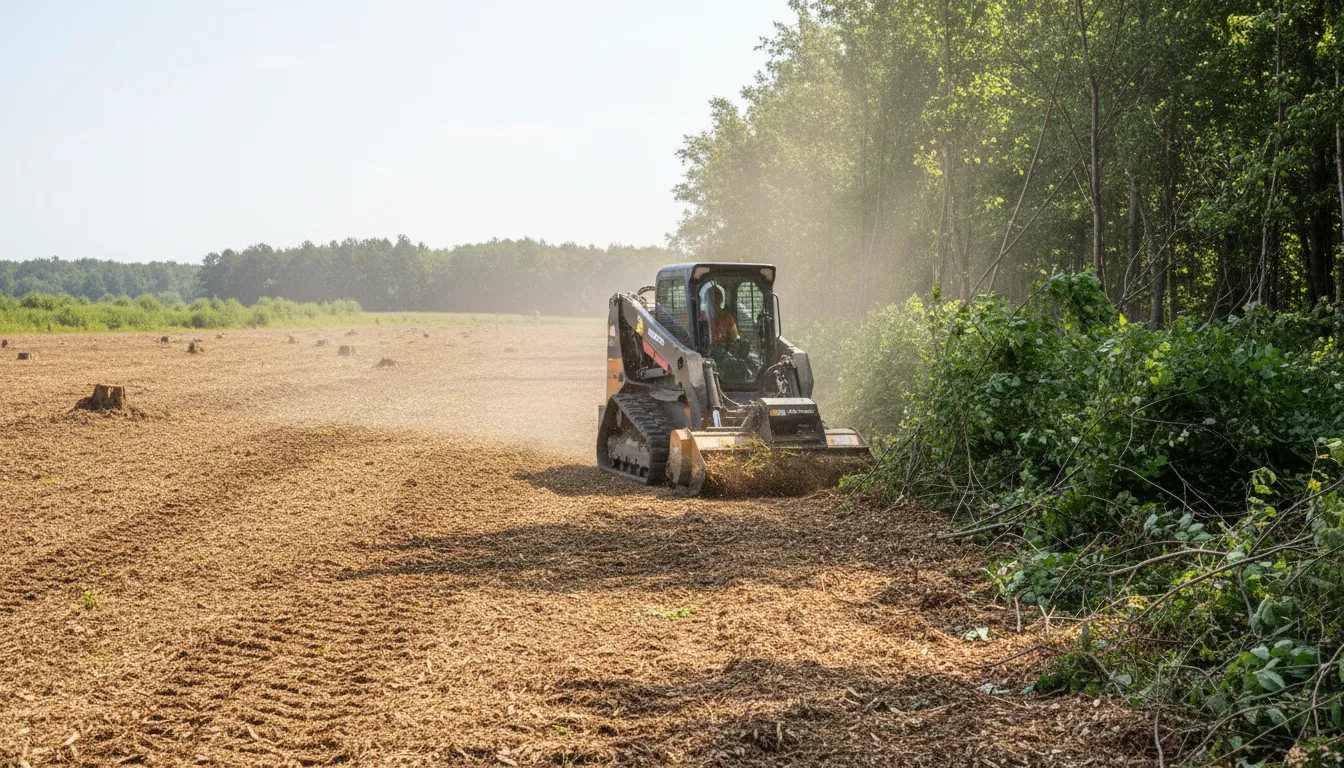
- On-site Mulching: Turning brush and small trees into beneficial ground cover.
- Hauling Away: Removing all debris for disposal or recycling.
- Burning: May be subject to local burn permits and air quality regulations.
- Repurposing: Using logs for firewood or lumber.
Find the perfect land clearing contractors for your needs
Get personalized recommendations and expert advice
Cost Factors for Land Clearing in Montana
Costs for site preparation in Montana vary widely because every parcel is unique. You can expect a range, but detailed quotes from local professionals are essential for an accurate budget.
Primary Cost Drivers:
- Acreage: While often calculated per acre, smaller projects have a higher cost per unit due to fixed equipment mobilization fees.
- Vegetation: Dense brush and large trees cost more to clear than open grassland.
- Terrain: Rocky, steep, or uneven land increases difficulty and equipment requirements.
- Accessibility: Limited access for large machinery may require specialized equipment or manual labor.
- Debris Removal: Hauling away material adds to the total cost versus on-site mulching.
- Permitting & BMPs: Costs for required permits, silt fencing, erosion control blankets, and inspections.
Sample Cost Ranges:
- Per Acre: Projects can range from approximately $1,500 for light brush on flat land to over $5,000 per acre for heavily forested, steep, or rocky terrain 6.
- Small Scale (e.g., 1/2 Acre): A typical residential lot clearing might range from $1,200 to $2,750, depending on the factors above 7.
Always request itemized quotes that break down clearing, grubbing, debris removal, and erosion control measures.
Protecting Sensitive Areas and Water Quality
Montana's water resources are a top priority. Projects near any water body require extra care. Riparian areas and wetlands are protected by state and federal laws, and clearing within these zones is heavily restricted or prohibited 8.
Key Protections:
- Stream Setbacks: Maintain undisturbed vegetative buffers along streams to filter runoff, stabilize banks, and provide habitat.
- Wetland Preservation: Avoid disturbance in wetlands; permits are extremely difficult to obtain for clearing in these areas.
- Sediment Control: Use silt fences, sediment basins, and stabilized construction exits to prevent soil from leaving the site and entering storm drains or waterways 9 10.
Planning your project to avoid these sensitive areas altogether is the most effective and legally sound strategy.
Hiring a Professional for Your Project
Given the regulatory and environmental complexities, hiring an experienced local professional is highly recommended. They understand Montana's specific rules, can secure necessary permits, and implement the correct BMPs.
What to Look For:
- Local Experience: Knowledge of county-specific regulations and common soil/terrain conditions.
- Proper Licensing and Insurance: Verify they carry liability and workers' compensation insurance.
- References and Portfolio: Ask for examples of past projects similar to yours.
- Detailed Proposal: The quote should clearly outline the scope, timeline, debris management plan, and erosion control measures.
- Environmental Awareness: They should proactively discuss permits, BMPs, and protection of sensitive areas.
A reputable contractor will view themselves as a partner in responsible land development, ensuring your site is prepared correctly for its next use while safeguarding Montana's natural resources.
Frequently asked questions
Sources
Footnotes
-
Chapter 48 | Code of Ordinances | Great Falls , MT - https://library.municode.com/mt/great_falls_/codes/code_of_ordinances?nodeId=TIT17LADECO_CH48ERCODUSIDE ↩
-
What Is Land Clearing? How It Prepares Land for Development - https://www.danieldean.com/what-is-land-clearing/ ↩
-
Protecting Soils with Mulch and Erosion Control Materials - https://eec.ky.gov/Environmental-Protection/Water/Protection/DocsEPSC/EPSC-ProtectSoilsWithMulch.pdf ↩
-
LAND CLEARING - NRCS Field Office Technical Guide - https://efotg.sc.egov.usda.gov/references/Delete/2013-9-28/Archived_460-Std-AZ2012_130926.pdf ↩
-
best management practices for forestry in montana - MT DNRC - https://dnrc.mt.gov/_docs/forestry/BMP.pdf ↩
-
How Much Does Land Clearing Cost Per Acre in Montana? - https://bdhlandsolutions.com/land-clearing/how-much-does-land-clearing-cost-per-acre/ ↩
-
Commercial Land Clearing Guide - https://strongholdtexas.com/a-complete-guide-to-commercial-land-clearing/ ↩
-
Forest Laws and Practices - MT DNRC - https://dnrc.mt.gov/MT-Forest-Info/Forest-Management/Forest-Laws-and-Practices ↩
-
Permanent Erosion and Sediment Control Design Guidelines - https://www.mdt.mt.gov/publications/docs/manuals/pesc_manual.pdf ↩
-
Erosion and Sediment Control Best Management Practices ... - https://greatfallsmt.net/sites/default/files/fileattachments/public_works/page/145361/bmp-manual-dec16_mdot.pdf ↩