Find the Best Land Clearing Contractors for Your Business
No obligation • Fast responses • Nationwide coverage

Why you can trust Landscape Atlas
Landscape Atlas is a leading United States resource for evaluating landscaping, lawn care, and outdoor service providers. Our team researches each category in depth, focusing on service quality, safety, and customer experience. Listings and rankings are based on independent criteria and user feedback, and companies cannot pay to influence our assessments or recommendations.
Search providers near you
Best Land Clearing Contractors in New Hampshire Ranked
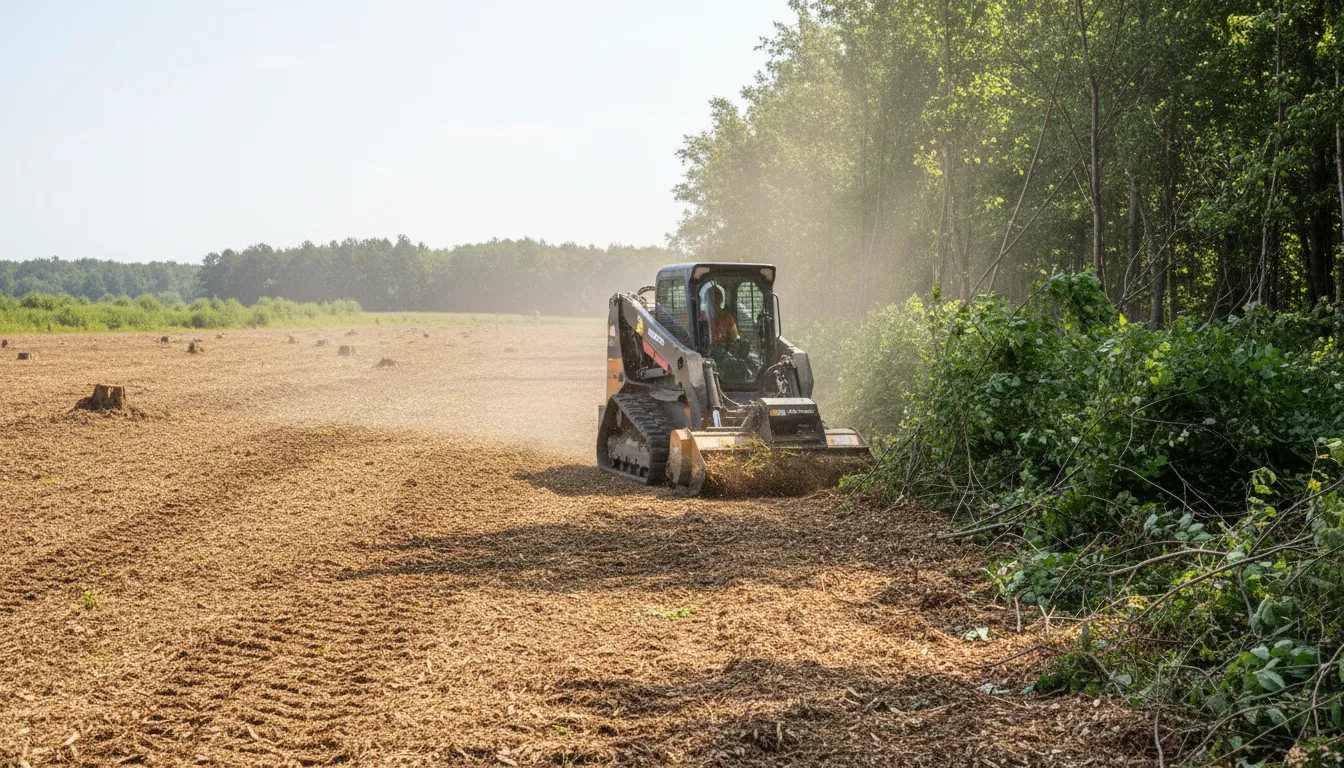
Land clearing is the process of removing trees, brush, stumps, and other obstacles to prepare a site for construction, agriculture, or landscaping. In New Hampshire, this work is more than just heavy machinery; it's a regulated activity that balances property development with the state's commitment to protecting its natural resources, particularly its abundant waterways and forests. Understanding local rules, permit requirements, and environmental best practices is essential for a successful project. This guide provides the practical information you need to plan your land clearing project, navigate New Hampshire's specific regulations, and connect with qualified local professionals who understand these critical nuances.
Understanding New Hampshire's Regulatory Landscape
Before any equipment arrives on-site, your first step must be a thorough check of local and state regulations. New Hampshire empowers its towns and cities to enforce land use and environmental controls, often through local planning boards and conservation commissions. The state also has overarching rules, especially for projects near water.
The Golden Rule: Contact Your Local Planning Department. Every municipality has its own set of ordinances regarding "Alteration of Terrain," site plan review, and tree removal. A preliminary consultation can clarify what permits you need, any required hearings, and specific local standards for erosion control and vegetation retention.
Protected Shoreland: Special Rules for Waterfront Properties
New Hampshire's Protected Shoreland rules are among the most critical regulations for land clearing. These rules apply to all land within 250 feet of the state's public waters (lakes, ponds, and rivers designated as fourth-order or higher).
- Setbacks are Mandatory: A "protected shoreland" is established, typically requiring a 50-foot setback from the reference line (usually the normal high-water mark) where permanent structures cannot be built and vegetation removal is severely restricted 1.
- Permits are Required: Any land disturbance, including clearing, within this zone usually requires a permit from the New Hampshire Department of Environmental Services (NHDES). The goal is to preserve the riparian buffer-the strip of natural vegetation along the water-which filters pollutants, prevents erosion, and provides wildlife habitat.
- Minimal Clearing Philosophy: The state's guidance is to retain natural vegetation whenever practical. Clearing should be the minimum necessary to achieve the project's goal, prioritizing the health of the shoreline ecosystem 2 3.
Best Practices for Erosion and Sediment Control
Preventing soil from leaving your site is not just good practice; it's often a legal requirement. Sediment runoff is a major pollutant for New Hampshire's waterways. State and local regulations mandate that erosion and sediment (E&S) controls be installed and maintained before and during any land-disturbing activity.
Proactive Installation is Key. Controls must be in place before you begin clearing. Common and effective measures include:
- Silt Fence: A geotextile fabric barrier installed downhill of the work area to trap sediment.
- Straw Wattles or Check Dams: Placed in ditches or channels to slow water flow and allow sediment to settle.
- Diversion Swales: Shallow channels that redirect clean runoff away from disturbed areas and toward stabilized, vegetated zones 4.
Maintenance is Non-Negotiable. E&S controls are not "set and forget." They must be inspected daily, especially after rain, and repaired immediately if damaged. Failure to maintain effective controls can result in work stoppages and fines 5.
Final Stabilization is Crucial. Once clearing is complete, exposed soil must be stabilized to prevent rilling and gully formation. This can involve seeding and mulching, applying erosion control matting, or installing permanent ground cover. The principle is to ensure all disturbed areas are stabilized before the project is considered complete 6 7.
Find the perfect land clearing contractors for your needs
Get personalized recommendations and expert advice
Cost Factors for Land Clearing in New Hampshire
The cost to clear land in New Hampshire is highly variable. There is no flat fee per acre. Professional estimators consider multiple factors to provide an accurate quote. Understanding these will help you budget realistically.
Primary Cost Drivers:
- Vegetation Density and Type: A quarter-acre lot packed with mature, dense hardwoods and underbrush costs significantly more to clear than a one-acre field with scattered saplings. Heavy brush requires different (often more time-consuming) equipment than large trees.
- Terrain and Accessibility: Steep slopes, rocky ground, and wet areas complicate equipment operation, increase time, and may require specialized machinery. Easy access for large equipment keeps costs down.
- Project Scope and Disposal: Are you clearing for a house pad, a septic field, a view, or a pasture? Do you want trees felled and left, chipped on-site, or hauled away? Stump removal (grinding vs. excavation) adds considerable cost. "Cut and leave" is cheapest; full removal and disposal is most expensive.
- Proximity to Protected Areas: As discussed, work within a Protected Shoreland zone often requires more careful, manual methods and adherence to strict guidelines, which can increase labor costs.
Estimated Cost Ranges
Based on current industry data, here are general price ranges for different project scales in New Hampshire. These are estimates; always get multiple detailed quotes.
- Small Residential Lot (e.g., 1/4 acre for a garden or addition): Costs can range from $800 to over $1,500, particularly if the area is heavily wooded or requires careful hand-clearing.
- Standard Building Lot (e.g., 1-1.5 acres for house and septic): For a full clearing and grubbing operation, homeowners can expect to pay between $6,000 and $11,000 or more. This typically includes removing trees, brush, and stumps to prepare the buildable area 8.
- Large or Challenging Lots (e.g., 2+ acres, steep slopes, waterfront): For extensive clearing, such as creating a view or preparing a large homestead, prices can range from $8,000 to $15,000+. Hillside work, sensitive environmental areas, and very dense timber all push costs toward the higher end 9 10.
Choosing the Right Service Provider
Given the regulatory and environmental complexities, selecting the right professional is critical. Look for providers who demonstrate knowledge beyond just operating machinery.
Key Questions to Ask:
- "Are you familiar with the local permitting process and Alteration of Terrain regulations in my town?"
- "Can you explain the erosion control measures you will install and maintain for my specific site?"
- "Do you have experience working within New Hampshire's Protected Shoreland zones?" (If applicable)
- "What is your process for stabilizing the site once clearing is complete?"
- "Can you provide references from recent projects in this area?"
A reputable contractor will welcome these questions, visit your site to provide a detailed assessment, and include permit assistance and E&S control plans in their proposal. They understand that successful land clearing in New Hampshire is as much about stewardship as it is about excavation.
Frequently asked questions
Sources
Footnotes
-
Protected Shoreland FAQ - NH Department of Environmental Services - https://www.des.nh.gov/protected-shoreland-faq ↩
-
Land Clearing New Hampshire: Top 5 Effective Solutions - https://aatreeservicema.com/land-clearing-new-hampshire/ ↩
-
Shoreland Protection: The Importance of Riparian Buffers - https://www.nheconomy.com/getmedia/6bd61078-3a82-46c5-89ea-ce99f6599211/ilupt-chpt-2-6.pdf ↩
-
New Hampshire - NH.gov - https://mm.nh.gov/files/uploads/dot/remote-docs/erosions-control-manual.pdf ↩
-
MODEL EROSION AND SEDIMENT CONTROL REGULATION - https://www.litchfieldnh.gov/DocumentCenter/View/139/Stormwater-Management-and-Erosion-Control-Regulation-PDF ↩
-
Erosion and Sediment Control During Construction - NH Economy - https://www.nheconomy.com/getmedia/65d6e48a-96a6-434d-8ac5-65838e17c03c/ilupt-chpt-2-8.pdf ↩
-
Erosion Control for Construction within the Protected Shoreland - https://www.des.nh.gov/sites/g/files/ehbemt341/files/documents/2020-01/sp-1.pdf ↩
-
How Much Does Land Clearing Cost in New Hampshire? A 2025 Homeowner's Guide - https://www.northpointrentals.com/blog/how-much-does-land-clearing-cost-in-new-hampshire-a-2025-homeowners-guide.html ↩
-
Pricing Guide: How Much Does It Cost to Clear Land in 2026? - LawnStarter - https://www.lawnstarter.com/blog/cost/clear-land-price/ ↩
-
Lot clearing NH: Top 3 Expert Tips for Amazing Results 2025 - https://aatreeservicema.com/lot-clearing-nh/ ↩