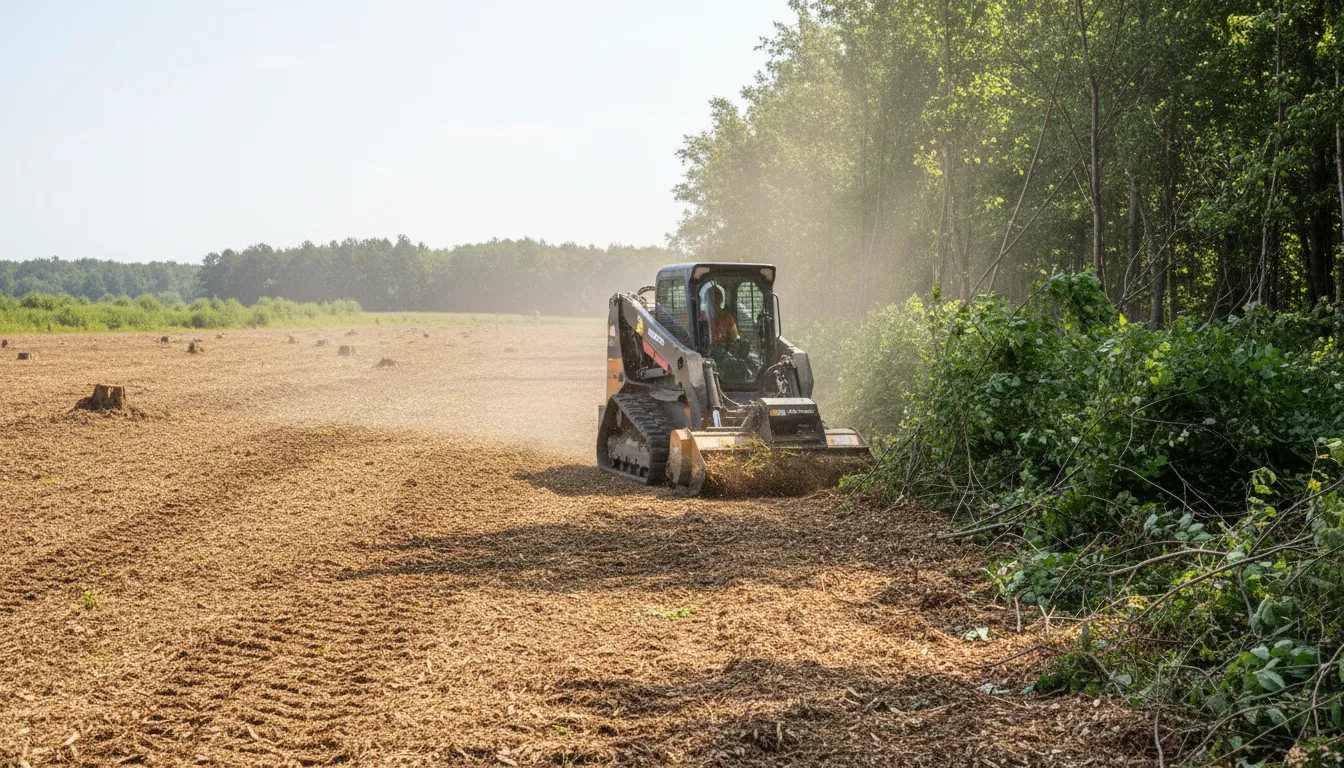
Find the Best Land Clearing Contractors for Your Business
No obligation • Fast responses • Nationwide coverage

Why you can trust Landscape Atlas
Landscape Atlas is a leading United States resource for evaluating landscaping, lawn care, and outdoor service providers. Our team researches each category in depth, focusing on service quality, safety, and customer experience. Listings and rankings are based on independent criteria and user feedback, and companies cannot pay to influence our assessments or recommendations.
Search providers near you
Best Land Clearing Contractors in New York Ranked
Land clearing is a critical first step for many property development and improvement projects in New York, from preparing a homesite to restoring overgrown land. It involves the careful removal of trees, brush, stumps, and rocks to create usable space. In New York, this process is governed by a complex framework of state and local regulations designed to protect soil, water, and sensitive ecosystems. This guide explains the key rules, best practices, and cost considerations for land clearing across the state, helping you understand what's required to plan a successful and compliant project.
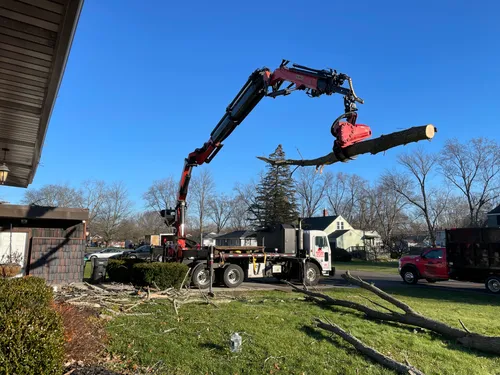
WoodChuck Tree Service
650 Baseline Rd, Grand Island, NY 14072
WoodChuck Tree Service provides tree removal, stump grinding, land clearing, and brush removal services in Buffalo, NY. The company handles various tree and land clearing needs, including stump grinding to clear unwanted tree bases. WoodChuck Tree Service operates locally to support property maintenance and land management.
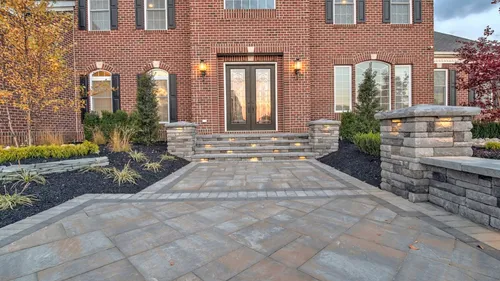
Scenic View Landscaping & Design Specialist
213 Broad St, Keyport, NJ 07735
Scenic View Landscaping & Design Specialist is a landscaping and hardscaping company based near New York, NY, offering a wide range of services including sod installation, artificial turf, landscape lighting, yard drainage, tree services, and hardscaping features like pavers and retaining walls. They provide landscape design and commercial maintenance, with capabilities such as grading and drainage solutions. The company has received multiple service awards and maintains a strong reputation for detailed and attentive work. Scenic View Landscaping & Design Specialist serves the New York, NY area and surrounding communities.
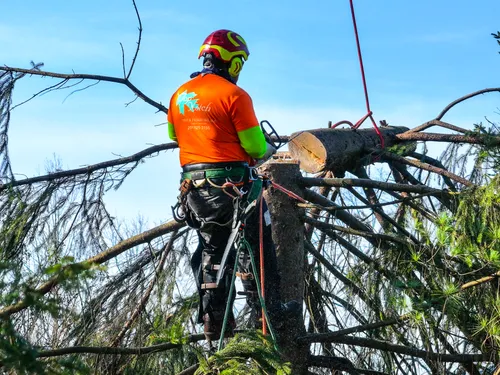
Top Notch Tree & Excavating LLC
83 Grant St #2, Ramsey, NJ 07446
Top Notch Tree & Excavating LLC is a family-owned business serving New York, NY, and northern New Jersey with over 20 years of experience. They provide a wide range of services including tree removal, stump grinding, land clearing, excavation, grading, and storm damage response. The company owns and operates its own equipment, allowing for efficient and timely project completion. Their team is certified and trained in safety practices, handling projects from small tree trimming to large-scale site preparation.
Alliance Landscapes
77 Keever Ave, Lackawanna, NY 14218
Alliance Landscapes is a full-service landscaping company based in Buffalo, NY. They offer a wide range of services including lawn fertilization, weed control, sod installation, artificial turf, landscape design, tree services, land clearing, hardscaping with pavers and retaining walls, and seasonal cleanups. The company is known for providing detailed design plans, including 3D renderings, to help clients visualize their projects. They have experience working on various landscaping needs from residential lawn care to complex outdoor living spaces. Alliance Landscapes also provides snow plow services during winter. The team is recognized for their quality workmanship, attention to detail, and clear communication throughout projects.
Power Tree Removal LLC
1229 71st St, Brooklyn, NY 11228
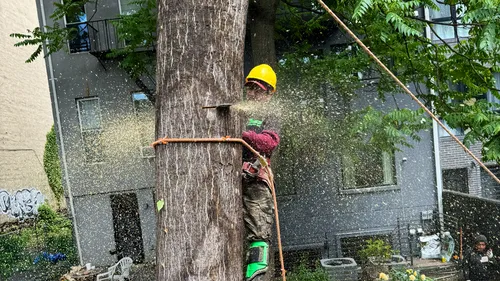
Power Tree Removal LLC provides comprehensive tree services in New York, NY, including tree removal, pruning, trimming, stump grinding, and land clearing. They serve multiple boroughs such as Brooklyn, Queens, Manhattan, Bronx, and Staten Island. The company employs certified arborists and uses modern equipment to ensure safe and efficient tree care, including emergency tree removal available 24/7. Power Tree Removal also focuses on environmentally responsible practices by recycling and repurposing wood and debris collected during their work.
Understanding New York's Regulatory Framework
Before any machinery arrives on-site, understanding the permitting landscape is essential. New York State, through the Department of Environmental Conservation (DEC), sets the baseline rules, which are often supplemented by stricter county, town, or village ordinances.
The most significant state-level requirement is the State Pollutant Discharge Elimination System (SPDES) General Permit for Stormwater Discharges from Construction Activity. If your project will disturb one acre or more of land, you are required to obtain this permit and develop a detailed Stormwater Pollution Prevention Plan (SWPPP). The SWPPP is a comprehensive document that outlines how you will control erosion and sediment runoff during and after clearing.
For projects disturbing less than one acre, a formal SPDES permit may not be required, but you are still legally obligated to implement effective erosion and sediment controls. Most local municipalities will require a permit for any significant land disturbance, regardless of size. For example, on Long Island and in the Hudson Valley, local permits are almost always necessary for clearing activities.
Protected Areas and Environmental Sensitivities
New York's regulations place special emphasis on protecting environmentally sensitive areas. Clearing in or near these zones is heavily restricted or prohibited, and special permits may be needed.
- Steep Slopes: Slopes with a grade exceeding 15% are highly regulated. The allowable percentage of disturbance decreases as the slope increases. For instance, on slopes between 15-20%, disturbance may be limited to 25% of the area1. Development on slopes over 25% is often prohibited entirely due to the high risk of severe erosion and slope failure1.
- Wetlands and Water Bodies: State and federal laws protect wetlands, streams, lakes, and their surrounding buffers (typically 100 feet or more). Clearing within these buffers usually requires a separate permit from the DEC or the U.S. Army Corps of Engineers and is frequently denied to protect water quality and habitat.
- Sensitive Soils: Hydrologic Soil Groups A and B (like sands and loams) are highly erodible and have high infiltration rates. Disturbing these soils requires meticulous planning and enhanced control measures to prevent rapid sediment loss and groundwater contamination.
- Significant Vegetation: Local laws, particularly in areas like Suffolk County and the East End, often protect specific tree species or sizes, wooded areas deemed significant, and unique habitats. Unauthorized removal can result in substantial fines and mandatory replanting.
Mandatory Erosion and Sediment Control Practices
The core principle of New York's land clearing rules is to prevent exposed soil from leaving your site. Your SWPPP or local permit plan must detail the specific control measures you will install and maintain.
Primary Perimeter Controls:
- Silt Fence: A geotextile fabric barrier installed downhill of the work area to filter sediment from runoff. It is the most common control for small to medium sites and must be installed correctly (trenched in) to be effective.
- Diversions and Swales: These are shallow channels built to safely redirect clean water (from uphill areas) around the disturbed site, preventing it from becoming contaminated with sediment.
Site Stabilization Practices:
- Prompt Seeding and Mulching: Any area where clearing and grading are complete must be stabilized as quickly as possible, typically within 14 days2. This involves applying lime and fertilizer, seeding with appropriate grass or cover crop, and covering with mulch or erosion control blankets to protect the seed.
- Topsoil Management: Whenever feasible, valuable topsoil should be stripped, stockpiled in a stabilized area, and redistributed over graded areas before final seeding to promote healthy revegetation.
Water Management:
- Sediment Basins or Traps: For larger sites, a temporary pond may be required to capture sediment-laden runoff, allowing the sediment to settle out before the water is slowly released.
- Outlet Protection: Any point where concentrated runoff leaves the site (e.g., through a pipe or ditch) must be armored with stone or other material to prevent scour and erosion.
Find the perfect land clearing contractors for your needs
Get personalized recommendations and expert advice
Cost Factors for Land Clearing in New York
The cost to clear land in New York varies dramatically based on several key factors. While average figures provide a starting point, your specific site conditions will determine the final price.
Primary Cost Drivers:
- Terrain and Geology: This is the most significant factor. Flat, soft soil with small brush is the least expensive to clear. Costs escalate quickly with hills, large rocks, boulders, and ledge, which require heavier equipment, specialized machinery (like rock rakes or excavators with hammer attachments), and more time.
- Vegetation Density and Size: A thick forest of large-diameter hardwood trees costs far more to clear than an overgrown meadow. Tree size dictates the equipment needed (large excavators vs. skid-steers) and increases hauling and disposal costs for logs and stumps.
- Project Size and Accessibility: There are economies of scale for larger acreage, but difficult access-such as narrow roads, limited gate openings, or soft ground-can increase costs due to equipment mobilization challenges.
- Local Regulations: The complexity of permitting and the stringency of required control measures (e.g., extensive silt fencing, basin construction) add to planning, material, and labor costs. Regions with strict environmental rules, like the Catskills, Adirondacks, or Long Island, often see higher project costs3 4.
Estimated Cost Ranges: Costs are often quoted per square foot for smaller projects or per acre for larger tracts.
- Per Square Foot: Simple clearing on flat, accessible land may range from $1 to $2 per square foot. For densely wooded, rocky, or sloped land, costs can easily reach $4 to $8+ per square foot 5.
- Per Acre: For a one-acre parcel, total clearing costs can range from approximately $810 to $5,870, with the wide variance reflecting the factors above6. Multi-acre projects will scale, but difficult terrain can push costs into the tens of thousands per acre.
Planning and Executing Your Project
For Small Projects (e.g., a single homesite under 1 acre): Focus on obtaining the necessary local permits. Your plan should center on basic but properly installed perimeter controls like silt fence and a strategy for managing topsoil and quickly stabilizing the area after grading7 8. Hiring a contractor familiar with local code enforcement expectations is crucial.
For Large Projects (1 acre or more): You must engage with the DEC's SPDES permit process. This involves hiring a qualified professional (like a Certified Professional in Erosion and Sediment Control - CPESC) to prepare your SWPPP. The plan will require more complex controls, such as sediment basins, stabilized construction entrances, and detailed inspection and maintenance schedules9 10. The permitting process can take several months, so factor this into your project timeline.
Best Practices for All Projects:
- Minimize Disturbance: Clear only what is absolutely necessary. Avoid excessive grading and flattening of natural contours, which increases erosion risk and cost11.
- Phase the Work: On larger sites, clear and stabilize the land in sequential phases rather than all at once. This limits the amount of exposed soil at any given time.
- Protect Existing Vegetation: Use fencing or flagging to mark trees and areas that are to remain undisturbed, preventing accidental damage by equipment.
- Plan for Disposal: Determine how you will handle cleared material. Options may include on-site chipping for mulch, hauling to a disposal facility, or selling usable timber.
Frequently asked questions
Sources
Footnotes
-
Stormwater Control Measures - New York State Department of State ↩ ↩2
-
Erosion, Sediment Control and Stormwater Law - City of Troy, NY ↩
-
Do You Need Permits for Land Clearing on Long Island? - Integrity Tree Care ↩
-
Land Clearing Cost Per Square Foot: Why $1-$8 Only Tells Half the Story - Bucktown Grading ↩
-
Erosion and Sediment Control Plans for Small Homesite Construction - NYSDEC ↩
-
New York State Standards and Specifications for Erosion and Sediment Control - NYSDEC ↩
-
New York State Stormwater Management Design Manual - NYSDEC ↩
-
New York State Standards and Specifications for Erosion and Sediment Control - Part 1 - NYSDEC ↩