Find the Best Land Clearing Contractors for Your Business
No obligation • Fast responses • Nationwide coverage

Why you can trust Landscape Atlas
Landscape Atlas is a leading United States resource for evaluating landscaping, lawn care, and outdoor service providers. Our team researches each category in depth, focusing on service quality, safety, and customer experience. Listings and rankings are based on independent criteria and user feedback, and companies cannot pay to influence our assessments or recommendations.
Search providers near you
Top Land Clearing Contractors in Bartlett, Tennessee Ranked
Preparing a piece of land for a new home, a commercial development, or simply reclaiming your yard from overgrowth is a significant undertaking. Land clearing, also known as site clearing or brush clearing, is the essential first step in transforming a wooded or overgrown property into a usable space. It involves the systematic removal of trees, stumps, brush, and other vegetation to create a clean slate. For Bartlett residents and developers, understanding the local process, methods, and costs is key to a successful project. This guide will help you navigate the specifics of site preparation in the Memphis area, from initial assessment to final grading.
Green Earth LLC
1890 Wooduck Cove, Germantown, TN 38139
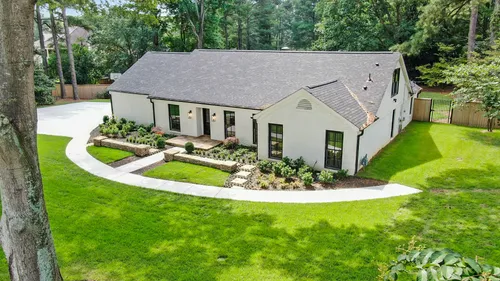
Green Earth LLC is a landscaping and irrigation company serving Memphis, TN, and the surrounding areas including Germantown, Collierville, Bartlett, and parts of Shelby County and North Mississippi. They offer a wide range of services such as landscape maintenance, design, irrigation installation and repair, drainage solutions, retaining walls, outdoor lighting, sod installation, tree services, and hardscaping. Established in 2012, Green Earth LLC combines decades of experience to provide sustainable landscaping solutions that enhance both residential and commercial properties.
A New Image Property Maintenance
8200 Mellen Dr, Olive Branch, MS 38654
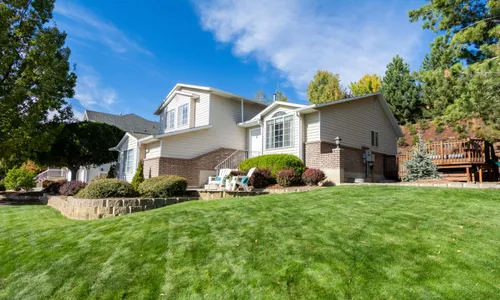
A New Image Property Maintenance is a family-owned business based near Memphis, TN, specializing in tree services and land clearing. They offer comprehensive tree care including removal, trimming, and stump grinding, as well as efficient land clearing and driveway installation. The company uses modern equipment and techniques to handle projects such as storm clean-up and brush removal, providing personalized property maintenance with a focus on clear communication and respect for clients. Their services are available 24/7 to accommodate various needs.
Tucker's Land Management LLC
Memphis, TN
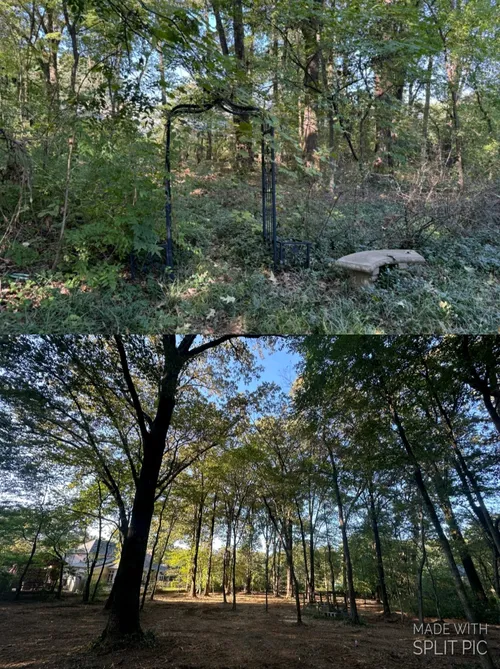
Tucker's Land Management LLC offers comprehensive land clearing and site preparation services in Memphis, TN. Their work includes tree and brush removal, forestry mulching, stump grinding, grading, storm clean-up, and installation of ponds and culverts. They serve residential, agricultural, and commercial clients, transforming overgrown or unusable land into stable, usable space. The company is experienced with local terrain and soil conditions, providing tailored solutions that support construction, farming, and rural development projects. Tucker's Land Management LLC emphasizes clear communication and project coordination to ensure timely completion and quality results.

Rivera Lawncare and Landscaping
6280 Staffordshire Rd, Memphis, TN 38134
Rivera Lawncare and Landscaping is a landscaping company based in Memphis, TN, with over 20 years of experience serving both residential and commercial clients. They offer a wide range of services including lawn mowing, fertilization, weed control, sod installation, fence installation, landscape design, tree services, yard drainage, sprinkler installation and repair, land clearing, and hardscaping. Their team focuses on creating functional and attractive outdoor spaces using eco-friendly practices. Rivera Lawncare and Landscaping aims to enhance both the aesthetics and value of properties through smart, sustainable landscaping solutions.
DeCoursey Company
Memphis, TN
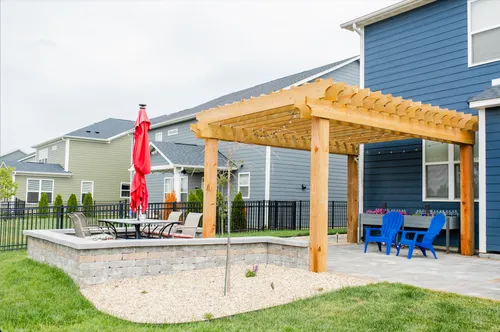
DeCoursey Company is a landscaping and outdoor living service provider based in Memphis, TN. They offer a broad range of services including landscape and hardscape design, installation of decks and pergolas, outdoor lighting, drainage solutions, excavation, and land clearing. One notable capability is their specialized downspout-adapter fitting to manage water drainage and protect foundations. DeCoursey Company handles projects of various sizes and emphasizes a consultative process to tailor designs and installations to client needs.
Understanding the Land Clearing Process in Bartlett
A successful property clearing project in Bartlett follows a structured sequence. Skipping steps can lead to unexpected problems and costs down the line. The typical workflow for lot clearing or brush removal in Shelby County involves several key phases.
Initial Site Assessment and Permitting
Before any equipment arrives, a thorough evaluation of the property is crucial. A professional contractor will survey the land to identify the types and density of vegetation, assess the terrain and soil conditions, and locate any potential obstacles like utilities, waterways, or protected areas. This stage also involves checking local regulations. In Bartlett and Shelby County, you may need permits for activities like controlled burning or for work near wetlands. Permit costs can range significantly, from $100 to over $1,900, depending on the scope and location of your project.
Vegetation Removal: Choosing the Right Method
The core of the land clearing work is removing trees, shrubs, and underbrush. The chosen method depends on your goals for the land, the size of vegetation, and environmental considerations.
- Manual/Hand Clearing: For smaller-scale projects or sensitive areas, crews may use chainsaws and hand tools to selectively cut down trees and brush. This offers precision but is labor-intensive.
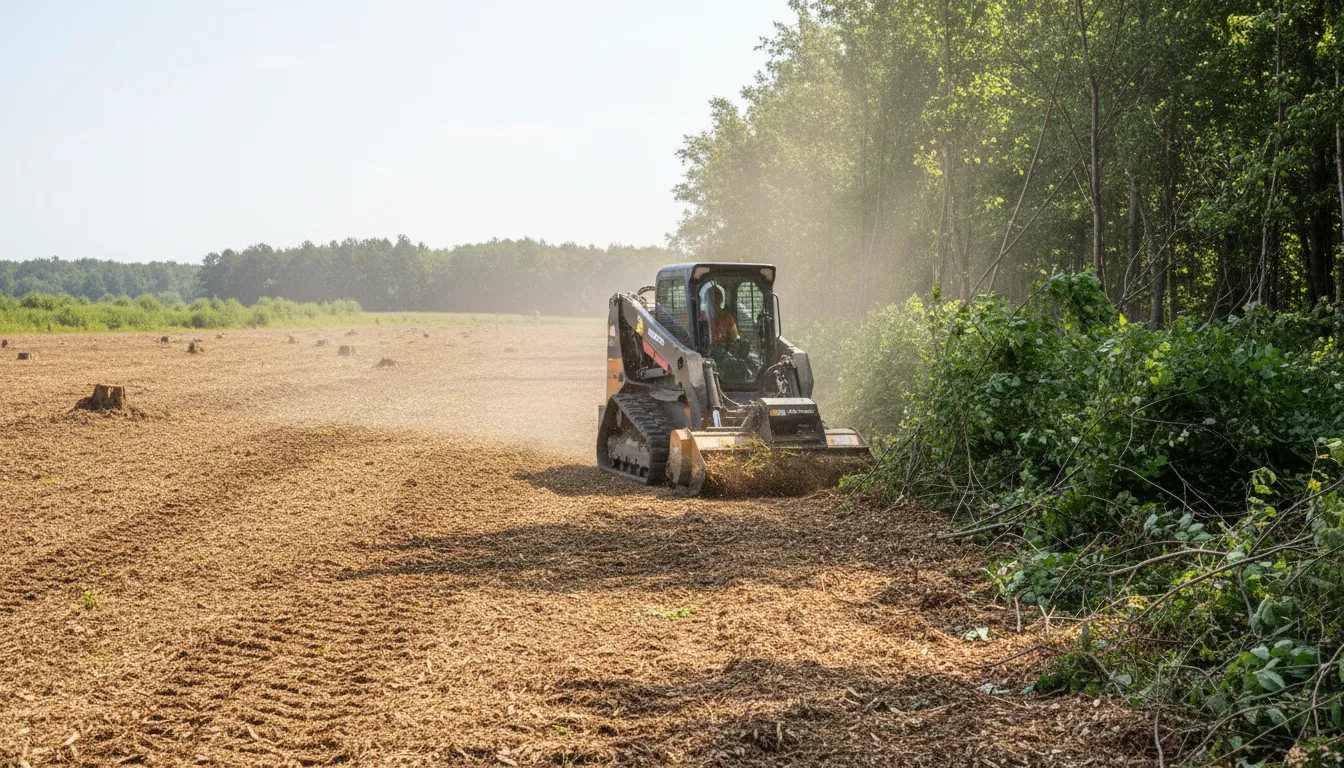
- Mulching or Forestry Mowing: This is an increasingly popular, eco-friendly method. A specialized machine with a rotating drum grinds trees and brush into fine wood chips, which are left on-site as a nutrient-rich mulch layer. This method enriches the soil, prevents erosion, and eliminates the need to haul away most debris 1.
- Mechanical Clearing with Heavy Equipment: For larger tracts of land with big trees and dense overgrowth, heavy machinery is necessary. Bulldozers equipped with root rakes can push over trees and brush, while excavators are excellent for digging out stumps and roots in a process called "grubbing" 2.
- Bush Hogging: This involves using a tractor with a heavy-duty rotary cutter (a "bush hog") to mow down thick grass, weeds, and small saplings. It's ideal for maintaining fields or initial passes on overgrown lots.
Stump and Root Removal
After trees are felled, the stumps and root systems remain. Simply cutting a tree flush with the ground leaves an obstacle that can interfere with construction, landscaping, or future mowing. The two primary solutions are:
- Stump Grinding: A machine chews the stump and major surface roots into small wood chips. This is efficient for individual stumps but leaves the root network to decay underground.
- Grubbing: Using an excavator or bulldozer to dig out the entire stump and root ball. This is more thorough and prepares the ground for digging foundations or installing utilities, but it is more disruptive to the soil 3.
Debris Hauling and Disposal
What happens to all the removed material? Disposal is a major component of the project's cost and planning.
- Chipping: As mentioned with mulching, debris can be processed on-site. This is often the most cost-effective and sustainable option.
- Hauling Away: Logs, brush piles, and stumps are loaded onto trucks and transported to a landfill or recycling center. This service adds to the project cost, typically ranging from $100 to $600 or more, depending on the volume.
- Controlled Burning: In some rural parts of Tennessee, burning is an option. It is critical to check current Bartlett and Shelby County fire regulations and obtain any necessary burn permits before considering this method 4.
Final Grading and Leveling
The last step in the site preparation process is grading. Once vegetation and debris are gone, the land is shaped using bulldozers and graders to ensure proper drainage and create a stable, level foundation for whatever comes next-whether it's a lawn, driveway, or building pad 5.
Equipment Used for Efficient Clearing
The right equipment makes all the difference in efficiency, cost, and environmental impact. For a large-scale land clearing job in Bartlett, you can expect contractors to utilize a fleet of machines.
- Bulldozers: The workhorses for pushing over trees and leveling ground, especially when fitted with a root rake.
- Excavators: Ideal for precision work like digging out stumps (grubbing), moving large rocks, and digging drainage ditches.
- Mulchers/Forestry Mowers: Mounted on skid-steers or excavators, these are used for the mulching method.
- Chippers and Stump Grinders: For processing debris and removing stumps.
- Chainsaws and Hand Tools: For detailed work, trimming, and smaller vegetation.
Find the perfect land clearing contractors for your needs
Get personalized recommendations and expert advice
Cost Factors for Land Clearing in Bartlett
The cost to clear land in Tennessee can vary dramatically. While averages provide a starting point, your specific quote will depend on a combination of factors unique to your Bartlett property.
Primary Cost Drivers:
- Size of the Area: Costs are often estimated on a per-acre basis. For large properties, you might see a quoted rate per acre, while smaller residential lots may be priced as a flat project fee.
- Density and Type of Vegetation: A lightly wooded lot is less expensive to clear than a densely forested one with large, mature hardwood trees. The presence of thick, tangled underbrush (often called "brush clearing") also increases labor and time.
- Site Accessibility: Can heavy equipment easily reach the work area? Tight spaces, slopes, or soft ground can increase the time and fuel needed, raising costs.
- Chosen Removal Method: Mulching may have different pricing than full clearing with hauling. Mechanical clearing with dozers is typically more expensive per hour than manual clearing but is far faster for large areas.
- Disposal Method: Hauling debris to a landfill incurs tipping fees and transportation costs, making it more expensive than on-site chipping or permitted burning.
- Additional Services: Many initial quotes cover basic clearing. Be sure to ask if the price includes stump removal (grinding or grubbing) and final grading, as these are often add-on services.
Understanding Price Ranges and Quotes
In East Tennessee, including the Bartlett area, land clearing costs can range from $1,000 to $5,000 or more per acre 6. However, this is a broad average. A simple field mowing might be at the very low end, while clearing an acre of dense forest with poor access and requiring full stump removal and grading could easily exceed that upper range.
Stump grinding alone typically costs $100 to $400+ per stump, depending on its size 7. The most important step is to get detailed, itemized written quotes from several licensed and insured local contractors. This ensures you are comparing the same scope of work and helps you avoid "hidden costs" for essential services that weren't included in a low initial bid 8.
Environmental and Practical Considerations
Clearing land has lasting effects on your property. Responsible contractors will discuss these considerations with you.
- Erosion Control: Removing vegetation exposes soil to rain and wind. Proper grading and the use of mulch or temporary seeding are vital to prevent soil loss and sediment runoff into nearby streams.
- Soil Health: The mulching method returns organic matter to the soil, improving its fertility and structure for future planting.
- Wildlife Habitat: Be mindful of nesting seasons. A professional assessment can identify if there are protected species or sensitive habitats on your land.
- Future Use: Your plans for the land should guide the clearing approach. If you're preparing for construction, more thorough grubbing and grading are needed. For creating a pasture or open lawn, mulching may be perfectly sufficient.
Frequently asked questions
Sources
Footnotes
-
Top 5 Methods of Land Clearing | Which Is Right for You? - Valor - https://www.valorenv.com/top-5-methods-of-land-clearing-which-is-right-for-you/ ↩
-
Best Equipment for Efficient Land and Brush Clearing - DOZR - https://dozr.com/blog/best-equipment-for-efficient-land-and-brush-clearing ↩
-
The Real Cost of Land Clearing in Tennessee - Fieldworks - https://www.fieldworksusa.com/blog/2 ↩
-
Land Clearing in Davidson County, TN: Everything You Need to Know - https://www.epstn.com/blog/land-clearing-in-davidson-county-tn ↩
-
What Is The Process Of Clearing Land? | Houston Concrete And ... - https://www.americanpavingtx.com/what-is-the-process-of-clearing-land/ ↩
-
What Is the Cost of Land Clearing in East Tennessee? - https://alloutservicestn.com/blog/what-is-the-cost-of-land-clearing-in-east-tennessee/ ↩
-
How Much Does Land Clearing Cost In Tennessee? - https://theyardforce.com/blog/how-much-does-land-clearing-cost-in-tennessee/ ↩
-
How Much Does it Cost to Clear Land Per Acre in Burlington WA - https://baxterexcavation.com/blog/f/how-much-does-it-cost-to-clear-land-per-acre-near-burlington-wa ↩