Find the Best Land Clearing Contractors for Your Business
No obligation • Fast responses • Nationwide coverage

Why you can trust Landscape Atlas
Landscape Atlas is a leading United States resource for evaluating landscaping, lawn care, and outdoor service providers. Our team researches each category in depth, focusing on service quality, safety, and customer experience. Listings and rankings are based on independent criteria and user feedback, and companies cannot pay to influence our assessments or recommendations.
Search providers near you
Best Land Clearing Contractors in Washington Ranked
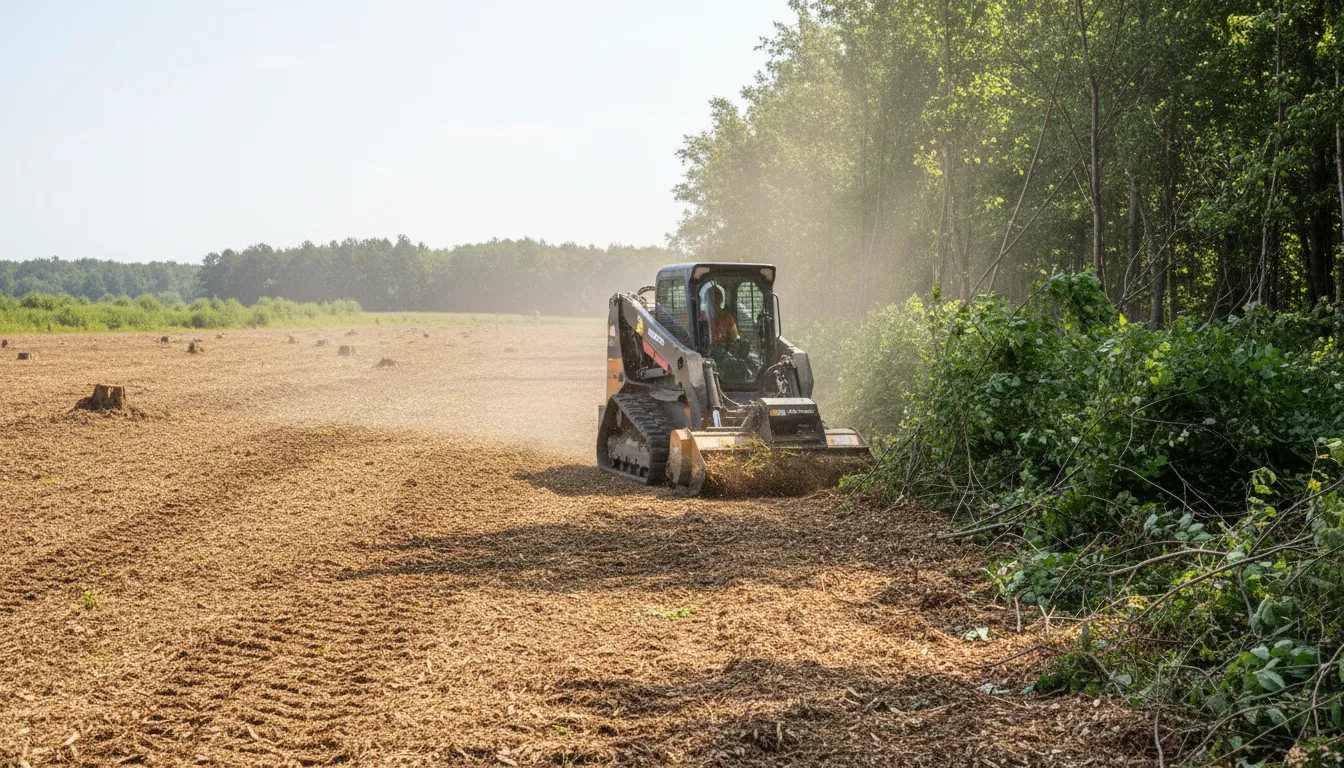
Land clearing is the process of removing trees, stumps, brush, rocks, and other obstacles from a piece of land to prepare it for construction, agriculture, or landscaping. In Washington, this work is more than just heavy machinery; it's a regulated activity that balances development needs with the state's strong environmental protections. Proper site clearing is crucial for creating a safe, stable foundation for any project while safeguarding Washington's waterways, forests, and wildlife habitats. This guide will help you understand the key regulations, best practices, and cost considerations for land clearing in Washington, empowering you to plan your project effectively and connect with qualified local professionals.
RJP Junk Removal, Yard Waste Removal & Home Services LLC
3911 Colonial Ln SE, Port Orchard, WA 98366
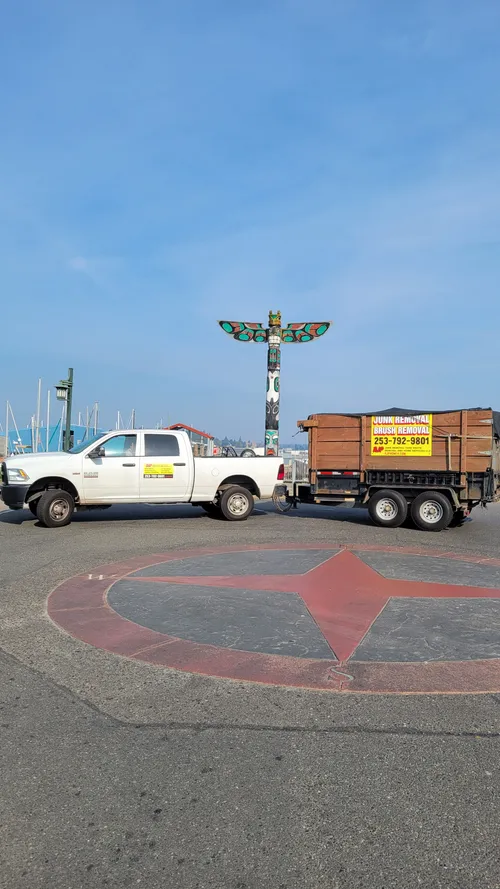
RJP Junk Removal, Yard Waste Removal & Home Services LLC provides junk removal and yard waste services in Seattle, WA. The company handles a wide range of removals including tree limbs, tree debris, small tree removal, and brush removal, as well as appliance, furniture, and estate cleanouts. They operate with specialized equipment such as all-wheel drive trucks and dump trailers to manage various job sizes efficiently. With about 16 years in business serving Kitsap County and surrounding areas, they emphasize eco-friendly disposal by recycling and donating reusable items. The company also offers military, senior, and disabled discounts and can schedule removals quickly, sometimes within the same day.
Blake's Tree Service LLC
606 W 15th Ave, Post Falls, ID 83854
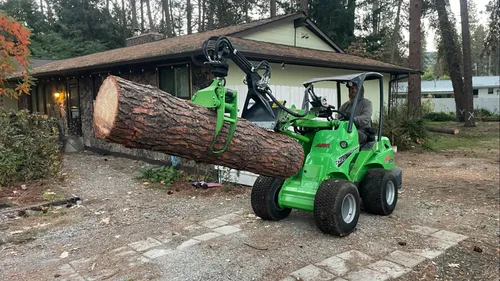
Blake's Tree Service LLC provides comprehensive tree care and land clearing services in Spokane, WA, including tree removal, stump grinding, brush removal, and storm cleanup. Serving residential and commercial clients in the Spokane area and nearby Idaho communities such as Post Falls, Coeur d'Alene, Hayden, and Rathdrum, the company specializes in large hazardous tree removal and fire prevention measures. Their experienced team uses specialized equipment to safely manage tree felling and land clearing projects. Blake's Tree Service is licensed and insured, with a strong focus on safety and thorough cleanup after each job.
Western Washington Tree Service
33900 NE Stossel Creek Way, Duvall, WA 98019
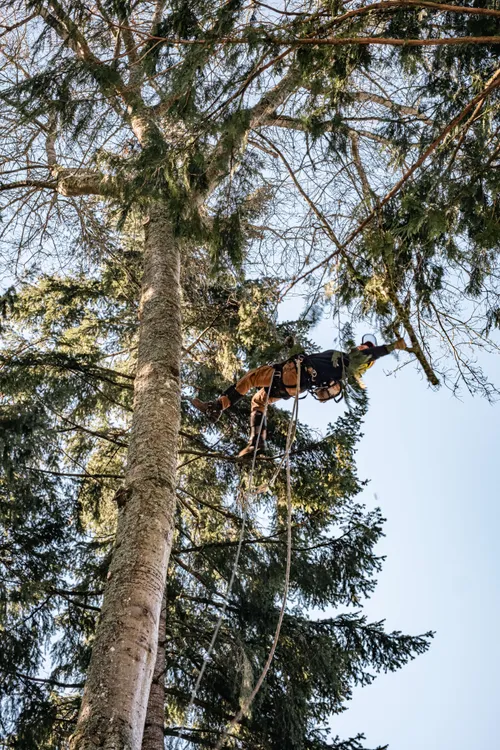
Western Washington Tree Service is a locally owned company based near Seattle, WA, specializing in tree trimming, removal, stump grinding, and land clearing. Serving King and Snohomish Counties, including Woodinville, Redmond, Bellevue, and surrounding communities, they provide services for residential, commercial, and large properties. Their capabilities include crane-assisted tree removal for large or difficult trees, ensuring safety and precision. Led by owner Matthew Pena, the company operates with full licensing and insurance, offering services seven days a week with availability from early morning to late evening.
Advanced Arborists Tree Service
11925 E Valleyway Ave #99206, Spokane Valley, WA 99206
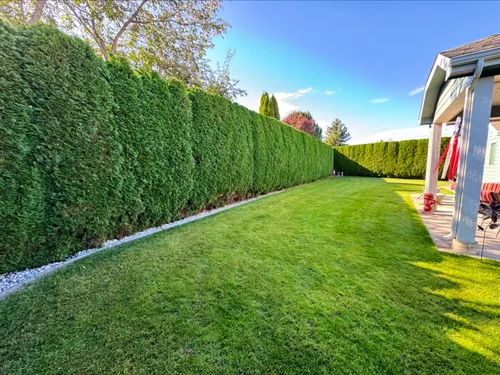
Advanced Arborists Tree Service is a Spokane, WA-based company with over 25 years of experience in tree care. They serve both residential and commercial clients in Spokane County and surrounding areas. Their services include tree trimming, tree removal, stump grinding, storm cleanup, lot clearing, hedge and shrub pruning, wood chipping, structural pruning, debris hauling, and brush removal. The company offers a full range of tree and land clearing services to handle projects of various sizes.
King & Sons Urban Forestry
3708 Belmont Rd, Coeur d'Alene, ID 83815
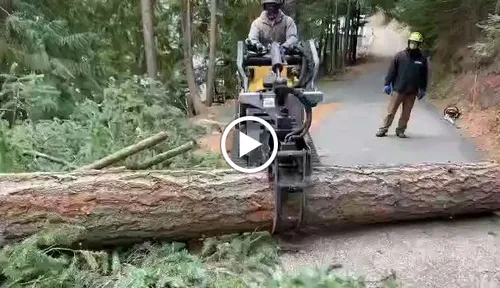
King & Sons Urban Forestry is a locally owned tree service and land clearing contractor based near Spokane, WA. They provide a variety of services including tree removal, tree trimming, stump grinding, land clearing, demolition, and small scale logging. The company emphasizes environmentally friendly practices and sustainable tree care methods to minimize environmental impact. They serve multiple communities around Spokane and are insured and bonded.
Understanding Washington's Regulatory Landscape
Before any equipment arrives on site, understanding the regulatory framework is the most critical step. Washington state and its local counties have established strict rules to minimize the environmental impact of land disturbance.
Permits Are Almost Always Required: Most land clearing projects will require a local Clearing and Grading Permit. The specific requirements vary by city and county. For example, King County has a detailed permit process for any significant vegetation removal or earth movement. If your property involves forested land, you may also need a Forest Practices Permit from the Washington State Department of Natural Resources. Always check with your local planning or building department first.
Critical Areas Protections: Washington law provides special protections for "critical areas," which include wetlands, streams, lakes, shorelines, steep slopes, and fish and wildlife habitat conservation areas. Clearing within or near these areas is heavily restricted and often prohibited. Buffers of undisturbed native vegetation are typically required around these sensitive zones, and any work usually necessitates a separate critical areas review and permit.
The State Environmental Policy Act (SEPA): For larger projects-often those disturbing over 500 cubic yards of earth-a SEPA review may be triggered. This process evaluates the potential environmental impacts of your project and may require you to develop mitigation plans. Your local permit office can advise if your site preparation work falls under SEPA thresholds.
Key Environmental Compliance Steps
Compliance isn't just about getting a permit; it's about implementing approved plans on the ground. Two areas receive particular focus in Washington: tree preservation and erosion control.
Tree Retention and Vegetation Management
Many Washington municipalities have tree preservation ordinances that limit the removal of "significant" trees (based on species, size, and health) and native growth. You may be required to submit a tree inventory and preservation plan as part of your permit application. The goal is to retain mature trees where possible and minimize the overall clearing footprint by fitting the development to the natural terrain 1.
Erosion and Sediment Control: The CSWPPP
This is arguably the most important on-site requirement. When vegetation is removed, exposed soil can wash away with rain, polluting streams and wetlands with sediment. To prevent this, Washington regulations typically require a Common Stormwater Pollution Prevention Plan (CSWPPP) for clearing and grading projects 2.
A CSWPPP details the specific Best Management Practices (BMPs) you will use to control erosion and filter runoff. Common BMPs include:
- Silt Fences: Temporary barriers of filter fabric installed downhill of disturbed areas to trap sediment.
- Straw Wattles: Rolled tubes of straw placed on slopes to slow water flow and catch sediment.
- Erosion Control Blankets: Mats of biodegradable material laid on bare soil to stabilize it until vegetation grows.
- Sediment Basins or Ponds: Small temporary ponds that allow sediment to settle out of runoff water before it leaves the site.
- Timely Revegetation: Seeding and planting disturbed areas as soon as possible to re-establish permanent ground cover.
Inspections from local officials will focus on the proper installation and maintenance of these controls 3.
Find the perfect land clearing contractors for your needs
Get personalized recommendations and expert advice
Best Practices for Sustainable Land Clearing
Working with the land, not just against it, leads to better outcomes and often smoother permitting. Adopting these sustainable practices is standard for reputable professionals in Washington.
Minimize the Disturbance Area: Clear only what is absolutely necessary for the project. Delineate strict "limits of clearing" with flagging tape and instruct equipment operators to stay within them. This protects root zones of trees you intend to keep and preserves more native soil structure and habitat.
Protect the Soil: Avoid operating heavy machinery on areas that will not be built upon or compacted. Soil compaction from equipment reduces water infiltration, harms tree roots, and leads to poor landscape health later. Using designated access routes and mats can help minimize this impact.
Sequence Work Properly: Install perimeter erosion controls (like silt fences) before any clearing begins. Clear vegetation in phases, and stabilize each cleared section with mulch or temporary seed before moving to the next. This phased approach prevents large areas of soil from being exposed simultaneously 4.
Plan for Permanent Stormwater Management: Think beyond temporary silt fences. Integrate the final site design with natural drainage patterns. Use native plants in landscaped areas, which have deep root systems that stabilize soil and absorb water efficiently. Consider rain gardens or bioswales as part of your long-term landscape plan to manage runoff naturally 5.
Cost Factors for Land Clearing in Washington
The cost to clear land in Washington is highly variable and depends on a confluence of project-specific factors. While online estimators provide a starting point, local conditions and regulations heavily influence the final price.
Primary Cost Drivers:
- Vegetation Density and Type: Clearing a lightly brushed lot is far less expensive than clearing a densely forested acre with large-diameter trees and stumps. Hardwood stumps are more costly to remove than softwood.
- Topography and Slope: Steep slopes increase difficulty, require specialized equipment, and necessitate more robust erosion controls, all of which raise costs.
- Site Access: Easy access for large bulldozers, excavators, and haul trucks keeps costs down. Tight, restricted access or the need for specialized smaller equipment adds expense.
- Disposal and Hauling: The cost to haul away brush, logs, and stumps depends on the volume, the distance to a disposal or recycling facility, and local tipping fees.
- Permits and Plans: The direct cost of permit fees, plus the potential cost of hiring a consultant to prepare a CSWPPP or tree preservation plan, must be factored in.
Estimated Cost Ranges: Costs are often quoted per acre for large tracts or per square foot for smaller residential lots. It's critical to get multiple site-specific bids.
- For small properties (e.g., under an acre), costs can range from $0.50 to over $2.00 per square foot, translating to roughly $800 to $6,000 or more per acre for basic clearing of brush and small trees 6 7.
- For larger properties, the per-acre cost may decrease, but the total project cost rises significantly. Complex sites with dense forest, steep slopes, or rocky terrain can cost many thousands of dollars per acre 8.
- Remember, these figures are for the clearing work itself. Additional costs for permits, erosion control materials and installation, tree preservation measures, and final grading can add substantially to the project total.
Choosing a Qualified Professional
Given the regulatory complexity, choosing an experienced and knowledgeable contractor is essential. Look for a provider who:
- Is licensed, bonded, and insured in Washington State.
- Has specific experience with land clearing projects in your county and is familiar with local permit requirements.
- Can clearly explain the permit process, critical areas, and erosion control requirements relevant to your site.
- Provides detailed, written estimates that break down costs for clearing, hauling, disposal, erosion control installation, and permit assistance.
- Follows sustainable BMPs and emphasizes minimizing the site disturbance.
A qualified professional views land clearing as the first step in responsible site development, ensuring your project starts on a solid and compliant foundation.
Frequently asked questions
Sources
Footnotes
-
Clearing and Grading - Land use permit process - King County - https://kingcounty.gov/en/dept/local-services/certificates-permits-licenses/permits/permits-inspections-codes-buildings-land-use/permit-forms-application-materials/land-use/clearing-grading ↩
-
23.76.090 Erosion and sedimentation control - https://bellevue.municipal.codes/BCC/23.76.090 ↩
-
Erosion Control Inspection: What to Look For - Pro Landscape - https://prolandscapesmd.com/erosion-control-inspection-what-to-look-for/ ↩
-
Minimum Erosion and Sediment Control Standards and Measures - https://stgenpln.blob.core.windows.net/document/Checklist_ErosionControl.pdf ↩
-
Technical Guidance Document - ezview.wa.gov - https://www.ezview.wa.gov/DesktopModules/Documents2/View.aspx?tabID=36890&alias=1949&mid=68545&ItemID=4093 ↩
-
How Much Does it Cost to Clear Land Per Acre in Burlington WA - https://baxterexcavation.com/blog/f/how-much-does-it-cost-to-clear-land-per-acre-near-burlington-wa ↩
-
How Much Does it Cost to Clear Land in 2026? - Lawn Love - https://lawnlove.com/blog/land-clearing-cost/ ↩
-
How Much Does Land Clearing Cost in Burlington, WA? - https://baxterexcavation.com/blog/f/how-much-does-land-clearing-cost-in-burlington-wa ↩