Find the Best Land Clearing Contractors for Your Business
No obligation • Fast responses • Nationwide coverage

Why you can trust Landscape Atlas
Landscape Atlas is a leading United States resource for evaluating landscaping, lawn care, and outdoor service providers. Our team researches each category in depth, focusing on service quality, safety, and customer experience. Listings and rankings are based on independent criteria and user feedback, and companies cannot pay to influence our assessments or recommendations.
Search providers near you
Best Land Clearing Contractors in Wisconsin Ranked
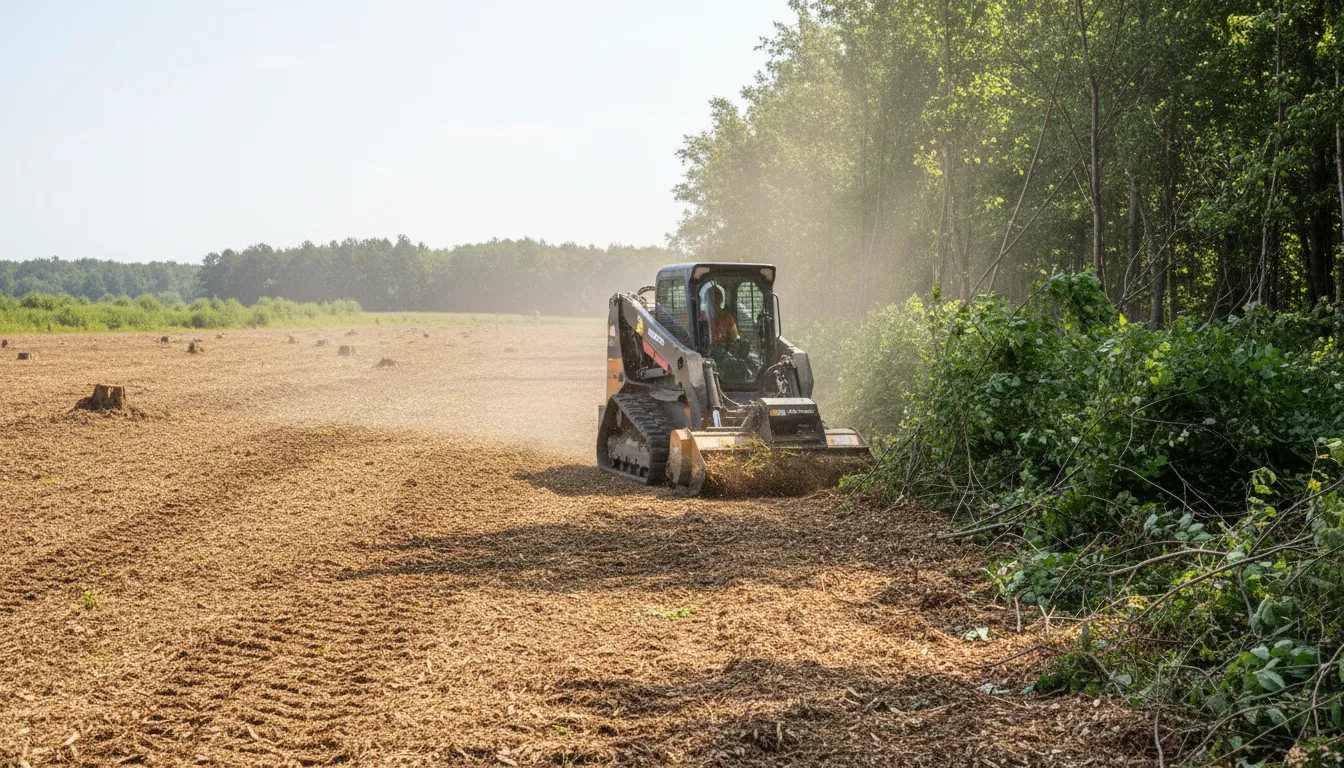
Land clearing is the process of removing trees, stumps, brush, rocks, and other obstacles from a piece of land to prepare it for construction, agriculture, or other uses. In Wisconsin, this work is more than just heavy machinery; it's a regulated activity that requires careful planning to protect the state's abundant water resources and natural landscapes. Understanding the specific rules for your county and project type is essential for compliance and environmental stewardship. This guide provides the practical information you need to plan your project, understand the regulations, and connect with experienced local professionals who can navigate Wisconsin's unique requirements.

Husky Tree Services
S74w16860 Janesville Rd #292, Muskego, WI 53150
Husky Tree Services is a tree service and land clearing contractor based near Milwaukee, WI. They provide tree removal, stump grinding, and brush removal services for homeowners and businesses throughout Wisconsin. Their certified arborists use specialized equipment such as spider lifts and grapple saw trucks to ensure safe and efficient work while protecting the surrounding landscape. Husky Tree Services is fully insured and has received positive customer feedback. They focus on improving property safety and appearance through expert tree and stump removal.
Two Guys and a Chainsaw
Madison, WI
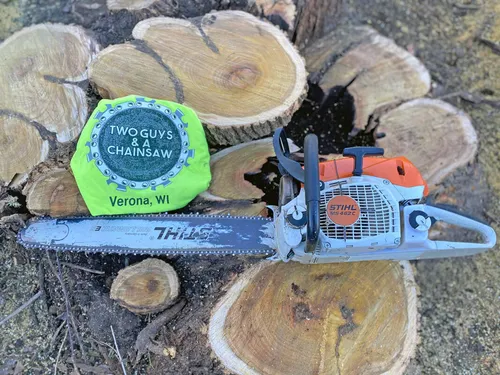
Two Guys and a Chainsaw is a tree service and land clearing company based in Madison, WI. Established in 2018 by Matt True, who has extensive experience in tree removal, trimming, stump grinding, and clearing, the company serves residential and commercial clients in Madison and surrounding areas including Middleton and Monona. Using advanced equipment, they handle tree removal and clearing efficiently, with expertise in safely lowering large tree sections using climbing gear and ropes. The business grew from Matt's background in land management and certified chainsaw safety training.
J.W. Kolp Tree Service LLC
Milwaukee, WI
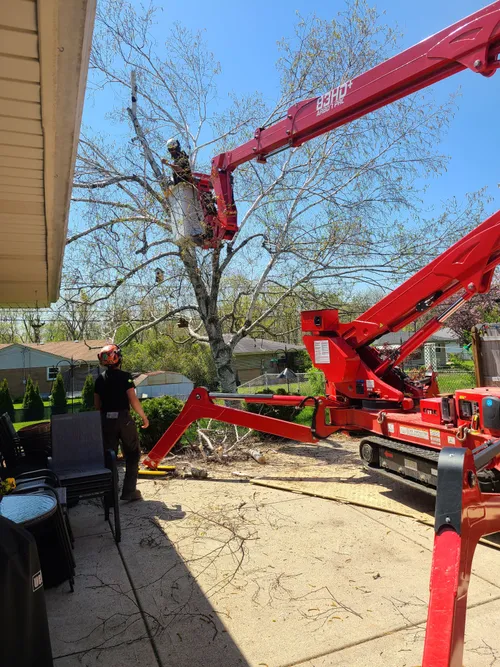
J.W. Kolp Tree Service LLC provides tree removal, pruning, emergency storm and insurance tree work, and lot clearing in Milwaukee, WI. They serve residential, commercial, and municipal clients, offering services such as brush removal and stump grinding. The team emphasizes client communication and safety, guiding customers on tree health and property protection. They are fully insured and committed to maintaining a clean and safe worksite.
Palasz Tree Service LLC
Milwaukee, WI
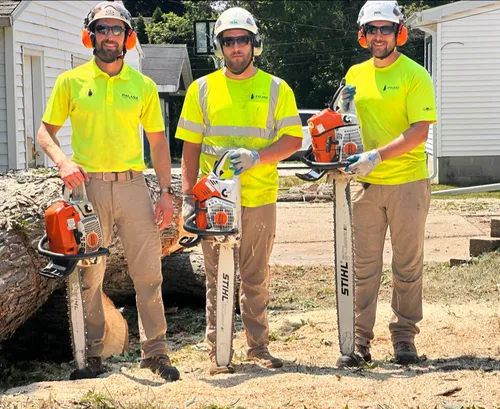
Palasz Tree Service LLC is a local tree care company based in Milwaukee, WI, offering a full range of tree services. They provide tree removals, trimming, pruning, stump grinding, land clearing, and brush removal for residential and commercial properties. Serving Southeastern Wisconsin, they handle everything from routine tree maintenance to the removal of diseased trees to help maintain property safety and aesthetics.
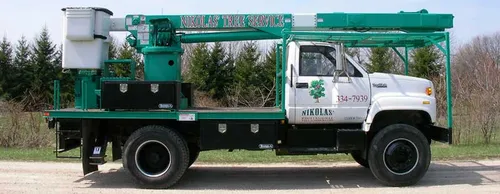
Nikolas Tree Service LLC
Madison, WI
Nikolas Tree Service LLC provides comprehensive tree care and land clearing services in Madison, WI. They specialize in tree trimming, pruning, removal, stump grinding, brush removal, and lot clearing. The company is equipped with professional, well-maintained equipment to ensure efficient and safe service delivery. With over 15 years of experience, Nikolas Tree Service LLC has served more than 5,000 commercial and residential clients in the Madison area. They also offer 24/7 same-day emergency tree removal services.
Understanding Wisconsin's Regulatory Landscape
Before any equipment arrives on-site, the first step is understanding the regulatory framework. Wisconsin's land clearing rules are designed to prevent soil erosion and protect water quality, with regulations enforced at both the state and local levels.
The cornerstone of state regulation is Wisconsin's Construction Site Erosion Control and Stormwater Management program (Chapter NR 216, Wis. Adm. Code). This program mandates that any project involving land disturbance of 4,000 square feet or more, or the movement of 400 cubic yards or more of soil, requires a formal erosion control and stormwater management plan. This plan must be implemented before work begins.
Furthermore, local counties and townships often have their own, sometimes stricter, ordinances. It is a critical best practice to always contact your County Land & Water Resources Department or local zoning office first to identify all applicable permits and requirements 1.
Shoreland Zoning and Waterway Protections
Wisconsin places a high priority on protecting its lakes, rivers, and streams through Shoreland Zoning rules. These rules create a protected "Shoreland Zone," typically extending 35 feet inland from the ordinary high-water mark of navigable waters.
Within this zone, regulations are particularly strict:
- Clear-cutting is heavily restricted. The goal is to preserve existing native vegetation to stabilize the shoreline and filter runoff 2.
- A permit is almost always required for any vegetation removal, grading, or land disturbance within the Shoreland Zone 3 4.
- Special standards apply to areas within 1,000 feet of a lake, pond, or flowage, or 300 feet of a river or stream, further limiting the amount of impervious surface and requiring vegetative buffers 5.
Wetlands and Other Sensitive Areas
Additional layers of protection exist for environmentally sensitive areas:
- Wetlands: Federally protected under the Clean Water Act. Disturbing wetlands often requires separate permits from the U.S. Army Corps of Engineers and the Wisconsin DNR. In wetlands, stumps and roots typically must be cut at or slightly above ground level; removal below the ground surface is generally prohibited to protect the hydric soil 6.
- Wild and Scenic Rivers: These designated areas have specific standards to preserve their natural state.
- Utility Rights-of-Way: Trees and vegetation near power lines are managed under specific guidelines by utility companies to ensure reliability and safety 7.
The Erosion Control Plan: A Non-Negotiable Requirement
For projects meeting the disturbance thresholds, developing and implementing an approved Erosion Control Plan is mandatory. This isn't just paperwork-it's a set of physical practices that must be in place before the first shovel hits the ground and maintained until the site is permanently stabilized.
Key components of an effective plan include 8 9 10:
- Sediment Barriers: Installing silt fences, fiber rolls, or other perimeter controls to trap sediment on-site.
- Stabilization: The ultimate goal is to establish permanent, perennial vegetative cover on 70% of all disturbed areas. This often involves seeding and mulching immediately after grading.
- Inlet Protection: Placing filters or barriers around storm drain inlets to prevent sediment from entering the municipal system.
- Phasing: Limiting the amount of land exposed at any one time and stabilizing each phase before moving to the next.
- Maintenance: Regularly inspecting and repairing all erosion control measures, especially after rain events.
Find the perfect land clearing contractors for your needs
Get personalized recommendations and expert advice
Cost Considerations for Land Clearing in Wisconsin
The cost of land clearing in Wisconsin is highly variable and depends on numerous site-specific factors. Statewide averages provide a starting point, but your final quote will be based on a professional assessment of your property.
Pricing Structures:
- Per Acre: For large-scale projects like preparing farmland or development sites, costs often range from $700 to $5,900 or more per acre 11 12. The low end might apply to lightly wooded, flat land, while the high end reflects dense forest, steep slopes, or rocky terrain.
- Per Square Foot: For smaller residential lots or specific areas, pricing may be calculated by the square foot. Costs can start around $1 per square foot but increase significantly with complexity, debris volume, and access challenges 13.
Primary Cost Factors:
- Vegetation Density and Type: A field of brush is far less expensive to clear than a dense stand of mature hardwood trees with large stumps.
- Terrain and Slope: Steep or rocky sites require specialized equipment and more labor, increasing costs.
- Debris Removal and Disposal: The largest variable cost is often hauling away and properly disposing of trees, stumps, and brush. Chipping material on-site can reduce volume and cost.
- Site Access: Easy access for large equipment keeps costs down. Tight urban lots or properties with limited entry points may require smaller machines or manual labor.
- Regulatory Compliance: The time and materials needed for permit applications, silt fencing, seeding, and inspection compliance are factored into professional quotes.
Hiring a Professional: What to Look For
Given the regulatory complexity, hiring an experienced professional is strongly advised. A qualified contractor will handle the permit process and ensure the work meets all legal and environmental standards.
When evaluating providers:
- Verify Licensing and Insurance: Ensure they carry proper liability and workers' compensation insurance.
- Check Local Experience: Ask for references from projects in your county. Familiarity with local inspectors and ordinances is invaluable.
- Review Their Erosion Control Process: A reputable contractor will discuss their plan for silt fencing, stabilization, and debris disposal upfront.
- Get Detailed Quotes: Obtain written estimates that break down costs for clearing, grubbing, hauling, and site stabilization. Ensure the quote specifies who is responsible for obtaining necessary permits.
Best Practices for Sustainable Land Clearing
Beyond mere compliance, consider these practices to minimize environmental impact and enhance your property's value:
- Preserve Where Possible: Work with your contractor to identify and protect healthy trees, native plant communities, and natural drainage features.
- Phase the Work: Clear and stabilize sections sequentially rather than denuding the entire site at once.
- Consider On-Site Reuse: Large logs can be milled for lumber, brush piles can create wildlife habitat (where appropriate), and wood chips make excellent mulch for trails or landscaped areas.
- Plan for Post-Clearing Use: Have a revegetation plan ready. Whether for a lawn, native prairie, or crop field, prompt stabilization is key to preventing erosion.
Frequently asked questions
Sources
Footnotes
-
Erosion Control Standards & Guides | Sauk County Wisconsin Official Website - https://www.co.sauk.wi.us/planningandzoning/erosion-control-standards-guides ↩
-
Wisconsin's Shoreland Management Program - https://dnr.wisconsin.gov/topic/ShorelandZoning/Programs/program-management.html ↩
-
Erosion Control and Shoreland Erosion Control - https://lwrd.danecounty.gov/what-we-do/erosion-control ↩
-
Erosion Control and Stormwater Management Work Group - https://apps.jeffersoncountywi.gov/Supplemental/2023/06262023/Erosion%20Control%20and%20Stormwater%20Management%20Work%20Group%20Packet.pdf ↩
-
NR 328.35 - Wisconsin Legislative Documents - https://docs.legis.wisconsin.gov/document/administrativecode/NR%20328.35 ↩
-
Managing Wetlands on Your Property | Superior, WI - Official Website - https://www.superiorwi.gov/564/Managing-Wetlands-on-Your-Property ↩
-
Line Clearance Pruning For Reliability - Wisconsin Public Service - https://www.wisconsinpublicservice.com/services/tree-vegetation ↩
-
Wisconsin Legislature: Chapter NR 152 Appendix A - https://docs.legis.wisconsin.gov/code/admin_code/nr/100/152_a/_200?up=1 ↩
-
Erosion control and storm water management plans - https://dnr.wisconsin.gov/topic/Stormwater/construction/erosion_control.html ↩
-
Wisconsin Contractors Institute Continuing Education - https://wicontractorinstitute.com/wp-content/uploads/coursebooks/contractors/Erosion-Control-Course-Book.pdf ↩
-
Land Clearing Cost Per Acre: A Complete Guide - Jack Cooper - https://www.jackcooper.com/land-clearing-cost-per-acre-a-complete-guide/ ↩
-
What Is the Cost of Land Clearing? Factors to Consider - Valor - https://www.valorenv.com/what-is-the-cost-of-land-clearing-factors-to-consider/ ↩
-
Land Clearing in Lake Mills, WI - Costs 12 / 2025 - Homeyou - https://www.homeyou.com/wi/land-clearing-lake-mills-costs ↩