Find the Best Land Clearing Contractors for Your Business
No obligation • Fast responses • Nationwide coverage

Why you can trust Landscape Atlas
Landscape Atlas is a leading United States resource for evaluating landscaping, lawn care, and outdoor service providers. Our team researches each category in depth, focusing on service quality, safety, and customer experience. Listings and rankings are based on independent criteria and user feedback, and companies cannot pay to influence our assessments or recommendations.
Search providers near you
Best Land Clearing Contractors in West Virginia Ranked
Land clearing in West Virginia is the process of removing trees, brush, stumps, and other obstacles to prepare a site for construction, agriculture, or other land uses. It's a critical first step for many property improvement projects, but it's governed by strict state and local regulations designed to protect West Virginia's waterways and landscapes from erosion and sediment pollution. Understanding these rules and the factors that influence cost and method is essential for a successful project. This guide will help you navigate the process, from permits to pricing, and connect you with experienced local professionals who understand the unique terrain and regulatory environment of the Mountain State.
Understanding West Virginia's Land Clearing Regulations
Before any equipment arrives on your property, it's crucial to understand the regulatory framework. The West Virginia Department of Environmental Protection (WVDEP) enforces rules to minimize the environmental impact of land disturbance.
The cornerstone of these regulations is the requirement for an Erosion and Sediment Control Plan. This is mandatory for any project that will disturb one acre or more of land. It's also required for smaller sites that are part of a larger common plan of development or sale. This plan must be approved by the WVDEP before work begins and details the specific Best Management Practices (BMPs) that will be used to prevent soil from leaving your site and entering streams or storm drains.
Protected Areas and Riparian Buffers
West Virginia places a high priority on protecting its water quality. A key rule involves riparian buffers-vegetated areas adjacent to streams. For major streams, a 100-foot buffer zone is typically required where heavy equipment use is severely restricted or prohibited 1. Clearing within these buffers often requires special approval and careful techniques to prevent bank destabilization and sediment runoff. Wetlands are also protected and require careful evaluation and likely additional permits before any disturbance 1.
The Role of Local Municipalities
In addition to state rules, many cities and counties in West Virginia have their own erosion and sediment control ordinances. For example, the City of Mount Hope has specific requirements for stabilization and BMPs that complement state law. Always check with your local government office to understand any additional permits or plan requirements for your land clearing project, even if it's under one acre.
Best Management Practices (BMPs) for Erosion Control
Following an approved plan means implementing specific BMPs. These are practical, on-the-ground techniques to control soil erosion. The WVDEP provides a comprehensive BMP manual that outlines acceptable methods 2.
Common and crucial BMPs for land clearing in WV include:
- Silt Fences: Temporary sediment barriers made of filter fabric installed downhill of disturbed areas to trap sediment.
- Straw/Hay Mulch and Binders: Applied to exposed soil to protect it from rain impact and wind, helping seeds germinate for permanent cover.
- Diversion Channels and Berms: Used to redirect clean water around the work site and channel runoff from disturbed areas to sediment traps.
- Sediment Basins or Traps: Small ponds constructed to capture runoff, allowing sediment to settle out before water is discharged.
- Prompt Seeding and Stabilization: This is not just a recommendation but a requirement. All disturbed soil must be stabilized with vegetation or other cover within 14 days of the final disturbance, or within 7 days if work is temporarily paused.
Land Clearing Methods and Equipment
The right method for your West Virginia property depends on your goals, the terrain, and the type of vegetation.
- Clearing and Grubbing: This is the basic removal of surface vegetation, trees, stumps, and rocks. It's often done with bulldozers and excavators.
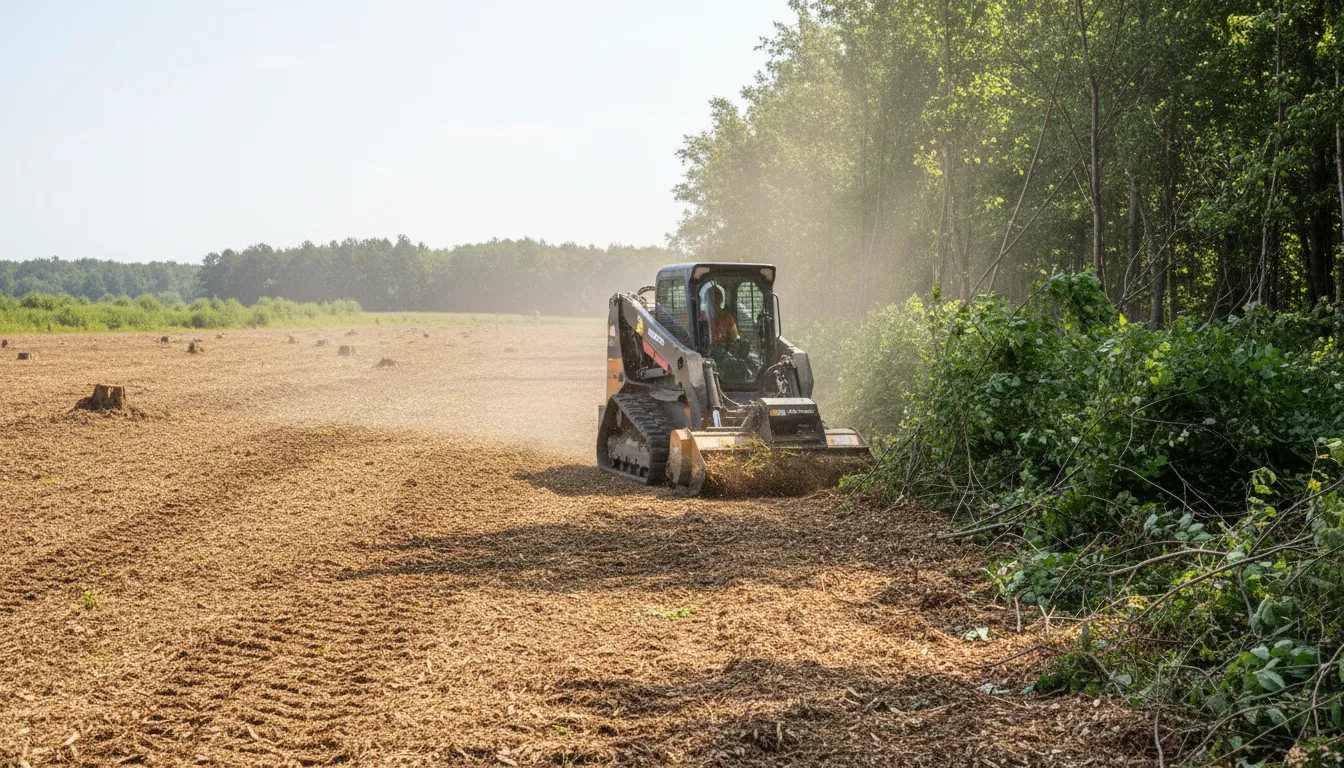
- Mulching (Forestry Mulching): A highly efficient method where a single machine cuts, grinds, and spreads vegetation in place as mulch. This method minimizes soil disturbance, helps with erosion control, and adds organic matter back to the soil. It's excellent for steep slopes and sensitive areas where traditional equipment might cause too much damage.
- Cut and Haul: Trees and brush are cut down, piled, and then hauled away from the site for disposal or recycling. This leaves a cleaner slate but is often more expensive due to hauling and disposal costs.
- Stump Removal: Can be done via grinding (leaving the root system in place) or full extraction with an excavator. Grinding is faster and less disruptive but may not be suitable if the area will be graded or excavated later.
- Controlled Burning: Requires strict permits from the West Virginia Division of Forestry and local fire authorities. It's highly regulated due to air quality and wildfire risks and is generally not the primary method for most clearing projects.
Find the perfect land clearing contractors for your needs
Get personalized recommendations and expert advice
Cost Factors for Land Clearing in West Virginia
Pricing for site clearing is highly variable and depends on a confluence of factors specific to your property. Getting multiple detailed estimates is essential.
Primary Cost Drivers:
- Acreage and Density: The size of the area is the starting point, but the density of trees and undergrowth has a massive impact. A densely wooded acre costs significantly more to clear than an acre of light brush.
- Terrain and Slope: West Virginia's famous hills and mountains present a challenge. Steep, rocky, or uneven terrain requires more skilled operators, specialized equipment, and time, increasing costs. Accessibility for large equipment also affects price.
- Type of Vegetation: Large hardwood trees with deep root systems are more expensive to remove than small pines or brush. The presence of invasive species may also affect disposal costs.
- Debris Removal and Disposal: Do you want the debris hauled away, chipped on-site, or mulched in place? Haul-away services add substantial cost for transportation and landfill fees.
- Site Preparation Level: Are you clearing for a future lawn, a building pad, or agricultural use? The desired final grade and "cleanliness" of the site affect the labor and equipment required.
- Permits and Plans: For projects over an acre, the cost of developing and submitting an Erosion and Sediment Control Plan to the WVDEP is an additional upfront expense 3.
Estimated Price Ranges
While every project is unique, general cost frameworks can help set expectations:
- Hourly Rates: Equipment and operator rates typically range from $200 to over $1,200 per hour, with larger, more specialized machinery (like high-horsepower mulchers) commanding the higher rates 4.
- Per-Acre Estimates: For a basic clearing and grubbing operation, costs can range from $2,000 to $4,650 or more per acre 5 6. Forestry mulching might fall within a similar per-acre range but often provides value through speed and built-in erosion control. Complex sites with heavy timber, steep slopes, and rock will push costs toward the high end or beyond these ranges.
Planning Your Project: Small vs. Large Properties
Your approach will differ significantly based on the scale of your project.
For Small Properties (Under 1 Acre): While you may not need a formal WVDEP plan, you are still legally responsible for preventing sediment from leaving your property 7. Basic BMPs like silt fencing and prompt seeding are a must. You will almost certainly need to check with your local county or city office for any required permits. A professional land clearing contractor will know these local rules.
For Large Properties or Developments (1 Acre or More): This triggers the formal state regulatory process. Your essential steps are:
- Hire a Qualified Professional: Work with a contractor or civil engineer experienced in preparing WVDEP-compliant Erosion and Sediment Control Plans.
- Submit and Gain Approval: The plan must be submitted to the WVDEP for approval before any ground is broken 8.
- Install BMPs First: Erosion control measures like silt fences and diversion ditches must be installed before clearing begins.
- Follow the Plan and Stabilize: Execute the clearing work according to the plan and ensure all disturbed areas are seeded, mulched, and stabilized within the mandated 14-day window 9 10.
Finding the Right Professional Service
Given the regulatory and environmental complexities, choosing an experienced West Virginia land clearing service is critical. Look for providers who:
- Have verifiable experience with projects similar in size and scope to yours.
- Understand WVDEP regulations and local permit requirements.
- Can provide references from past clients in your area.
- Carry adequate insurance, including general liability and workers' compensation.
- Are willing to visit your site to provide a detailed, written estimate that accounts for terrain, vegetation, and final site goals.
- Communicate clearly about their planned methods, timeline, and how they will manage erosion control and debris.
Frequently asked questions
Sources
Footnotes
-
Guidelines for Managing West Virginia's Nine State Forests ↩ ↩2
-
West Virginia Department of Transportation Erosion and Sediment Control Manual ↩
-
Virginia Tech Extension: Options for Clearing Land: Pasture Establishment ↩
-
Erosion and Sediment Control Ordinance | City of Mount Hope, WV ↩
-
State of West Virginia Construction Stormwater General Permit Fact Sheet ↩
-
West Virginia Code §22-4-18: Land reclamation requirements ↩