Find the Best Land Clearing Contractors for Your Business
No obligation • Fast responses • Nationwide coverage

Why you can trust Landscape Atlas
Landscape Atlas is a leading United States resource for evaluating landscaping, lawn care, and outdoor service providers. Our team researches each category in depth, focusing on service quality, safety, and customer experience. Listings and rankings are based on independent criteria and user feedback, and companies cannot pay to influence our assessments or recommendations.
Search providers near you
Best Land Clearing Contractors in Wyoming Ranked
Land clearing is the process of removing trees, brush, stumps, rocks, and other obstacles to prepare a parcel of land for a new use, such as construction, agriculture, or habitat restoration. In Wyoming, this work is more than just heavy machinery; it's a careful balance between achieving your property goals and protecting the state's fragile ecosystems. Successful projects require navigating specific regulations, implementing erosion control, and planning for long-term revegetation. This guide will help you understand the key considerations, processes, and local resources to connect with experienced professionals who can manage your Wyoming land clearing project responsibly.
Understanding Wyoming's Land Clearing Environment
Wyoming's diverse landscapes-from high plains and rolling grasslands to rugged mountains and arid basins-present unique challenges for land clearing. The state's low rainfall, high winds, and sensitive soils mean that any ground disturbance can have long-lasting effects. The primary goals extend beyond simple removal to include preventing soil loss, protecting water quality, controlling invasive weeds, and restoring native plant communities. Whether you're preparing a homesite, improving pasture, or managing wildlife habitat, a site-specific plan is essential for a successful outcome that meets both your needs and regulatory requirements.
Permits and Regulations in Wyoming
Before any equipment arrives, understanding the regulatory landscape is crucial. Requirements vary based on project size, location, and potential environmental impact.
- Local Permits: Always check with your city or county planning department first. For example, the City of Casper requires an erosion and sediment control permit for land-disturbing activities of one acre or more, and even smaller projects may need review if they are near waterways.
- State Oversight: The Wyoming Department of Environmental Quality (DEQ) oversees water quality. Projects that could impact streams, wetlands, or groundwater may require permits. The state also has strict rules regarding noxious weed control, which directly ties into clearing activities.
- Federal Land: If your project involves or borders Bureau of Land Management (BLM) or U.S. Forest Service land, federal mitigation guidelines and permitting processes apply. These focus heavily on protecting sensitive resources and require detailed reclamation plans.
A qualified land clearing contractor will be familiar with these layers of regulation and can often handle the permit application process on your behalf.
Critical Environmental Considerations
Erosion and Sediment Control
Wyoming's soils are highly susceptible to erosion by wind and water. Exposing bare ground without a plan can lead to significant topsoil loss and sedimentation of nearby waterways. Implementing Best Management Practices (BMPs) is not just a good idea-it's often a permit condition 1. Common BMPs for Wyoming include:
- Mulching: Applying straw, wood chips, or other organic material to stabilize soil.
- Log Terraces: Using cleared woody debris to create barriers that slow water runoff on slopes.
- Minimizing Bare Ground: Phasing clearing work and quickly seeding disturbed areas to reduce exposure time.
- Silt Fences and Wattles: Installing perimeter controls to trap sediment before it leaves the site.
Noxious Weed and Invasive Species Management
Land clearing can inadvertently encourage the spread of invasive plants like cheatgrass, leafy spurge, and Canada thistle by disturbing the soil and removing competing vegetation. A proactive weed management plan is a cornerstone of responsible clearing:
- Plan First: Identify existing weeds on the site before work begins.
- Control Before Disturbance: Treat heavy infestations prior to clearing to prevent spreading seeds.
- Use Clean Equipment: Ensure machinery is cleaned of weed seeds before entering and leaving your property.
- Revegetate Promptly: Establish competitive, desirable plants as soon as possible after clearing.
Revegetation and Habitat Restoration
The final step in a responsible clearing project is restoring plant life. In Wyoming's arid climate, this requires patience and realistic expectations, as full establishment can take several years.
- Native Species: Using locally adapted native grasses, forbs, and shrubs is recommended. They are drought-tolerant, support local wildlife and pollinators, and resist invasion.
- Certified Weed-Free Seed: Always source seed that is certified as weed-free to avoid introducing new problems.
- Diverse Mixes: Planting a diversity of species creates a more resilient and ecologically functional landscape.
- Follow-Up Care: Plan for supplemental watering (if possible), weed control, and possibly reseeding in the initial years.
Find the perfect land clearing contractors for your needs
Get personalized recommendations and expert advice
The Land Clearing Process: A Step-by-Step Overview
- Site Assessment & Planning: A professional will evaluate your property's topography, soil type, vegetation density, and environmental sensitivities. This assessment forms the basis for a clearing and reclamation plan.
- Permitting & Approvals: Based on the plan, the necessary local, state, or federal permits are secured.
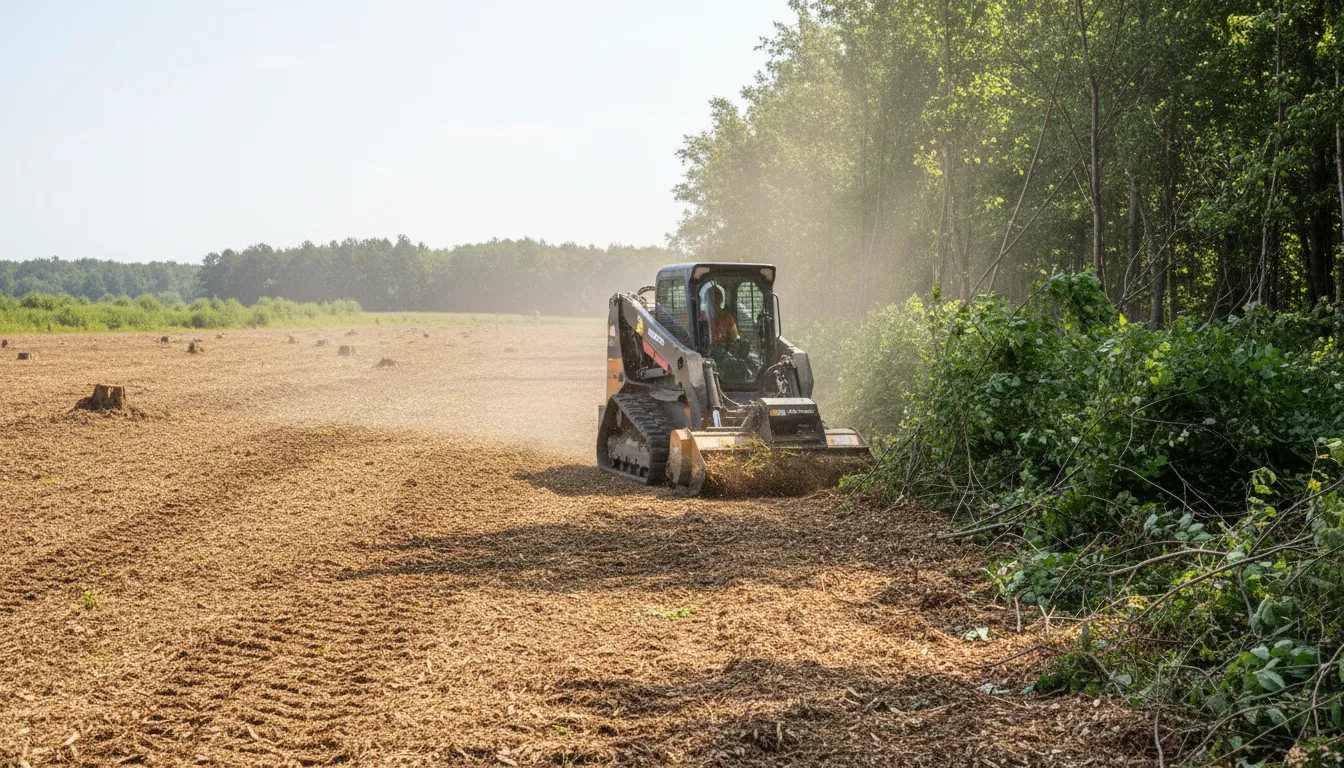
- Mobilization & Clearing: Equipment such as bulldozers, excavators, forestry mulchers, or skid-steers is used to remove vegetation and debris. Methods vary from complete grubbing and removal to selective clearing or mulching-in-place.
- Debris Management: Removed trees and brush may be chipped for mulch, hauled away, piled for burning (where allowed), or stacked for habitat.
- Erosion Control Implementation: BMPs are installed during and immediately after clearing activities.
- Site Preparation for Future Use: This may include rough grading, rock removal, or root raking.
- Revegetation: The final grade is prepared, soil amendments may be added, and the area is seeded or planted according to the reclamation plan.
Cost Factors for Land Clearing in Wyoming
Costs in Wyoming vary dramatically based on several key factors, with average ranges typically quoted per acre:
- Light Brush/Grassland: $700 - $2,000 per acre. This involves mostly grasses, sagebrush, and small shrubs on relatively flat ground.
- Lightly Wooded: $2,000 - $3,500 per acre. For areas with scattered trees, larger shrubs, and moderate brush.
- Heavily Wooded/Rocky/Terrain: $3,500 - $8,000+ per acre. This includes dense forest, steep slopes, significant rock outcroppings, or heavily overgrown land. Forestry mulching for such areas can range from $4,000-$6,000 per acre 2.
Additional variables that affect price:
- Project Size: Smaller parcels (under an acre) are often priced as a whole project, not per acre.
- Debris Removal: Hauling away debris significantly increases costs compared to mulching or burning on-site.
- Accessibility: Difficult site access for large equipment can raise the price.
- Permitting & Planning: Complex projects requiring extensive environmental planning and permits will have higher upfront soft costs.
Finding Professional Assistance and Resources
Wyoming offers excellent resources for landowners planning a clearing project:
- University of Wyoming Extension: Provides practical, research-based guides on noxious weeds, erosion control, and vegetation management 3 4 5.
- Natural Resources Conservation Service (NRCS): Offers technical assistance and may have cost-share programs for developing conservation plans, including erosion control and revegetation 6 7.
- Wyoming Game and Fish Department: A key partner for projects aimed at improving wildlife habitat or located near riparian areas.
- Bureau of Land Management (BLM): Provides specific guidelines for projects affecting or adjacent to federal lands 8 9.
When seeking a contractor, look for those who demonstrate knowledge of these local resources, emphasize environmental stewardship, and can provide a detailed written plan that addresses permits, erosion control, weed management, and revegetation.
Frequently asked questions
Sources
Footnotes
-
Erosion and Sediment - Casper, WY - https://www.casperwy.gov/community/environment_waste/stormwater/erosion_and_sediment.php ↩
-
How Much Does Land Clearing Cost? - Bear Claw Land Services - https://bearclawlandservices.com/blog/how-much-does-land-clearing-cost/ ↩
-
Wyoming Rural Living Resources A Practical Guide - https://www.uwyo.edu/barnbackyard/_files/documents/magazine/2012guide/rural_living_resources_guide-2019-web.pdf ↩
-
Rights-of-Way Vegetation Management - https://www.wyoextension.org/publications/html/MP127-906/ ↩
-
EROSION CONTROL - University of Wyoming - https://www.uwyo.edu/barnbackyard/_files/documents/magazine/2017/winter/0117erosioncontrol.pdf ↩
-
Revegetation Guidelines: Considering Invasive and Noxious Weeds - https://www.nrcs.usda.gov/plantmaterials/mtpmcpu13977.pdf ↩
-
Resources for Landowners - University of Wyoming - https://www.uwyo.edu/haub/ruckelshaus-institute/private-lands-stewardship/resources-land-owners.html ↩
-
APPENDIX 1-WYOMING BUREAU OF LAND ... - https://eplanning.blm.gov/public_projects/lup/63197/78289/88518/Appendix01_Wyoming_Mitigation_Guidelines.pdf ↩
-
APPENDIX G BEST MANAGEMENT PRACTICES AND ... - https://eplanning.blm.gov/public_projects/lup/68506/110860/135754/23_Appendix_G_Best_Management_Practices.pdf ↩