Find the Best Landscape Design Companies for Your Business
No obligation • Fast responses • Nationwide coverage

Why you can trust Landscape Atlas
Landscape Atlas is a leading United States resource for evaluating landscaping, lawn care, and outdoor service providers. Our team researches each category in depth, focusing on service quality, safety, and customer experience. Listings and rankings are based on independent criteria and user feedback, and companies cannot pay to influence our assessments or recommendations.
Search providers near you
Best Landscape Design Companies in Oregon Ranked
Creating a beautiful and functional outdoor space in Oregon requires a thoughtful approach that works with the state's unique climate and geography. Professional landscape design transforms your property by harmonizing aesthetics, sustainability, and local regulations into a cohesive plan. This guide helps you understand the key considerations, styles, and processes for successful landscaping in Oregon, empowering you to connect with skilled local professionals who can bring your vision to life.
HD Landscape and Maintenance
Portland, OR
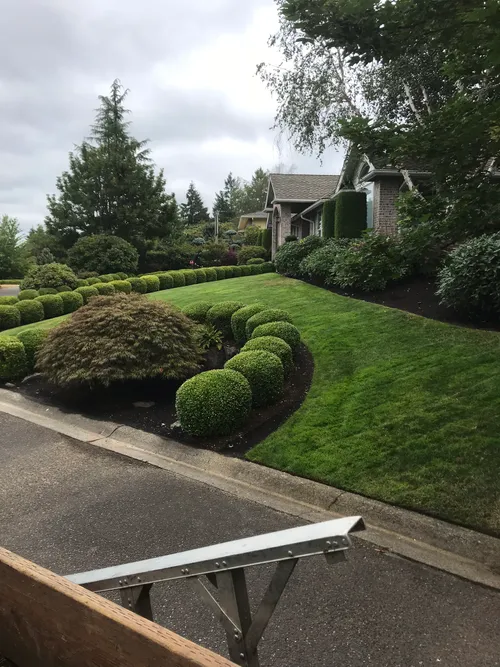
HD Landscape and Maintenance is a landscaping and maintenance company serving Portland, OR, and the surrounding metropolitan area. They offer a wide range of services including lawn care, sod and artificial turf installation, fence installation, landscape lighting, landscape design, tree services, yard drainage, hardscaping, and seasonal maintenance. Their work covers residential and commercial properties across Multnomah, Washington, and Clackamas counties. The company emphasizes sustainable landscaping practices using native plants and eco-friendly materials. They are fully licensed and insured, with experience handling projects from initial design to completion, including specialized capabilities like storm damage restoration and smart drainage systems.
Simple Lawns Landscape Design
9707 NE 54th St #C, Vancouver, WA 98662
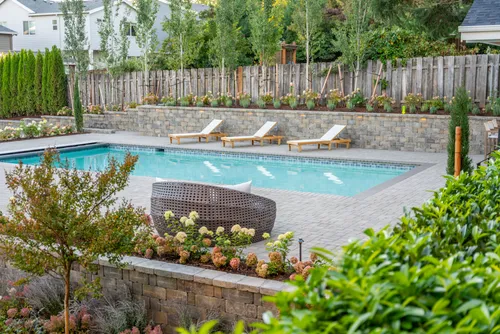
Simple Lawns Landscape Design is a family-owned landscaping and lawn care company serving Portland, OR. They provide a full range of services including lawn mowing, fertilization, weed control, landscape design, yard drainage, sprinkler installation and repair, and hardscaping such as pavers and retaining walls. With over 20 years of experience, they focus on durable outdoor solutions backed by a 5-year warranty on hardscaping. Their team includes trained installers who stay current with landscaping techniques to ensure quality results.
Árboles Landscape and Tree Services LLC
Portland, OR
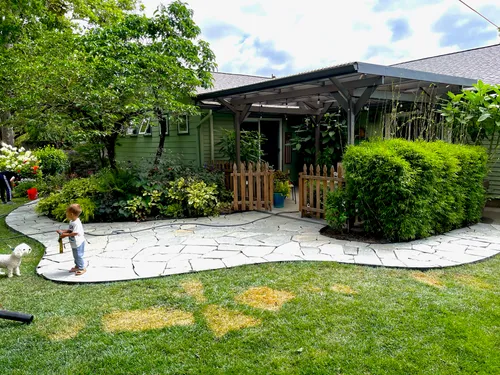
Árboles Landscape and Tree Services LLC is a landscaping and tree care company based in Portland, OR. They offer a range of services including landscape design, tree removal, and stump grinding. The company specializes in creating personalized outdoor spaces such as serene gardens and entertainment areas to enhance both beauty and function. Their service area includes Portland and the surrounding regions.
Danshap Landscaping and Excavation inc.
7800 NE 103rd Ave, Vancouver, WA 98662
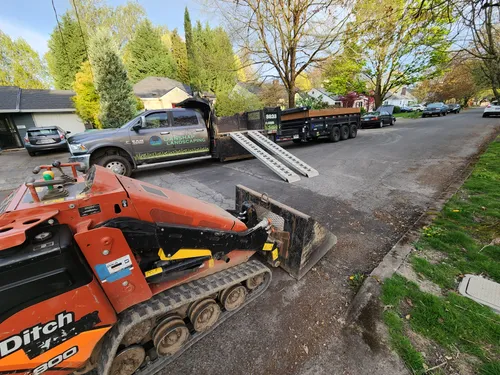
Danshap Landscaping and Excavation Inc. is a licensed, bonded, and insured landscaping company serving Portland, OR, and the surrounding areas. They offer a wide range of services including sod installation, landscape design, tree removal, stump grinding, yard drainage, grading, land clearing, brush removal, and general lawn care. The company is equipped to handle both residential and commercial projects, with capabilities such as grading and re-sloping yards to improve drainage and appearance. Danshap Landscaping is locally owned and operated, with a strong focus on customer satisfaction and quality workmanship.
Wyeast Gardens, LLC
23202 SE Hoffmeister Rd, Damascus, OR 97089
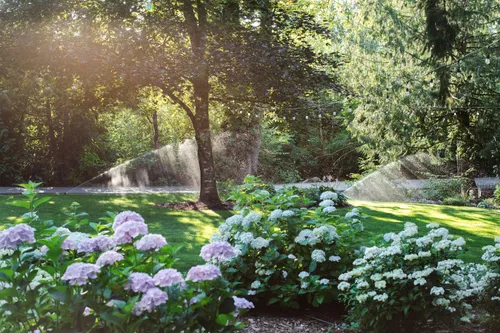
Wyeast Gardens, LLC is a full-service landscaping company based in Portland, OR, offering landscape design, irrigation installation and repair, yard drainage solutions, and hardscaping services. Serving commercial, residential, industrial, and governmental clients, they specialize in efficient irrigation systems and sustainable water management to enhance outdoor spaces. Established in 1994, Wyeast Gardens brings over 25 years of experience, including work with national cemeteries and VA hospitals, and provides skilled masonry and landscape construction services.
Understanding Oregon's Landscape Design Environment
Oregon's diverse environment presents both challenges and opportunities for homeowners. A successful design must account for dramatic regional variations and seasonal shifts to create a resilient and thriving outdoor space.
Climate Considerations: Wet Winters and Dry Summers
The defining feature of Oregon's climate is its wet winters and dry summers, particularly west of the Cascades. This pattern demands a landscape that can handle significant rainfall and seasonal drought. Effective designs incorporate plants adapted to dry spells and strategies for managing winter stormwater 1. In Central Oregon and the high desert east of the mountains, aridity and temperature extremes are the primary concerns, requiring even greater emphasis on drought tolerance 1.
Regional Variation: From Rainforest to High Desert
Oregon is not a single gardening zone. Western Oregon, including the Willamette Valley and Portland metro area, features a temperate rainforest climate supporting lush, dense plantings. Eastern Oregon, however, is a high desert or semi-arid region where water conservation is paramount. Plant palettes, irrigation needs, and even design styles must be tailored to these distinct environments.
Critical Design Priorities: Water, Fire, and Soil
Beyond aesthetics, several functional priorities are non-negotiable for a lasting landscape:
- Water Management: Proper drainage is essential to prevent erosion and basement flooding. Incorporating rain gardens, bioswales, and permeable paving helps capture and filter stormwater runoff, protecting local waterways.
- Fire Resistance: In forested areas, on slopes, or in the wildland-urban interface, employing Fire Wise principles is crucial. This involves creating defensible space with fire-resistant plants, strategic hardscaping, and careful placement of trees and structures.
- Soil Health: Understanding your soil type-whether it's the clay-heavy soil of the valley or the sandy, fast-draining soil of the east-is fundamental to selecting plants that will thrive.
Popular Landscape Design Styles in Oregon
Oregon homeowners often gravitate toward styles that reflect the state's natural beauty and environmental ethos. Here are some of the most sought-after approaches.
Native & Ecological Design
This style emphasizes sustainability and low maintenance by using plants indigenous to Oregon's various ecoregions. It supports local biodiversity, provides habitat for pollinators, and is inherently adapted to local rainfall patterns, reducing or eliminating the need for supplemental irrigation. An ecological design views the landscape as a connected system 2.
Modern & Contemporary Design
Characterized by clean lines, geometric shapes, and defined outdoor "rooms," modern design often uses materials like local stone, concrete, steel, and ornamental grasses. It focuses on structure, simplicity, and creating seamless transitions between indoor and outdoor living spaces. Plantings are often strategic and architectural rather than lush and abundant.
Woodland & Forest Edge Design
Prevalent in Western Oregon, this style works with existing mature trees to create a natural, layered look. It utilizes understory plants, native ferns, shade-tolerant perennials, and mosses to emulate the serene, textured feel of the Pacific Northwest forests. The goal is to enhance and blend with the wooded environment rather than clear it.
Drought-Tolerant & Xeriscape Design
While "xeriscape" might bring to mind rock and cactus, in Oregon it often means a vibrant, water-wise garden using plants from Mediterranean climates or dryland natives. This style is increasingly popular across the state as a response to drier summers and a desire to conserve water, without sacrificing color and interest 3.
Navigating Regulations and Permits in Oregon
Before breaking ground, it's essential to understand the regulatory landscape. Requirements vary by city and county, but several common themes exist.
Local Ordinances and Zoning
Most municipalities have landscaping codes that govern:
- Setbacks: How close structures or plantings can be to property lines.
- Tree Preservation: Rules for removing existing trees, especially those of a certain size or species.
- Planting Standards: Requirements for street trees or buffers in multi-family or commercial settings 4.
- Invasive Species: Many jurisdictions prohibit planting known invasive plants that can harm local ecosystems.
Permits for Hardscaping and Structures
Substantial changes often require permits:
- Retaining Walls: Walls over a certain height (often 4 feet) typically require a permit and engineered plans, especially if they are supporting a slope.
- Decks, Patios, and Pergolas: Permanent structures usually need building permits to ensure they meet safety codes.
- Fencing: Height and location restrictions are common, particularly for front yard fences.
Special Considerations: Drainage and Fire
- Stormwater Management: If your project significantly alters the flow of water on your property or adds large impervious surfaces, you may need a stormwater review or permit. Cities like Portland have specific guidelines for on-site stormwater management 5.
- Fire Hazard Zones: Properties in designated wildland-urban interface areas must comply with strict defensible space regulations, dictating plant choice, spacing, and the removal of combustible materials near the home 6.
Find the perfect landscape design companies for your needs
Get personalized recommendations and expert advice
The Financial Landscape: Understanding Costs
Investment in landscape design and installation varies widely based on project scope, materials, and site conditions. Having a realistic budget in mind helps guide the planning process.
Design Fees
Hiring a professional designer or landscape architect is the first financial step. Fees can be structured as:
- Hourly Rates: Typically ranging from $50 to $150 per hour for consultations and design work.
- Flat-Fee Design Packages: A complete master plan for a residential property can range from $2,000 to $7,000 or more, depending on the detail and complexity 7 8.
Installation Costs
This is the most variable part of the budget, covering all labor and materials:
- Small Updates: Refreshing planting beds or adding a simple path may start around $5,000.
- Standard Full Installations: A comprehensive project with new patio, planting, lighting, and irrigation often falls between $25,000 and $50,000.
- High-End Complex Projects: Large properties with extensive hardscaping (e.g., stone walls, outdoor kitchens, water features), complex grading, and mature specimen trees can easily reach $100,000 or more 9 10 11.
Key Cost Drivers
Several factors disproportionately impact the final price:
- Hardscaping: Materials like natural flagstone, pavers, or poured concrete and the labor for installation are major cost components.
- Site Preparation: Difficult access, significant grading, rock removal, or land clearing add to labor and equipment costs.
- Irrigation Systems: Installing a new automated drip or spray system is a significant line item but crucial for plant establishment.
- Plant Material Size: Installing large, mature trees and shrubs is far more expensive than planting smaller "starter" sizes.
- Permitting and Engineering: Projects requiring engineered plans for walls or drainage will incur additional professional fees.
The Professional Design Process: What to Expect
Working with a professional ensures your project navigates the above considerations smoothly. A typical process includes:
- Initial Consultation: Discuss your goals, budget, site challenges, and aesthetic preferences.
- Site Analysis: The designer assesses soil, sun/shade patterns, drainage, existing vegetation, and views.
- Conceptual Design: Preliminary sketches explore layout ideas, spatial relationships, and style direction.
- Master Plan Development: Detailed drawings specify all elements: planting plans, hardscape layouts, lighting, and irrigation.
- Construction Documentation & Contractor Selection: Some designers provide detailed specs for contractors to bid on; others may manage the installation.
- Installation & Project Management: The landscape is built, often with the designer overseeing to ensure the plan is executed correctly.
Frequently asked questions
Sources
Footnotes
-
Climate Change and Central Oregon Landscaping - https://www.highdeserthorticulturalcenter.org/news/climate-change-and-central-oregon-landscaping ↩ ↩2
-
Ecological design of urban landscapes: Economic, social and ... - https://extension.oregonstate.edu/catalog/em-9107-ecological-design-urban-landscapes-economic-social-ecological-benefits ↩
-
to Landscape Design Oregon - Green Gardens Group - https://greengardensgroup.com/wp-content/uploads/2018/11/APLD_OR_G3_Handbook_web.pdf ↩
-
Chapter 17.140 LANDSCAPING STANDARDS - General Code - https://www.codepublishing.com/OR/RogueRiver/html/RogueRiver17/RogueRiver17140.html ↩
-
Civil Design Guide - Portland.gov - https://www.portland.gov/transportation/engineering/documents/civil-design-guide-public-street-improvements/download ↩
-
3.2.300 New Landscaping | Bend Development Code - https://bend.municipal.codes/BDC/3.2.300 ↩
-
How Landscape Architecture in Portland, OR is Redefining ... - https://www.olguinclandscaping.com/blog/how-landscape-architecture-in-portland-or-is-redefining-sustainable-garden-design/ ↩
-
How Much Does Landscape Design Cost in 2026? - LawnStarter - https://www.lawnstarter.com/blog/cost/landscape-design-price/ ↩
-
Landscaping in Beaverton, OR - Costs 12 / 2025 - Homeyou - https://www.homeyou.com/or/landscaping-beaverton-costs ↩
-
ADU Design Portland Oregon: Top Trends for 2024 Success - https://rgprobuilders.com/adu-design-portland-oregon/ ↩
-
Landscape Design Costs - YesPlease.GARDEN - https://yesplease.garden/landscape-design-costs/ ↩