Find the Best Landscape Lighting Installers for Your Business
No obligation • Fast responses • Nationwide coverage

Why you can trust Landscape Atlas
Landscape Atlas is a leading United States resource for evaluating landscaping, lawn care, and outdoor service providers. Our team researches each category in depth, focusing on service quality, safety, and customer experience. Listings and rankings are based on independent criteria and user feedback, and companies cannot pay to influence our assessments or recommendations.
Search providers near you
Best Landscape Lighting Installers in Delaware Ranked
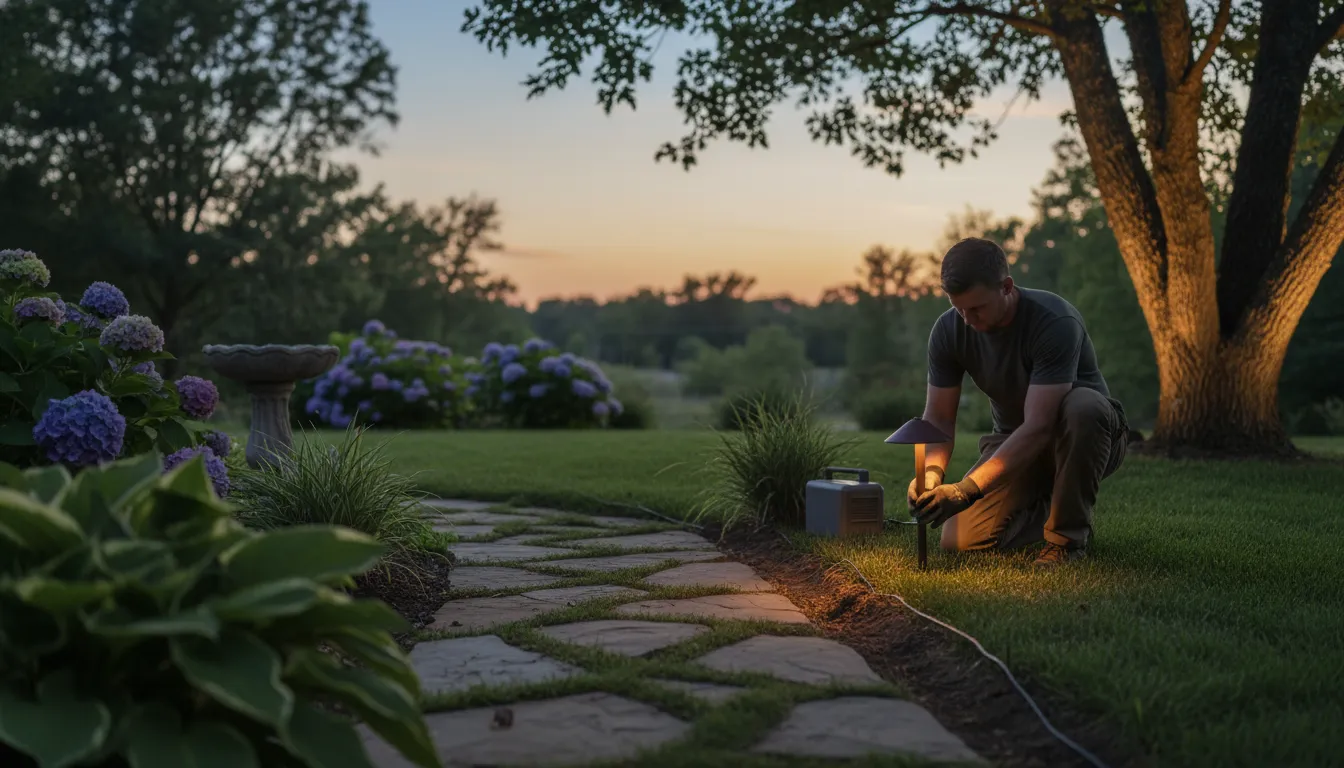
A well-designed landscape lighting system transforms your Delaware property, enhancing its beauty, safety, and usability after sunset. It's more than just placing lights; it's an art form that highlights architectural features, illuminates pathways, and creates inviting outdoor living spaces. Finding the right professional for your project is key to achieving a system that is both stunning and reliable. This guide will help you understand your options, from system types to costs, so you can make an informed decision and connect with qualified specialists in the First State.
Understanding Your Lighting System Options
When planning your Delaware landscape lighting, the first major decision is choosing between low-voltage and line-voltage systems. Each has distinct advantages, installation requirements, and ideal applications.
Low-Voltage (12V) Lighting is the most popular choice for residential properties across Delaware. These systems use a transformer to step down standard household current (120V) to a safer 12 volts. The inherent safety of low voltage makes it suitable for DIY enthusiasts and is a major plus for homes with children and pets. Beyond safety, these systems are energy-efficient and offer tremendous design versatility for highlighting trees, washing walls, or lighting walkways.
Line-Voltage (120V) Lighting operates at full household current, providing brighter, more powerful illumination 1. This makes it suitable for security lighting, illuminating large commercial properties, or areas requiring intense light. However, due to the significant shock hazard, installation must be performed by a licensed electrician 2. It requires deeper trenching (typically 18 inches deep) for conduit and involves strict electrical codes and permits 3 4.
Solar Lighting presents a third, DIY-friendly path. These fixtures have built-in photovoltaic panels and batteries, requiring no wiring. While low in upfront cost and installation complexity, they are generally less powerful and provide inconsistent light output compared to wired systems, often best used for accenting garden paths 5.
Key Components of a Low-Voltage System
A professional-grade low-voltage lighting installation consists of several integrated parts. Understanding these will help you communicate effectively with your installer.
- Transformer: The heart of the system. This weatherproof box plugs into a standard outdoor GFCI outlet and converts 120V power to 12V. It's crucial to select a transformer with enough wattage capacity to handle all your planned fixtures, plus room for future expansion 6.
- Fixtures: The visible elements that provide the light. Common types include:
- Spotlights/Uplights: Used to accentuate trees, architectural details, or flagpoles.
- Path Lights: Shorter fixtures that line walkways and driveways for safety.
- Well Lights: Recessed into the ground for subtle uplighting.
- Deck & Step Lights: Provide safety and ambiance on stairs and railings.
- Cable: Specially designed low-voltage landscape wire that runs from the transformer to each light fixture. Proper wire gauge (thickness) is critical to prevent voltage drop, which causes lights at the end of a long run to appear dim 7.
- Connections: All wire splices and fixture connections must be made with waterproof connectors to ensure the system withstands Delaware's weather and operates safely for years 8.
Find the perfect landscape lighting installers for your needs
Get personalized recommendations and expert advice
Professional Installation Process and Considerations
A professional installer doesn't just put lights in the ground; they follow a meticulous process to ensure a beautiful, durable, and code-compliant result.
- Consultation & Design: A specialist will visit your property at dusk to understand your goals, assess the landscape, and create a lighting plan. This plan considers focal points, safety needs, light pollution, and the technical layout of circuits.
- Component Selection: Based on the design, you'll select fixtures (materials like copper, brass, or polymer), lamp types (LED is standard for efficiency and longevity), and the appropriately sized transformer.
- Installation: The crew will trench shallow lines for low-voltage cable (typically 3-6 inches deep), mount the transformer, place and secure all fixtures, and make all electrical connections. For line-voltage systems, this phase involves permitting, deeper trenching for conduit, and work by a licensed electrician 9.
- Aiming & Final Adjustments: Once everything is powered, the installer will precisely aim each fixture to achieve the desired effect, adjusting beams to avoid glare and create perfect shadows.
What to Expect: Investment and Value
The cost of a professional landscape lighting installation in Delaware varies based on system complexity, fixture quality, and property size.
- Typical Total Project Cost: For a complete professionally installed low-voltage system, most homeowners invest between $2,000 and $6,000.
- Cost Per Fixture: Installed fixture costs typically range from $100 to $500 each, depending on the style, material, and technology.
- Project Range: A small, simple lighting project may start around $800, while extensive, custom designs with high-end fixtures can reach $10,000 or more 10 11.
While this is an investment, it adds significant value. Beyond the immediate beauty and functionality, a quality lighting system enhances property safety and security, extends the use of your outdoor living areas, and can increase your home's curb appeal and market value.
Maintaining Your Landscape Lighting
To keep your system looking and performing its best, simple annual maintenance is recommended. This includes cleaning fixture lenses of dirt and debris, trimming back plant growth that may block light beams, checking for and correcting any fixtures that have shifted or sunk, and ensuring the transformer timer is correctly set for the changing seasons. Many professional installers offer maintenance plans to handle these tasks for you.
Frequently asked questions
Sources
Footnotes
-
Line Voltage vs. Low Voltage for Your Landscape Lighting - https://www.lightingwarehouse.com/learn/low-voltage-vs-line-voltage ↩
-
Landscape Lighting: Low-Voltage (12V) vs Line-Voltage (120V) - https://www.voltlighting.com/learn/low-voltage-vs-line-voltage-landscape-lighting ↩
-
Difference Between Low Voltage & Line Voltage Landscape Lighting - https://www.lightopia.com/low-voltage-vs-line-voltage-landscape-lighting ↩
-
Landscape Lighting Voltage: The Essential Guide to 12V vs. 120V ... - https://ironsmithlighting.com/blogs/news/landscape-lighting-voltage ↩
-
How to Install Landscape Lighting - The Home Depot - https://www.homedepot.com/c/ah/how-to-install-landscape-lighting/9ba683603be9fa5395fab90d9f6978e ↩
-
Choosing the Right Transformer for Your Landscape Lighting Job - https://www.kichler.com/choosing-the-right-transformer-for-your-landscape-lighting-job ↩
-
A Beginner's Guide to Low Voltage Landscape Lighting Wire Lengths - https://www.gardenreet.com/blogs/landscape-lighting-articles/a-beginners-guide-to-low-voltage-landscape-lighting-wire-lengths ↩
-
How to Create a Landscape Lighting Installation Plan - VOLT Lighting - https://www.voltlighting.com/learn/create-a-landscape-lighting-plan ↩
-
Illuminate Your Delaware Property with Low Voltage Lighting - https://conductiveelectric.com/low-voltage-lighting-delaware/ ↩
-
How Much Does Landscape Lighting Cost in 2026? - LawnStarter - https://www.lawnstarter.com/blog/cost/landscape-lighting-price/ ↩
-
How Much Does Landscape Lighting Installation Cost? [2026 Data] - https://www.angi.com/articles/landscape-lighting-costs.htm ↩