Find the Best Landscape Lighting Installers for Your Business
No obligation • Fast responses • Nationwide coverage

Why you can trust Landscape Atlas
Landscape Atlas is a leading United States resource for evaluating landscaping, lawn care, and outdoor service providers. Our team researches each category in depth, focusing on service quality, safety, and customer experience. Listings and rankings are based on independent criteria and user feedback, and companies cannot pay to influence our assessments or recommendations.
Search providers near you
Best Landscape Lighting Installers in Hawaii Ranked
Enhancing your outdoor space with landscape lighting can transform your Hawaii property, extending its usability into the evening and dramatically highlighting its unique tropical beauty. Properly installed lighting improves safety on paths and steps, increases security, and creates a welcoming ambiance for entertaining. This guide will help you understand the options, costs, and considerations for installing outdoor lighting in Hawaii, so you can make informed decisions and find qualified local professionals to bring your vision to life.
Oceanic Landscaping
4348 Waialae Ave #562, Honolulu, HI 96816
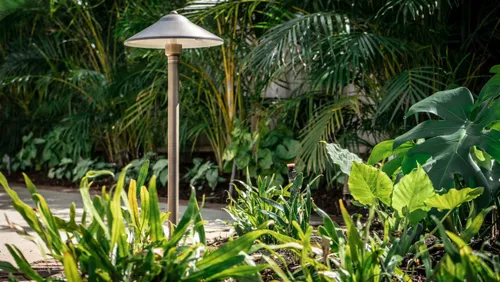
Oceanic Landscaping is a full-service landscaping company based in Honolulu, HI, serving communities throughout Oahu including Ala Moana, Waikiki, Manoa, and Kailua. They offer a wide range of services such as lawn care, tree trimming, landscape design, hardscaping, and outdoor lighting installation. Their team specializes in creating functional and aesthetically pleasing outdoor spaces, including features like outdoor kitchens and fire pits, tailored to enhance clients' lifestyles. Oceanic Landscaping is committed to protecting Hawaii's native ecosystem while maintaining beautiful, well-kept landscapes year-round.
Hawaii Harmony Gardens Landscaping
1419 Piikoi St, Honolulu, HI 96822
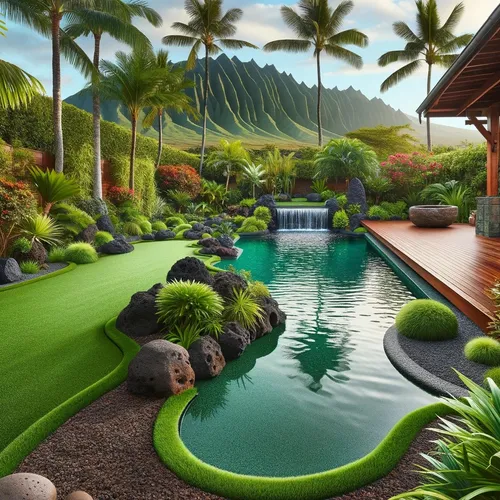
Hawaii Harmony Gardens Landscaping is a full-service landscaping company based in Honolulu, HI. They provide a wide range of services including lawn mowing, fertilization, weed control, sod and synthetic turf installation, landscape lighting, irrigation system design and repair, tree services, and hardscaping such as patios and retaining walls. Their expertise includes sustainable landscaping with native Hawaiian plants and smart irrigation systems that optimize water use while maintaining healthy lawns and gardens. They serve both residential and commercial clients in Honolulu, offering personalized landscape design and maintenance solutions. The company also provides 24/7 tree removal services for emergencies.
Aloha `Aina Landscaping LLC
41-668 Kakaina St, Waimanalo, HI 96795
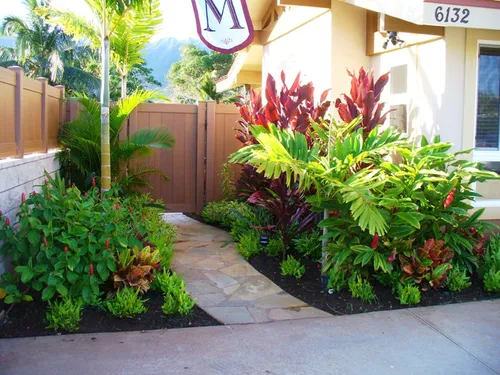
Aloha `Aina Landscaping LLC is a licensed and insured landscaping company based in Honolulu, HI. They offer a comprehensive range of services including landscape design and planting, irrigation system installation, lawn installation, drainage and grading, masonry and fencing construction, landscape lighting, and yard care. Their nursery grows high-quality plants to support vibrant outdoor spaces. The company emphasizes transparent communication and partnership to meet client project visions with cost-effective solutions. Aloha `Aina Landscaping is known for their masonry construction capabilities such as driveway and walkway paving.
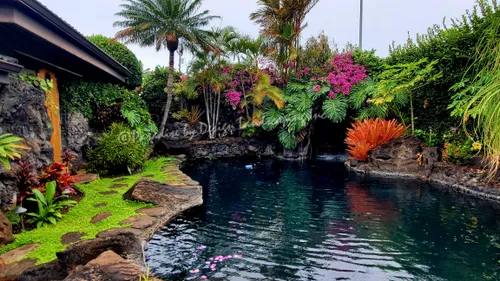
Paradise by Design Landscaping Inc.
1813 Paula Dr, Honolulu, HI 96816
Paradise by Design Landscaping Inc. is a landscaping company based in Honolulu, HI, offering a wide range of services including landscape design, renovation, and installation. They specialize in various landscape styles such as Lush Tropical, Formal Tropical, Hawaiian, Japanese, Modern, and Formal designs. The company also provides full-service landscape maintenance for select clients, including lawn fertilization, weed and pest control, and irrigation optimization. Their expertise extends to professional low voltage outdoor lighting design and installation, as well as sprinkler system installation and repair. With over 30 years of experience in Hawaii and Florida, Paradise by Design Landscaping Inc. brings creativity and skill to transforming properties into tropical garden paradises.
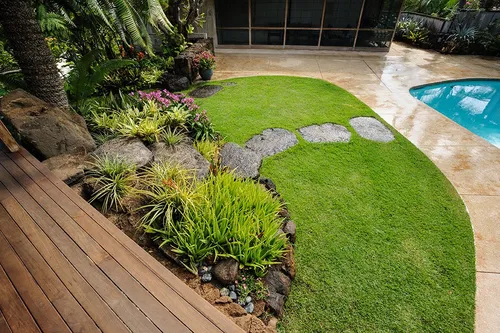
Mulkern Landscaping & Nursery
41-639 Kaulukanu St, Waimanalo, HI 96795
Mulkern Landscaping & Nursery is a full-service landscaping company based in Honolulu, HI, serving East and Windward Oahu. With over 40 years of experience since 1975, they specialize in landscape design, installation, and maintenance, including sprinkler installation and repair. Their capabilities include creating natural water features such as ponds and fountains, as well as outdoor lighting to enhance garden spaces. The company covers a wide area including Kailua, Hawaii Kai, and Kaneohe.
Understanding Your Lighting System Options
In Hawaii, you'll primarily choose between low-voltage, line-voltage, and solar-powered lighting systems. Each has distinct advantages, installation requirements, and best-use cases suited to the islands' climate and typical residential properties.
Low-Voltage (12V) Systems are the most popular choice for Hawaiian homes. These systems use a transformer to convert your standard household 120V current down to a safer 12 volts. They are ideal for highlighting palm trees, garden paths, water features, and architectural details. The lower voltage significantly reduces the risk of shock, allows for easier do-it-yourself installation, and is generally more energy-efficient. Wiring can often be buried at a shallow depth (around 6 inches), making installation less disruptive to your landscape.
Line-Voltage (120V) Systems deliver full household current and are typically reserved for applications requiring high power output, such as illuminating large areas, security floodlights, or commercial properties 1 2. In Hawaii, any line-voltage installation must be performed by a licensed electrician and requires strict adherence to the National Electrical Code (NEC), including burying conduit at depths of 18 to 24 inches 3 4. This makes the installation more complex and costly but necessary for certain high-demand lighting needs.
Solar-Powered Lights offer a budget-friendly and temporary lighting solution. They are easy to place anywhere without wiring but depend entirely on consistent sunlight to recharge their batteries. In Hawaii's sometimes cloudy or rainy microclimates, this can lead to inconsistent performance, dimmer light output, and a need for more frequent battery replacement compared to hardwired systems.
Key Considerations for Hawaii Homeowners
Choosing the right system involves more than just picking a type. Several factors specific to your property and goals will guide your decision.
- Safety and Code Compliance: For low-voltage systems, DIY installation is common and safe. However, any work involving your home's main electrical panel or line-voltage wiring must be done by a licensed electrician to meet Hawaii's building and electrical codes.
- Property Goals: Define what you want to achieve. Is it safety lighting for a dark pathway? Accent lighting for a prized plumeria tree? Ambient lighting for a lanai? Security lighting for a driveway? Your goals will determine fixture types and placement.
- Fixture Quality and Materials: Hawaii's salty air and humid climate demand durable, corrosion-resistant materials. Look for fixtures made from solid brass, copper, or high-quality polymers with weatherproof seals. Cheap aluminum fixtures will corrode quickly in the island environment.
- Transformer Capacity: The transformer is the heart of a low-voltage system. It must be sized to handle the total wattage of all your lights, plus an additional 20% overhead for future expansion. An undersized transformer will cause all your lights to dim.
- Lighting Controls: Basic systems use manual or timer controls. Modern systems integrate with smart home technology, allowing you to control lights via smartphone apps, set schedules, or even sync with motion sensors for enhanced security and convenience.
Landscape Lighting Installation Costs in Hawaii
Costs for outdoor lighting in Hawaii can vary widely based on system type, fixture quality, and project complexity. Here's a breakdown of what you can expect.
System Type & Scope:
- DIY Low-Voltage Kits: A starter kit with a transformer, several fixtures, and cable can range from $200 to over $3,600, depending on quality and the number of lights.
- Professional Installation (Per Fixture): For professionally installed low-voltage fixtures, homeowners can expect to pay roughly $100 to $150 per light5. This cost includes the fixture, labor, wiring, and transformer connection.
- Total Project Costs: A basic professional installation with around 6 fixtures may start at approximately $2,700. A more comprehensive mid-range project with 10 lights could average $3,500. High-end designs with 15 or more premium, smart-controlled fixtures can easily reach $5,600 or more6 7 8.
Primary Cost Factors:
- Fixture Quality: Premium materials like copper and brass cost more upfront but last far longer in coastal climates.
- Transformer Size: Larger capacity transformers cost more but are essential for supporting bigger systems.
- Wire Length and Labor: The distance from the transformer to the farthest light and the complexity of the layout (around trees, under decks) impact cable costs and labor time.
- Control Systems: Adding smart timers, dimmers, or app-based controls increases the project cost but adds significant convenience 9.
- Line-Voltage Projects: Due to the need for an electrician, permits, and deeper trenching, line-voltage installations are significantly more expensive per fixture than low-voltage projects 10.
Find the perfect landscape lighting installers for your needs
Get personalized recommendations and expert advice
The Professional Installation Process
Working with a qualified installer ensures your system is safe, effective, and built to last. A typical professional installation follows these key steps:
- Consultation and Design: A specialist will visit your property to discuss your vision, assess the landscape, and create a lighting plan. This plan maps out fixture locations, types (path, spot, wash), and the wiring route.
- Equipment Selection: Based on the design, you'll select fixtures, a properly sized transformer, and any control systems. A professional will recommend materials suited for Hawaii's environment.
- Installation: For low-voltage, the crew will place the transformer, run the main cable (often in a shallow trench or hidden under mulch), and connect each fixture with waterproof connectors. For line-voltage, a licensed electrician will handle the trenching, conduit laying, and connections to your home's electrical system 11.
- Connection and Testing: All fixtures are connected to the transformer, the system is powered on, and each light is adjusted for perfect beam angle and placement. The installer will demonstrate any timers or controls.
- Final Walkthrough: You'll review the illuminated landscape with the installer to ensure every element meets your expectations before the project is finalized.
Maintenance for Longevity in Island Climates
To protect your investment from Hawaii's elements, regular simple maintenance is crucial.
- Monthly: Wipe fixture lenses to remove salt spray, dust, and debris that can block light.
- Seasonally: Trim back any plants that have grown into the light beams. Check for corrosion on fixture housings and connections.
- Annually: Inspect all wire connections for moisture ingress. Test the transformer and timer settings. Replace any burnt-out bulbs or LEDs promptly.
Frequently asked questions
Sources
Footnotes
-
Line Voltage vs Low Voltage: Which Landscape Lighting is Best? - https://www.lutou-tech.com/line-voltage-vs-low-voltage-landscape-lighting/ ↩
-
How to Choose the Best Landscape Lighting for Your Home & Yard - https://www.voltlighting.com/learn/introduction-to-landscape-lighting ↩
-
Low Voltage Landscape Lighting: What You Need to Know? - https://tru-scapes.com/low-voltage-landscape-lighting/ ↩
-
Landscape Lighting: Low-Voltage (12V) vs Line-Voltage (120V) - https://www.voltlighting.com/learn/low-voltage-vs-line-voltage-landscape-lighting ↩
-
How to Plan for a Landscape Lighting Installation - https://www.superbrightleds.com/blog/planning-for-an-led-landscape-lighting-installation.html ↩
-
How Much Does Landscape Lighting Cost in 2026? - LawnStarter - https://www.lawnstarter.com/blog/cost/landscape-lighting-price/ ↩
-
How Much Does Low Voltage Landscape Lighting Cost? - Blog - https://brooksidelandscape.design/how-much-does-low-voltage-landscape-lighting-cost-full-breakdown/ ↩
-
Outdoor Lighting Installation Cost and Pricing Guide - https://www.outdoorlights.com/resources/pricing-guide/ ↩
-
How Much Do Low-Voltage Landscaping Lights Cost - https://www.royalcreationslandscaping.com/low-voltage-landscaping-light-system-cost-guide/ ↩
-
How Much Does Landscape Lighting Cost in 2026? - Lawn Love - https://lawnlove.com/blog/landscape-lighting-cost/ ↩
-
New How to Install Landscape Lighting (2021 Updated Version) - https://www.youtube.com/watch?v=ZxaDJ2mdvFE ↩