Find the Best Landscape Lighting Installers for Your Business
No obligation • Fast responses • Nationwide coverage

Why you can trust Landscape Atlas
Landscape Atlas is a leading United States resource for evaluating landscaping, lawn care, and outdoor service providers. Our team researches each category in depth, focusing on service quality, safety, and customer experience. Listings and rankings are based on independent criteria and user feedback, and companies cannot pay to influence our assessments or recommendations.
Search providers near you
Best Landscape Lighting Installers in Massachusetts Ranked
A well-designed landscape lighting system transforms your Massachusetts property, enhancing its beauty, safety, and usability after sunset. It's more than just placing lights; it's about strategically illuminating pathways, architectural features, and gardens to create ambiance and security. Finding the right professional for your project ensures a system that is both aesthetically pleasing and technically sound, tailored to New England's distinct seasons and your home's unique character.
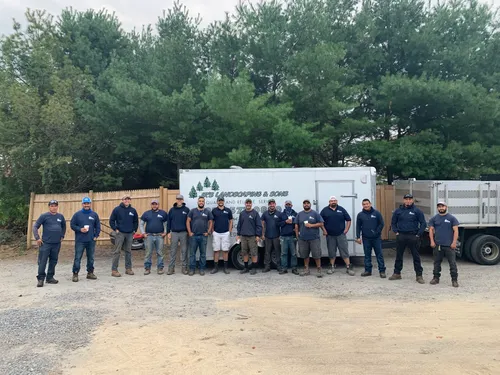
JR's Landscaping & Sons LLC
3 Sorelle Pl, Burlington, MA 01803
JR's Landscaping & Sons LLC is a full-service landscaping company serving Boston, MA, and Middlesex County. They provide a wide range of services including lawn mowing, lawn fertilization, weed control, sod installation, fence installation, landscape lighting, sprinkler installation and repair, hardscaping with patios and retaining walls, and custom landscape design. With over 20 years of experience since 1997, they offer year-round solutions tailored to maintain and enhance outdoor spaces for both residential and commercial properties. Their capabilities include expert hardscape installations such as stone walkways, patios, and retaining walls designed for New England weather conditions.
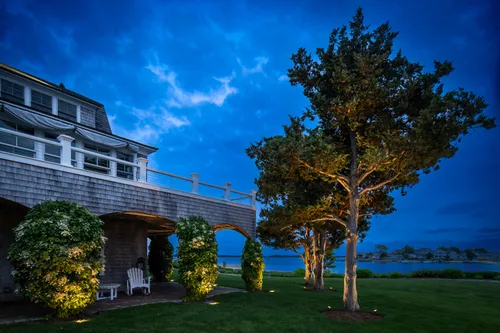
Apollo Outdoor Lighting
77 Accord Park Dr D-14, Norwell, MA 02061
Apollo Outdoor Lighting is a company based near Boston, MA, specializing in landscape and outdoor lighting installation. They design custom lighting solutions that enhance the appearance and ambiance of residential properties after dark. Apollo Outdoor Lighting serves the South Shore, MetroWest, Cape Cod, and surrounding areas, focusing on creating warm and inviting outdoor spaces through tailored lighting designs.
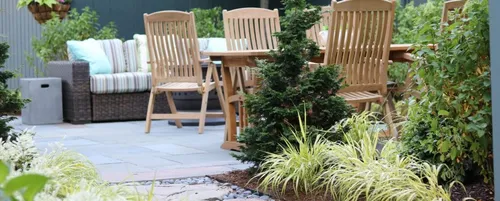
The Narrow Lane
78 Fremont St, Needham, MA 02494
The Narrow Lane is a landscaping and outdoor lighting company based in Boston, MA. They provide a full range of luxury outdoor services including landscape design, construction, lighting installation, and maintenance. Their expertise includes creating custom outdoor living spaces and hardscaping features such as fire pits. With decades of experience, The Narrow Lane offers year-round care and manages projects from initial design through completion.
The Pros Inc. - Landscape Design & Build
29 Hanover St, Lynn, MA 01902
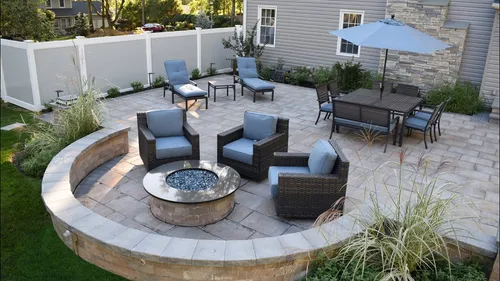
The Pros Inc. - Landscape Design & Build is a landscaping and outdoor living company serving Boston, MA, and surrounding areas. With over 20 years of experience, they offer a wide range of services including landscape design, lawn care, sod installation, fence installation, hardscaping, outdoor lighting, irrigation, water features, pool and spa construction, decks, pergolas, driveways, and seasonal maintenance. Their expertise includes custom pool building with options like fiberglass and gunite concrete pools, as well as comprehensive irrigation systems designed for efficient watering. The company also provides snow and ice management services during winter months.
Advanced Electrical Service Co.
Boston, MA
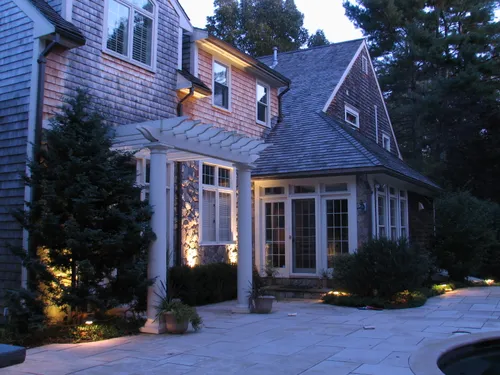
Advanced Electrical Service Co. is an electrical company based in Boston, MA, specializing in landscape and outdoor lighting installation. They offer a range of services including night landscaping lighting, interior lighting design, and electric vehicle charging installation throughout the Greater Boston Area. With over 32 years of experience, owner Dave Pike has built a reputation for dependable and skilled electrical work. The company serves multiple communities in Eastern Massachusetts and showcases a diverse portfolio of completed projects.
Understanding Your Lighting Options: Voltage, Types, and Styles
The foundation of any good lighting plan is choosing the right system type. In Massachusetts, the vast majority of residential landscape lighting installations use low-voltage (12V) systems. These are popular because they are safer, energy-efficient with modern LEDs, and often more DIY-friendly. A transformer steps down your standard 120V household current to a safer 12 volts for the outdoor fixtures.
For larger properties or areas requiring intense illumination, line-voltage (120V) systems are an option. These deliver more power and can support high-wattage fixtures, but they carry a much higher risk of electrical shock and must be installed by a licensed electrician. Given the complexity and code requirements, line-voltage is less common for typical home landscapes.
A third, increasingly popular category is solar lighting. These cordless, portable fixtures are excellent for easy accent lighting in sunny spots. However, they are generally less powerful and reliable than wired systems, with performance varying based on sunlight exposure1 2.
Once you've chosen a system type, consider the lighting styles that will achieve your goals:
- Path & Step Lighting: Guides movement safely along walkways and stairs.
- Uplighting: Dramatically highlights trees, stone walls, or architectural details from below.
- Accent & Spotlighting: Draws attention to specific garden features, sculptures, or water elements.
- Security & Flood Lighting: Illuminates dark corners, driveways, and entry points for safety.
- Ambient & Decorative: Includes string lights, bistro lights, or soft wash lighting for patios and decks3 4.
Key Components of a Professional System
A durable and effective lighting system is built from quality parts. Understanding these components helps you evaluate proposals and products.
- Transformer: The heart of a low-voltage system. It converts household power to 12V and houses the timer or smart controls. Sizing it correctly (with about 20% extra wattage capacity for future expansion) is critical for performance5.
- Fixtures: Available in myriad materials (brass, copper, aluminum) and finishes. Quality fixtures are designed to withstand Massachusetts weather, from summer humidity to winter freeze-thaw cycles. Costs typically range from $100 to $500 per fixture, depending on materials and light output.
- Wire & Cable: Low-voltage wiring, usually 12 or 10-gauge, connects the transformer to the fixtures. Proper wire gauge is essential to prevent voltage drop over long runs, which causes lights at the end of the line to dim.
- Connectors & Housings: Watertight connectors and durable lens housings protect electrical connections and LEDs from moisture and debris.
- Controls: Modern systems go beyond simple timers. Smart controls allow you to adjust lighting schedules, dim lights, and control zones from your smartphone, maximizing both convenience and energy savings6.
Installation Considerations and Massachusetts Codes
While low-voltage lighting is safer and has fewer regulatory hurdles than line-voltage, proper installation is still governed by best practices and local codes.
Licensing and Permits: In Massachusetts, installing the low-voltage cable and fixtures typically does not require an electrician's license. However, the initial connection of the transformer to your home's 120V power source often does require work by a licensed electrician, depending on your local town or city's bylaws7 8. Always check with your municipal building department.
Wire Burial Depth: Low-voltage wiring does not need to be buried as deeply as line-voltage cables, but it must still be buried or secured to prevent damage from lawn equipment or weathering. Following the National Electric Code (NEC) and manufacturer guidelines is essential for safety and longevity9 10.
Design and Layout: A professional installer will create a lighting plan that considers beam angles, light pollution (avoiding "light trespass" on neighbors), glare control, and the specific growth habits of your plants to ensure the design remains effective for years.
Find the perfect landscape lighting installers for your needs
Get personalized recommendations and expert advice
Cost Guide for Landscape Lighting in Massachusetts
The total investment for a landscape lighting system in Massachusetts varies widely based on the system's size, complexity, and fixture quality. Here's a general breakdown to help you budget:
- Small/Starter System: A basic setup illuminating a front walkway and a few key shrubs might start around $2,000.
- Average Residential System: A comprehensive design covering key architectural features, trees, and multiple pathways typically ranges from $2,000 to $6,000 for professional design and installation 11.
- Large/Custom System: Extensive lighting for a large property, including smart controls, specialized fixtures, and multiple zones, can range from $8,000 to over $20,000.
- Per-Fixture Basis: A useful rule of thumb is $100 to $500 per fixture, plus the cost of the transformer, wiring, and labor12.
- DIY Approach: A homeowner installing a small solar or low-voltage kit could spend under $1,500 on materials, but this requires technical comfort and may not achieve the same integrated, durable result as a professional installation13.
Maintaining Your Outdoor Lighting System
To protect your investment and keep your system shining brightly, regular maintenance is key, especially in New England's climate.
- Seasonal Cleaning: Gently clean fixture lenses in spring and fall to remove dirt, pollen, and salt spray that can reduce light output.
- Bulb/LED Replacement: Even long-lasting LEDs will eventually need replacement. Using compatible, quality replacements ensures performance.
- Wire and Connection Checks: Periodically inspect for wire damage from rodents or landscaping, and ensure connections remain watertight.
- Adjustment: As plants grow, you may need to reposition fixtures to maintain the intended lighting effect.
- Transformer Care: Ensure the transformer's vents are clear of debris and its settings are correct for the season (e.g., adjusting timer settings as daylight hours change).
The Value of Professional Design and Installation
Working with a knowledgeable professional in Massachusetts offers significant advantages. An expert will navigate site-specific challenges like rocky New England soil, mature tree root systems, and local electrical codes. They provide a cohesive design that balances aesthetics, function, and safety while using commercial-grade products built to last. Perhaps most importantly, a professional guarantees the installation, giving you peace of mind that your system is safe, reliable, and adds lasting value to your home.
Frequently asked questions
Sources
Footnotes
-
Landscape Lighting: Low-Voltage (12V) vs Line-Voltage (120V) - https://www.voltlighting.com/learn/low-voltage-vs-line-voltage-landscape-lighting ↩
-
How to Install Landscape Lighting - The Home Depot - https://www.homedepot.com/c/ah/how-to-install-landscape-lighting/9ba683603be9fa5395fab90d9f6978e ↩
-
low voltage outdoor lighting - Pandolfi Landscape Construction - https://www.pandolfilandscapes.com/services/low-voltage-outdoor-lighting ↩
-
Line Voltage vs. Low Voltage for Your Landscape Lighting - https://www.lightingwarehouse.com/learn/low-voltage-vs-line-voltage ↩
-
Choosing the Right Transformer for Your Landscape Lighting Job - https://www.kichler.com/choosing-the-right-transformer-for-your-landscape-lighting-job ↩
-
How to Create a Landscape Lighting Installation Plan - VOLT Lighting - https://www.voltlighting.com/learn/create-a-landscape-lighting-plan ↩
-
Understanding Low Voltage vs. Line Voltage - Spectrum Electric - https://www.spectrumelectricinc.com/blog/2023/understanding-low-voltage-vs-line-voltage.html ↩
-
Do I Need to Be an Electrician to Install Landscape Lighting ... - https://www.youtube.com/watch?v=yra_PP4Qkso&t=3 ↩
-
A Beginner's Guide to Low Voltage Landscape Lighting Wire Lengths - https://www.gardenreet.com/blogs/landscape-lighting-articles/a-beginners-guide-to-low-voltage-landscape-lighting-wire-lengths ↩
-
Gauge Wires For Landscape Lighting - Kings Outdoor Lighting - https://kingsoutdoorlighting.com/blogs/news/gauge-wires-for-landscape-lighting ↩
-
How Much Does Landscape Lighting Installation Cost? [2026 Data] - https://www.angi.com/articles/landscape-lighting-costs.htm ↩
-
Landscape Lighting Design in Walpole, MA - https://landdesignassociates.com/landscape-lighting-design-walpole-ma/ ↩
-
How Much Does Landscape Lighting Cost in 2026? - LawnStarter - https://www.lawnstarter.com/blog/cost/landscape-lighting-price/ ↩