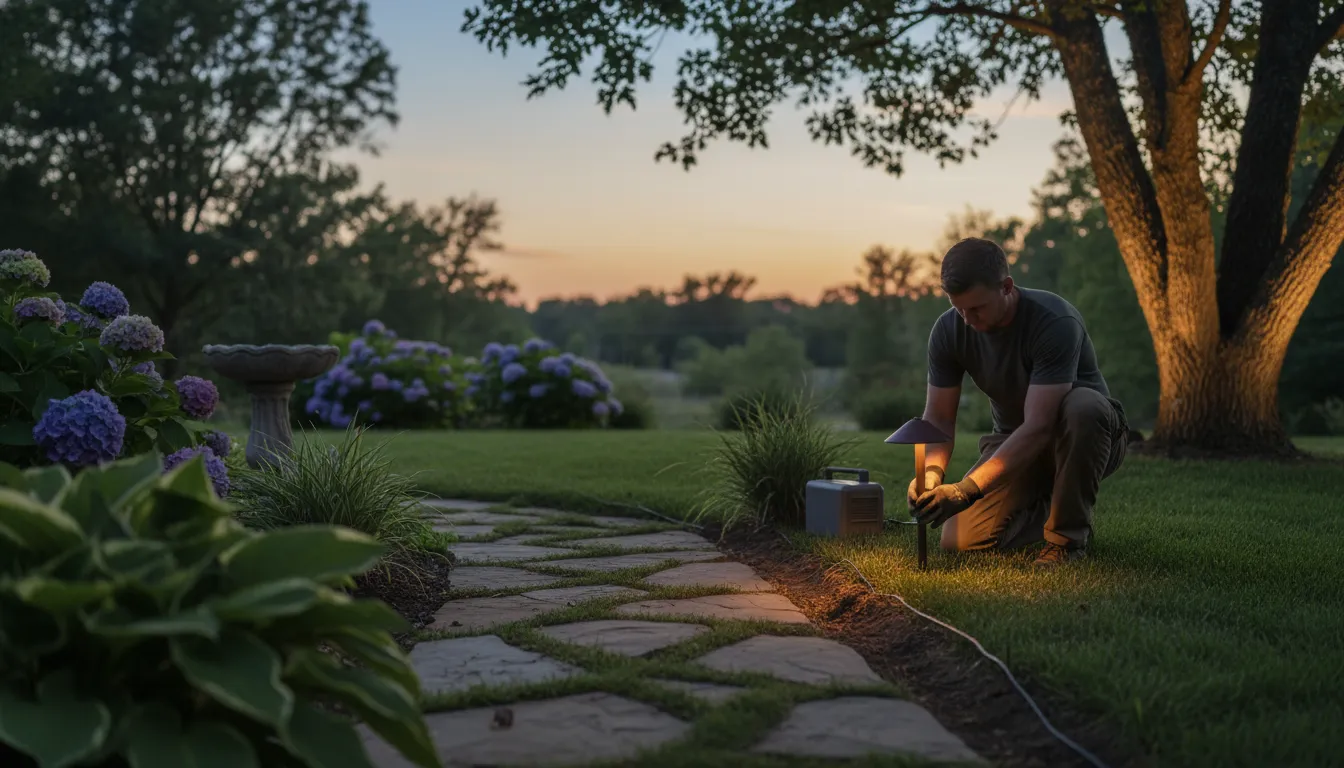
Find the Best Landscape Lighting Installers for Your Business
No obligation • Fast responses • Nationwide coverage

Why you can trust Landscape Atlas
Landscape Atlas is a leading United States resource for evaluating landscaping, lawn care, and outdoor service providers. Our team researches each category in depth, focusing on service quality, safety, and customer experience. Listings and rankings are based on independent criteria and user feedback, and companies cannot pay to influence our assessments or recommendations.
Search providers near you
Best Landscape Lighting Installers in North Carolina Ranked
Outdoor lighting transforms your North Carolina property from a dark space into a welcoming, beautiful, and secure extension of your home. A well-designed lighting system enhances curb appeal, improves safety on paths and steps, and allows you to enjoy your patio, garden, or architectural features long after sunset. This guide provides the essential information you need to understand your options, from system types and costs to state-specific considerations, helping you connect with qualified professionals to illuminate your outdoor living space.
Carolina Outdoor Lighting Professionals Inc.
Raleigh, NC
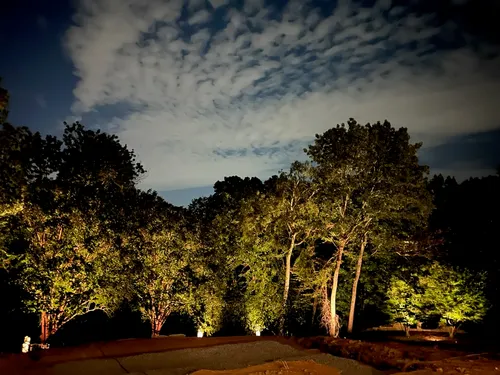
Carolina Outdoor Lighting Professionals Inc. is a locally owned and operated company based in Raleigh, NC, specializing in low-voltage outdoor lighting installation. They serve Raleigh and surrounding areas including Durham, Chapel Hill, Wake Forest, Apex, Cary, and more. The company offers expert design and professional installation of outdoor lighting systems, with a focus on creating customized plans that enhance the beauty and functionality of residential properties. They provide a complimentary evening demonstration to showcase lighting designs before installation and offer maintenance, repair, and upgrades for existing systems. Carolina Outdoor Lighting Professionals is known for their careful installation practices, including underground cabling protection, and they provide a lifetime warranty on bulbs for residential customers.
Southern Lightscapes
3909 Miriam Dr, Charlotte, NC 28205
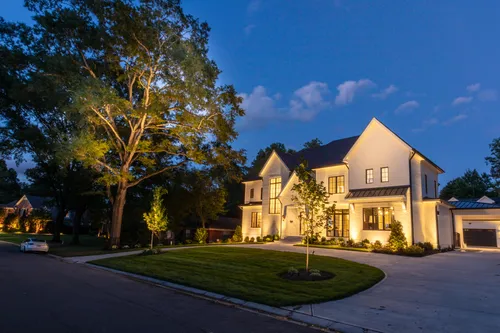
Southern Lightscapes is a landscape lighting installation company based in Charlotte, NC. They specialize in designing and installing creative outdoor lighting systems that enhance the architectural beauty and landscaping of homes. Their services include custom lighting design, efficient installation, and integration of outdoor audio systems to complement the ambiance of outdoor spaces. Southern Lightscapes uses low-voltage LED lighting that is energy-efficient and durable. They manage projects from design through installation to ensure quality control and customer satisfaction.
DreamScapes
4913 Professional Ct, Raleigh, NC 27609
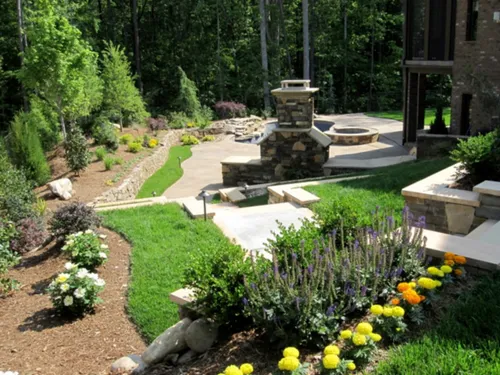
DreamScapes is a landscaping company based in Raleigh, NC, offering a wide range of residential and commercial landscaping services. Their expertise includes lawn mowing, fertilization, weed control, sod and artificial turf installation, landscape lighting, design, tree services, yard drainage, sprinkler installation and repair, as well as hardscaping such as pavers and retaining walls. With over fifteen years of experience, DreamScapes serves the greater Raleigh area including Cary, Wake Forest, Durham, and Chapel Hill. They provide customized landscape design and maintenance plans, combining hardscapes, planting, and lighting to meet client needs. DreamScapes sources materials from local high-quality suppliers and is known for attention to detail and comprehensive service. The company does not specify special availability hours.
Southern Lights Outdoor Lighting & Audio
6212 Lake Brandt Rd, Summerfield, NC 27358
Southern Lights Outdoor Lighting & Audio is a company based in Greensboro, NC, specializing in landscape and outdoor lighting installation along with outdoor audio system solutions. They serve a broad area including parts of North Carolina and Virginia, offering services such as lighting design, LED upgrades, maintenance, repairs, and holiday lighting for both residential and commercial properties. Established in 1995, Southern Lights has extensive experience in transforming outdoor spaces with custom lighting and audio installations that enhance aesthetics and security.
Southern Lightscapes Birmingham
Charlotte, NC
Southern Lightscapes Birmingham offers landscape and outdoor lighting installation services in Charlotte, NC. They specialize in lighting design for both residential and commercial properties, providing comprehensive support throughout the process. Their services cover Jefferson and Shelby Counties in Alabama, focusing on enhancing property aesthetics and functionality through tailored lighting solutions.
Understanding Your Lighting System Options
The first and most critical decision in any outdoor lighting project is choosing between low-voltage and line-voltage systems. This choice impacts safety, cost, complexity, and the final result.
Low-Voltage (12V) LED Lighting is the predominant choice for residential landscape lighting in North Carolina. These systems use a transformer to convert your standard 120V household current down to a safer 12 volts. The core components include the transformer (power supply), various fixtures (like path lights, spotlights, and uplights), specialized low-voltage wire, and waterproof connectors.
- Pros: Much safer with minimal shock risk, making them more DIY-friendly. They are highly energy-efficient, use simpler wiring (thin cables can be buried in shallow trenches), and are excellent for creating subtle, ambient lighting effects 1.
- Cons: They require the upfront purchase of a transformer. While bright, individual fixtures may not match the raw intensity of some line-voltage options, and high-quality LED fixtures can have a higher initial cost 2 3.
Line-Voltage (120V) Lighting uses the full standard household current.
- Pros: It delivers brighter, more intense light, which can be beneficial for security lighting or illuminating very large areas.
- Cons: It carries a much higher risk of severe shock or electrocution. Installation always requires a licensed electrician due to code requirements. Labor is significantly more expensive, as it involves deep trenching (18+ inches), running wires through protective conduit, and strict adherence to the National Electrical Code (NEC). For most homeowners seeking ambiance and aesthetics, low-voltage is the recommended and more popular path.
North Carolina Codes and Professional Licensing
Regardless of the system type, all electrical work must follow applicable state and local building codes to ensure safety and protect your property value.
For low-voltage lighting, North Carolina state law and the NEC typically do not require a licensed electrician for installation because the 12V current presents a very low shock hazard 4. However, this can vary by local municipality, so it's wise to check with your county or city building department. The trenching requirements are also less stringent than for line voltage.
For line-voltage (120V) lighting, a licensed electrical contractor is mandatory in North Carolina. This work involves permitting, inspections, and strict adherence to codes regarding burial depth, conduit, and connections 5. Hiring a licensed professional ensures the installation is safe, legal, and insurable.
Cost Breakdown for Landscape Lighting in NC
The total investment for a professional landscape lighting installation in North Carolina varies widely based on the project's scope, fixture quality, and site complexity.
- Average Total Project Cost: A typical residential installation ranges from $2,000 to $6,000, with extensive projects using numerous high-end fixtures reaching $10,000 or more. Even a small, focused project often starts around $800+.
- Cost Per Fixture (Installed): A useful way to estimate is by fixture. For low-voltage LED fixtures, including the fixture, wire, and professional labor, you can expect to pay roughly $100 to $500+ per fixture. Many standard path lights or spotlights fall in the $100-$150 per fixture range when installed 6.
- Professional Labor Rates: If billed hourly, landscape lighting professionals in NC generally charge between $50 and $100+ per hour 7. Most reputable installers will provide a fixed-price quote based on a detailed plan.
Find the perfect landscape lighting installers for your needs
Get personalized recommendations and expert advice
Key Design and Installation Considerations
A successful lighting project starts with a thoughtful plan. Professional designers often sketch a lighting layout, considering key viewpoints from inside the house and the street.
- Layering Light: Use a mix of techniques. Uplighting grazes trees or architectural walls. Path lighting ensures safe navigation. Downlighting (mounted in trees or eaves) creates moonlight effects. Accent lighting highlights statues, water features, or plant specimens 8 9.
- Wiring and Layout: Proper wire gauge is crucial, especially for longer cable runs. Using wire that is too thin (e.g., 16-gauge) for a long run can cause voltage drop, resulting in dim lights at the end of the line. For most installations, 12-gauge or 10-gauge wire is recommended to maintain consistent brightness 10. All wire connections must be made with waterproof connectors to prevent corrosion and failure.
- Efficiency and Quality: LED technology is the standard due to its long lifespan (often 25,000+ hours) and low energy use. North Carolina has guidance promoting energy-efficient solid-state lighting, which aligns perfectly with modern LED systems 11. Investing in quality fixtures with good materials (copper, brass, stainless steel) and proper IP (Ingress Protection) ratings for weather resistance will ensure your system looks great and functions reliably for years.
Maintaining Your Outdoor Lighting System
Once installed, a little routine maintenance keeps your system shining brightly. Periodically clean fixture lenses of dirt, pollen, and debris. Trim back any plant growth that encroaches on the light beams. After severe storms, check for any fixtures that may have been shifted or buried. For low-voltage systems, ensure the transformer timer or photocell is functioning correctly and adjust seasonal timings as needed. An annual check by the installing professional can identify worn connectors or potential issues before they lead to failures.
Frequently asked questions
Sources
Footnotes
-
Line Voltage vs. Low Voltage for Your Landscape Lighting - https://www.lightingwarehouse.com/learn/low-voltage-vs-line-voltage ↩
-
Landscape Lighting: Line Voltage vs. Low Voltage Lighting - coloer - https://coloer.com/blogs/news/line-voltage-low-voltage-landscape-lighting-guide ↩
-
More on Low-Voltage Lighting - The Lighting Corner - https://www.thelightingcorner.com/blog/more-on-low-voltage-lighting ↩
-
Do I Need to Be an Electrician to Install Landscape Lighting ... - https://www.youtube.com/watch?v=yra_PP4Qkso&t=3 ↩
-
Landscape Lighting: Low-Voltage (12V) vs Line-Voltage (120V) - https://www.voltlighting.com/learn/low-voltage-vs-line-voltage-landscape-lighting ↩
-
How Much Does Landscape Lighting Installation Cost? [2026 ... - https://www.angi.com/articles/landscape-lighting-costs.htm ↩
-
How Much Does Landscape Lighting Cost in 2026? - LawnStarter - https://www.lawnstarter.com/blog/cost/landscape-lighting-price/ ↩
-
How to Create a Landscape Lighting Installation Plan - VOLT Lighting - https://www.voltlighting.com/learn/create-a-landscape-lighting-plan ↩
-
Professional Landscape Lighting Design & Installation - https://www.pacificlawnsprinklers.com/Services/Landscape-Lighting ↩
-
A Beginner's Guide to Low Voltage Landscape Lighting Wire Lengths - https://www.gardenreet.com/blogs/landscape-lighting-articles/a-beginners-guide-to-low-voltage-landscape-lighting-wire-lengths ↩
-
Energy Efficient Lighting Guidance Document for New ... - https://www.doa.nc.gov/documents/files/sco-ssl-energy-efficient-solid-state-lighting-guidance-pdf/open ↩