Find the Best Landscape Lighting Installers for Your Business
No obligation • Fast responses • Nationwide coverage

Why you can trust Landscape Atlas
Landscape Atlas is a leading United States resource for evaluating landscaping, lawn care, and outdoor service providers. Our team researches each category in depth, focusing on service quality, safety, and customer experience. Listings and rankings are based on independent criteria and user feedback, and companies cannot pay to influence our assessments or recommendations.
Search providers near you
Best Landscape Lighting Installers in Nevada Ranked
Outdoor lighting transforms your Nevada property from a dark space into a functional, beautiful, and secure extension of your home. Properly installed landscape lighting enhances curb appeal, improves safety on pathways and steps, and allows you to enjoy your outdoor living areas long after the sun sets over the desert. For Nevada homeowners, navigating the unique climate and local regulations is key to a successful project. This guide provides the essential information you need to understand your options, local codes, and the process of working with a professional to illuminate your outdoor space effectively and responsibly.
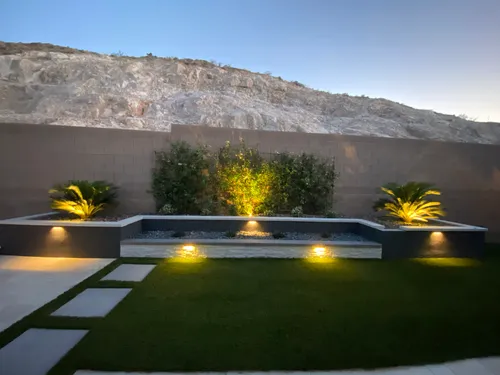
New View Landscapes, LLC
4262 Blue Diamond Rd #102-435, Las Vegas, NV 89139
New View Landscapes, LLC is a landscaping company based in Las Vegas, NV, specializing in landscape design, sod and artificial turf installation, outdoor lighting, yard drainage, grading, and hardscaping. They serve areas including Summerlin, Henderson, and Southern Highlands. Their services include custom landscape designs that incorporate low-glare lighting, water features, and curated plant palettes, along with precise grading and masonry work for drainage and aesthetic appeal. With over 20 years of experience, they focus on creating refined and functional outdoor environments that complement the desert landscape and homeowners' lifestyles.
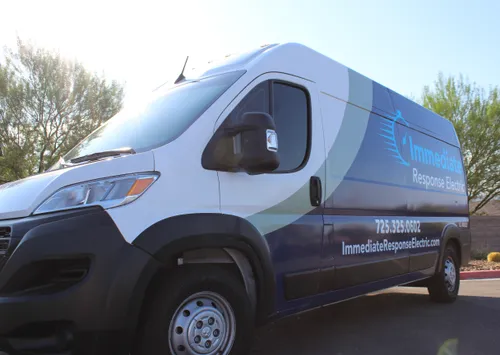
Immediate Response Electric
170 S Green Valley Pkwy #300, Henderson, NV 89012
Immediate Response Electric is an electrical company based in Henderson, NV, specializing in landscape and outdoor lighting installation. They provide services that enhance outdoor spaces with mood lighting and functional illumination, including installations under pergolas and other outdoor areas. The team is experienced in handling various electrical needs efficiently and professionally.
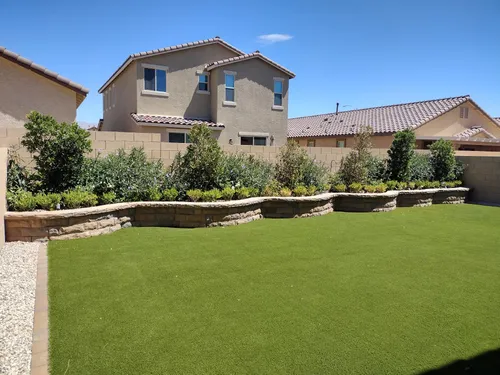
VanDorne Landscape and Design
Henderson, NV
VanDorne Landscape and Design is a family-owned landscaping company serving Henderson, NV. With over a decade of experience, they specialize in landscape design and installation, irrigation system installation and repair, outdoor lighting, artificial turf, and xeriscaping tailored for desert climates. Their services focus on sustainable, water-efficient landscaping using native and drought-tolerant plants to create low-maintenance outdoor spaces. The company handles all permits and complies with local regulations, ensuring a smooth project process. VanDorne Landscape and Design emphasizes eco-friendly solutions and offers flexible maintenance plans to keep landscapes vibrant year-round.
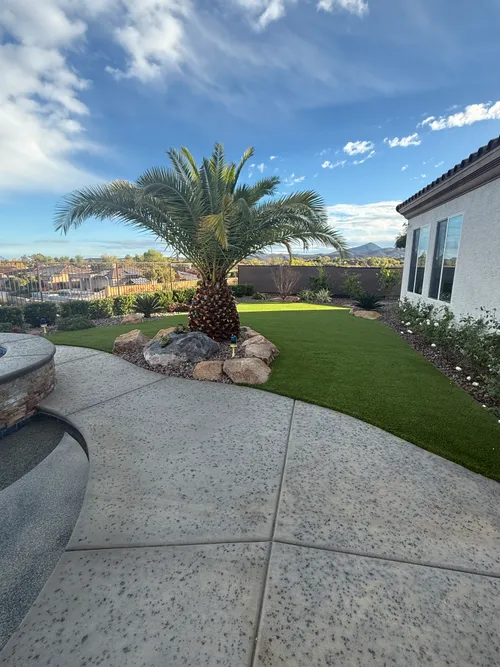
Results Landscape Services
Las Vegas, NV
Results Landscape Services is a family-owned landscaping company based in Las Vegas, NV, with over 20 years of experience. They offer a wide range of services including lawn care, irrigation, xeriscaping, landscape lighting installation, tree services, and landscape design. The team is familiar with the local environment and focuses on delivering tailored landscaping solutions for yards, patios, and other outdoor areas. Founded by Blas and his father, the company emphasizes reliable and trustworthy service to meet the needs of the Las Vegas community.
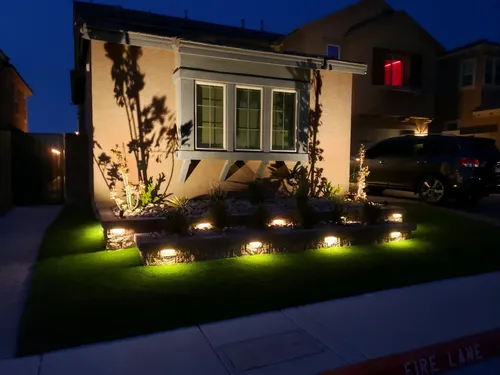
Sierra Landscape
Las Vegas, NV
Sierra Landscape is a locally owned and operated landscaping company based in Las Vegas, NV. They specialize in landscape design and installation, offering services such as artificial turf installation, hardscaping with pavers and retaining walls, outdoor lighting, and garden bed creation. With a strong focus on creating functional and beautiful outdoor spaces, Sierra Landscape serves the Las Vegas Valley including Summerlin and Henderson. Their team provides expert design and construction services tailored to the local desert climate, ensuring durable and attractive results. The company is fully insured and offers financing options to support project needs.
Understanding Your Lighting System Options
Choosing the right type of system is the first and most critical decision. In Nevada, the vast majority of residential landscape lighting projects utilize low-voltage systems, and for good reason. Understanding the core differences between low-voltage and line-voltage lighting will help you determine the best fit for your home's needs, budget, and safety.
Low-Voltage Lighting (12V): The Residential Standard
Low-voltage landscape lighting operates at 12 volts, which is significantly safer than standard household current. A transformer plugs into an outdoor GFCI (Ground Fault Circuit Interrupter) outlet and steps down the 120-volt household electricity to a safe 12 volts 1.
- Safety & Installation: The lower voltage presents a minimal shock risk, making it much safer for homes with children and pets. Installation is generally simpler; wires can often be buried in shallow trenches (as little as 6 inches deep) or discreetly placed on the ground, which reduces labor costs and disruption to your landscaping 2.
- Energy Efficiency: These systems are highly energy-efficient, especially when paired with modern LED bulbs. This is a major advantage in Nevada, where managing energy costs is a priority for many homeowners.
- Flexibility & Control: Low-voltage systems offer a tremendous variety of fixture styles-from path lights and spotlights to well lights and deck lights-allowing for precise aesthetic effects. They are also easily adaptable; you can typically add or relocate fixtures as your landscape evolves.
- Permitting: A significant benefit is that low-voltage lighting installations usually do not require an electrical permit in most Nevada jurisdictions, as they are not considered a permanent alteration to your home's main electrical system.
Line-Voltage Lighting (120V): For Demanding Applications
Line-voltage lighting uses the standard 120-volt household current. It is more common in commercial settings or for specific residential applications requiring very high output.
- Power & Brightness: These systems can power brighter, larger fixtures, making them suitable for illuminating very large trees, expansive driveways, or providing broad security lighting over a wide area.
- Safety & Regulation: Due to the high shock risk, installation is strictly regulated. All work must be performed by a licensed electrician. Wiring must be buried in deep trenches (typically 18 inches or more) or installed inside protective conduit, and all connections must be made in sealed junction boxes.
- Cost & Complexity: The need for professional electricians and more intensive labor makes line-voltage installations more expensive per fixture. They also always require an electrical permit and inspection from your local building department 3.
Comparison Table: Low-Voltage vs. Line-Voltage Lighting
| Feature | Low Voltage (12V) | Line Voltage (120V) |
|---|---|---|
| Primary Use | Residential pathways, accent, garden, and aesthetic lighting | Commercial, high-output security, and large-area lighting |
| Safety | Very safe; minimal shock risk; often DIY-friendly | High shock risk; requires a licensed electrician |
| Installation | Easier; shallow burial or ground placement; uses a transformer | Labor-intensive; requires deep trenching or conduit |
| Energy Efficiency | Highly efficient, especially with LEDs | Can be efficient with certain bulbs, but generally uses more power |
| Fixture Variety | Extensive options for specific lighting effects | Fewer residential-style options; fixtures are often larger |
Nevada-Specific Codes and "Dark Sky" Considerations
Nevada's clear desert skies are a treasure, and many communities have adopted lighting ordinances designed to minimize light pollution and glare. These "Dark Sky" friendly rules are not just for astronomers; they reduce energy waste and help maintain peaceful neighborhood environments by preventing light trespass onto adjacent properties 4.
Key regulations you or your installer must follow typically include:
- Shielding and Direction: Most local codes require that all outdoor lighting fixtures be fully shielded and aimed downward. This means the bulb or LED source is not visible from the side, and light is directed onto your property, not into the sky or your neighbor's windows. The goal is to prevent light from shining above the horizontal plane 5 6.
- Light Trespass: Regulations often specify that illumination measured at your property line should be minimal. For example, light spilling onto an adjacent residential property should ideally not exceed 0.5 foot-candles 7. Proper fixture placement and shielding are crucial for compliance.
- Fixture Approval: Many jurisdictions require that only fixtures certified as "full-cutoff" or that meet specific shielding standards be installed.
- Permitting for Line-Voltage: As noted, any permanent wiring connected to your home's main electrical system requires a permit. Always verify with your local city or county building department (e.g., Clark County Code Enforcement or City of Las Vegas Building and Safety) for the most current requirements 8.
Find the perfect landscape lighting installers for your needs
Get personalized recommendations and expert advice
The Professional Installation Process
Working with a knowledgeable professional ensures your system is designed for beauty, function, and code compliance. Here's what a typical process looks like:
- Consultation and Design: A specialist will visit your property at dusk to assess the natural shadows and architectural features. You'll discuss goals (security, aesthetics, entertainment), budget, and preferred styles. A good design will create "layers" of light-ambient, task, and accent-for a balanced effect.
- System Planning: Based on the design, the installer will select the appropriate transformer size, calculate wire gauge to prevent voltage drop (which causes lights at the end of a run to dim), and choose the right fixtures (LED type, beam spread, wattage) for each location.
- Installation: For a low-voltage system, the installer will place the transformer, run weatherproof cabbing, and install fixtures. Wiring is discreetly buried. Fixtures are adjusted for perfect aiming. For line-voltage systems, a licensed electrician will handle all wiring and connections.
- Final Adjustment and Demonstration: Once everything is installed, the professional will fine-tune the direction of each light and program any timers or smart controls. They should walk you through the system's operation and provide maintenance tips.
Cost Factors for Landscape Lighting in Nevada
The total investment for your outdoor lighting project depends on several variables. On average, for a professionally installed low-voltage system, homeowners can expect to pay approximately $100 to $150 per installed fixture. This cost typically includes the fixture, LED bulb, wiring, connectors, and labor.
- Transformer: The heart of a low-voltage system. A basic transformer may cost $150-$300, while larger, more advanced models with multiple circuits and smart controls can cost $500 or more 9.
- Fixtures: Price varies by material (brass, copper, aluminum), finish, and light quality. Higher-quality fixtures offer better durability and light output.
- Labor & Complexity: Simple path lighting is less labor-intensive than installing multiple well lights to uplight trees or a complex lighting scheme for water features and retaining walls.
- Line-Voltage Costs: Due to the required electrical expertise and deeper trenching, line-voltage installation costs are higher, often ranging from $100 to $200 per fixture10 11.
Maintenance and Smart Technology
Modern LED landscape lights are built to last, with lifespans often exceeding 20,000 hours. Maintenance is generally minimal but important:
- Periodically clean lenses and fixtures of dust, dirt, and spider webs.
- Trim back plants that may grow into the path of the light.
- Check wire connections if a light goes out (often it's just a loose connection).
- Ensure the transformer is free of debris and functioning.
Integrating smart controls can maximize convenience and efficiency. Timers, photocells (that turn lights on at dusk), and motion sensors are common. Many systems can now be integrated with smart home platforms, allowing you to control your landscape lighting from a phone app, set schedules, and even change the color of RGB LED fixtures for holidays.
Frequently asked questions
Sources
Footnotes
-
Landscape Lighting: Low-Voltage (12V) vs Line-Voltage (120V) - https://www.voltlighting.com/learn/low-voltage-vs-line-voltage-landscape-lighting ↩
-
Low-Voltage VS. Line-Voltage Outdoor Lighting: Which is Right for Your Project? - https://kingsoutdoorlighting.com/blogs/news/low-voltage-vs-line-voltage-outdoor-lighting-which-is-right-for-your-project ↩
-
WHEN DO I NEED A PERMIT? - City of Las Vegas - https://files.lasvegasnevada.gov/building-safety/Forms/General/WHEN-DO-I-NEED-A-PERMIT.pdf ↩
-
Outdoor Lighting Ordinance - City of Nevada City - https://www.nevadacityca.gov/DocumentCenter/View/1561 ↩
-
19.10.8 - Document Viewer | Development Code - https://online.encodeplus.com/regs/henderson-nv/doc-viewer.aspx?secid=72 ↩
-
17.24.080. Exterior lighting. - http://nlasvegas-nv.elaws.us/code/coor_title17_ch17.24_sec17.24.080 ↩
-
§ 50-480. Residential outdoor lighting standards., Article VI. NOISE AND LIGHT, Chapter 50. ENVIRONMENT, Code of Ordinances - https://volusiacounty.elaws.us/code/coor_ch50_artvi_sec50-480 ↩
-
LED Strip Lighting in Closets: NEC Compliance and Safety Best Practices - https://www.aspectled.com/blog/post/led-strip-lighting-in-closets/ ↩
-
How Much Does Low Voltage Landscape Lighting Cost? - Blog - https://brooksidelandscape.design/how-much-does-low-voltage-landscape-lighting-cost-full-breakdown/ ↩
-
How Much Does Landscape Lighting Cost in 2026? - https://www.lawnstarter.com/blog/cost/landscape-lighting-price/ ↩
-
Line Voltage vs. Low Voltage for Your Landscape Lighting - https://www.lightingwarehouse.com/learn/low-voltage-vs-line-voltage ↩