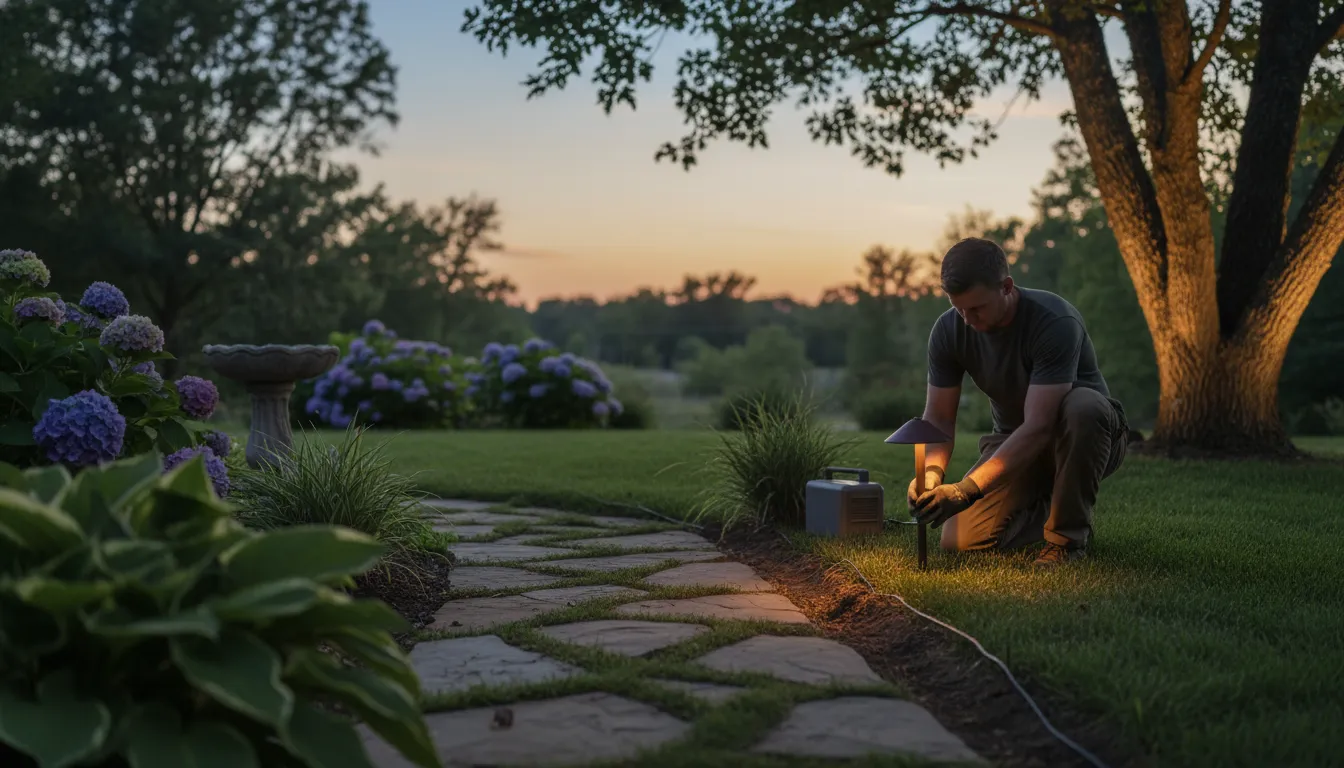
Find the Best Landscape Lighting Installers for Your Business
No obligation • Fast responses • Nationwide coverage

Why you can trust Landscape Atlas
Landscape Atlas is a leading United States resource for evaluating landscaping, lawn care, and outdoor service providers. Our team researches each category in depth, focusing on service quality, safety, and customer experience. Listings and rankings are based on independent criteria and user feedback, and companies cannot pay to influence our assessments or recommendations.
Search providers near you
Best Landscape Lighting Installers in Rhode Island Ranked
Outdoor lighting transforms your Rhode Island property, enhancing safety, security, and curb appeal after sunset. A well-designed system highlights architectural features, gardens, and pathways, extending the enjoyment of your outdoor living spaces. This guide explains the key considerations for landscape lighting in the Ocean State, from system types and local codes to design principles and costs, helping you connect with qualified professionals for your project.
Understanding Your Lighting System Options
The first major decision is choosing between low-voltage and line-voltage systems. Each has distinct advantages and applications for Rhode Island homes.
Low-Voltage (12V) Lighting This is the most popular choice for residential landscape lighting across Rhode Island. A transformer converts your standard 120V household current to a safer 12 volts. The primary benefits are safety, energy efficiency, and flexibility. Because the current is significantly reduced, the risk of severe shock is minimized, making it more DIY-friendly for smaller projects 1. These systems predominantly use LED fixtures, which consume very little power and have exceptionally long lifespans. You'll find a vast array of low-voltage fixture types, including path lights, spotlights, well lights, and deck lights, allowing for creative accent lighting.
Line-Voltage (120V) Lighting These systems use standard household current and are less common for typical residential accent lighting 2. They are typically reserved for applications requiring very high brightness, such as illuminating large driveways, security perimeters, or commercial properties. Due to the inherent shock hazard, line-voltage installations must be performed by a licensed electrician and involve strict code requirements, including burial in conduit at a depth of at least 18 inches 3. The installation complexity and cost are generally higher than for low-voltage systems.
Rhode Island Codes and Permitting
While low-voltage lighting is safer, all electrical work in Rhode Island must adhere to state and local electrical codes to ensure long-term safety and reliability.
Key Code Considerations:
- Low-Voltage Wiring: Even though the voltage is low, proper installation is crucial. Codes often specify how cables should be protected (e.g., in conduit when passing under walkways), how transformers should be mounted, and that all connections must be waterproof 4.
- Line-Voltage Requirements: These are stringent. Buried cables must be in approved conduit, typically at a depth of 18 inches, and all junction boxes must be waterproof. This work absolutely requires a licensed electrician.
- Local Permits: Regulations can vary by city or town. It's essential to check with your local Rhode Island building department to determine if a permit is required for your lighting project. Many smaller low-voltage installations may be exempt, but verification is always the responsible step 5.
Designing Your Rhode Island Landscape Lighting
A thoughtful design is what separates a functional system from a stunning one. Start by considering your goals: Is it for safety along a walkway, for security near entrances, or for aesthetics to showcase a beautiful tree or façade?
Core Design Principles:
- Create a Plan: Sketch your property and note key features you want to highlight-paths, trees, architectural details, and seating areas.
- Layer the Light: Use a mix of techniques. Path lighting guides movement, uplighting grazes trees or walls for drama, downlighting (mounted in trees or eaves) creates moonlit effects, and accent lighting focuses on sculptures or plantings.
- Avoid Light Pollution: Direct fixtures downward or toward the feature you're illuminating. Use shields to prevent glare into your own or your neighbors' windows.
- Think in Zones: Group lights on different transformer circuits or zones. This allows you to control sections independently-for example, keeping path lights on all night while turning off decorative accent lights later in the evening.
Find the perfect landscape lighting installers for your needs
Get personalized recommendations and expert advice
Installation Process Overview
Whether you undertake a DIY project or hire a professional, understanding the steps involved is helpful.
For a Typical Low-Voltage System:
- Design & Transformer Selection: Finalize your fixture plan and calculate the total wattage. Choose a transformer with a wattage capacity at least 20-30% greater than your total to allow for future expansion 6.
- Mount the Transformer: Install the transformer on an outdoor-rated electrical box near a GFCI outlet, following manufacturer and code guidelines.
- Run the Cable: Lay the low-voltage cable along your planned routes. It can often be buried just a few inches deep or tucked under mulch or along landscape edges.
- Connect Fixtures: Attach your light fixtures to the cable using waterproof wire connectors. Ensure all connections are tight and protected from moisture.
- Test and Adjust: Plug in the transformer, turn on the system, and test every light. This is the time to adjust fixture positions and angles for the perfect effect before securing them permanently.
Professional installers will handle all these steps, along with necessary trenching, conduit placement for wire protection, and ensuring full compliance with local codes.
Cost Guide for Landscape Lighting in Rhode Island
Costs can vary widely based on the system's scale, fixture quality, and whether you install it yourself or hire a professional. The figures below are estimates for professionally installed low-voltage LED systems, which are the regional standard 7 8.
- Small Project (5-10 Fixtures): Typically ranges from $1,000 to $3,000. This might cover illuminating a front walkway, a few key trees, and the house façade.
- Medium Project (10-20 Fixtures): Often falls between $2,500 and $5,000. This scope could include comprehensive front yard lighting, a patio area, and additional landscape accents.
- Large/Comprehensive Project (20+ Fixtures): Can range from $4,000 to $8,000 or more. This covers full property lighting with multiple zones, advanced control systems, and high-end architectural fixtures.
Cost Breakdown:
- Fixtures: Individual LED landscape lights can cost from $20 to over $150 each, depending on materials (brass, copper, aluminum) and light output.
- Transformer: A quality transformer with timer/dimming capabilities typically costs $150 to $500.
- Wire, Connectors & Accessories: Materials for wiring and connections may add $100 to $500 to the project.
- Labor: Professional installation labor is a significant portion of the total cost, reflecting site preparation, trenching, wiring, and final aiming of fixtures.
Maintenance and Long-Term Care
To keep your Rhode Island landscape lighting looking its best through coastal weather and seasonal changes, simple maintenance is key. Periodically clean fixture lenses of dirt, salt spray, and debris. Trim back any plant growth that encroaches on the light beams. After major storms, check that fixtures are still properly aligned and that no wiring has been exposed. For LED systems, the bulbs themselves may last for a decade or more, but transformers and connections should be inspected annually to ensure everything remains safe and operational.
Frequently asked questions
Sources
Footnotes
-
Low Voltage Landscape Lighting vs. Line Voltage - VOLT Lighting - https://www.voltlighting.com/learn1/low-voltage-landscape-lighting-vs-line-voltage ↩
-
Line Voltage vs. Low Voltage for Your Landscape Lighting - https://www.lightingwarehouse.com/learn/low-voltage-vs-line-voltage ↩
-
Landscape Lighting: Low-Voltage (12V) vs Line-Voltage (120V) - https://www.voltlighting.com/learn/low-voltage-vs-line-voltage-landscape-lighting ↩
-
Low Voltage Installation: Wiring & Cabling Full Guide - https://thenetworkinstallers.com/blog/low-voltage-wiring/ ↩
-
Commercial Lighting Company - https://www.chrisjameslandscaping.com/how-do-you-install-commercial-landscape-lighting/ ↩
-
Low Voltage Landscape Lighting: What You Need to Know? - https://tru-scapes.com/low-voltage-landscape-lighting/ ↩
-
How Much Does Low Voltage Landscape Lighting Cost? (Full Breakdown) - https://brooksidelandscape.design/how-much-does-low-voltage-landscape-lighting-cost-full-breakdown/ ↩
-
Outdoor Lighting Installation Cost and Pricing Guide - https://www.outdoorlights.com/resources/pricing-guide/ ↩