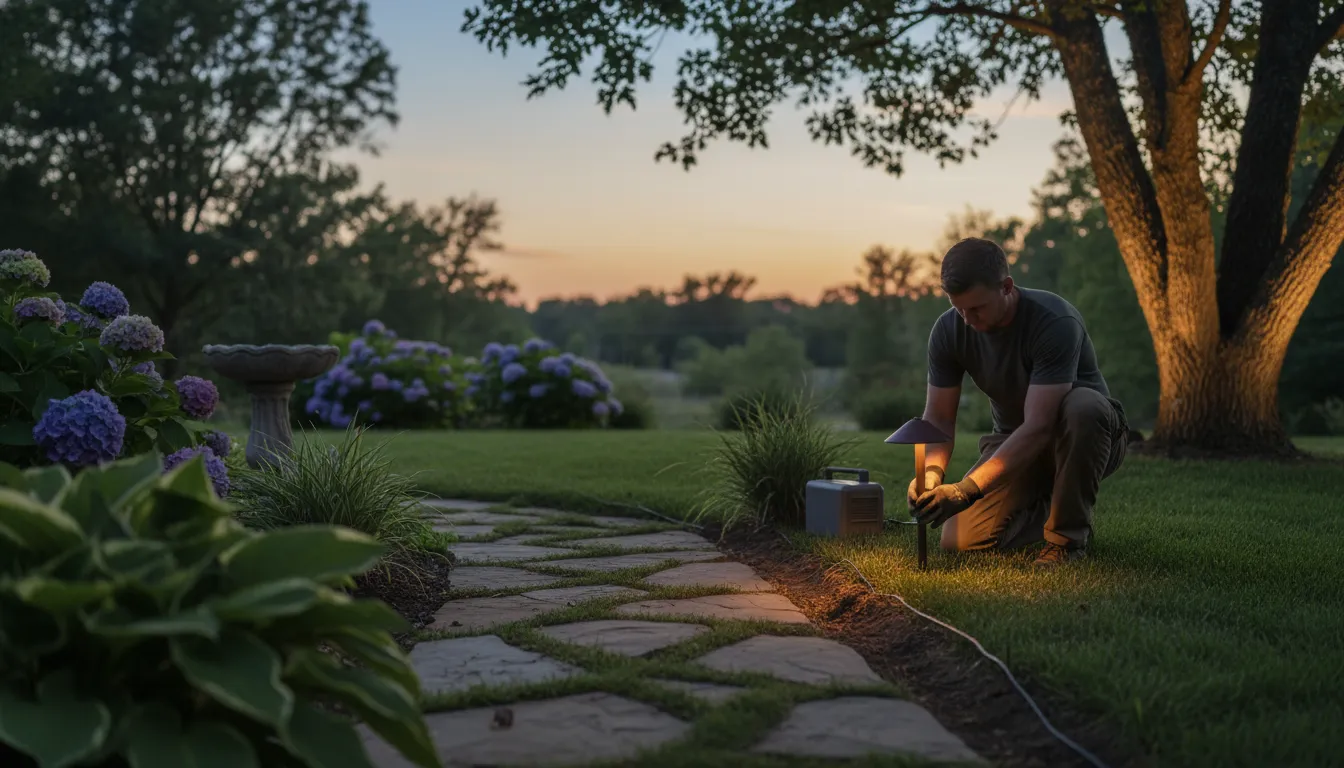
Find the Best Landscape Lighting Installers for Your Business
No obligation • Fast responses • Nationwide coverage

Why you can trust Landscape Atlas
Landscape Atlas is a leading United States resource for evaluating landscaping, lawn care, and outdoor service providers. Our team researches each category in depth, focusing on service quality, safety, and customer experience. Listings and rankings are based on independent criteria and user feedback, and companies cannot pay to influence our assessments or recommendations.
Search providers near you
Best Landscape Lighting Installers in South Carolina Ranked
Enhancing your South Carolina property with professional landscape lighting installation transforms your outdoor space into a beautiful, functional, and secure extension of your home. A well-designed lighting plan highlights architectural features, illuminates pathways for safety, and creates an inviting atmosphere for evening enjoyment. This guide will help you understand the key considerations, costs, and processes involved in installing outdoor lighting in the Palmetto State, so you can make informed decisions and connect with qualified local specialists.
Understanding Your Lighting System Options
The first major decision in any landscape lighting project is choosing between low-voltage and line-voltage systems. Each has distinct advantages and applications, especially in the South Carolina climate.
Low-Voltage (12V/24V) Systems: This is the most popular choice for residential properties across South Carolina. These systems use a transformer to convert your home's standard 120V power down to a safer 12 or 24 volts. The primary benefits are enhanced safety, easier installation, and greater energy efficiency. Because of the reduced shock risk, low-voltage installations often do not require a licensed electrician, though professional design and installation are still highly recommended for optimal results. They are ideal for most decorative and functional purposes like path lights, spotlights for trees, and deck lighting.
Line-Voltage (120V) Systems: These systems use the full voltage from your household outlets. They are less common for general residential landscape lighting due to the higher shock hazard and stricter installation codes, which typically mandate a licensed electrician. Line-voltage is generally reserved for applications requiring very high light output, such as illuminating large commercial properties or sports courts. For the vast majority of South Carolina homeowners, a well-planned low-voltage system provides more than enough power and flexibility.
Key Planning and Safety Considerations
A successful installation starts with a thoughtful plan. Before contacting professionals, consider your goals: is it safety, aesthetics, security, or a combination? Walk your property at dusk to identify dark areas, key architectural features, and mature trees or gardens you wish to highlight.
Safety and Local Codes: While low-voltage systems are safer, you must always check with your local municipality (city or county) for specific permit requirements. Regulations can vary, and some areas may have rules about wiring depth or transformer placement 1 2. Adhering to local codes ensures your system is safe and avoids issues during a future home sale.
Power and Wiring: A critical step is ensuring your transformer has sufficient wattage to handle all your planned fixtures, plus a buffer (typically 20%) for future expansion 3 4. Equally important is selecting the correct wire gauge. Thicker wire (with a lower gauge number) is essential for longer cable runs and supporting multiple fixtures without significant voltage drop, which causes lights at the end of a run to appear dim 5. A professional installer will calculate these factors precisely.
Fixture Selection for South Carolina: Choose fixtures rated for wet locations, given South Carolina's humidity and frequent rainfall. LED fixtures are the standard due to their long lifespan, energy efficiency, and low heat output. Consider a mix of fixture types:
- Path Lights for safe navigation along walkways.
- Well Lights for uplighting trees or architectural details from the ground.
- Spotlights and Floodlights for highlighting focal points.
- Step and Deck Lights for safety on elevated surfaces.
Cost Breakdown for Landscape Lighting in South Carolina
Understanding the investment helps you budget effectively. Costs can vary based on system complexity, fixture quality, and property size.
Per-Fixture Costs: Individual fixture prices, including installation, typically range from $100 to over $500 each. The price depends on the fixture's material (brass vs. polymer), light output, and special features like shielding or adjustable beams.
Total Project Costs: Most residential projects fall within a predictable range based on scale:
- Basic/Small System (e.g., 10 fixtures): Approximately $1,000 to $2,500. This covers a simple setup for a front walkway and a few accent lights.
- Average/Medium System (e.g., 20-30 fixtures): Typically $2,000 to $6,000. This allows for comprehensive coverage of pathways, key landscaping, and architectural highlights.
- Large/Complex System: Can easily exceed $10,000. These projects involve extensive coverage, smart home integration, custom lighting designs, and high-end commercial-grade fixtures.
Component and Labor Costs: The transformer is a key component, costing between $150 and $500+ depending on its capacity and features like timers or photocells 6 7. Labor is often bundled into the per-fixture price but can also be charged hourly, generally ranging from $50 to $100+ per hour 8 9. Professional design services, which are invaluable, may be a separate fee or included in the installation package.
Find the perfect landscape lighting installers for your needs
Get personalized recommendations and expert advice
The Professional Installation Process
Working with a skilled installer ensures your system is beautiful, reliable, and built to last. The process usually follows these steps:
- Initial Consultation and Design: A specialist visits your property to discuss your vision, assess the landscape, and create a custom lighting plan. This plan includes fixture placement, wire routing, transformer location, and a detailed quote.
- Equipment Selection: Together, you'll select fixtures that match your aesthetic preferences and functional needs. A reputable professional will offer durable, weather-resistant options suitable for the local environment.
- Installation Day: The crew will trench shallow channels for low-voltage wiring, mount the transformer, install fixtures, and connect all components. The work is typically non-invasive and completed in one to three days for an average-sized project.
- System Testing and Demonstration: Once everything is connected, the installer will test all fixtures, adjust beam angles, and program any timers or smart controls. They will walk you through the system's operation and provide care instructions.
- Service and Maintenance: Many companies offer maintenance plans to clean lenses, adjust fixtures, replace bulbs, and ensure the system continues to perform perfectly year after year.
Benefits Beyond Beauty
A professionally installed landscape lighting system delivers value that extends far after sunset.
- Increased Safety and Security: Illuminated pathways, steps, and entryways prevent trips and falls. A well-lit exterior is also a proven deterrent to criminal activity.
- Enhanced Property Value and Curb Appeal: Outdoor lighting significantly boosts your home's aesthetic appeal and can be a attractive feature for potential future buyers.
- Extended Living Space: Effectively, you gain additional square feet of usable living area. Your patio, deck, or pool area becomes a welcoming venue for evening entertaining.
- Highlighting Landscape Investment: It allows you to enjoy the beauty of your garden, mature trees, and hardscaping investments 24 hours a day.
Finding the Right Specialist in South Carolina
Look for providers with specific experience in landscape-not just general electrical-work. They should understand horticulture, architectural highlighting, and the unique challenges of outdoor installations. Ask to see a portfolio of completed projects, request references, and ensure they are properly insured. A great installer will listen to your goals and provide a clear, detailed proposal outlining the design, products, costs, and warranty.
Frequently asked questions
Sources
Footnotes
-
Landscape Lighting: Low-Voltage (12V) vs Line-Voltage (120V) - https://www.voltlighting.com/learn/low-voltage-vs-line-voltage-landscape-lighting ↩
-
How to Plan for a Landscape Lighting Installation - https://www.superbrightleds.com/blog/planning-for-an-led-landscape-lighting-installation.html ↩
-
Do I Need to Be an Electrician to Install Landscape Lighting ... - https://www.youtube.com/watch?v=yra_PP4Qkso&t=3 ↩
-
Understanding Low Voltage vs. Line Voltage - Spectrum Electric - https://www.spectrumelectricinc.com/blog/2023/understanding-low-voltage-vs-line-voltage.html ↩
-
A Beginner's Guide to Low Voltage Landscape Lighting Wire Lengths - https://www.gardenreet.com/blogs/landscape-lighting-articles/a-beginners-guide-to-low-voltage-landscape-lighting-wire-lengths ↩
-
How Much Does Low Voltage Landscape Lighting Cost? - Blog - https://brooksidelandscape.design/how-much-does-low-voltage-landscape-lighting-cost-full-breakdown/ ↩
-
How to Create a Landscape Lighting Installation Plan - VOLT Lighting - https://www.voltlighting.com/learn/create-a-landscape-lighting-plan ↩
-
How Much Does Landscape Lighting Installation Cost? [2026 ... - https://www.angi.com/articles/landscape-lighting-costs.htm ↩
-
How Much Does Landscape Lighting Cost in 2026? - LawnStarter - https://www.lawnstarter.com/blog/cost/landscape-lighting-price/ ↩