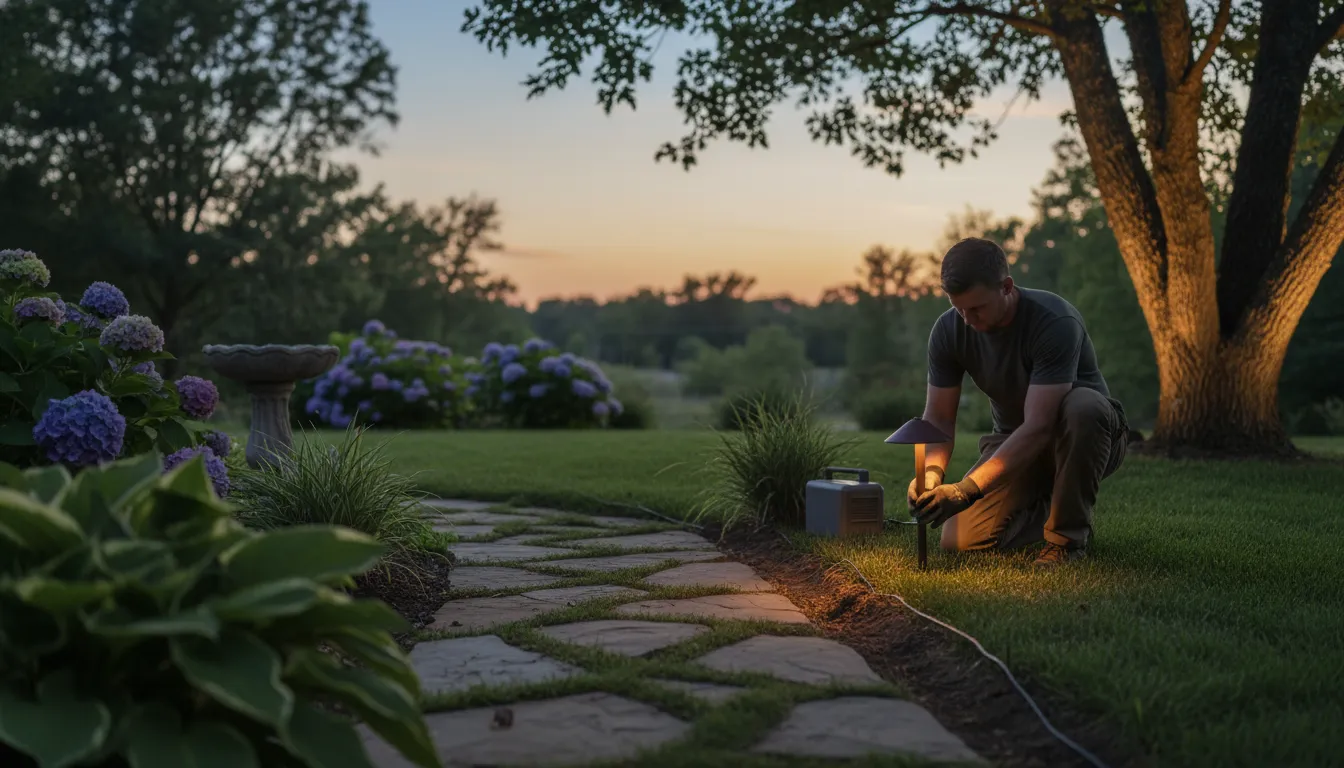
Find the Best Landscape Lighting Installers for Your Business
No obligation • Fast responses • Nationwide coverage

Why you can trust Landscape Atlas
Landscape Atlas is a leading United States resource for evaluating landscaping, lawn care, and outdoor service providers. Our team researches each category in depth, focusing on service quality, safety, and customer experience. Listings and rankings are based on independent criteria and user feedback, and companies cannot pay to influence our assessments or recommendations.
Search providers near you
Best Landscape Lighting Installers in Wisconsin Ranked
Adding professional landscape lighting to your Wisconsin property enhances safety, security, and curb appeal while extending the enjoyment of your outdoor spaces into the evening. A well-designed lighting plan can highlight architectural features, illuminate pathways, and create a welcoming ambiance. This guide provides a detailed overview of your options, costs, and local considerations to help you connect with qualified professionals in your area who can bring your vision to life.
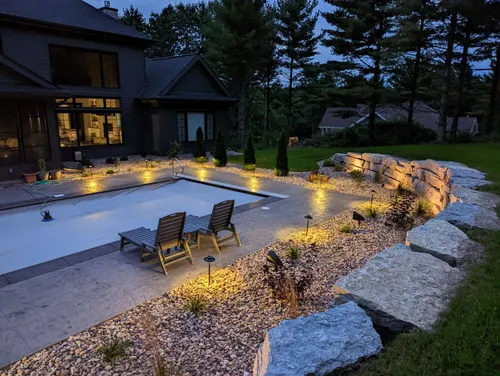
Lang Lighting and Decor LLC
441 Glacier Moraine Dr Unit #24 Unit 24, Stoughton, WI 53589
Lang Lighting and Decor LLC is an outdoor lighting company based in Madison, WI. They specialize in landscape lighting installation, holiday lighting, permanent RGB lighting, outdoor audio, and event lighting. The company offers customized lighting designs to enhance the safety, security, and aesthetic appeal of residential and commercial properties. One of their key capabilities includes installing permanent outdoor lighting systems that reduce maintenance needs and improve property value. With over 15 years of experience, Lang Lighting and Decor has been transforming outdoor spaces and providing holiday lighting displays for more than a decade.
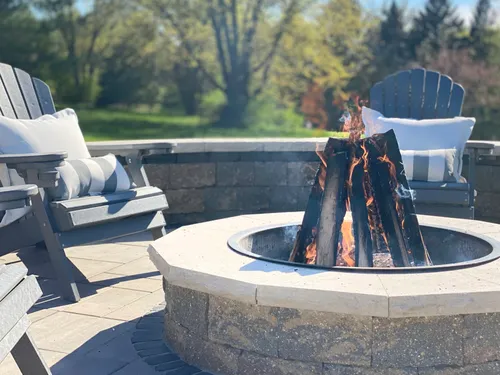
Carrington Lawn & Landscape
4387 Schwartz Rd, Middleton, WI 53562
Carrington Lawn & Landscape is a full-service landscaping company based in Madison, WI, specializing in lawn care, landscape design, hardscaping, tree services, and outdoor lighting installation. Established in 1998, they offer customized solutions including lawn fertilization, weed control, retaining walls, and landscape lighting to enhance both the beauty and functionality of outdoor spaces. Their team manages projects from initial consultation through installation and ongoing maintenance, focusing on tailored designs that reflect clients' lifestyles. They also provide commercial snow removal services with certified expertise during winter months.
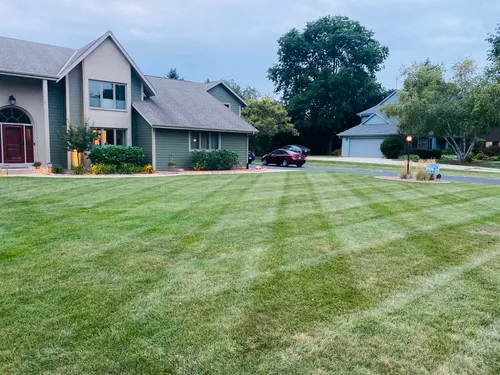
Discovery Outdoor Services
17700 Bermuda Blvd, Brookfield, WI 53045
Discovery Outdoor Services is a landscaping and lawn care company based in Milwaukee, WI. They offer a variety of services including lawn mowing, landscape lighting installation, mulch and yard installations, and outdoor living enhancements. The company also provides year-round property maintenance and snow and ice removal with day and night availability to ensure safety during winter months. Discovery Outdoor Services serves the Brookfield area and focuses on tailored landscaping solutions to meet specific client needs. They emphasize professional equipment and staff, online payment options, and timely responses to service requests.
Ross Landcare
8420 Hwy V, Caledonia, WI 53108
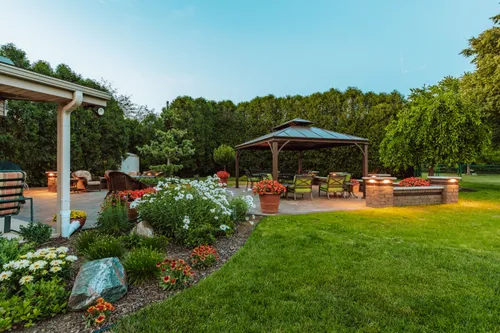
Ross Landcare is a landscaping company based in Milwaukee, WI, serving Southeast Milwaukee County and Racine County. Since 2010, they have offered landscape design, installation, and maintenance services for both residential and commercial clients. Their work includes creating patios, custom outdoor fire pits, hardscaping features like retaining walls and pavers, as well as outdoor lighting installation to enhance landscapes. Ross Landcare combines creativity and craftsmanship to deliver durable and visually appealing outdoor spaces.
Jolly Holiday Lighting
Madison, WI
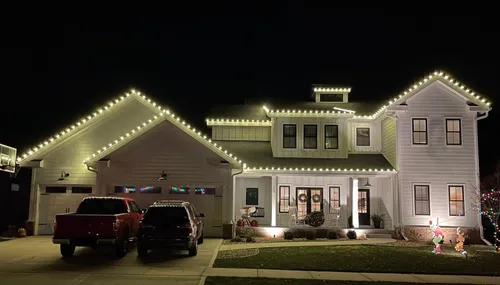
Jolly Holiday Lighting is a full-service holiday and landscape lighting company based in Madison, WI. They provide custom installation of commercial-grade lights for homes, including installation, removal, maintenance, and off-season storage. The company serves Madison and surrounding areas such as Verona, Fitchburg, Waunakee, Mount Horeb, Sun Prairie, and Middleton. With over six years of experience, Jolly Holiday Lighting offers a turnkey service that handles all aspects of holiday lighting without requiring any effort from the customer.
Understanding Your Lighting System Options
The first major decision in any outdoor lighting project is choosing between low-voltage and line-voltage systems. Each has distinct advantages, safety considerations, and applications suitable for Wisconsin homes.
Low-Voltage Landscape Lighting (12V/24V)
Low-voltage lighting is the most popular choice for residential properties in Wisconsin due to its safety, energy efficiency, and flexibility. These systems use a transformer to reduce standard household current (120V) to a safer 12 or 24 volts.
- Primary Uses: Ideal for accent lighting on trees, shrubs, and garden features, as well as for illuminating pathways, steps, and deck perimeters.
- Safety & Installation: The low shock hazard makes these systems safer for homeowners and simpler for professionals to install. Wires typically do not require deep burial or conduit, which reduces labor time and cost 1 2.
- Efficiency & Options: Modern low-voltage systems almost exclusively use LED bulbs, which are highly energy-efficient and have long lifespans. There is a vast array of fixture designs available, from discreet path lights to dramatic uplights.
Line-Voltage Landscape Lighting (120V)
Line-voltage systems use standard household current and are less common for typical residential accent lighting in Wisconsin 3.
- Primary Uses: Best suited for applications requiring very bright light over large areas, such as security lighting for driveways or commercial properties, or for powering large fixtures like lampposts.
- Safety & Installation: These systems present a high shock hazard and must be installed by a licensed electrician. Installation is complex, requiring wiring to be buried at least 18 inches deep or run through protective conduit, in strict compliance with the National Electrical Code (NEC) and local codes 4.
- Considerations: They generally consume more electricity and offer fewer decorative fixture options compared to low-voltage systems.
Key Considerations for Wisconsin Homeowners
Beyond choosing a system type, several local factors will influence your landscape lighting project.
Climate and Durability
Wisconsin's climate, with its cold winters, snow, and freeze-thaw cycles, demands durable materials. Look for fixtures with a high IP (Ingress Protection) rating (e.g., IP65 or higher) to ensure they are waterproof and dust-tight. Fixtures should be constructed from corrosion-resistant materials like copper, brass, or high-quality powder-coated aluminum to withstand the elements.
Local Ordinances and Light Pollution
Some Wisconsin cities and municipalities have adopted outdoor lighting ordinances to reduce light trespass and glare. For example, local codes may require "full cut-off" fixtures that direct light downward, impose lumen limits, or set rules about the placement of lights near property lines 5 6. It's essential to check with your local building inspection department before finalizing your design to ensure compliance.
Professional Design vs. DIY
While low-voltage lighting is often marketed as a DIY project, hiring a professional offers significant benefits. A certified lighting designer or experienced installer can create a cohesive lighting plan that balances aesthetics, safety, and function. They understand how to layer different types of light (ambient, task, accent) and can properly size transformers and wire gauges to prevent voltage drop, ensuring all your lights shine brightly and consistently.
Find the perfect landscape lighting installers for your needs
Get personalized recommendations and expert advice
Cost Breakdown for Landscape Lighting in Wisconsin
The total cost of your project will depend on its scale, the quality of materials, and labor. Professional installation in Wisconsin typically ranges from $2,000 to $6,000 for a comprehensive low-voltage system, though smaller or more elaborate projects can fall outside this range 7 8.
Cost by Project Scale
| Project Scale | Number of Fixtures | Typical Application | Average Installed Cost Range |
|---|---|---|---|
| Small | 4-8 lights | Front walkway, entryway, or a small garden bed. | $800 - $2,000 |
| Medium | 9-16 lights | Accenting both front and backyard features, including trees and architectural elements. | $2,000 - $4,500 |
| Large/Custom | 17+ lights | Full property illumination, complex designs, integrated smart controls, and high-end fixtures. | $4,500 - $10,000+ |
Detailed Cost Components
- Fixtures: The single largest variable. Basic path lights start around $50 each, while high-quality LED well lights, spotlights, or decorative fixtures can cost $200 to $400 or more apiece 9 10.
- Transformer & Wiring: A quality transformer for a low-voltage system costs $150 to $300. Landscape wire typically costs $1 to $3 per linear foot, depending on gauge and quality 11 12.
- Labor: Professionals usually charge between $50 and $100 per hour. Some may quote a flat rate per fixture installed, which often includes the fixture cost and can range from $150 to $300 per light.
- Design & Controls: A custom lighting design service may add $200 to $500. Adding smart controls (Wi-Fi or app-based systems, timers, dimmers, or motion sensors) can increase the budget by $100 to $1,000 or more 13.
The Professional Installation Process
Working with a qualified installer ensures a safe, code-compliant, and beautiful result. The process generally follows these steps:
- Initial Consultation & Design: The professional will assess your property, discuss your goals and budget, and create a preliminary lighting plan, often using photos or software to create a mock-up.
- Detailed Proposal: You will receive a detailed quote outlining all fixtures, materials, labor, and the total project cost.
- Installation: The crew will place and stake fixtures according to the plan, run and bury wiring, install and program the transformer, and make all electrical connections. For line-voltage work, a licensed electrician will perform this step.
- Final Adjustment & Demonstration: Once everything is powered, the installer will fine-tune the aim of each fixture and demonstrate the system's operation, including any timers or controls.
- Maintenance Guidance: A reputable professional will explain simple maintenance, such as cleaning lenses and adjusting fixtures seasonally, and may offer a service plan.
Maintaining Your Landscape Lighting System
To keep your system looking and performing its best for years, follow these simple maintenance tips:
- Seasonal Cleaning: Gently wipe fixture lenses in the spring and fall to remove dirt, pollen, and debris that can dim the light output.
- Winter Preparation: While most quality fixtures are designed to withstand snow, gently brush heavy accumulations off path lights. Ensure transformer vents are clear of leaves and snow.
- Annual Check-Up: Once a year, inspect all fixtures for proper alignment, check wire connections at the transformer, and replace any burnt-out LED modules (though they should last for many years).
- Vegetation Management: Trim back plants, shrubs, and tree branches that may have grown into the path of lights.
Frequently asked questions
Sources
Footnotes
-
Landscape Lighting: Low-Voltage (12V) vs Line-Voltage (120V) - https://www.voltlighting.com/learn/low-voltage-vs-line-voltage-landscape-lighting ↩
-
Low Voltage Landscape Lighting: What You Should Know - https://landscapeworkshop.com/landscaping-blog/low-voltage-landscape-lighting-what-you-should-know/ ↩
-
Line Voltage vs. Low Voltage for Your Landscape Lighting - https://www.lightingwarehouse.com/learn/low-voltage-vs-line-voltage ↩
-
NEC & Best Practices in Landscape & Architectural Lighting - https://www.wolfcreekcompany.com/nec-best-practices-in-landscape-architectural-lighting/ ↩
-
CITY OF MIDDLETON, WISCONSIN CHAPTER 33: OUTDOOR ... - https://www.cityofmiddleton.us/DocumentCenter/View/11715 ↩
-
CITY OF MIDDLETON, WISCONSIN CHAPTER 33: OUTDOOR ... - https://www.cityofmiddleton.us/DocumentCenter/View/12398 ↩
-
How Much Does Landscape Lighting Installation Cost? [2026 ... - https://www.angi.com/articles/landscape-lighting-costs.htm ↩
-
How Much Does Landscape Lighting Cost in 2026? - https://www.lawnstarter.com/blog/cost/landscape-lighting-price/ ↩
-
How Much Does Low Voltage Landscape Lighting Cost? - Blog - https://brooksidelandscape.design/how-much-does-low-voltage-landscape-lighting-cost-full-breakdown/ ↩
-
How Much Does Low Voltage Landscape Lighting Cost? - Blog - https://brooksidelandscape.design/how-much-does-low-voltage-landscape-lighting-cost-full-breakdown/ ↩
-
Landscape Lighting Cost Calculator: Estimate Your Outdoor ... - https://caudills.com/landscape-lighting-cost-calculator/ ↩
-
Breaking Down the Cost of Landscape Lighting Installation - https://kndlandscaping.com/breaking-down-the-cost-of-landscape-lighting-installation/ ↩
-
Cost To Install Outdoor Lighting - Arte Verde Landscape Design - https://www.arteverde.com/cost-to-install-outdoor-lighting/ ↩