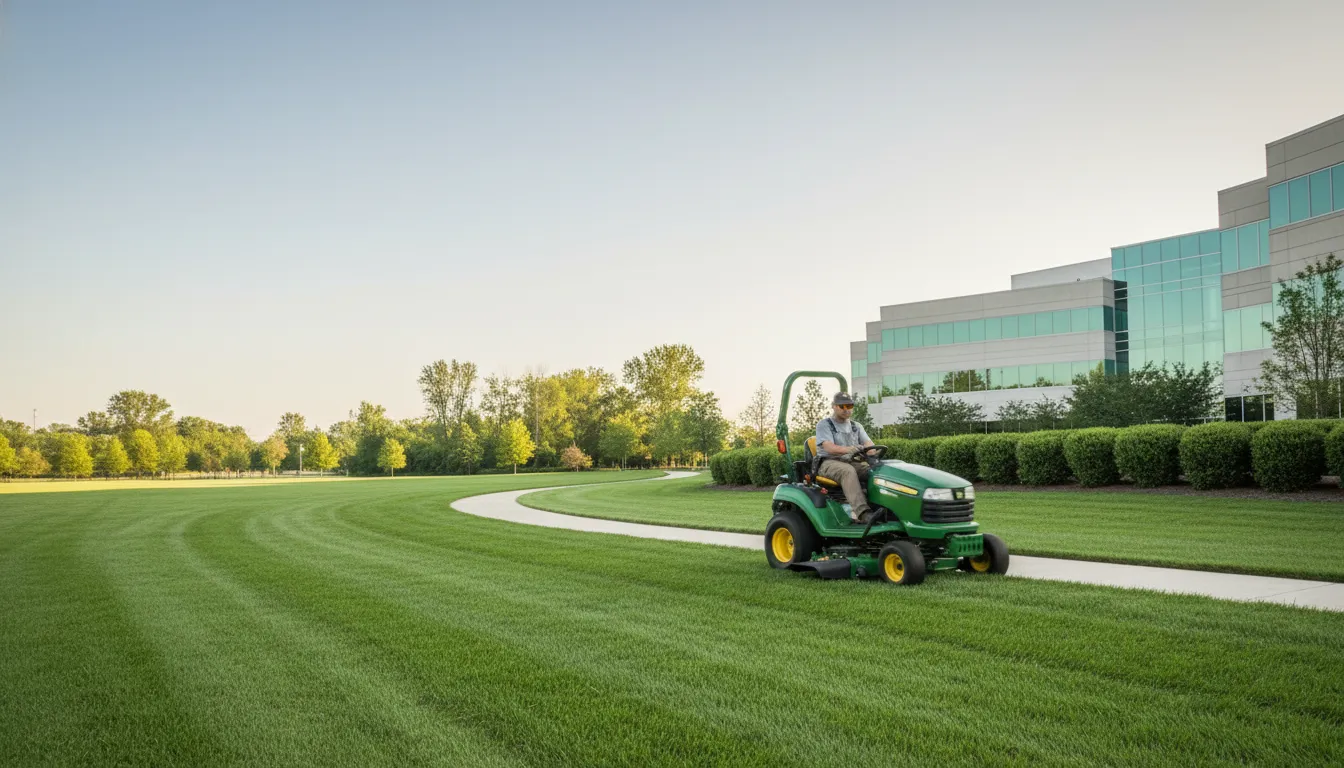
Find the Best Lawn Mowing Companies for Your Business
No obligation • Fast responses • Nationwide coverage

Why you can trust Landscape Atlas
Landscape Atlas is a leading United States resource for evaluating landscaping, lawn care, and outdoor service providers. Our team researches each category in depth, focusing on service quality, safety, and customer experience. Listings and rankings are based on independent criteria and user feedback, and companies cannot pay to influence our assessments or recommendations.
Search providers near you
Best Lawn Mowing Companies in Indiana Ranked
Maintaining a healthy, attractive lawn in Indiana requires more than just running a mower over the grass. It involves understanding the state's climate, the specific needs of its common grasses, and adopting practices that promote resilience and beauty. Professional lawn mowing services provide consistent, expert care based on these principles, saving you time and ensuring your turf thrives through the seasons. This guide explains the key aspects of lawn mowing in the Hoosier State, helping you understand best practices and what to look for in a local service provider.
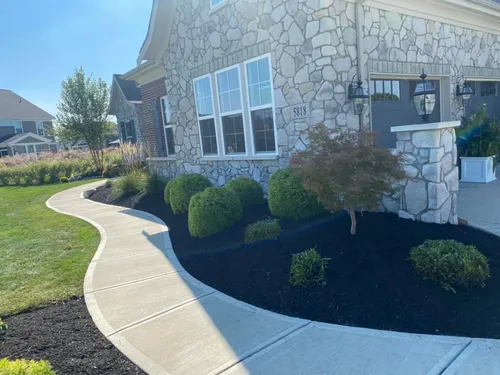
PMT Lawn & Landscape
Indianapolis, IN
PMT Lawn & Landscape is a landscaping and lawn care company serving Indianapolis, IN, and the greater central Indiana area. Since 2015, they have provided commercial and residential groundskeeping services including mowing, edging, pruning, mulch installation, lawn fertilization, weed control, tree trimming and removal, aeration, overseeding, and snow removal. Their team also offers landscape design and holiday lighting installation. PMT Lawn & Landscape is licensed, bonded, and insured, with expertise in local Indiana conditions and chemical-based lawn treatments.
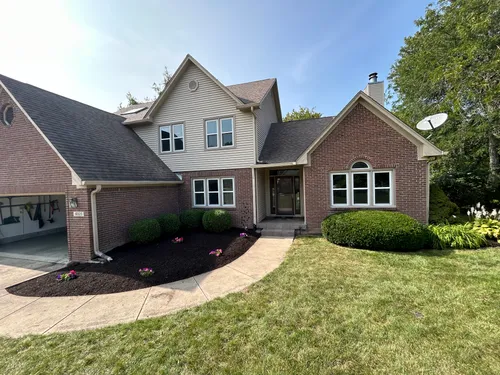
Hoosier Homes Lawn & Landscape LLC
11233 Rockingham Cir, Fishers, IN 46037
Hoosier Homes Lawn & Landscape LLC is a lawn care and landscaping company based in Indianapolis, IN. They offer year-round lawn and landscape services for both residential and commercial properties, including lawn mowing, fertilization, weed and pest control, and creative landscape design. Their weed and pest control service uses safe and effective treatments to protect lawns without harming the environment. Hoosier Homes serves Indianapolis and surrounding areas such as Fishers, Noblesville, Carmel, and more. The company emphasizes transparent communication and reliability in their work.
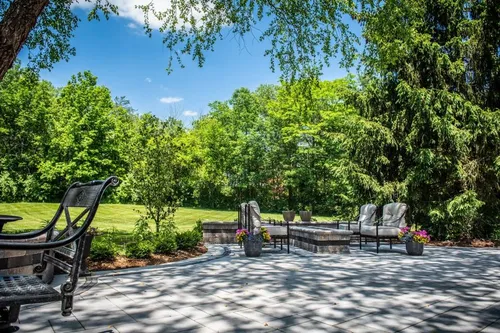
GreenImage Landscape & Design LLC
4035 Meadows Pkwy, Indianapolis, IN 46205
GreenImage Landscape & Design LLC is a landscaping company based in Indianapolis, IN, offering lawn mowing, landscape design, and maintenance services. They serve both Indianapolis and Carmel, providing creative and personalized landscape designs that enhance outdoor spaces. Their services include ongoing lawn care, pruning, seasonal cleanups, and hardscape maintenance to keep properties looking their best year-round. With years of experience, GreenImage Landscape & Design focuses on transforming yards into inviting and functional retreats.
Rooted Lawn & Landscape
160 W Carmel Dr #217, Carmel, IN 46032
Rooted Lawn & Landscape is a lawn care and landscaping company serving Indianapolis, IN, and surrounding areas. They offer a range of services including lawn mowing, lawn fertilization, weed control, tree and shrub installation and maintenance, stump grinding, and full landscaping solutions. The company emphasizes year-round yard health and uses quality materials and professional equipment to maintain lawns, small business properties, and golf courses. Rooted Lawn & Landscape is locally owned, licensed, and insured, providing service across Carmel, Hamilton County, Meridian Hills, Broad Ripple, and other nearby communities.
Fralich's
959 W 100 N, Greenfield, IN 46140
Fralich's is a landscaping company serving Indianapolis, IN, with over 20 years of combined experience. They offer a wide range of services including lawn mowing, fertilization, weed control, landscape design and installation, yard drainage and grading, sprinkler installation and repair, land clearing, and hardscaping such as pavers and retaining walls. Their team uses professional equipment for land grading to ensure lawns are even and free of standing water. Established in 2006, Fralich's has grown from a one-man operation to a seasonal crew of 15, focusing on both residential and commercial landscaping projects.
Understanding Indiana's Lawn Grasses
The foundation of proper mowing starts with knowing what's underfoot. Indiana's climate is ideal for cool-season grasses, which grow most vigorously in the cool temperatures of spring and fall. The most common types found in residential lawns are:
- Kentucky Bluegrass: Known for its rich green color and ability to spread, creating a dense, self-repairing turf.
- Tall Fescue: A bunch-type grass prized for its drought tolerance, deep roots, and durability in high-traffic areas.
- Fine Fescues: Often found in shade mixes, these grasses have fine blades and good tolerance for lower light and poorer soils.
These grasses share a common growth pattern and respond best to similar mowing heights and frequencies. Mowing correctly is not just about aesthetics; it's a critical form of stress management that influences your lawn's health, weed resistance, and ability to withstand Indiana's summer heat and winter cold.
The Golden Rule: Mowing Height and Frequency
The single most important guideline for mowing any lawn, especially in Indiana, is the One-Third Rule. This rule states you should never remove more than one-third of the grass blade's height in a single mowing 1. Cutting off more than this shocks the plant, stresses the root system, and leaves clumps of clippings that can smother the grass beneath.
Adhering to this rule directly determines your mowing frequency. For cool-season grasses, the ideal mowing height is between 3 and 3.5 inches. A taller blade of grass supports a deeper, healthier root system, shades the soil to conserve moisture and prevent weed seeds (like crabgrass) from germinating, and produces more energy for the plant.
How often should you mow? It's not a fixed schedule but a response to growth.
- Spring & Fall (Peak Growth): During these cool, moist seasons, your lawn may need mowing every 5 to 7 days to follow the one-third rule.
- Summer (Slow Growth): When summer heat arrives, grass growth slows. You can often extend the interval to every 10 to 14 days. During drought or extreme heat, it's best to avoid mowing altogether to prevent damage.
Find the perfect lawn mowing companies for your needs
Get personalized recommendations and expert advice
Seasonal Mowing Strategies for Indiana
A one-size-fits-all approach doesn't work year-round in Indiana. Adjusting your mowing strategy with the seasons is key to a resilient lawn.
Spring: Growth explodes as temperatures rise. Focus on frequent mowing to keep up with growth without cutting too short. This is the time to establish your regular weekly or bi-weekly schedule. Sharpening your mower blade in early spring ensures clean cuts that heal quickly.
Summer: The primary goal shifts to lawn preservation. Raise your mower deck to the higher end of the recommended range (3.5 inches or slightly more) to provide extra shade and moisture retention for the soil. Reduce mowing frequency significantly. Mow only when necessary, and preferably during the cooler parts of the day to minimize stress on the grass.
Fall: Growth picks up again with cooler temperatures and autumn rains. Return to a more frequent mowing schedule to manage leaf litter and keep the lawn tidy. The final cut of the season can be slightly shorter (around 2.5 inches) to help prevent matting and snow mold over the winter, but avoid scalping the lawn 2.
Professional Service Schedules and Considerations
Many homeowners choose professional lawn care for its consistency and expertise. Providers typically offer service on several schedules:
- Weekly Service: Most common during the fast-growing seasons of spring and early fall. Provides the most consistent appearance and is often priced slightly lower per visit than less frequent options 3.
- Bi-Weekly Service: A popular choice that balances cost and maintenance, especially effective during summer when growth is slower. It requires careful planning to ensure the one-third rule isn't violated between visits 4.
- Monthly or On-Demand Service: This typically has the highest cost per visit, as it often involves cutting an overgrown lawn, which requires more time, fuel, and effort. It can also be more stressful for the turf if too much is removed at once.
When evaluating providers, ask about their mowing height settings, whether they follow the one-third rule, and if they sharpen their blades regularly. A quality service will understand and explain these Indiana-specific practices.
The Benefit of Grass Clippings
Contrary to old advice, grass clippings should not be viewed as waste. Mulch mowing-leaving the fine clippings on the lawn-is a recommended practice known as "grasscycling" 5. These small clippings decompose quickly, returning valuable nutrients like nitrogen back to the soil, which can reduce the need for fertilizer. They do not cause thatch buildup. For this to work effectively, you must mow frequently enough (following the one-third rule) so the clippings are small and can filter down to the soil surface.
Cost Factors for Lawn Mowing in Indiana
The cost for professional mowing in Indiana varies based on several key factors. The primary driver is the size of your yard. While prices can fluctuate by region and provider, general ranges based on property size are:
- Small Yard (up to 1/4 acre): Often in the range of $30 to $45 per visit.
- Medium Yard (1/2 acre): Typically ranges from $45 to $75 per visit.
- Large Yard (1 acre or more): Can range from $75 to $200+ per visit, depending on complexity, obstacles, and slope 6 7 8 9.
Frequency also impacts the per-visit price. Weekly service often has a lower rate per mow compared to bi-weekly, with monthly service being the most expensive per visit due to the extra work involved. Other factors that can affect price include the terrain (hills are more work), the number of obstacles (trees, gardens, play sets), and whether additional services like edging, blowing, or trimming are included.
Common Lawn Mowing Challenges in Indiana
- Weeds: Mowing high (3-3.5 inches) is one of the simplest and most effective weed prevention strategies. A dense, tall turf shades the soil, making it harder for weed seeds like dandelions and crabgrass to establish 10 11.
- Summer Drought: As mentioned, raising the mowing height and reducing frequency in summer helps the lawn conserve water and endure dry periods.
- Leaf Management in Fall: Frequent mowing with a mulching mower can help break down fallen leaves into small pieces that decompose and nourish the lawn, reducing the need for raking.
Frequently asked questions
Sources
Footnotes
-
How Often and What Height to Mow - The 1/3 Leaf Surface Rule is The Ke - https://www.mysoiltesting.com/blogs/lawn-articles/the-1-3-leaf-surface-rule-the-key-to-healthy-resilient-lawns ↩
-
Month-to-Month Indiana Lawn Care Schedule - Lawn Love - https://lawnlove.com/blog/indiana-lawn-care-schedule/ ↩
-
Why You Shouldn't Mow the Lawn Every Week - Hittle Landscaping - https://hittlelandscape.com/blog/why-you-shouldnt-mow-the-lawn-every-week/ ↩
-
How Often Should You Mow Your Lawn in Indiana-And Why ... - https://www.naturescapeservices.com/blog/how-often-should-you-mow-your-lawn-indiana-and-why-it-matters ↩
-
ay-32-w.pdf - Purdue Extension - https://www.extension.purdue.edu/extmedia/ay/ay-32-w.pdf ↩
-
Indiana (IN) Lawn Care Services & Mowing Companies - https://www.yourgreenpal.com/indiana-lawn-care-services ↩
-
Lawn Mowing Cost: Average Prices by Size & Region (2026) - https://www.yourgreenpal.com/blog/lawn-mowing-cost ↩
-
Indiana (IN) Lawn Care - Facts And Figures - LawnStarter - https://www.lawnstarter.com/in ↩
-
How Much to Charge for Lawn Mowing: Complete Pricing Guide - https://order.siterecon.ai/blog/how-much-to-charge-for-lawn-mowing ↩
-
Taking Care of Your Yard - Purdue Extension - https://www.extension.purdue.edu/extmedia/HO/HO-236-W.pdf ↩
-
Mowing Best Practices That Indiana Homeowners Should ... - https://brooklawnservices.com/mowing-best-practices-that-indiana-homeowners-should-follow-in-2023/ ↩