Find the Best Lawn Mowing Companies for Your Business
No obligation • Fast responses • Nationwide coverage

Why you can trust Landscape Atlas
Landscape Atlas is a leading United States resource for evaluating landscaping, lawn care, and outdoor service providers. Our team researches each category in depth, focusing on service quality, safety, and customer experience. Listings and rankings are based on independent criteria and user feedback, and companies cannot pay to influence our assessments or recommendations.
Search providers near you
Best Lawn Mowing Companies in Kansas Ranked
Maintaining a healthy, vibrant lawn in Kansas requires more than just running a mower over the grass. It's a practice that balances the state's unique climate, diverse grass types, and seasonal challenges. Professional lawn mowing services provide the expertise and consistency needed to foster deep roots, resist weeds, and withstand the intense summer heat and winter cold. This guide will help you understand the key principles of proper mowing for Kansas lawns and how to connect with local professionals who can apply this knowledge to keep your yard in top condition.
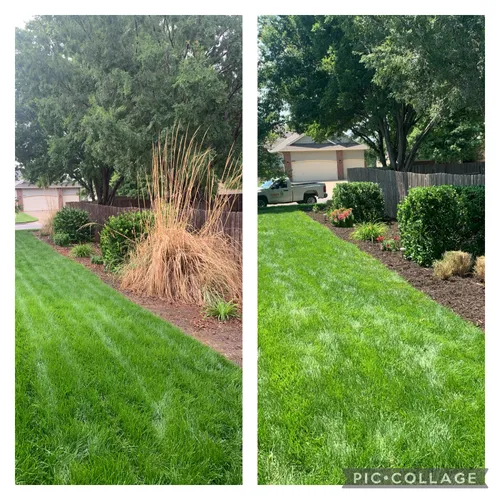
Ferry Lawnscapes LLC
10100 W Maple St Suite 305, Wichita, KS 67209
Ferry Lawnscapes LLC is a family-owned lawn and landscaping company based in Wichita, KS. With over 20 years of experience, they provide a wide range of services including lawn mowing, sod installation, landscape design, tree removal, stump grinding, and general lawn care. Their capabilities cover everything from mulch and rock installation to aeration and over-seeding, making them a full-service option for residential and commercial landscaping needs.

True Lawn Care, LLC
5025 E Kellogg Dr #100, Wichita, KS 67218
True Lawn Care, LLC is a lawn care company based in Wichita, KS, offering lawn mowing, mulching, irrigation, and sprinkler repair services. They serve Wichita and nearby communities including Derby and Andover. The company provides personalized lawn care plans focused on sustainable and environmentally friendly practices. Their expertise includes maintaining irrigation systems to ensure healthy, vibrant gardens. True Lawn Care emphasizes customized outdoor spaces and attentive maintenance to meet homeowner needs.
Western Lawn & Landscape LLC
4323 W 31st St S, Wichita, KS 67215
Western Lawn & Landscape LLC is a landscaping and lawn care company based in Wichita, KS. They provide full-service grounds management, including lawn and landscape maintenance as well as snow and ice mitigation. Their services also cover landscaping and hardscaping projects, such as creating custom backyard designs with features like pavers and retaining walls.
The Grounds Guys of Wichita
1816 N Wabash Ave, Wichita, KS 67214
The Grounds Guys of Wichita provides comprehensive landscaping and lawn care services in Wichita, KS. Their offerings include lawn mowing, fertilization, weed control, irrigation installation and repair, landscape design, hardscaping such as patios and retaining walls, tree services, and yard drainage solutions. They specialize in eco-friendly and drought-tolerant landscaping options, incorporating water-smart irrigation and permeable hardscaping to conserve resources. The company delivers tailored landscape maintenance programs that include mowing, pruning, aeration, and seasonal cleanups to keep properties well-maintained year-round. Their team also offers custom landscape designs with 2D and 3D previews to help clients visualize projects before installation. The Grounds Guys are part of a national network, providing local expertise with a broad range of landscaping capabilities.

Divine Lawns
5025 E Kellogg Dr #100, Wichita, KS 67218
Divine Lawns is a landscaping and lawn care company based in Wichita, KS, serving Wichita, Andover, El Dorado, and nearby areas. They offer a wide range of services including lawn mowing, fertilization, weed control, sod installation, tree trimming, removal, and stump grinding, as well as snow plowing and landscape design. Their team focuses on creating and maintaining healthy, vibrant outdoor spaces using skilled craftsmanship and environmentally conscious methods. Divine Lawns also provides specialized capabilities such as overseeding, dethatching, aeration, and professional mulch installation to enhance lawn health and appearance.
Understanding Kansas Grass Types and Mowing Needs
The foundation of a good mowing schedule is knowing what type of grass you have. Kansas lawns are typically divided into two categories: cool-season and warm-season grasses, each with distinct growth patterns.
- Cool-Season Grasses: These are the most common in Kansas, especially in the northern and central regions. Varieties like Tall Fescue and Kentucky Bluegrass thrive in the cooler temperatures of spring and fall. They grow most vigorously during these seasons and can go semi-dormant or become stressed during the peak summer heat.
- Warm-Season Grasses: Found more frequently in southern Kansas, grasses like Bermuda and Zoysia love the heat. They green up later in the spring, grow fastest during the hot summer months, and go dormant (turn brown) after the first hard frost in the fall.
Your mowing frequency will directly depend on your grass type and the current season. A one-size-fits-all approach won't work for a state with Kansas's climate range.
The Golden Rule: The 1/3 Rule
Regardless of grass type, one universal principle applies: never remove more than one-third of the grass blade in a single mowing. 1 2 This is perhaps the most critical rule for lawn health.
- Why it Matters: Cutting off too much at once shocks the plant, reducing its ability to photosynthesize and produce energy. This weakens the roots, making the lawn more susceptible to drought, disease, and weed invasion.
- How to Apply It: If your target mowing height is 3 inches, you should mow when the grass reaches about 4.5 inches tall. This practice encourages denser growth, deeper roots, and a healthier lawn overall.
Recommended Mowing Heights for Kansas Lawns
Mowing at the correct height is a simple yet powerful form of stress management for your grass.
- Cool-Season Grasses (Tall Fescue/Kentucky Bluegrass): Aim to maintain a height of 3 to 4 inches. 3 During the summer, keeping it on the taller end (3.5-4 inches) provides crucial shade for the soil and crown of the plant, conserves moisture, and helps crowd out weeds like crabgrass.
- Warm-Season Grasses (Bermuda/Zoysia): These grasses are typically cut shorter. In peak summer, a height of 1 to 2.5 inches is common. However, as growth slows in late summer and early fall, allowing them to grow to 3-4 inches helps the plants store energy reserves for winter dormancy.
A common mistake is mowing too short, or "scalping." This exposes soil to sunlight, promoting weed germination, and puts immense heat and drought stress on the grass plants.
A Seasonal Mowing Guide
Your mowing strategy should adapt throughout the year to support your lawn's natural growth cycle.
- Spring: Begin mowing when the grass greens up and reaches about 3-4 inches tall. Frequency will increase as the cool-season grasses hit their peak growth spurt. This is a good time for a first clean-up cut and to sharpen mower blades.
- Summer: For cool-season grasses, raise the mower deck to the highest setting. The taller grass blades protect the soil. Mow as frequently as needed to follow the 1/3 rule, which may be less often if heat slows growth. For warm-season grasses, this is the period of most frequent mowing. 4 5
- Fall: As growth slows, gradually reduce the mowing frequency. For cool-season grasses, this is another growth period, so maintain consistent height. In late fall, you can gradually lower the cutting height for the final mow of the season to help prevent matting and snow mold. 6
Find the perfect lawn mowing companies for your needs
Get personalized recommendations and expert advice
Service Structures and Pricing
Professional lawn care in Kansas is typically offered in a few flexible structures to meet different needs and budgets.
- A La Carte / One-Time Service: Ideal for a single clean-up, after a vacation, or for addressing an overgrown lawn. This is often the most expensive option on a per-visit basis.
- Subscription Packages: The most common and cost-effective approach. Providers offer weekly or bi-weekly service on a recurring schedule. These packages often include the basic mow, edging, and blowing off hard surfaces. 7 Seasonal add-ons like spring/fall clean-ups, aeration, or leaf removal can be included or offered separately.
Pricing is influenced primarily by the size of your yard (often measured in acreage or square footage) and the complexity of the terrain.
- Small Yards (up to 1/4 acre): You might expect a range of $25 to $60 per visit.
- Mid-Size Lawns (around 1/2 acre): A typical range is $50 to $75 per visit. 8
- Larger Properties (1 acre or more): Prices can range from $150 to $200+ per visit.
- General Range: For many standard residential properties, a cost of $30 to $80 per visit is common, with subscription packages providing better long-term value. 9 10
Choosing the Right Service Provider
Beyond price and schedule, consider these factors when selecting a professional:
- Knowledge of Local Conditions: Do they understand Kansas grass types and seasonal challenges?
- Equipment: Well-maintained, sharp mowers are essential for a clean cut that promotes health.
- Services Offered: Can they handle your broader seasonal needs like aeration, dethatching, or overseeding?
- Reliability and Communication: Consistent scheduling and clear communication are key to a good partnership.
Investing in proper mowing is investing in the long-term health and beauty of your Kansas lawn. By partnering with a knowledgeable professional who follows these science-backed practices, you can enjoy a resilient, lush green space that enhances your home.
Frequently asked questions
Sources
Footnotes
-
Mowing | General Lawn Maintenance - Kansas State University - https://www.k-state.edu/turf/resources/lawn-problem-solver/maintenance/mowing/ ↩
-
Achieve the Perfect Lawn: Mowing Best Practices - https://ryanlawn.com/blog/mowing-to-perfection/ ↩
-
K-State's Upham outlines recommended heights for fall - https://www.ksre.k-state.edu/news/stories/2022/09/horticulture-turf-grass-lawn-mowing-height.html ↩
-
Mowing the Lawn - Johnson County Extension Office - https://www.johnson.k-state.edu/programs/lawn-garden/agent-articles-fact-sheets-and-more/agent-articles/lawns/mowing.html ↩
-
How High Should I Cut My Lawn? - https://schendellawn.com/how-high-should-i-cut-my-lawn-2/ ↩
-
Month-to-Month Lawn Care Guide for Kansas - LawnStarter - https://www.lawnstarter.com/blog/kansas/monthly-lawn-care-guide-ks/ ↩
-
How Much to Charge for Lawn Mowing: Complete Pricing Guide - https://order.siterecon.ai/blog/how-much-to-charge-for-lawn-mowing ↩
-
Lawn Care Price Guide 2026: Average Mowing Rates & Costs - https://www.housecallpro.com/resources/how-much-charge-lawn-mowing/ ↩
-
Lawn Mowing Cost [2026 Data] - Angie's List - https://www.angi.com/articles/how-much-does-lawn-mowing-cost.htm ↩
-
Lawn Mowing in Wichita, KS - Costs 01 / 2026 - Homeyou - https://www.homeyou.com/ks/lawn-mowing-wichita-costs ↩