Find the Best Lawn Mowing Companies for Your Business
No obligation • Fast responses • Nationwide coverage

Why you can trust Landscape Atlas
Landscape Atlas is a leading United States resource for evaluating landscaping, lawn care, and outdoor service providers. Our team researches each category in depth, focusing on service quality, safety, and customer experience. Listings and rankings are based on independent criteria and user feedback, and companies cannot pay to influence our assessments or recommendations.
Search providers near you
Best Lawn Mowing Companies in Massachusetts Ranked
A well-maintained lawn is a source of pride and a key element of your home's curb appeal. In Massachusetts, achieving a healthy, green lawn requires more than just occasional cutting; it demands a seasonal strategy tailored to the state's unique climate and cool-season grasses. Professional lawn mowing services provide consistent, expert care that follows best practices for grass height, frequency, and seasonal preparation. This guide will help you understand the essentials of lawn care in the Bay State and how to connect with local professionals who can keep your property looking its best year-round.
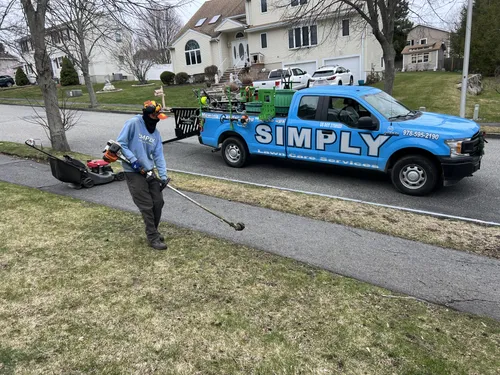
Simply Lawn Care Services
802 Main St Lower Level, Melrose, MA 02176
Simply Lawn Care Services provides professional landscaping and lawn care solutions in Boston, MA. They offer comprehensive lawn maintenance, including hybrid and organic fertilization, weed control, and precision landscaping to enhance outdoor spaces. Serving Stoneham, Wakefield, Saugus, Melrose, and Malden, the company focuses on hassle-free transformations and reliable lawn care.
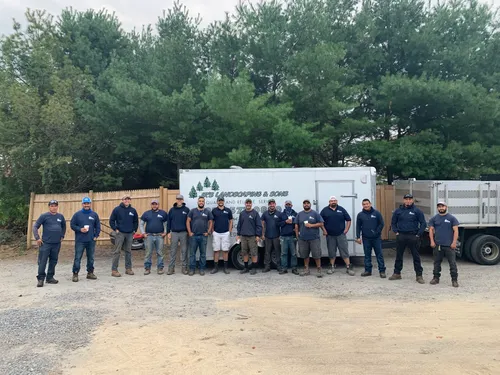
JR's Landscaping & Sons LLC
3 Sorelle Pl, Burlington, MA 01803
JR's Landscaping & Sons LLC is a full-service landscaping company serving Boston, MA, and Middlesex County. They provide a wide range of services including lawn mowing, lawn fertilization, weed control, sod installation, fence installation, landscape lighting, sprinkler installation and repair, hardscaping with patios and retaining walls, and custom landscape design. With over 20 years of experience since 1997, they offer year-round solutions tailored to maintain and enhance outdoor spaces for both residential and commercial properties. Their capabilities include expert hardscape installations such as stone walkways, patios, and retaining walls designed for New England weather conditions.
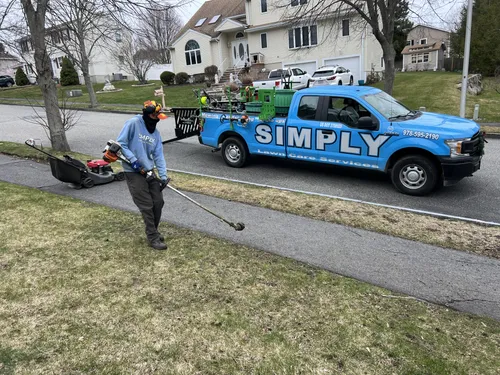
Simply Lawn Care Services
147 Summit St #13b, Peabody, MA 01960
Simply Lawn Care Services is a landscaping and lawn care company based near Boston, MA. They provide a range of services including lawn mowing, lawn fertilization with hybrid and organic options, weed control, and precision landscaping. Serving areas such as Peabody, Danvers, Salem, Lynn, and Beverly, they focus on comprehensive lawn maintenance and outdoor space enhancement.
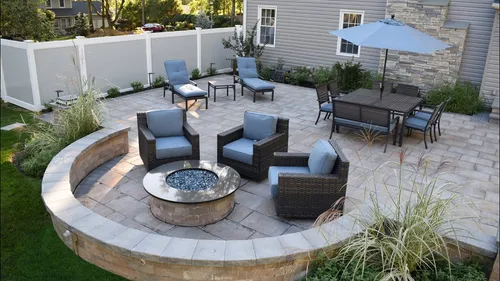
The Pros Inc. - Landscape Design & Build
29 Hanover St, Lynn, MA 01902
The Pros Inc. - Landscape Design & Build is a landscaping and outdoor living company serving Boston, MA, and surrounding areas. With over 20 years of experience, they offer a wide range of services including landscape design, lawn care, sod installation, fence installation, hardscaping, outdoor lighting, irrigation, water features, pool and spa construction, decks, pergolas, driveways, and seasonal maintenance. Their expertise includes custom pool building with options like fiberglass and gunite concrete pools, as well as comprehensive irrigation systems designed for efficient watering. The company also provides snow and ice management services during winter months.
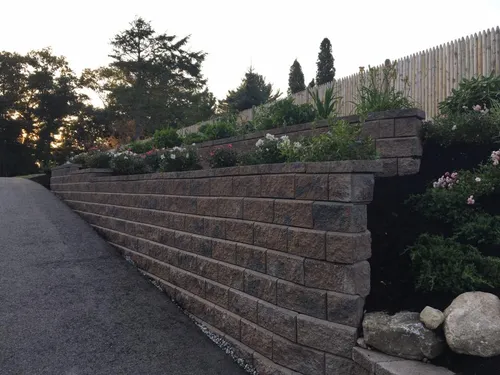
Pat Gibbs Landscape Design & Construction, Inc.
Boston, MA
Pat Gibbs Landscape Design & Construction, Inc. is a landscaping and construction company serving Boston, MA, and the surrounding areas. With over 25 years of experience, they offer a wide range of services including lawn maintenance, landscaping, hardscaping, excavating, fencing installation, outdoor living spaces, tick and mosquito spray, bathroom remodeling, dumpster rental, and snow removal. The company uses quality materials such as Techo Block and Uni-Lock for durable and attractive hardscaping projects and provides a 25-year warranty on hardscaping work. They also offer a 10% discount for military and first responders on seasonal contracts and hardscaping.
Understanding Massachusetts Lawn Care Basics
Massachusetts lawns are predominantly composed of cool-season grasses like Kentucky bluegrass, perennial ryegrass, and fescues. These grasses thrive in the cooler temperatures of spring and fall and can go dormant during the hot, dry periods of summer. Successful lawn maintenance here hinges on adapting your mowing practices to these seasonal growth cycles. The core service typically includes cutting the grass, trimming along edges and around obstacles, and blowing clippings off hard surfaces like driveways and walkways. Many providers offer this as a standalone service or as part of a broader package that may include fertilization, aeration, or seasonal cleanups 1.
The Seasonal Mowing Schedule
Adhering to a seasonal schedule is the most effective way to promote a dense, weed-resistant turf. Here's a breakdown of what to expect throughout the year:
Spring (April - May)
Growth kicks into high gear as temperatures rise. Mowing should begin in April once the grass is actively growing and dry. A weekly frequency is common during this peak growth period. Start the season with a higher cut, around 2.5 to 3 inches, to encourage strong root development.
Summer (June - August)
Heat and potential drought stress the lawn. It's crucial to raise your mower blades to a height of 3 to 4 inches. Taller grass shades the soil, conserving moisture and helping to prevent weed seeds from germinating. As growth slows, you can often switch to a bi-weekly schedule, mowing every 7 to 10 days.
Fall (September - October)
Cooler temperatures trigger another growth spurt, often requiring a return to weekly mowing. This is the time to begin gradually lowering the cutting height in preparation for winter. Reduce the blade height slowly over several mows from the summer height down to about 2.5 to 3 inches.
Winter Preparation (Late Fall)
The final cut of the season is critical. Before the first hard frost, mow the lawn to a shorter height of 2 to 2.5 inches 2 3. This helps prevent snow mold and matting during the winter months. This service is often bundled with a thorough fall leaf removal.
Essential Mowing Principles for a Healthy Lawn
Beyond the calendar, two fundamental rules govern proper lawn cutting.
The One-Third Rule: Never remove more than one-third of the grass blade's height in a single mowing session 4. For example, if you maintain a 3-inch lawn, you should mow when it reaches about 4.5 inches. Cutting off too much at once shocks the plant, stresses the roots, and can leave unsightly brown clumps of clippings that smother the grass beneath.
Correct Mowing Height: As highlighted in the seasonal schedule, height matters. Consistently mowing too short (scalping) weakens the grass, making it more susceptible to drought, disease, and weed invasion. The recommended range for Massachusetts cool-season grasses is generally between 2.5 and 4 inches, adjusted for the time of year 5.
Find the perfect lawn mowing companies for your needs
Get personalized recommendations and expert advice
Service Frequency and What to Expect
Most homeowners in Massachusetts choose between weekly and bi-weekly service plans. Weekly mowing is standard during the rapid growth periods of spring and fall, ensuring the one-third rule is always followed 6. Bi-weekly service is a common and cost-effective option during the slower summer growth phase or for lawns that are less vigorous 7.
A standard professional mowing visit typically includes:
- Mowing: Cutting the entire lawn area to the agreed-upon height.
- Trimming: Using a string trimmer to cut grass along fences, walls, garden beds, and around trees and poles.
- Blowing: Clearing all grass clippings from sidewalks, driveways, and patios.
- Clipping Management: Most professionals use mulching mowers that finely chop clippings and return them to the lawn, where they decompose and provide natural nutrients. If bagging is requested or necessary due to excessive growth, clippings will be removed from the property.
Understanding Pricing for Lawn Mowing Services
The cost for professional grass cutting in Massachusetts varies based on several key factors. The primary driver is the size of your yard, often measured in acres or square feet. Terrain complexity (hills, slopes, obstacles), the frequency of service, and any add-on tasks also influence the final price.
Based on available data, here is a general overview of per-visit costs:
- Weekly Service: Can range from approximately $28 for a small lot (around 1/8 acre) to $100 or more for a one-acre property 8.
- Bi-Weekly Service: Often has a slightly higher per-visit rate due to the increased growth between cuts, with ranges from about $34 to over $110 for the same property sizes 9 10.
For the most accurate estimate, it's best to request quotes from local providers who can assess your specific property.
Choosing the Right Service for Your Lawn
When evaluating professionals, look for those who demonstrate knowledge of regional best practices. They should be able to explain their seasonal height adjustments, adherence to the one-third rule, and winterization process. Don't hesitate to ask about their equipment (sharp blades are essential for a clean cut), insurance, and whether they offer bundled seasonal packages that can provide better value and comprehensive care for your landscape.
Frequently asked questions
Sources
Footnotes
-
Common Lawn Mowing Packages and Sub-Tasks - https://www.taskeasy.com/contractor-resource-center/common-lawn-mowing-packages ↩
-
Seasonal Mowing Heights for Massachusetts Lawns - https://www.hartney.com/resources/seasonal-mowing-heights-for-massachusetts-lawns/ ↩
-
When Should You Start Mowing Your Lawn in Massachusetts? - https://www.simplylawncareservices.com/blog/when-should-you-start-mowing-your-lawn-in-massachusetts ↩
-
Recommended Lawn Mowing Heights By Season (Spring, Summer, ... - https://blog.davey.com/recommended-lawn-mowing-heights-by-season-spring-summer-fall/ ↩
-
- Mowing - UMass Amherst - https://www.umass.edu/agriculture-food-environment/turf/best-management-practices-bmps-for-lawn-landscape-turf/8-mowing
-
Lawn Care Service Guide: Top 10 Best in 2024 - https://bostonlandscapeco.com/lawn-care-service/ ↩
-
Lawn Mowing Prices | Cost of Lawn Service - https://www.fixr.com/costs/lawn-maintenance ↩
-
How Much Does Lawn Mowing Cost in 2026? - LawnStarter - https://www.lawnstarter.com/blog/cost/lawn-mowing-price/ ↩
-
Massachusetts Lawn Care - Facts and Figures - LawnStarter - https://www.lawnstarter.com/ma ↩
-
Lawn Care Pricing Chart: Your Guide to Fair Lawn Service Costs - https://invoicefly.com/academy/lawn-care-pricing-chart/ ↩