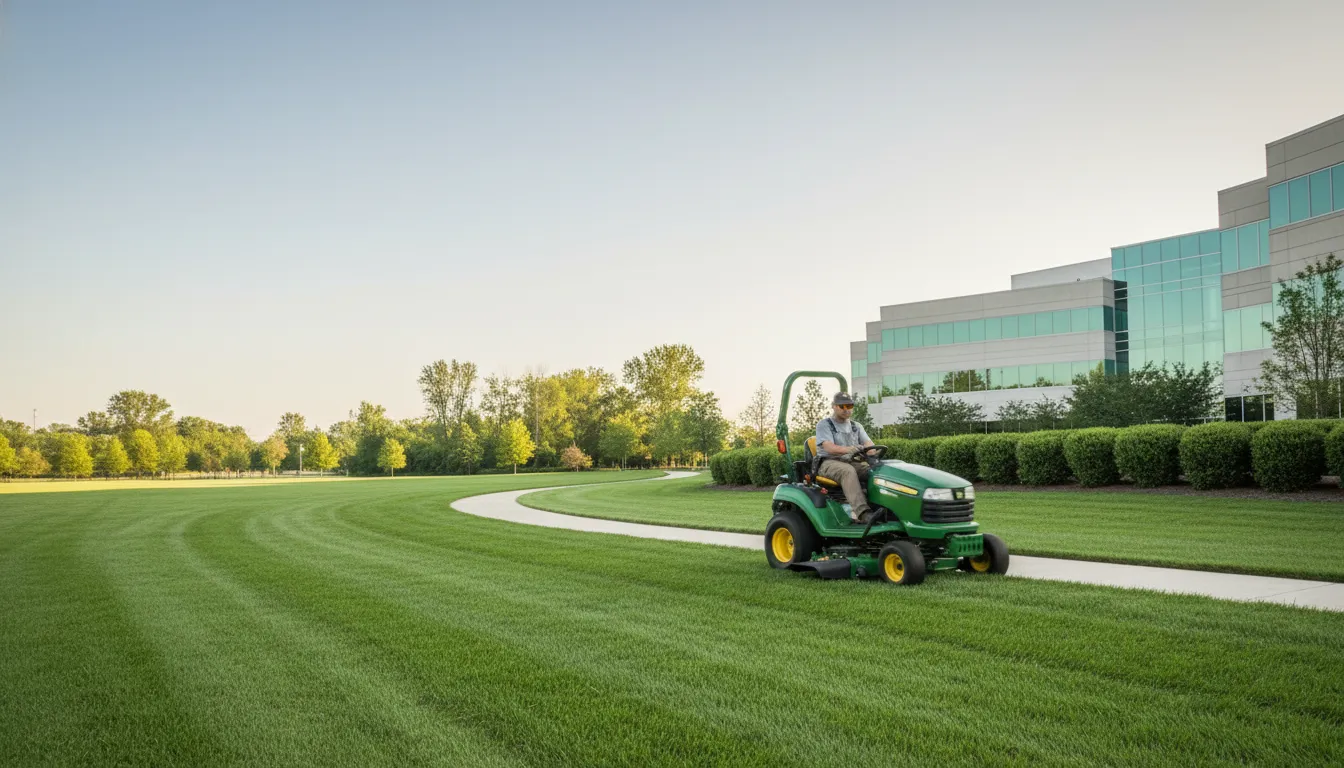
Find the Best Lawn Mowing Companies for Your Business
No obligation • Fast responses • Nationwide coverage

Why you can trust Landscape Atlas
Landscape Atlas is a leading United States resource for evaluating landscaping, lawn care, and outdoor service providers. Our team researches each category in depth, focusing on service quality, safety, and customer experience. Listings and rankings are based on independent criteria and user feedback, and companies cannot pay to influence our assessments or recommendations.
Search providers near you
Best Lawn Mowing Companies in Michigan Ranked
Maintaining a healthy, attractive lawn in Michigan requires more than just running a mower over the grass. It involves understanding the state's unique climate, soil, and grass types to apply the right techniques at the right time. Proper mowing is the cornerstone of lawn care, directly impacting turf health, weed resistance, and drought tolerance. This guide provides clear, practical information on mowing practices, schedules, and considerations to help Michigan homeowners make informed decisions and connect with local professionals who understand the specific needs of lawns in the Great Lakes State.

Lawnade Lawn Care Service of Grosse Pointe
17410 Mack Ave: #1039, Grosse Pointe Woods, MI 48230
Lawnade Lawn Care Service of Grosse Pointe is a locally owned lawn care and landscaping company serving Detroit, MI, and the surrounding Grosse Pointe communities. They provide a range of services including weekly lawn mowing, trimming, weed control, mulch installation, yard cleanups, dethatching, aeration, overseeding, and leaf cleanup for both residential and commercial properties. Their team is trained and insured, focusing on maintaining healthy and attractive outdoor spaces with attention to detail. Lawnade emphasizes a straightforward process from assessment to aftercare, ensuring clear communication and customer satisfaction.
Gardner's Landscaping
Detroit, MI
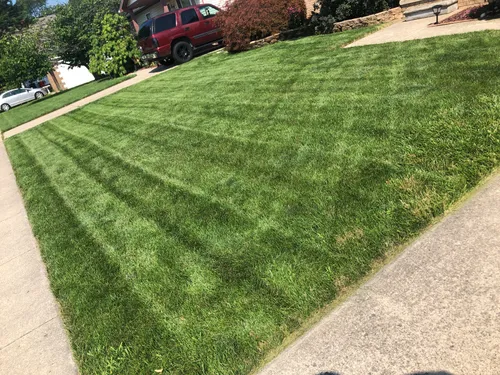
Gardner's Landscaping is a small landscaping company based in Detroit, MI, serving the Grosse Pointe, St. Clair Shores, and Clinton Township areas. They offer lawn mowing, lawn care, landscaping, trimming, and mulching services, focusing on transforming outdoor spaces with attention to detail. The team is experienced in handling various lawn sizes and shapes, including irregular areas, and uses push mowers when needed. Gardner's Landscaping is known for reliable service and professional project execution, with a customer-focused approach that ensures each job receives proper care.
Lakeside Pro Services: Plumbing, Irrigation, Lawn, Construction
28279 Groesbeck Hwy, Roseville, MI 48066
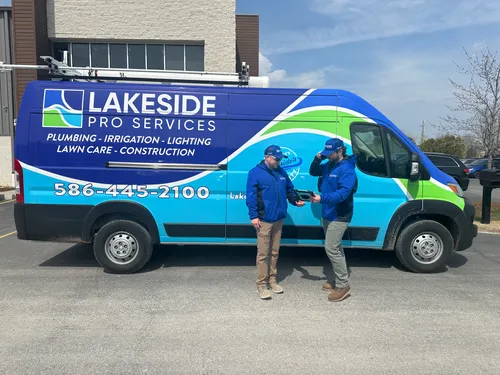
Lakeside Pro Services: Plumbing, Irrigation, Lawn, Construction offers a range of residential and commercial services in Detroit, MI. They provide lawn mowing, landscaping, sprinkler installation and repair, as well as landscape and outdoor lighting installation. The company serves Southeastern Michigan and surrounding areas, including many local communities. Their technicians are experienced and equipped to handle all brands and models, with a focus on detailed, personalized service.
DJ Wyatt's Landscaping LLC
Detroit, MI
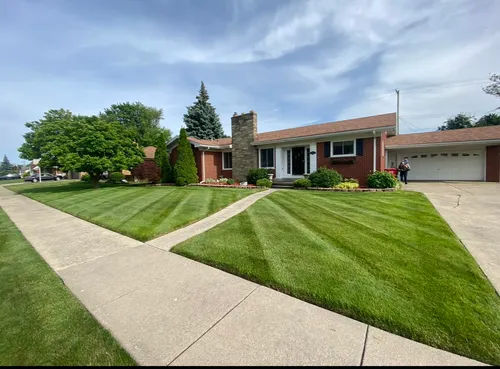
DJ Wyatt's Landscaping LLC is a landscaping company serving Detroit, MI, and nearby areas including Roseville, Warren, Fraser, and St. Clair Shores. They provide a range of outdoor services such as lawn care, landscaping, French drain installation, and snow removal. The company is known for its focus on customer satisfaction and strong communication, operating as a family-owned business with a commitment to quality workmanship. DJ Wyatt's Landscaping has built a reputation for reliability and professionalism in Macomb County.
Crisp Cuts Landscaping LLC
Detroit, MI
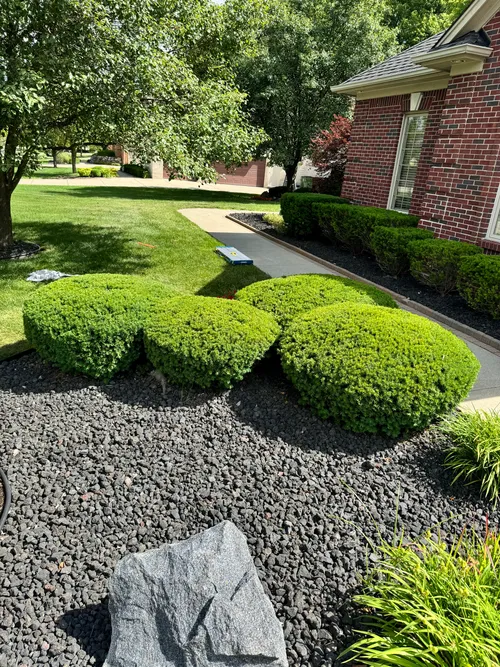
Crisp Cuts Landscaping LLC is a landscaping company based in Detroit, MI, offering a range of lawn mowing and lawn care services for both residential and commercial properties. They serve the Metro Detroit area with a focus on personalized landscaping solutions that address the specific needs of each client. Their capabilities include detailed lawn maintenance and landscape preparation to ensure healthy and attractive outdoor spaces. The company emphasizes attention to detail and quality craftsmanship in all their work.
Understanding Michigan's Lawn Environment
Michigan's climate presents distinct challenges and opportunities for lawn care. The state experiences four distinct seasons, with cool, wet springs, warm summers, and cold winters. This climate is ideal for cool-season grasses, which are the most common turf types found in Michigan lawns.
- Primary Grass Types: Kentucky Bluegrass, Fine Fescue, and Perennial Ryegrass, often in blends, thrive here. These grasses grow most vigorously in the spring and fall when temperatures are moderate.
- Soil Considerations: Michigan soils can vary widely, from sandy soils near the coasts to heavier clay soils inland. Soil type affects water retention and nutrient availability, which in turn influences mowing height and frequency.
- Seasonal Growth Patterns: Grass growth is not consistent year-round. Understanding the peak growth periods in spring and fall versus the slower summer and dormant winter periods is key to setting an effective mowing schedule.
Core Mowing Principles for Michigan Lawns
Adhering to a few fundamental rules can transform your mowing from a simple chore into a powerful lawn health tool.
The Golden Rule: The One-Third Rule
This is the single most important guideline for mowing. Never remove more than one-third of the grass blade height in a single mowing session. For example, if your target height is 3 inches, you should mow when the grass reaches about 4.5 inches. Cutting off more than one-third shocks the grass plant, stresses its root system, and creates excessive clippings that can smother the lawn. Consistent adherence to this rule promotes thicker turf and deeper roots.
Optimal Mowing Height
Contrary to the desire for a short, carpet-like lawn, taller grass is healthier grass in Michigan. The recommended mowing height for cool-season grasses is between 2.5 and 3.5 inches 1.
- Spring/Fall: During peak growth, maintain a height in the 2.5-3 inch range with frequent mowing.
- Summer Stress: As heat and potential drought arrive, raise the mower blade. Allowing grass to grow to 3.5 or even 4 inches provides shade for the soil, conserves moisture, and helps the lawn withstand summer stress.
- Benefits of Taller Grass: A taller cut encourages deeper root growth, improves drought tolerance, and naturally suppresses weeds by blocking sunlight from reaching weed seeds.
The Importance of Sharp Mower Blades
A dull mower blade tears the grass rather than cutting it cleanly. These ragged tips turn brown, give the lawn a dull appearance, and create open wounds that make the grass more susceptible to disease and moisture loss. Sharpening mower blades regularly-at least once or twice per season-is essential for a clean, healthy cut 2.
To Bag or to Mulch?
For most Michigan lawns, mulching (grasscycling) is the recommended practice. Mulching mowers cut clippings into fine pieces that fall back onto the soil. These clippings decompose quickly, returning valuable nutrients like nitrogen and potassium to the lawn, acting as a natural fertilizer, and helping to retain soil moisture 3. Bagging is generally only necessary if the grass has become excessively overgrown and clippings would clump and smother the turf.
Find the perfect lawn mowing companies for your needs
Get personalized recommendations and expert advice
Seasonal Mowing Schedule & Frequency
Your mowing routine should adapt to the seasonal growth patterns of your lawn.
- Spring (April - June): This is the period of most rapid growth. Weekly mowing is often necessary to keep up with growth and follow the one-third rule, especially during rainy periods. Begin mowing when the ground is dry enough to support equipment without causing ruts.
- Summer (July - August): Growth slows due to heat and potential dry spells. You can often reduce frequency to every 10-14 days (bi-weekly). This is the time to raise your mowing height to its maximum (3.5-4 inches) to protect the grass 4 5.
- Fall (September - October): Cooler temperatures and rain trigger a second, shorter growth spurt. Return to a weekly or bi-weekly schedule as needed 6 7. Continue mowing until the grass stops growing, typically after a few hard frosts.
- Winter: Mowing is not required. Ensure your final fall cut is not too short; a height of around 2.5 inches is ideal to prevent matting and disease over the winter.
Service Frequency and Pricing Considerations
Many homeowners choose to hire professional lawn care services for consistency and expertise. Service frequency directly impacts both lawn health and cost.
- Weekly Service: Most common during peak spring and fall growth. It provides the best results for lawn health and often has the lowest per-visit cost because the grass is maintained at a consistent height and requires less work per mow.
- Bi-Weekly Service: A good option for slower summer growth or for lawns that don't require intensive maintenance. The per-visit cost may be slightly higher than a weekly visit due to the increased growth and labor.
- Monthly or "As-Needed" Service: This typically has the highest per-visit cost because the grass is often significantly overgrown, requiring more time, fuel, and potentially additional cleanup (like bagging).
Pricing in Michigan varies based on yard size, frequency, and location, but general ranges for a standard 1/4-acre residential lot can be between $30 and $80+ per visit 8 9 10. For example, weekly service might average $37-$45 per visit, while bi-weekly for the same property might be $45-$50 per visit 8 9. Obtaining estimates from local providers for your specific property is the best way to understand current pricing.
Beyond Basic Mowing: Integrated Lawn Health
Mowing works best when combined with other core lawn care practices.
- Watering: Deep, infrequent watering encourages deep roots. Lawns typically need about 1 inch of water per week from rainfall or irrigation.
- Fertilization: Cool-season grasses benefit from fertilizer applications in the fall and spring to support root growth and green-up.
- Aeration: Core aeration, ideally performed in the fall, relieves soil compaction, allowing water, air, and nutrients to reach the root zone more effectively.
Frequently asked questions
Sources
Footnotes
-
Frequently Asked Questions About Residential Lawn Cutting Services - https://victorylawn.com/faq-about-residential-lawn-cutting-services/ ↩
-
4 Rules for Mowing Lawns in Michigan | Big Lakes Lawncare Blog - https://biglakeslawncare.com/blog/4-rules-for-mowing-lawns-in-michigan/ ↩
-
What Are Top Lawn Care Practices for Michigan? - MJR Landscape - https://mjrlandscape.com/what-are-top-lawn-care-practices-for-michigan/ ↩
-
Lawn Maintenance BMP - State of Michigan - https://www.michigan.gov/-/media/Project/Websites/egle/Documents/Programs/WRD/NPS/Tech/BMP/bmp-lm.pdf ↩
-
Mowing Lawn Turf - MSU Extension - https://www.canr.msu.edu/resources/mowing-lawn-turf ↩
-
Best Mowing Techniques for Southeastern Michigan Lawns - https://victorylawn.com/mowing-techniques-for-southeastern-michigan-lawns/ ↩
-
Tips on Lawn Mowing Frequency and Length of Cut - https://www.aaalawncare.com/lawn-mowing-frequency-and-length-of-cut/ ↩
-
Michigan (MI) Lawn Care - Facts And Figures - https://www.lawnstarter.com/mi ↩ ↩2
-
Lawn Mowing Cost: Average Prices by Size & Region (2026) - https://www.yourgreenpal.com/blog/lawn-mowing-cost ↩ ↩2
-
Lawn Mowing Cost [2026 Data] - Angie's List - https://www.angi.com/articles/how-much-does-lawn-mowing-cost.htm ↩