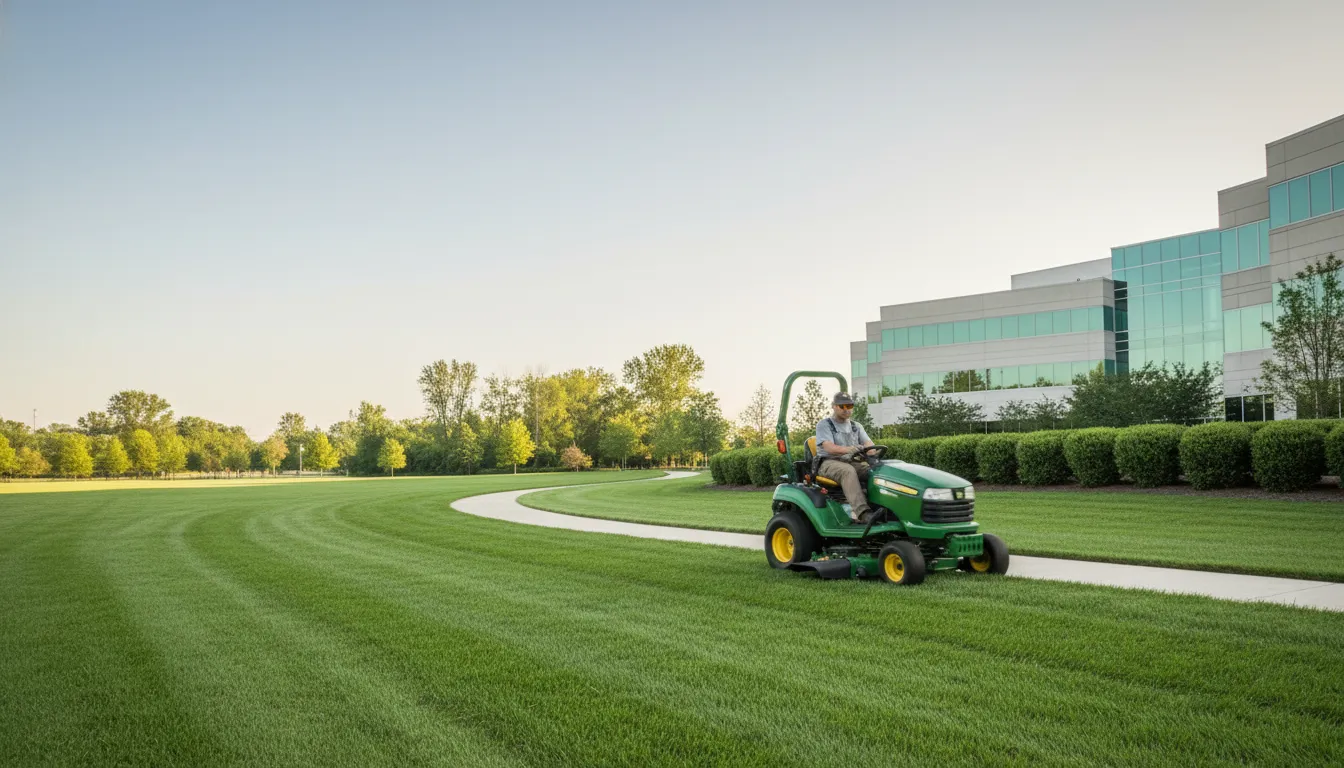
Find the Best Lawn Mowing Companies for Your Business
No obligation • Fast responses • Nationwide coverage

Why you can trust Landscape Atlas
Landscape Atlas is a leading United States resource for evaluating landscaping, lawn care, and outdoor service providers. Our team researches each category in depth, focusing on service quality, safety, and customer experience. Listings and rankings are based on independent criteria and user feedback, and companies cannot pay to influence our assessments or recommendations.
Search providers near you
Best Lawn Mowing Companies in Oklahoma Ranked
Maintaining a healthy, attractive lawn in Oklahoma requires a strategy tailored to its unique climate and common grass types. Regular mowing is the cornerstone of this care, influencing everything from drought tolerance to weed resistance. This guide provides clear, practical information on mowing schedules, proper techniques, seasonal adjustments, and typical service considerations to help you manage your Oklahoma turf effectively.
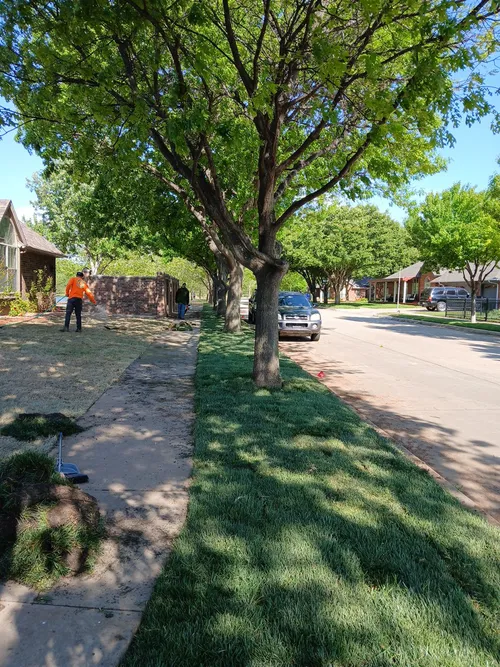
Tailored Lawns & Tree Services, LLC
Oklahoma City, OK
Tailored Lawns & Tree Services, LLC provides comprehensive lawn care, tree services, and landscaping solutions in Oklahoma City, OK. With over 20 years of experience since 2005, they offer services including lawn mowing, fertilization, weed control, sod installation, tree trimming, removal, and stump grinding, as well as landscape design and land clearing. Their team is knowledgeable about the local climate and soil, ensuring tailored care for both residential and commercial properties. They also provide emergency tree services following storms and maintain a focus on community beautification.
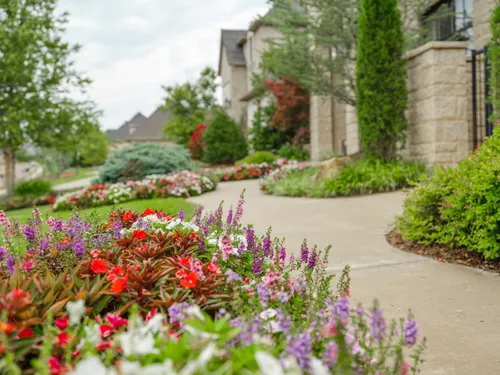
High Definition Lawn and Landscape
11415 N Western Ave, Oklahoma City, OK 73114
High Definition Lawn and Landscape is a landscaping company based in Oklahoma City, OK, offering a wide range of services including lawn care, sprinkler installation and repair, hardscaping, landscape design, and outdoor living features such as outdoor kitchens and lighting. With over 15 years of experience, they provide full-scale landscaping from design through installation and maintenance, focusing on tailored solutions to meet client needs.
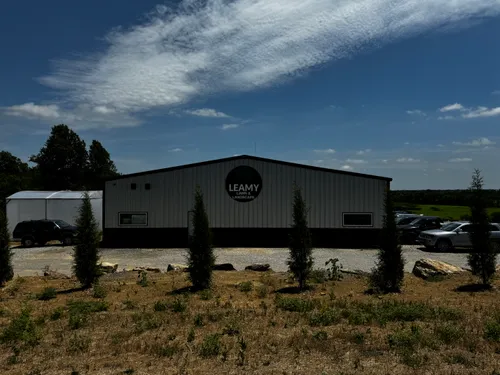
Leamy Lawn & Landscape
18269 S 4150 Rd, Claremore, OK 74017
Leamy Lawn & Landscape is a landscaping company based in Tulsa, OK, serving both commercial and residential clients across Northeast Oklahoma. Since 2017, they have provided a range of lawn care and landscaping services including lawn mowing, fertilization, weed control, landscape design, hardscaping, and landscape lighting installation. The company emphasizes creating and maintaining outdoor spaces that enhance curb appeal and property value, with expertise in fertilization treatments tailored to local soil and weather conditions. Their offerings also include commercial grounds maintenance, outdoor living areas, patios, and seasonal services like snow removal.
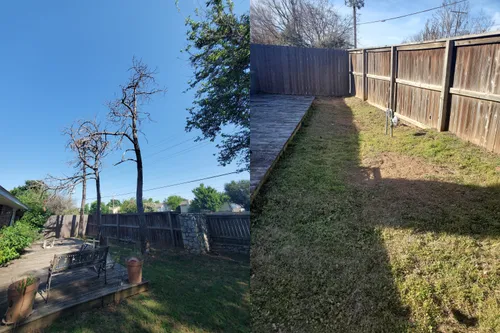
Grass & Trees, LLC
2402 S Santa Fe Ave #204, Moore, OK 73160
Grass & Trees, LLC is a lawn care and tree service company serving Oklahoma City, OK, and nearby areas including Moore and Norman. They provide a range of services such as tree removal, stump grinding, trimming and pruning, land clearing, brush removal, and full-service lawn mowing. The company specializes in safely removing medium-sized risky trees and offers stump grinding or chemical treatment when grinding is not feasible. Their lawn care includes mowing, trimming, edging, and yard cleanup. Grass & Trees, LLC is fully insured and known for careful work in tight spaces and thorough cleanup after jobs.

All Green Lawn & Pest
7001 NW 80th St, Oklahoma City, OK 73132
All Green Lawn & Pest is a lawn care company based in Oklahoma City, OK. They offer a range of services including lawn mowing, fertilization, weed control, and landscaping. The company is known for personalized treatments and a satisfaction guarantee, ensuring clients can request retreatment within 24 hours if needed. Their team includes knowledgeable technicians familiar with local properties, providing consistent lawn maintenance and care.
Understanding Oklahoma's Lawn Grasses
Successful mowing starts with knowing what's underfoot. Most Oklahoma lawns are composed of warm-season grasses, which have distinct growth cycles tied to soil temperature.
- Bermudagrass: This is the most common turfgrass across the state, prized for its durability, drought tolerance, and ability to handle heavy foot traffic. It spreads via both rhizomes and stolons, allowing it to recover quickly from stress.
- Zoysiagrass: Gaining popularity for its dense, carpet-like quality and good shade tolerance compared to Bermuda. It establishes more slowly but forms a very resilient lawn.
- Buffalograss: A native grass well-suited to low-maintenance, low-water areas. It grows in a more open, tufted form and requires less frequent mowing.
- Tall Fescue: A cool-season grass sometimes used, particularly in shaded northern parts of the state. It requires a different mowing and watering schedule, staying greener in cooler months but struggling in Oklahoma's intense summer heat.
Identifying your primary grass type is the first step to determining the correct mowing height and frequency for a healthy lawn.
The Importance of Proper Mowing Height
Cutting your grass at the optimal height is not just about aesthetics; it's a critical plant health practice. The right height encourages deep roots, shades the soil to conserve moisture and suppress weeds, and improves the lawn's overall resilience.
For Oklahoma's warm-season grasses, follow these general height guidelines:
- Bermudagrass: During the peak summer heat, maintain a height of 2 to 3 inches for common varieties. Higher mowing within this range provides better stress tolerance. For a very tight, manicured look (often on hybrid varieties), some cut as low as 0.5-0.75 inches, but this requires more frequent mowing and precise care.
- Zoysiagrass: Mow at 1 to 2.5 inches. The specific variety will determine the ideal height.
- Buffalograss: This grass thrives when mowed at 2 to 3 inches or even left unmowed for a natural prairie look.
- Tall Fescue: Keep at 2.5 to 3.5 inches, especially in summer, to protect its crown from heat stress.
The Golden Rule: The 1/3 Rule. Never remove more than one-third of the grass blade in a single mowing session 1. Cutting off too much at once shocks the plant, scalps the lawn (exposing soil and stems to sun), and depletes root reserves. If your grass has gotten too tall, gradually lower it over several mowings, each time cutting only the top third.
Recommended Mowing Frequency
How often you need to mow depends directly on the growth rate of your grass, which is driven by season, temperature, rainfall, and fertilization.
- Weekly Mowing: This is standard during the peak growing season, typically from late April through September. Weekly cuts ensure you follow the 1/3 rule, keep the lawn tidy, and prevent clumping.
- Bi-Weekly Mowing: This can be sufficient during shoulder seasons (spring and fall) when growth moderates, or for lawns that are not heavily fertilized. It's a common service frequency for maintenance-focused plans.
- Monthly or One-Time Mowing: This is generally not recommended for ongoing health, as it almost always violates the 1/3 rule, leading to scalping and clumps of clippings that can smother the grass. Services for overgrown lawns typically come at a higher per-visit cost due to the extra labor and time required.
Find the perfect lawn mowing companies for your needs
Get personalized recommendations and expert advice
A Seasonal Mowing Guide for Oklahoma
Your mowing practices should adapt throughout the year to support your lawn's natural lifecycle 2 3 4.
Spring (March - May):
- Task: Begin mowing as the lawn greens up. Start with a slightly lower cut to remove winter debris and dormant tips, then raise the mower blade to the recommended summer height.
- Frequency: Increase frequency as temperatures rise and growth accelerates, moving toward a weekly schedule by late spring.
- Key Tip: Ensure your mower blade is sharp. A dull blade tears grass, creating brown, frayed tips that are more susceptible to disease.
Summer (June - August):
- Task: This is peak maintenance season. Adhere to the higher end of the recommended mowing height (e.g., 3 inches for Bermuda) to provide shade for the soil and roots, reducing heat and drought stress 5 6.
- Frequency: Mow weekly, or even twice a week if growth is explosive after rain and fertilizer.
- Key Tip: Mow during the cooler parts of the day and vary your mowing pattern each time to prevent soil compaction and ruts.
Fall (September - November):
- Task: As growth slows, you can gradually lower the cutting height by about 0.5 inches for the final few mows. This helps prevent matting under winter leaves and snow.
- Frequency: Reduce frequency from weekly to bi-weekly as temperatures drop.
- Key Tip: This is an excellent time for core aeration and overseeding (for cool-season grasses like fescue) to improve lawn density.
Winter (December - February):
- Task: Most warm-season grasses are fully dormant and brown. No mowing is needed. An occasional trim of winter weeds might be necessary.
- Key Tip: Keep leaves and debris cleared off the lawn to prevent dead spots.
Additional Lawn Service Considerations
A comprehensive lawn care routine often includes more than just cutting the grass. When evaluating services, you may encounter these common add-ons or practices:
- Edging: Creating a clean, defined border along sidewalks, driveways, and flower beds gives a lawn a professionally finished appearance.
- Trimming: Using a string trimmer to cut grass in areas the mower can't reach, such as around trees, fences, and light posts.
- Blowing: Clearing clippings, leaves, and debris from hard surfaces after mowing is a standard part of a full-service visit.
- Clipping Management: Leaving clippings on the lawn (grasscycling) returns nutrients and organic matter to the soil, provided they are not too long or clumpy. Most professional services use mowers that mulch clippings finely.
- Seasonal Clean-Ups: Services like aeration, dethatching, and pre-emergent weed control applications are critical for long-term lawn health and are often scheduled separately from regular mowing.
Understanding Service Costs
The cost for professional lawn mowing in Oklahoma varies based on several key factors. For a standard residential lot, you can expect a base price range 7 8 9.
The primary driver is lawn size, typically measured in square feet or acreage. A small, flat city yard will cost significantly less than a multi-acre property. Service frequency also affects price; weekly visits often have a lower per-visit cost than bi-weekly or monthly schedules, as the workload is more consistent and the grass is never excessively overgrown 10 11. The complexity of the terrain-including hills, slopes, and numerous obstacles like trees and gardens-can increase the time and effort required.
Finally, the scope of services included in the visit determines the final price. A basic "mow-and-go" will be less expensive than a full-service visit that includes meticulous edging, trimming, and blowing off all surfaces. Additional treatments like fertilizer or weed control applications are almost always separate line items.
Frequently asked questions
Sources
Footnotes
-
Mow at the Right Height to Maintain Turf | Oklahoma State University ↩
-
How Often You Should Have Your Yard Mowed in Oklahoma ... - 413 Lawns ↩
-
Landscape Maintenance Schedule | Oklahoma State University ↩
-
Proper Mowing Maintenance For Property Owners In Tulsa, OK - NutriGreen Tulsa ↩
-
Lawn Care in Tulsa, OK from $55 | 6,000+ 5-Star Reviews - getsunday.com ↩
-
Residential Lawn Mowing Services in Oklahoma City. - lawnokc.com ↩
-
Lawn Care Price Guide 2026: Average Mowing Rates & Costs - Housecall Pro ↩
-
Lawn Mowing Cost: Average Prices by Size & Region (2026) - Your Green Pal ↩