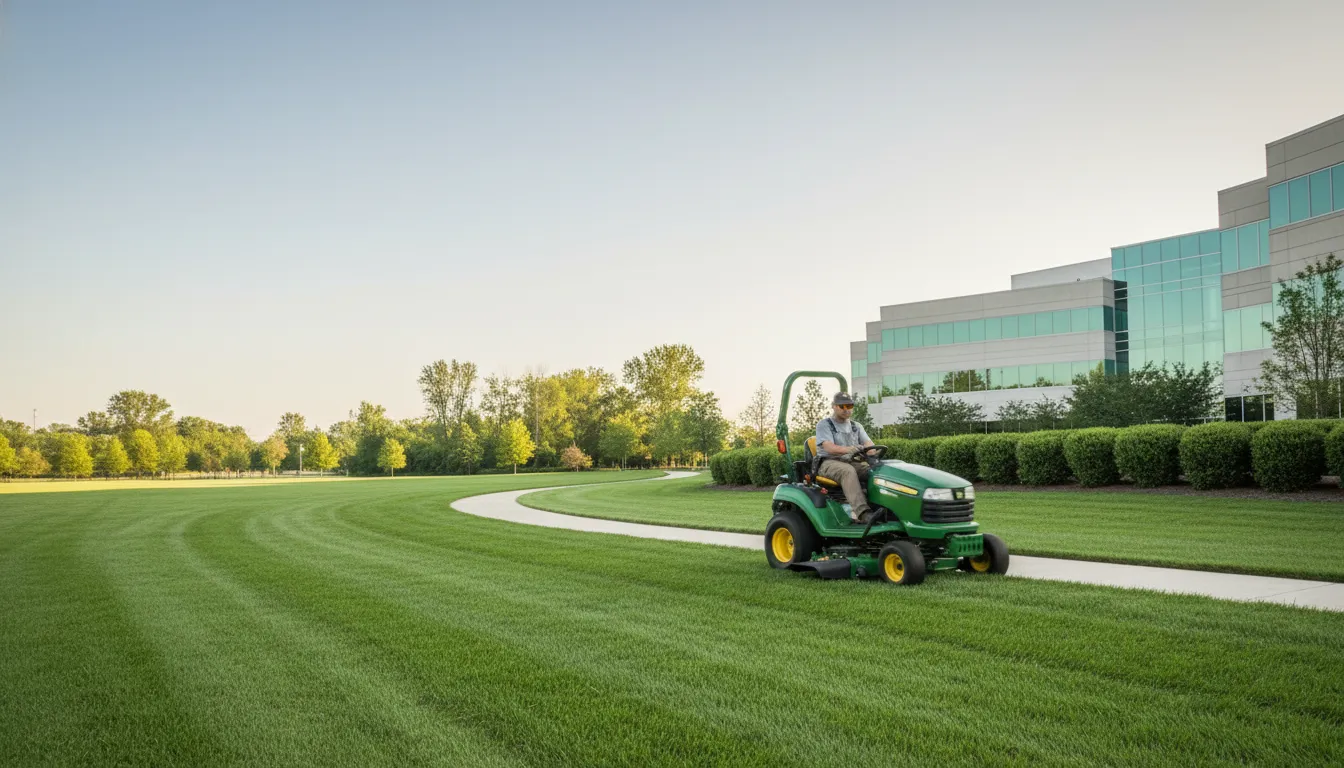
Find the Best Lawn Mowing Companies for Your Business
No obligation • Fast responses • Nationwide coverage

Why you can trust Landscape Atlas
Landscape Atlas is a leading United States resource for evaluating landscaping, lawn care, and outdoor service providers. Our team researches each category in depth, focusing on service quality, safety, and customer experience. Listings and rankings are based on independent criteria and user feedback, and companies cannot pay to influence our assessments or recommendations.
Search providers near you
Best Lawn Mowing Companies in Texas Ranked
Maintaining a healthy, attractive lawn in Texas requires a strategy tailored to the state's unique climate and common grass types. Regular mowing is the cornerstone of this strategy, directly impacting your turf's resilience against heat, drought, and weeds. This guide outlines the essential practices for Texas lawn care, from seasonal schedules to proper cutting heights, helping you understand what professional services aim to achieve for a thriving landscape.

Southern Love Landscaping & Design
111 Congress Ave. Suite 400, Austin, TX 78701
Southern Love Landscaping & Design is a landscaping and outdoor living company based in Austin, TX. They offer a wide range of services including custom landscaping, fire pits, patios, sod installation, irrigation installation and repair, fence installation, retaining walls, and landscape lighting. The company serves Austin and nearby areas such as Cedar Park and Round Rock, providing tailored outdoor solutions that enhance both residential and commercial properties. Their expertise includes building durable retaining walls and designing functional irrigation systems to support healthy landscapes. Southern Love Landscaping & Design emphasizes personalized service and craftsmanship to meet client needs.

Landscape Express
2801 Justin Rd Building 100, Flower Mound, TX 75028
Landscape Express is a full-service landscaping company based near Fort Worth, TX. They offer a wide range of services including lawn mowing, fence installation, landscape lighting, tree care, sprinkler system installation and repair, hardscaping, and landscape design. The company serves residential, commercial, property management, and HOA clients, providing custom designs and installations for outdoor living spaces, retaining walls, walkways, and irrigation systems. Landscape Express has been operating for over five years and is a second-generation family business, emphasizing community ties and customer satisfaction.
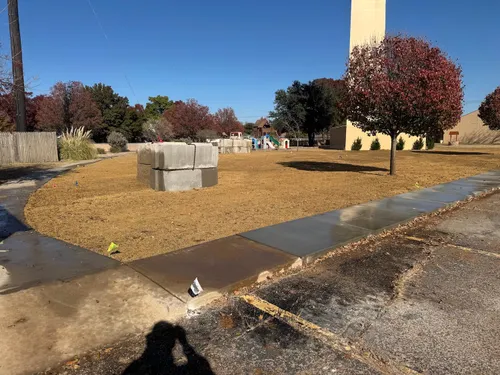
Bautista Pros Landscaping and Irrigation
6901 Upland Ave #8e, Lubbock, TX 79424
Bautista Pros Landscaping and Irrigation is a full-service landscaping and lawn care company serving Lubbock, TX, and surrounding West Texas areas. They offer a wide range of services including lawn mowing, fertilization, weed control, irrigation installation and repair, landscape design, and hardscaping such as pavers and retaining walls. With over a decade of experience, Bautista Pros combines detailed workmanship with comprehensive outdoor solutions to support healthy lawn growth and enhance curb appeal. Their team works closely with homeowners and businesses to deliver tailored landscaping projects that meet specific needs.
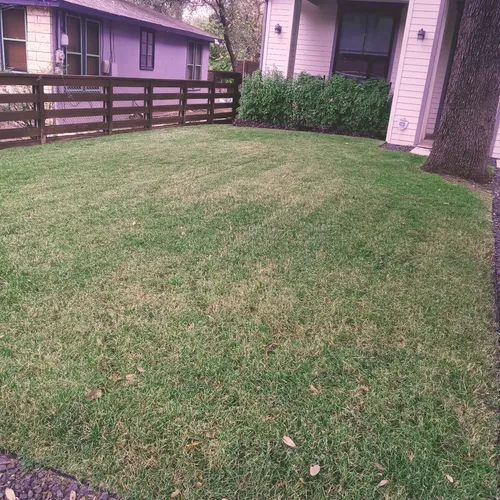
Lucio Gonzales Lawn Maintenance and Flower Bed Services
Austin, TX
Lucio Gonzales Lawn Maintenance and Flower Bed Services is a lawn care and landscaping company based in Austin, TX. They offer a variety of services including lawn mowing, fertilization, weed control, flower bed creation, and hardscaping such as stone pavers and patios. Founded by Lucio Gonzales, a U.S. Army Veteran with over a decade of experience and formal training in landscape professional principles, the company serves both residential and commercial properties. Their approach focuses on personalized service tailored to each customer's needs.
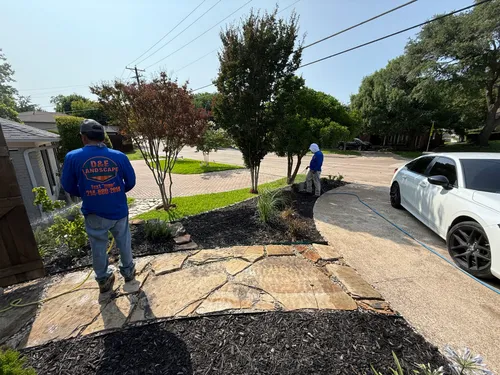
D&E Landscape Maintenance
Plano, TX
D&E Landscape Maintenance is a landscaping company based in Plano, TX. They provide lawn mowing, lawn care, and landscape maintenance services tailored to customer needs. Their service area includes Dallas County and nearby communities such as Rowlett, Sachse, Garland, and Murphy. The company offers a range of services from spring cleanups to weekly lawn care to help maintain the appearance of outdoor spaces.
Understanding Texas Grass Types and Growth Cycles
The foundation of a proper mowing regimen is knowing what type of grass you have. Texas lawns are predominantly warm-season grasses, which have distinct growth patterns tied to temperature.
- Bermudagrass: This is one of the most common grasses, known for its durability and fine texture. It thrives in full sun and can tolerate close mowing.
- St. Augustine: Popular for its wide blades and shade tolerance, St. Augustine forms a thick, carpet-like lawn but requires specific mowing practices to stay healthy.
- Zoysiagrass: Valued for its drought tolerance and dense growth, Zoysia is slower growing but creates a very uniform appearance.
- Buffalograss: A native grass that is extremely drought-tolerant, Buffalograss requires minimal mowing and is often left to grow taller.
These warm-season grasses enter active, rapid growth during the heat of late spring and summer, become semi-dormant in the fall, and go fully dormant (turning brown) in the winter. This cycle dictates the entire mowing schedule.
The Texas Mowing Schedule: Seasonal Adjustments Are Key
A static, weekly schedule year-round doesn't work in Texas. Professional lawn care adjusts frequency with the seasons to match grass growth rates, promoting health and preventing stress.
- Spring (March - May): As soil temperatures rise, grass breaks dormancy. Mowing often starts on a bi-weekly basis in early spring to clean up and stimulate growth, then transitions to weekly as growth accelerates.
- Summer (June - September): This is the peak growing season. Most lawns require weekly mowing to maintain the correct height. During periods of heavy rain and intense heat, some fast-growing grasses like Bermuda may even need mowing twice a week to avoid removing too much blade at once 1.
- Fall (October - November): Growth slows significantly as temperatures drop. The schedule typically shifts back to bi-weekly mowing.
- Winter (December - February): Most warm-season grasses are dormant and not growing. Mowing is usually unnecessary, though a single cleanup cut may be performed if there is mild winter growth 2.
Adhering to this seasonal rhythm prevents the lawn from becoming overgrown, which can lead to scalping when you finally cut it, and avoids unnecessary stress on the grass during its dormant periods.
The Golden Rule: Never Cut More Than One-Third
Perhaps the most critical rule in lawn mowing is the "One-Third Rule." This means you should never remove more than one-third of the grass blade's total height in a single mowing session 3. For example, if your St. Augustine is at a healthy 4 inches, you should mow it before it exceeds 6 inches, cutting it back down to 4 inches.
Cutting off more than one-third shocks the grass plant, weakening its root system and making it more susceptible to disease, drought, and weed invasion. It can also leave unsightly brown clippings that smother the lawn below. If a lawn has become severely overgrown, it's best to gradually lower the height over several mows rather than cutting it all at once.
Recommended Mowing Heights for Texas Grasses
Mowing at the correct height is not about aesthetics alone; it directly influences root depth, moisture retention, and weed competition. Each grass type has an optimal range.
- Bermudagrass: 1 to 2 inches. It can be kept relatively short, which encourages lateral growth and a thick, dense turf. Hybrid varieties are often kept at the lower end of this range 4.
- St. Augustine: 3 to 4 inches. This grass must be kept taller. A higher cut promotes deeper roots, which is crucial for its heat and drought tolerance. Mowing it too short is a common cause of thinning and weed problems 5.
- Zoysiagrass: Around 2 to 2.5 inches. Its optimal height can vary by variety, but it generally performs well at a medium height that maintains density 6.
- Buffalograss: 4 inches or higher. As a native prairie grass, it is often left unmowed or mowed only a few times per season to maintain a natural, meadow-like appearance 7.
Always ensure your mower blades are sharp. Dull blades tear the grass, creating ragged, brown tips that stress the plant and make the lawn more vulnerable to disease.
Find the perfect lawn mowing companies for your needs
Get personalized recommendations and expert advice
The Role of Clippings: To Bag or Not to Bag?
For a healthy Texas lawn, the general recommendation is to leave the clippings on the lawn, a practice known as "grasscycling" 8 9. As long as you are mowing frequently and following the one-third rule, the fine clippings will decompose quickly, returning valuable nutrients like nitrogen back to the soil. This acts as a natural, slow-release fertilizer.
Bagging should only be considered if the lawn is so overgrown that clippings form thick, wet mats that can smother the grass beneath. Otherwise, leaving clippings saves time, reduces landfill waste, and feeds your lawn.
What to Expect from Professional Lawn Mowing Services
Professional lawn care providers bring expertise, proper equipment, and consistent scheduling to maintain your lawn's health. A standard visit typically includes:
- Mowing: Cutting the lawn to the pre-determined, species-appropriate height.
- Edging: Creating clean lines along sidewalks, driveways, and flower beds.
- Trimming: Using string trimmers to cut grass in areas the mower can't reach, such as around trees, fences, and landscaping.
- Blowing: Clearing clippings and debris from hard surfaces.
The cost for these core services varies based on several factors. In Texas, a typical price range for a standard residential property is often between $30 and $50+ per visit 10 11. The final cost is influenced by:
- Lawn Size: The total square footage or acreage is the primary cost driver.
- Frequency: Weekly service may have a different per-visit rate than bi-weekly service.
- Terrain: Slopes, obstacles, and uneven ground can increase time and complexity.
- Location: Prices can vary between metropolitan and rural areas.
- Additional Services: Many companies offer bundled care, including fertilization, weed control, aeration, or irrigation checks, which affect the overall price 12.
Common Lawn Mowing Challenges in Texas
- Summer Heat Stress: Mowing during the heat of the day can add stress. Professionals often schedule mowing for cooler morning or evening hours.
- Thatch Buildup: While clippings decompose, some grasses like Bermuda can produce a layer of undecomposed stems (thatch) at the soil line. Regular core aeration, not mowing, is the solution for excessive thatch.
- Weed Infestation: Proper mowing height is a natural weed deterrent. Taller grass shades the soil, preventing weed seeds from germinating. Scalping a lawn often leads to a flush of weeds.
By partnering with a knowledgeable provider who understands these regional specifics, you can ensure your lawn is not just cut, but cared for in a way that promotes long-term health and beauty.
Frequently asked questions
Sources
Footnotes
-
Lawn Mowing in Central Texas: Essential Tips From the Experts - https://greenackors.com/blog/lawn-mowing-central-texas-essential-tips-from-experts ↩
-
How Often Should You Mow Your Lawn Throughout the Year in ... - https://www.arboreallawns.com/blog/how-often-should-you-mow-your-lawn-throughout-the-year-in-texas/ ↩
-
Mow Schedule - Texas Landscape Management - https://texaslandscapemanagement.com/mow-schedule/ ↩
-
Lawn Mowing Tips For North Texas Homeowners - Grassperson - https://www.grassperson.com/blog/lawn-mowing-tips-north-texas-homeowners ↩
-
The long and short of mowing - Garden Style San Antonio - https://www.gardenstylesanantonio.com/garden-articles/the-long-and-short-of-mowing/ ↩
-
Top Lawn Mower Settings for Different Grass Types in Texas - https://www.livlawn.com/top-lawn-mower-settings-for-different-grass-types-in-texas ↩
-
Mowing Recommendations for Warm-Season Turfgrasses - https://agrilifeextension.tamu.edu/wp-content/uploads/2025/06/Turf-Cutting-height.pdf ↩
-
The Ideal Mowing Schedule for Lawns in North Texas - CitiTurf - https://cititurf.com/blog/the-ideal-mowing-schedule-for-lawns-in-texas/ ↩
-
Best Length for Cutting Grass in Texas | Lawn Care Guide - https://www.thickgreenhealthy.com/best-length-for-cutting-grass-in-texas/ ↩
-
Cost Of Lawn Mowing Price Guide In Texas Areas - GoMow - https://gomow.com/blog/cost-of-lawn-mowing-price-guide-in-texas-areas/ ↩
-
How Much Does It Cost To Mow A Lawn In Texas: Pricing Guide - https://www.thickgreenhealthy.com/cost-to-mow-a-lawn-in-texas/ ↩
-
2025 Lawn Mowing & Care Services | Get Estimates - Thumbtack - https://www.thumbtack.com/p/lawn-service-prices ↩