Find the Best Sprinkler & Irrigation Companies for Your Business
No obligation • Fast responses • Nationwide coverage

Why you can trust Landscape Atlas
Landscape Atlas is a leading United States resource for evaluating landscaping, lawn care, and outdoor service providers. Our team researches each category in depth, focusing on service quality, safety, and customer experience. Listings and rankings are based on independent criteria and user feedback, and companies cannot pay to influence our assessments or recommendations.
Search providers near you
Top Sprinkler & Irrigation Companies in Oro Valley, Arizona Ranked
A well-designed sprinkler and irrigation system is the cornerstone of a healthy, beautiful, and water-efficient landscape in Oro Valley. In our desert climate, a smart watering setup does more than just keep plants alive-it conserves a precious resource and protects your investment in your property. This guide will help you understand the components, best practices, and local considerations for automatic watering systems, empowering you to make informed decisions and find the right local expertise for installation, maintenance, or repair.
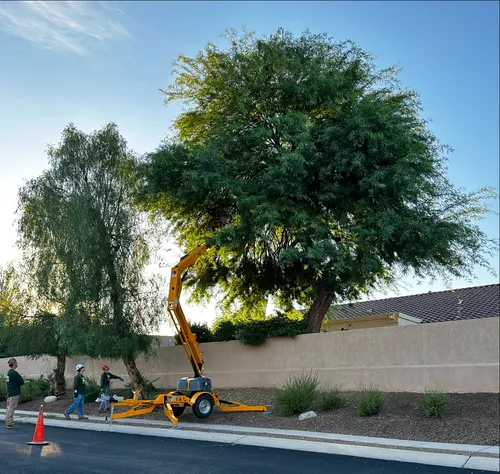
Transformed Trees & Landscaping LLC
7118 E 17th Pl, Tucson, AZ 85710
Transformed Trees & Landscaping LLC is a full-service tree and landscape company based in Tucson, AZ. They specialize in native trees and shrubs while offering a wide range of services including tree trimming, pruning, removal, stump grinding, insect and disease management, storm damage repair, soil care, fertilization, irrigation installation and repair, landscape design, and decorative rock installation. The company was founded in 2016 by Chris Bouchard, a certified Arizona arborist with extensive experience in tree care. They emphasize the science behind proper tree maintenance and landscaping to help clients maintain healthy and attractive properties.
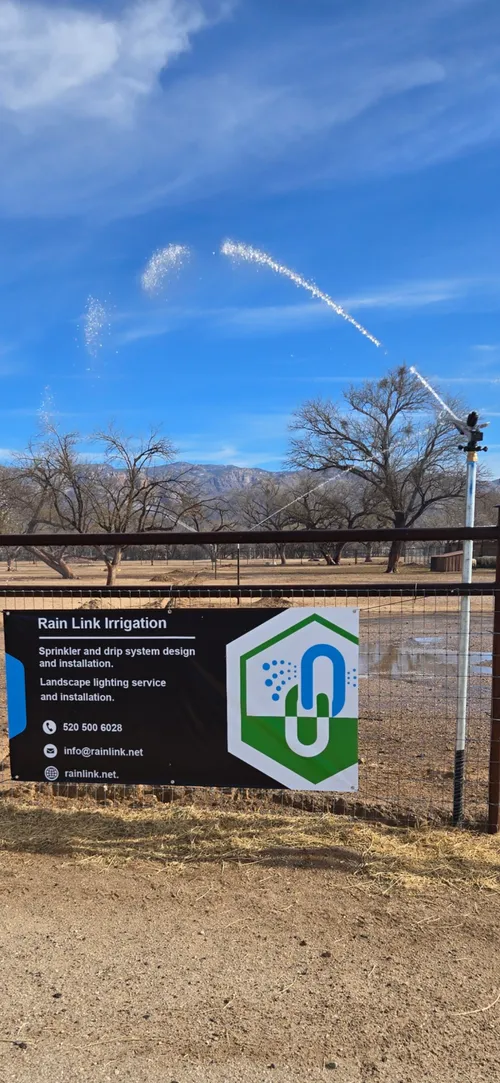
Rain Link Irrigation & Landscape Lighting
Tucson, AZ
Rain Link Irrigation & Landscape Lighting is based in Tucson, AZ, offering services in landscape lighting installation and sprinkler system design, installation, and repair. They focus on enhancing outdoor spaces by combining aesthetic lighting with efficient irrigation solutions, including EZ-FLO system services. Their approach includes using advanced irrigation technologies like weather-based controllers and moisture sensors to promote water conservation and sustainability in outdoor environments.
A Green Star Landscape Irrigation
760 E Silver Canyon Pl, Oro Valley, AZ 85737
A Green Star Landscape Irrigation offers sprinkler installation, repair, and irrigation services in Tucson, AZ. They focus on intelligent irrigation solutions designed to conserve water and promote responsible water use, tailored to the unique Southwest environment. Their services address issues such as leaking valves and pipes as well as upgrading older, inefficient systems.
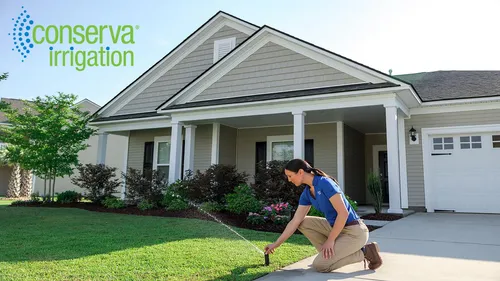
Conserva Irrigation of Tucson East
Tucson, AZ
Conserva Irrigation of Tucson East provides residential and commercial landscape irrigation services in Tucson, AZ, and surrounding areas including Green Valley, Sahuarita, Tanque Verde, and Vail. They offer a full range of irrigation solutions such as installation, repair, drip irrigation, artificial turf irrigation, and drainage services. Their expertise includes smart irrigation systems with automated scheduling, weather monitoring, and water conservation features designed to reduce water usage significantly. Conserva Irrigation focuses on system design, installation, maintenance, and upgrades to optimize landscape health and efficiency. The company is known for solving complex irrigation issues and improving system performance with a commitment to water conservation.
Desert Rain Landscaping & Services
Tucson, AZ
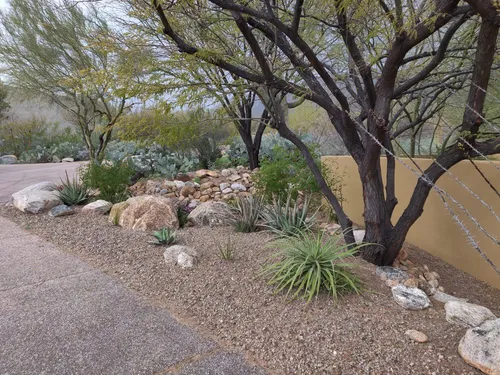
Desert Rain Landscaping & Services is a family-owned landscaping company based in Tucson, AZ, offering a comprehensive range of outdoor services for residential and commercial clients. Their expertise includes lawn care, sod and artificial turf installation, fence construction, landscape lighting, tree services, irrigation system installation and repair, and hardscaping such as patios and retaining walls. They focus on creating sustainable and aesthetically pleasing outdoor spaces, using advanced technology and local plant sourcing to ensure quality and environmental suitability. The company holds a landscaping contractor license (ROC 343355) and emphasizes clear communication and personalized service to meet client needs.
How an Automatic Watering System Works
At its core, an irrigation system is a network designed to deliver water efficiently to different areas of your landscape. It functions like a carefully orchestrated team, with each part playing a specific role.
The controller acts as the system's brain, programmed to tell specific areas when and how long to water. These areas are divided into zones, which are crucial for tailoring water delivery. For example, a sunny lawn, a shaded garden bed, and a xeriscaped area with desert plants would each be on separate zones because they have vastly different water needs.
From the main water source, pipes carry water to each zone. Valves serve as gatekeepers, opening and closing to allow water to flow to a specific zone when the controller commands it. Finally, emitters-which include sprinkler heads for turf or drip lines for shrubs-are the endpoints that distribute the water directly to the landscape 1. Modern systems often integrate smart technology, using local weather data or soil moisture sensors to automatically adjust the watering schedule, preventing waste from over-watering after a rainstorm.
System Design for Oro Valley Landscapes
A one-size-fits-all approach doesn't work for irrigation, especially in a region with diverse microclimates and planting styles. Effective system design starts with a zone-by-zone plan that matches the delivery method to the plant material.
Turf and Lawn Zones: Grass areas typically use pop-up spray heads or rotor heads. Rotors are common for larger lawns, as they throw water in a stream and rotate to cover a broad area. A key feature in our sloped terrain is the use of check valves within the sprinkler heads. These prevent water in the pipes from draining out after the system shuts off, which eliminates low-head drainage and unsightly puddling at the bottom of a slope.
Desert and Xeriscape Zones: For native plants, shrubs, trees, and garden beds, drip irrigation is the gold standard for water conservation. This method delivers water slowly and directly to the root zone through a network of tubing with emitters or micro-sprayers. It minimizes evaporation and runoff, making it exceptionally efficient for our arid environment 2. Drip systems are often covered with mulch to further protect the tubing and retain soil moisture.
Smart System Integration: Whether you have turf, desert landscaping, or a mix, integrating a smart controller is a wise investment. These devices can be programmed with local evapotranspiration (ET) rates, connect to weather stations, or use onsite sensors to tailor watering schedules to actual plant needs and current conditions, not just a preset calendar 3.
Best Practices for Watering in the Desert
Proper scheduling is as important as the equipment itself. The goal for cool-season turf grasses is typically about 1 to 1.5 inches of water per week, but this must be adjusted for grass type, sun exposure, and soil conditions. A critical technique for our often compacted or sloped soils is cycle and soak. Instead of running a zone for 20 minutes straight, you program the system to run for three shorter cycles (e.g., 7 minutes each) with a 30-minute soak period in between. This allows water to penetrate deeply without running off the surface.
Timing is everything. The absolute best time to water is in the early morning, between 4 a.m. and 10 a.m. Winds are usually calm, and temperatures are low, which drastically reduces water loss from evaporation. It also allows grass blades to dry during the day, helping to prevent fungal diseases. A smart controller handles this timing automatically, ensuring optimal efficiency 4.
Find the perfect sprinkler & irrigation companies for your needs
Get personalized recommendations and expert advice
Understanding Installation and Repair
Installing a new in-ground system is a significant project that involves careful planning, trenching for pipe runs, assembling components, and thorough testing. It's highly recommended to work with a professional who can create a hydraulic design to ensure proper water pressure and coverage across all zones 5 6. For repairs, understanding common components can help you communicate effectively with a service technician.
Costs can vary based on the scope of work and materials. A basic service call for diagnosis might start around $60, which often includes the first 30 minutes of labor. Common replacement parts include:
- Controllers: Upgrading to a smart controller can start around $225 or more for the unit itself 7.
- Valves: A standard irrigation valve may cost around $60 or more for the part.
- Sprinkler Heads: A simple pop-up spray head can start around $6 each, while rotors are more 8.
- Drip Components: Individual emitters, tubing, and connectors are generally inexpensive, often just a few dollars each.
For full installations or major overhauls, the cost is highly dependent on property size and landscape complexity, so obtaining a few free estimates from local companies is the best course of action 9.
Why Local Expertise Matters in Oro Valley
Water conservation isn't just a good practice in Southern Arizona; it's a community responsibility. Utilizing water-efficient irrigation technologies like drip systems and smart controllers is a best management practice supported by energy and environmental agencies 10. Local professionals understand the specific challenges of our soil-which can be rocky and hard-packed-and our climate's intense summer heat and mild winters.
They design systems that comply with any local water use guidelines and are experienced in working with the common landscaping styles found in Oro Valley neighborhoods. Companies with strong local reputations, such as those highlighted in community forums, bring invaluable on-the-ground experience to ensure your system is both effective and efficient for years to come.
Maintaining Your System for Longevity
Regular maintenance is key to saving water and money. Perform a visual inspection each month during the watering season. Look for broken or misaligned sprinkler heads, geysers caused by damaged pipes, or dry spots indicating a clogged emitter. Adjust heads so they are watering the landscape, not the sidewalk or driveway.
At least twice a year-typically in spring before peak season and in fall when winterizing-conduct a more thorough check. Test each zone manually from the controller. Flush drip lines to clear sediment and check filters. Ensure your smart controller's settings and weather data connections are active and correct. Proper winterization (blowing out the lines with compressed air to prevent freeze damage) is essential, even with our relatively mild winters, as overnight temperatures can occasionally dip below freezing 11.
Frequently asked questions
Sources
Footnotes
-
How Does a Lawn Irrigation System Work: #1 Best Benefits - https://mcleodlandscaping.com/how-does-a-lawn-irrigation-system-work/ ↩
-
How to Use Drip Irrigation in Each Season | AZ SummerWinds - https://www.summerwindsnursery.com/az/inspire/blog/drip-irrigation-guide/ ↩
-
[Solved] In arid areas, with uneven land surface most suitable method - https://testbook.com/question-answer/in-arid-areas-with-uneven-land-surface-most-suita--5ef74369c0eff60d0c929ae5 ↩
-
Landscape Irrigation Watering Guide - https://northgeorgiawater.org/wp-content/uploads/2017/02/Landscape-Irrigation-Watering-Guide.pdf ↩
-
A Step-By-Step Guide to Installing an Irrigation System. - East Valley Land - https://eastvalleylandscapers.com/installing-sprinkler-diy/ ↩
-
How to Install an In-Ground Sprinkler System - This Old House - https://www.thisoldhouse.com/landscaping/21016605/how-to-install-in-ground-sprinklers ↩
-
Irrigation Repair Oro Valley - https://azirrigation.com/drip-irrigation-system-repairs-oro-valley.html ↩
-
Oro Valley Irrigation Services - https://www.conservairrigation.com/tucson-east/about-us/service-areas/oro-valley/ ↩
-
TOP 10 BEST Irrigation in Oro Valley, AZ - Updated 2026 - Yelp - https://m.yelp.com/search?find_desc=Irrigation&find_loc=Oro+Valley%2C+AZ ↩
-
Best Management Practice #5: Water-Efficient Irrigation - https://www.energy.gov/femp/best-management-practice-5-water-efficient-irrigation ↩
-
Irrigation System Explained | Installation and Maintenance Guide - https://bluejayirrigation.com/irrigation-installation-explained/ ↩