Find the Best Sprinkler & Irrigation Companies for Your Business
No obligation • Fast responses • Nationwide coverage

Why you can trust Landscape Atlas
Landscape Atlas is a leading United States resource for evaluating landscaping, lawn care, and outdoor service providers. Our team researches each category in depth, focusing on service quality, safety, and customer experience. Listings and rankings are based on independent criteria and user feedback, and companies cannot pay to influence our assessments or recommendations.
Search providers near you
Top Sprinkler & Irrigation Companies in Queen Creek, Arizona Ranked
In the desert climate of Queen Creek, a well-designed sprinkler and irrigation system is essential for maintaining a healthy, water-efficient landscape. These automated systems deliver precise amounts of water to different plant zones, conserving a precious resource while keeping your lawn and plants vibrant. This guide will help you understand how irrigation systems work, what to consider for your property, and how to connect with local professionals who can design, install, and maintain an efficient watering solution tailored to our unique environment.
Repair Services
3961 E Chandler Blvd Suite 111-190, Phoenix, AZ 85048
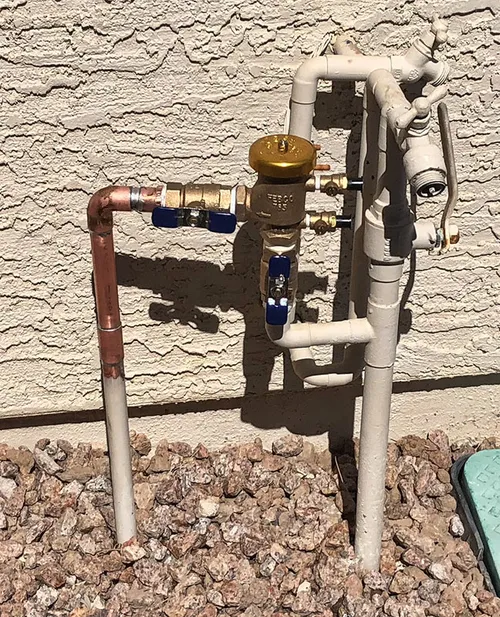
Repair Services is a Phoenix, AZ-based company specializing in landscape lighting installation and sprinkler system services, including installation, repair, and replacement. They handle all irrigation components such as valves, controllers, back-flow preventers, and various sprinkler heads to help maintain healthy lawns and landscapes. Established in 2004, the company has over a decade of experience serving the local community. They also offer low voltage outdoor lighting installation through their sister company, AZ Lighting Pros.
Controlled Rain Inc.
10105 E Vía Linda #103-319, Scottsdale, AZ 85258
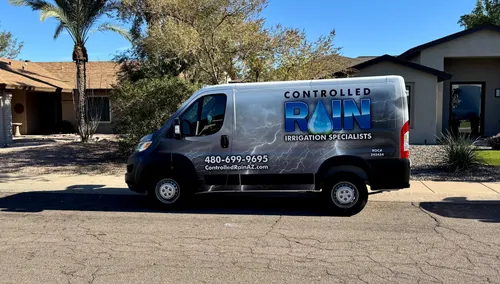
Controlled Rain Inc. is a family-owned irrigation company based near Phoenix, AZ, specializing in sprinkler installation, repair, and irrigation system optimization. They focus on water-efficient solutions tailored to Arizona's climate, including smart controllers, drip zones, and automated weather adjustments to help customers conserve water and maintain healthy plants. With decades of experience, Controlled Rain Inc. offers expertise in upgrading irrigation systems for better performance and ease of use through smartphone control.

Scottsdale Flow Irrigation LLC
3024 N 81st St, Scottsdale, AZ 85251
Scottsdale Flow Irrigation LLC provides irrigation and outdoor lighting services in Phoenix, AZ. They specialize in sprinkler system installation, repair, and maintenance for both residential and commercial properties. The company offers expertise in irrigation controllers with features like auto-shutoff, rain delay, and remote control, ensuring efficient water management. With over 10 years of experience serving Scottsdale and surrounding areas, Scottsdale Flow Irrigation uses high-quality materials and custom designs tailored to client needs.
Arizona Irrigation Repair LLC: Irrigation System Specialists
10632 N Scottsdale Rd Suite B-431, Scottsdale, AZ 85254
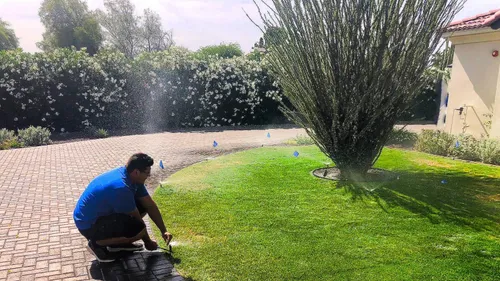
Arizona Irrigation Repair LLC: Irrigation System Specialists is a lawn sprinkler system contractor based in Phoenix, AZ. They serve the Phoenix metropolitan area, including Scottsdale, Paradise Valley, Gilbert, Chandler, Mesa, and nearby communities. The company offers services for both residential and commercial clients, specializing in sprinkler repairs, drip irrigation installations, and outdoor landscape lighting design and maintenance. Their expertise helps maintain water-efficient and attractive landscapes throughout the year.
The Irrigation Geek, LLC
Mesa, AZ
The Irrigation Geek, LLC provides sprinkler installation, repair, and irrigation services in Mesa, AZ. They handle various irrigation needs to help maintain efficient watering systems for residential and commercial properties. The company operates during regular business hours and focuses on delivering practical irrigation solutions.
How Automated Watering Systems Function
An efficient irrigation setup is more than just sprinkler heads popping up. It's a coordinated network of components working together. The process begins at your home's main water supply, where a connection is made to feed the entire system. The central command is the controller or timer, which you program with watering schedules. Modern smart controllers can automatically adjust these schedules based on local weather data, soil moisture, and plant type, offering significant water savings.
When the controller activates a schedule, it sends a low-voltage signal to solenoid valves. Each valve controls a specific zone, which is a grouping of sprinklers or drip emitters designed for plants with similar water needs. Opening the valve allows water to flow through underground pipes to the emitters-which could be spray heads for turf, rotors for larger grassy areas, or drip lines for beds and trees. A critical safety component, the backflow preventer, is installed to ensure irrigation water cannot flow backward and contaminate your home's drinking water supply.
Designing for Queen Creek's Desert Climate
The key to an effective and water-wise system in our area is intelligent design centered on zoning. A typical Queen Creek layout will separate high-water-use zones, like turf grass, from low-water-use zones planted with native desert species and trees. This allows you to water each area according to its specific needs without overwatering drought-tolerant plants.
For lawns, pop-up spray heads or rotary nozzles are common. For flower beds, shrubs, and tree basins, drip irrigation is highly recommended. Drip systems deliver water slowly and directly to the root zone, minimizing evaporation and runoff-a major advantage in our hot, dry climate. Some properties in Queen Creek may also have access to SRP flood irrigation for certain zones, which is a separate, seasonal water source1. A professional can design a system that optimally integrates these different methods.
Smart Watering Schedules Through the Seasons
Your watering needs change dramatically with Queen Creek's seasons, and your irrigation schedule should too. Adhering to seasonal guidelines is one of the simplest ways to conserve water and promote deep root growth.
- Summer (Hot & Dry): This is peak watering season. Schedules often call for watering 3-5 days per week. Drip zones for trees and shrubs may need to run for longer durations, sometimes 2 hours or more, to ensure deep soil penetration.
- Spring & Fall: As temperatures moderate, you can reduce frequency. Watering every 5 to 14 days is often sufficient, depending on rainfall and plant type.
- Winter (Cool & Mild): Plants are largely dormant and require minimal water. Schedules can often be reduced to once every 14 to 21 days.
This is where smart irrigation controllers truly shine. These devices connect to local weather networks and can automatically delay watering after a rainstorm, reduce runtime during a cool spell, or increase frequency during a heatwave, taking the guesswork out of seasonal adjustments2 3.
Find the perfect sprinkler & irrigation companies for your needs
Get personalized recommendations and expert advice
Understanding Installation and Repair
Installing a new sprinkler and irrigation system is a significant project that involves trenching, piping, valve placement, and head positioning. The cost can vary widely, typically ranging from $1,000 to $5,000 or more, depending on your yard's size, the complexity of the design, the type of controller (basic vs. smart), and the materials used4 5. It's highly advisable to get multiple detailed bids from local providers to compare scope and price.
Even the best systems require occasional maintenance and repair. Common issues include:
- Leaks in pipes or at connection points.
- Clogged emitters or sprinkler heads from mineral deposits or debris.
- Malfunctioning solenoid valves that won't open or close.
- Controller or timer failures.
Repair costs are generally lower than installation, with simple fixes like clearing a clog or replacing a single head potentially costing between $100 and $300. More complex repairs, such as replacing a faulty valve manifold, fixing a broken main line, or upgrading a controller, can range from $300 to $800 or more6 7 8. Regular inspections, especially before and after the summer season, can help catch small problems before they become expensive.
Choosing Components for Efficiency and Durability
When planning your system, the quality of components matters. For controllers, consider investing in a Wi-Fi enabled smart model that offers water usage reports and automatic weather adjustments. For valves, look for durable brands with easy-service diaphragms. In sprinkler heads, choose models with matched precipitation rates within a zone and consider rotors for large, rectangular lawn areas and spray heads for smaller, irregular shapes9 10.
For drip irrigation, pressure-compensating emitters ensure even water delivery across the zone, regardless of elevation changes or line length. Don't forget filtration; a simple inline filter can prevent sediment from clogging your drip emitters. Using quality PVC piping for mains and lateral lines and ensuring proper winterization (though less critical here than in colder climates) will extend the life of your entire investment.
The Value of Professional Expertise
While DIY irrigation is possible, the design and hydraulic calculations for an efficient system benefit greatly from professional expertise. A local specialist understands Queen Creek's soil types (often clay), water pressure nuances, and municipal codes regarding backflow prevention. They can perform a site analysis to account for sun exposure, slope, and plant material to create a truly customized zoning plan 11.
Professionals also have access to commercial-grade equipment and materials and can often complete the installation more quickly and cleanly. Perhaps most importantly, they stand behind their work with warranties on both labor and parts, providing peace of mind. Whether you're building a new home landscape or retrofitting an older, inefficient system, partnering with a knowledgeable local provider is a step toward long-term water savings and landscape health.
Frequently asked questions
Sources
Footnotes
-
How Flood Irrigation Works - SRP - https://www.srpnet.com/grid-water-management/irrigation/how-flood-irrigation-works ↩
-
Smart Irrigation System Installation in Queen Creek - https://www.greenacresusa.com/irrigation-system-in-queen-creek-az ↩
-
Landscape Watering Guidelines | Surprise, AZ - Official Website - https://surpriseaz.gov/294/Landscape-Watering-Guidelines ↩
-
Irrigation Design Services Queen Creek - Blossom and Oak ... - https://www.blossomandoak.com/irrigation-systems ↩
-
What Does a Lawn Sprinkler System Cost in 2025? - https://blog.lawnguru.co/lawn-sprinkler-system-cost/ ↩
-
Queen Creek Irrigation | Irrigation System Installation AZ - https://theyardexperts.com/services/irrigation/ ↩
-
Overview of a Sprinkler System Install - Big Frog Supply - https://www.bigfrogsupply.com/blogs/big-frog-blog/overview-of-a-sprinkler-system-install ↩
-
How Long Does It Take to Install an Irrigation System? - HS Irrigation and Landscape Lighting - https://www.hsirrigationandlighting.com/blog/how-long-does-it-take-to-install-an-irrigation-system ↩
-
Selecting an Irrigation System - https://www.nrcs.usda.gov/sites/default/files/2022-09/stelprdb1167474-selecting-irrigation-system.pdf ↩
-
The 5 essential components for an efficient irrigation system - rain.it - https://www.rain.it/en/magazine/5-essential-components-for-an-efficient-irrigation-system/ ↩
-
How to Install an Irrigation System: A Smart Guide for Arizona Lawns - https://podlaz.com/how-to-install-irrigation-system/ ↩