Find the Best Sprinkler & Irrigation Companies for Your Business
No obligation • Fast responses • Nationwide coverage

Why you can trust Landscape Atlas
Landscape Atlas is a leading United States resource for evaluating landscaping, lawn care, and outdoor service providers. Our team researches each category in depth, focusing on service quality, safety, and customer experience. Listings and rankings are based on independent criteria and user feedback, and companies cannot pay to influence our assessments or recommendations.
Search providers near you
Top Sprinkler & Irrigation Companies in Brea, California Ranked
An automated sprinkler and irrigation system is a smart investment for any Brea homeowner, transforming how you care for your landscape. These systems deliver water precisely and efficiently, which is not just a matter of convenience but a critical component of responsible water stewardship in Southern California. This guide will help you understand how lawn watering systems work, how to maintain them, and how to find qualified local professionals to ensure your property thrives while conserving our vital water resources.
Gabriel´s Tree Service And Landscaping
11528 Felton Ave, Los Angeles, CA 90045
Gabriel's Tree Service And Landscaping is a full-service tree and landscaping company based in Los Angeles, CA. They offer a wide range of services including tree trimming, removal, stump grinding, emergency tree care available 24/7, landscape design, sprinkler installation and repair, land clearing, demolition, and hardscaping. Their certified arborists use professional equipment to safely manage tree emergencies and routine maintenance for residential and commercial properties. With over 20 years of experience, Gabriel's Tree Service And Landscaping also provides demolition services tailored to site preparation and renovation needs.
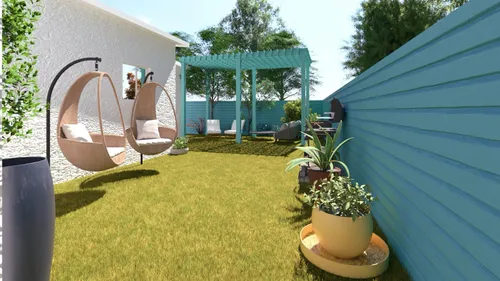
Green Advisor Inc.
7660 Beverly Blvd, Los Angeles, CA 90036
Green Advisor Inc. is a landscaping and remodeling company based in Los Angeles, CA. They provide comprehensive landscape design and construction services, including hardscaping, irrigation system installation, and custom outdoor renovations. Their expertise extends to pool construction, patio and deck building, and eco-friendly home remodeling projects. The company is recognized for its award-winning landscape designs and sustainable outdoor solutions. Green Advisor Inc. also offers 3D design services to help clients visualize their projects. They serve the Greater Los Angeles area, including the San Fernando Valley, and collaborate with trusted suppliers to ensure quality materials and craftsmanship.
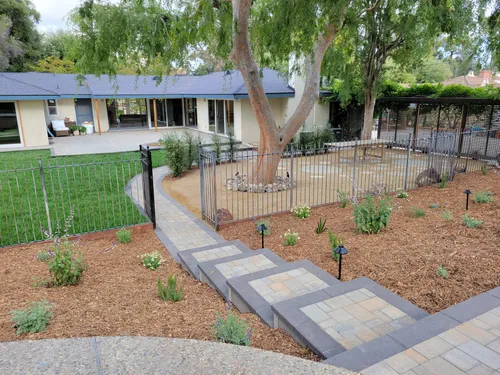
Droughtscape
Angeles Crest Hwy, La Cañada Flintridge, CA 91011
Droughtscape is a landscaping and outdoor construction company based in Los Angeles, CA. With over 45 years of experience, they specialize in drought and fire-resistant landscape design and installation, hardscaping, irrigation, fencing, artificial turf, and more. Their services cover a wide range of outdoor improvements including interlocking pavers, decks, pergolas, retaining walls, and yard drainage. Droughtscape serves multiple neighborhoods in the Los Angeles area, focusing on water-saving and sustainable landscaping solutions that suit various home styles. They emphasize clear communication and quality craftsmanship to provide a smooth project experience.
Greenplace Inc
2151 Pacific Ave A205, Costa Mesa, CA 92627
Greenplace Inc is a landscaping company based in Santa Ana, CA, offering a wide range of services including landscape design, hardscaping, lawn care, irrigation installation and repair, artificial turf, and yard drainage solutions. They serve both residential and commercial clients throughout Southern California, including Orange County and Los Angeles. Greenplace specializes in creating custom outdoor environments that combine aesthetic appeal with practical features such as smart irrigation systems to optimize water use. Founded by Volodymyr Dragan and Viktor Peshekhonov, the company emphasizes craftsmanship and long-term vision in their work. Their licensed team is known for detailed project management and responsiveness to client needs.
Irrigation Pros
Los Angeles, CA
Irrigation Pros is a locally owned landscaping company serving Orange County, including Santa Ana, Irvine, Newport Beach, and Mission Viejo. They specialize in sprinkler repair, sod installation, drainage solutions, and artificial turf installation. Their services focus on efficient irrigation systems tailored to the local climate, preventing water waste and yard damage. The company offers top-grade sod and drip irrigation systems designed for sustainability and water savings. Irrigation Pros operates with years of experience in the area and provides 24/7 availability for urgent sprinkler and drainage issues.
How an Automated Watering System Works
At its core, a residential irrigation system is a network designed to automate the delivery of water to your landscape. The process begins at your home's water source, typically a connection to the main line or a dedicated irrigation meter. From there, a series of components work in concert:
- Controller/Timer: Often called the "brain" of the system, this device is programmed to automatically turn different watering zones on and off at specific days and times.
- Piping: A network of underground PVC or polyethylene pipes carries water from the source out to the various areas of your yard.
- Valves: These are electrically activated gates, usually housed in valve boxes in the ground. Each valve controls the water flow to a specific zone-a section of your yard with similar watering needs (e.g., front lawn, backyard shrubs, garden bed) 1.
- Sprinklers or Emitters: This is the endpoint where water is distributed. Systems use either spray heads/rotors that pop up and spray water over an area, or drip lines with emitters that deliver water slowly and directly to the root zone of individual plants 2.
Key Design Principles for Effective Irrigation
A well-designed system is more than just parts; it follows engineering principles for efficiency and uniformity.
- Zoning: The most important concept. Your landscape should be divided into separate zones based on plant type (turf vs. native shrubs), sun exposure (full sun vs. shade), and soil type. This allows each area to receive the exact amount of water it needs, nothing more and nothing less.
- Head-to-Head Coverage: For spray systems, sprinkler heads are spaced so that the water from one head reaches the adjacent head. This ensures even coverage and prevents dry spots, which can lead to overwatering other areas to compensate3.
- Drip Irrigation Integration: For non-turf areas like planting beds, vegetable gardens, or ground cover, drip irrigation is vastly more efficient. It applies water slowly at the root zone, minimizing evaporation and runoff. Many Brea systems use a hybrid approach with spray zones for lawn and drip zones for other plantings 4.
Creating a Smart Watering Schedule for Brea
Your system is only as good as its schedule. Proper programming aligns with Brea's climate and state regulations to promote healthy roots and conserve water.
- Frequency & Duration: The golden rule is deep, infrequent watering. This encourages roots to grow deeper, making plants more drought-resistant. A general guideline is to water 3-4 times per week in the peak summer heat, reducing to 1-3 times per week in spring and fall, and 1-2 times per week or less in winter 5.
- Time of Day: Always water in the early morning, ideally before 10 AM. This reduces water loss from evaporation and wind, and allows foliage to dry before nightfall, helping prevent fungal diseases 6.
- The Cycle and Soak Method: This is crucial for Brea's often clay-heavy soils, which absorb water slowly. Instead of running a zone for 20 minutes straight (which causes runoff), program the controller to run for two shorter cycles (e.g., 5 minutes each) with a "soak" period in between (e.g., 60 minutes). This allows the first watering to penetrate, so the second cycle can soak in deeper with zero waste7 8.
- Following Local Guidelines: Brea adheres to California's Model Water Efficient Landscape Ordinance (MWELO) for new and renovated landscapes of a certain size. This ordinance mandates efficient design principles, appropriate plant selection, and smart controllers, emphasizing that conservation is built into the code 9.
Find the perfect sprinkler & irrigation companies for your needs
Get personalized recommendations and expert advice
Understanding Costs for Installation and Repair
Investing in a lawn sprinkler system involves upfront costs that vary widely based on your property's size and complexity. For professional installation of a new system, homeowners can expect a range from approximately $1,000 for a basic, small-yard setup to $3,000 or more for larger properties with multiple zones, high-efficiency components, and advanced smart controllers10 11. Regular maintenance and occasional repairs are part of system ownership. Common issues and their typical repair cost ranges include:
- Simple Fixes (clogged nozzle, broken head): $75 - $150
- Valve Replacement: $150 - $300+ per valve
- Controller Repair or Upgrade: $200 - $400+
For accurate pricing, it's always recommended to get multiple detailed quotes from licensed irrigation specialists or landscapers in Brea.
Pro Tips for System Efficiency and Longevity
- Prioritize Water Conservation: In our climate, efficiency isn't optional. Ensure your system design and schedule reflect this priority from the start.
- Schedule Regular Maintenance: A spring tune-up to check for leaks, adjust heads, and update the controller schedule can save significant water and money over the season.
- Consider a Smart Controller Upgrade: Weather-based "smart" controllers use local weather data or soil moisture sensors to automatically adjust watering times, eliminating overwatering after rain. They are a worthwhile investment for both convenience and conservation12 13.
Frequently asked questions
Sources
Footnotes
-
Understanding What Each Major Part of a Sprinkler System Does - https://www.rainbird.com/homeowners/blog/understanding-sprinkler-system-components ↩
-
CHAPTER 5. SPRINKLER IRRIGATION - https://www.fao.org/4/s8684e/s8684e06.htm ↩
-
How Does a Lawn Irrigation System Work: #1 Best Benefits - https://mcleodlandscaping.com/how-does-a-lawn-irrigation-system-work/ ↩
-
Install Irrigation: 7 Powerful Steps for Effortless Success 2025 - https://mcleodlandscaping.com/install-irrigation/ ↩
-
Lawn Watering & Care | Monte Vista Water District, CA - https://www.mvwd.org/191/Lawn-Watering-Care ↩
-
Irrigation System Guides - Metropolitan North Georgia Water ... - https://northgeorgiawater.org/residents-schools-businesses/conserve-our-water/irrigation-system-guides-watering-and-maintenance-guides/ ↩
-
East Bay Region Irrigation Schedules - https://www.bayareagardening.org/Watering-Guide/EastBay.php ↩
-
- Water less frequently but more deeply. Think of your soil as a ... - https://www.contracosta.ca.gov/DocumentCenter/View/2221/Saving-Water-in-the-Yard?bidId=
-
Water Efficiency Landscape Ordinance | San Benito County, CA - https://www.sanbenitocountyca.gov/departments/water-efficiency-landscape-ordinance ↩
-
Sprinkler Irrigation | UC Master Gardeners of San Joaquin ... - https://ucanr.edu/site/uc-master-gardeners-san-joaquin-county/sprinkler-irrigation ↩
-
What Does a Lawn Sprinkler System Cost in 2025? - https://blog.lawnguru.co/lawn-sprinkler-system-cost/ ↩
-
Water Efficient Landscape Guidelines - Brea, CA - https://cityofbrea.gov/DocumentCenter/View/14288/Water-Efficient-Landscape-Guidelines ↩
-
Understanding Your Irrigation System | Santa Rosa, CA - SRCity.org - https://www.srcity.org/3447/Understanding-Your-Irrigation-System ↩