Find the Best Sprinkler & Irrigation Companies for Your Business
No obligation • Fast responses • Nationwide coverage

Why you can trust Landscape Atlas
Landscape Atlas is a leading United States resource for evaluating landscaping, lawn care, and outdoor service providers. Our team researches each category in depth, focusing on service quality, safety, and customer experience. Listings and rankings are based on independent criteria and user feedback, and companies cannot pay to influence our assessments or recommendations.
Search providers near you
Top Sprinkler & Irrigation Companies in Folsom, California Ranked
A well-designed sprinkler and irrigation system is the cornerstone of a healthy, vibrant landscape in Folsom. It goes beyond simple convenience, providing precise, efficient water delivery that conserves a vital resource while protecting your investment in your property. Whether you're installing a new system, upgrading an outdated one, or need repairs, understanding your options helps you make informed decisions. This guide will help you navigate the components, best practices, and local considerations for landscape watering in Folsom.
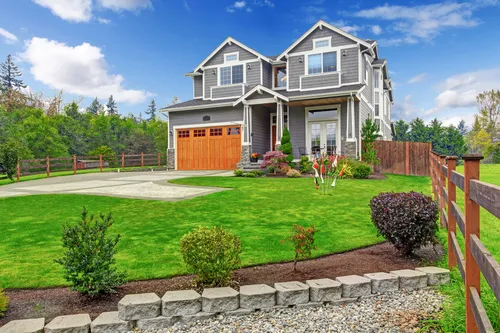
American Gardens Landscaping
Sacramento, CA
American Gardens Landscaping is a licensed landscaping and fencing contractor serving Sacramento, CA, and surrounding counties including El Dorado and Placer. The company offers a comprehensive range of services such as landscape design, hardscape installation, fencing, irrigation, drainage, planting, and outdoor lighting. They specialize in capabilities like paver installation, patio construction, retaining walls, and both natural and artificial grass installation. With three generations of family experience in landscaping, American Gardens Landscaping provides expert design and project execution to enhance outdoor spaces.
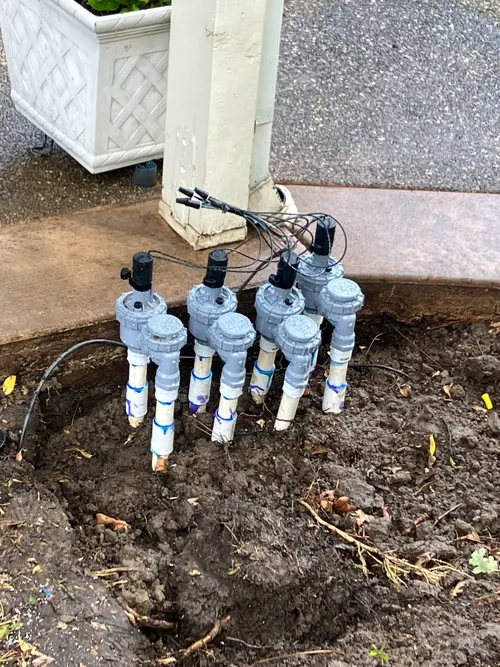
Hazen Sprinkler Services
4812 Donovan Dr, Carmichael, CA 95608
Hazen Sprinkler Services has been providing sprinkler installation, repair, and maintenance for residential and commercial properties in Sacramento, CA for 39 years. They handle a wide range of sprinkler system issues, including broken pipes, leaky heads, malfunctioning timers, valve replacements, and water audits. The company services all major sprinkler brands and is experienced in managing both small and large-scale irrigation systems.
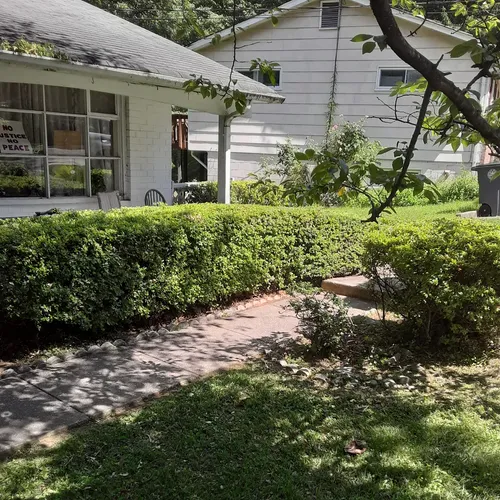
LawnStarter Landscaping
501 Pinedale Ave, Sacramento, CA 95838
LawnStarter Landscaping provides a wide range of lawn care and landscaping services in Sacramento, CA. Their offerings include lawn mowing, sprinkler installation and repair, landscape lighting installation, and hardscaping such as pavers and retaining walls. They serve various neighborhoods throughout Sacramento, delivering services like cleanups, bush trimming, and irrigation tailored to local seasonal needs. LawnStarter Landscaping is known for its online booking system that allows customers to schedule services quickly and conveniently. Their professionals are backed by a property protection guarantee to ensure customer satisfaction.
Caligreen Landscaping Inc.
645 Amber Ct, Roseville, CA 95678
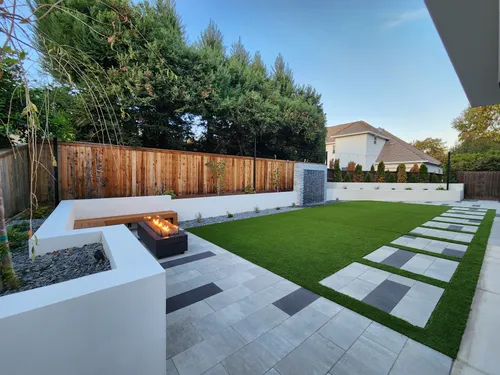
Caligreen Landscaping Inc. is a landscaping company based in Sacramento, CA, offering comprehensive outdoor design and installation services. They specialize in creating functional and attractive outdoor spaces including sod and artificial turf installation, landscape lighting, irrigation systems, hardscaping with pavers and retaining walls, and yard drainage solutions. Their projects often include features like patios, firepits, outdoor kitchens, and pergolas, tailored to fit the client's lifestyle and property. Serving the Sacramento area, Caligreen Landscaping Inc. emphasizes detailed planning and quality craftsmanship to ensure durable and well-designed landscapes. Their approach includes transparent communication and thorough project management from concept through installation. The company is known for handling complete landscape transformations and offers water-efficient landscaping options.
Salvador Landscape
Sacramento, CA
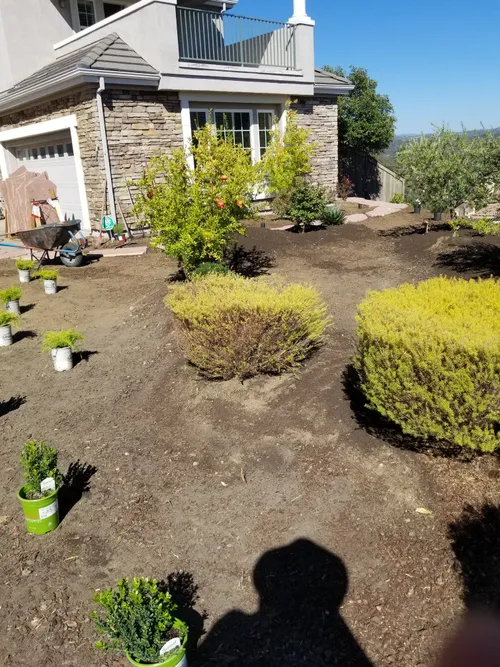
Salvador Landscape is a family-run landscaping company based in Sacramento, CA. They offer a range of services including lawn care, sprinkler installation and repair, irrigation, gardening, and general landscaping. With six years of experience, the team focuses on efficient project completion and maintaining clean, attractive outdoor spaces.
How Sprinkler and Drip Irrigation Systems Work
At its core, an irrigation system is a network designed to mimic natural rainfall in a controlled, efficient manner. Water from your home's supply line is directed through a series of underground pipes to various zones in your yard. The flow is managed by an electronic controller, which sends signals to open and close valves on a set schedule. When a valve opens, water pressure pushes through to the delivery components: either sprinkler heads that pop up and spray water over an area, or drip emitters that release water slowly directly at the root zone of plants.
This automated approach ensures your lawn, garden beds, and trees receive consistent hydration without the waste and uneven coverage common with manual watering. The true sophistication lies in zoning-grouping plants with similar water needs (like turf, shrubs, or vegetable gardens) onto separate valves. This allows you to tailor the amount and frequency of water each plant type receives, a fundamental principle of water-wise landscaping.
Key Components of Your Irrigation System
Understanding the parts of your system demystifies maintenance and helps you communicate effectively with service professionals.
- Controller/Timer: The "brain" of the operation. Modern controllers, especially smart or weather-based models, automatically adjust watering schedules based on local weather data, saving significant water.
- Valves: These are the electrically activated gates that control water flow to each zone. A malfunctioning valve can lead to a zone not turning on or, worse, not turning off.
- Sprinkler Heads: These are the most visible parts. Rotors are used for larger turf areas, rotating streams of water in a full or partial circle. Fixed spray heads are for smaller, defined areas like parkways or tight corners, emitting a fan-shaped spray. Proper head selection and placement are critical for uniform coverage.
- Drip Irrigation: This system uses flexible tubing with built-in emitters to deliver water slowly and directly to the base of plants, shrubs, and trees. It's exceptionally efficient, minimizing evaporation and runoff, and is ideal for flower beds, vegetable gardens, and foundation plantings.
- Pipes, Sensors, and Pumps: PVC pipes form the distribution network. Additional components like soil moisture sensors can override the controller when the ground is already wet, and booster pumps may be needed to maintain adequate pressure for proper operation.
Smart Watering Practices for Folsom Climates
Folsom's climate, with its hot, dry summers, demands intelligent watering strategies. The goal is not just to keep plants alive, but to encourage deep, drought-resistant root systems while adhering to local water conservation values.
The general rule is to provide about 1 inch of water per week for turf grass, including any rainfall. However, this is a total weekly amount, not a daily dose. It's far better to water deeply and infrequently. In peak summer, this might mean watering each zone every 2-4 days, rather than a little every day. This practice encourages roots to grow deeper into the soil in search of moisture.
Timing is everything. The best window to water is between 4 a.m. and 10 a.m.1 2. Watering during this time minimizes loss to evaporation from the sun and wind, and allows foliage to dry before evening, reducing the risk of fungal diseases.
For slopes or hard-packed soils common in the area, the "Cycle and Soak" method is essential. Instead of running a zone for 30 minutes straight, program the controller to run for two 15-minute cycles (or three 10-minute cycles) with an hour break in between. This allows the first watering to soak in, preventing wasteful runoff during the second cycle 3.
Find the perfect sprinkler & irrigation companies for your needs
Get personalized recommendations and expert advice
Installation, Repair, and Service Considerations
Investing in a quality irrigation system or maintaining an existing one involves several factors. For a new installation in Folsom, costs can vary widely based on property size, the number of zones, the mix of sprinkler and drip components, and the technology level of the controller. Systems with advanced smart controllers and moisture sensors may have a higher upfront cost but offer long-term water savings.
Common repair needs include:
- Sprinkler Head Damage: From lawnmowers or wear, repair or replacement typically ranges from $75 to $150+ per head.
- Valve Issues: Repairing or replacing a faulty valve that won't open or close properly often falls in the $150 to $300+ range.
- Controller Upgrades: Replacing an old timer with a modern smart controller, including installation, can cost from $200 to $500+.
- Drip System Installation: Adding a drip zone for garden beds can be a project ranging from $300 to $1,000+, depending on scope4 5.
Given Folsom's focus on water efficiency, local professionals are well-versed in designing and servicing systems that meet both performance and conservation standards. They can conduct an audit of your system, checking for leaks, misaligned heads, and pressure issues that waste water.
Optimizing for Water Conservation
In Folsom, efficient water use isn't just a good idea-it's a community priority. Beyond basic scheduling, several technologies can dramatically reduce your outdoor water use.
Weather-Based (ET) Controllers are the gold standard. They connect to local weather data or on-site sensors to adjust watering times automatically, skipping cycles after rain or increasing run times during a heat wave6. Soil Moisture Sensors placed in the ground provide direct feedback, preventing the controller from watering when the soil is already sufficiently moist.
Regular maintenance is a form of conservation. A broken head spraying onto a sidewalk or a leaking valve running constantly can waste thousands of gallons. A simple seasonal check-up-activating each zone and looking for problems-can catch these issues early. Finally, consider converting appropriate areas from spray to drip irrigation. Drip systems can be 90% efficient compared to 65-75% for traditional sprinklers, making them ideal for non-turf areas7 8.
Frequently asked questions
Sources
Footnotes
-
Landscape Irrigation Watering Guide - https://northgeorgiawater.org/wp-content/uploads/2017/02/Landscape-Irrigation-Watering-Guide.pdf ↩
-
IFA's Lawn Watering Guide - The Best Time To Water Your Grass - https://grow.ifa.coop/lawn-care/lawn-watering-guide ↩
-
Irrigation Schedules - SoCal Yard Transformation - https://www.socalyardtrans.com/schedules ↩
-
Irrigation Sprinkler System Repair in Folsom, CA - https://www.landscapesprinklerguys.com/sprinkler-repair-folsom-california ↩
-
TOP 10 BEST Irrigation near Folsom, CA - Updated 2025 - Yelp - https://m.yelp.com/search?find_desc=Irrigation&find_loc=Folsom%2C+CA ↩
-
Workshops, Webinars and Water-Wise Tips - Folsom, CA - https://www.folsom.ca.us/government/environmental-water-resources/water-conservation/water-wise-tips-of-the-week ↩
-
CHAPTER 5. SPRINKLER IRRIGATION - https://www.fao.org/4/s8684e/s8684e06.htm ↩
-
Best Management Practice #5: Water-Efficient Irrigation - https://www.energy.gov/femp/best-management-practice-5-water-efficient-irrigation ↩