Find the Best Sprinkler & Irrigation Companies for Your Business
No obligation • Fast responses • Nationwide coverage

Why you can trust Landscape Atlas
Landscape Atlas is a leading United States resource for evaluating landscaping, lawn care, and outdoor service providers. Our team researches each category in depth, focusing on service quality, safety, and customer experience. Listings and rankings are based on independent criteria and user feedback, and companies cannot pay to influence our assessments or recommendations.
Search providers near you
Top Sprinkler & Irrigation Companies in Indio, California Ranked
A well-designed sprinkler and irrigation system is the cornerstone of a healthy, vibrant landscape in Indio's desert climate. These automated watering systems deliver precise amounts of water exactly where it's needed, conserving our most precious resource while keeping plants thriving. This guide will help you understand the components, benefits, and smart practices for lawn sprinklers and landscape irrigation, empowering you to find the right local expertise for installation, maintenance, or upgrades.
Lumiflow Irrigation & Lighting
Irvine, CA
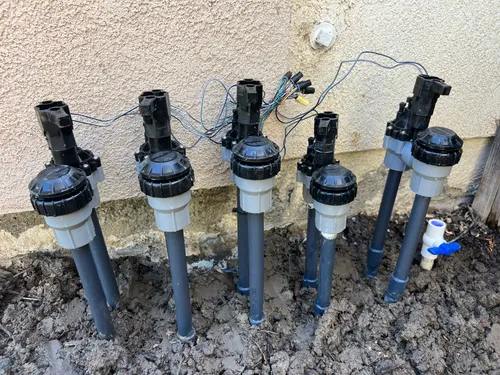
Lumiflow Irrigation & Lighting is a landscaping company based in Irvine, CA, offering comprehensive garden construction services. They specialize in irrigation system installation, maintenance, and repair, as well as custom outdoor lighting design and professional hardscape installation including patios, artificial grass, decorative walls, and concrete structures. Their services focus on efficient water management and enhancing outdoor ambiance through tailored lighting solutions. Lumiflow provides reliable installation and upkeep to ensure durable and functional outdoor spaces.
Noriega and Sons Tree Service Corp.
Riverside, CA
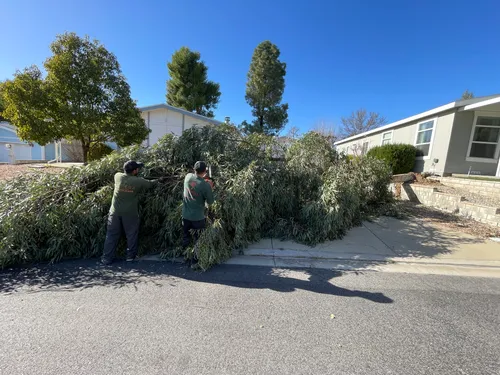
Noriega and Sons Tree Service Corp. provides a range of tree and landscape care services in Riverside, CA. Their offerings include tree trimming, fence installation, landscaping, sod installation, retaining walls, sprinkler systems, pavers, concrete work, and desert hardscape. The company is licensed and certified, and they provide emergency services available 24/7.
Understanding Your Landscape's Watering Needs
In the Coachella Valley, every drop of water counts. A generic watering schedule can lead to waste, plant stress, and high utility bills. Effective irrigation starts with understanding your landscape's unique zones. A typical Indio yard might have a mix of thirsty turfgrass, drought-tolerant shrubs, native desert plants, and flower beds, each with vastly different hydration requirements. A modern irrigation system addresses this by dividing your property into separate zones, each controlled by its own valve and programmed individually on a central controller. This zoning allows you to water a lawn for longer durations less frequently, while providing a slow, deep soak to tree roots or a light, targeted mist to delicate annuals, all on different schedules.
Smart technology takes this precision a step further. Weather-based controllers, also known as ET (evapotranspiration) controllers, automatically adjust watering times based on local weather data, dialing back during cooler, cloudy days or increasing slightly during a heatwave. When paired with rain sensors or soil moisture sensors, these systems can skip an entire cycle after a rare desert rain, preventing overwatering-a common cause of plant failure here 1. This intelligent approach is not just convenient; it's a critical strategy for sustainable landscaping in our region.
Core Components of an Irrigation System
Whether you're installing a new system or troubleshooting an existing one, knowing the key parts is essential.
- Controller (Timer): This is the brain of the operation. Modern smart controllers allow for complex programming via smartphone apps, adjusting for each zone's needs and external weather conditions 2.
- Valves: Usually housed in underground valve boxes, these electrically operated gates control the flow of water to each zone. When the controller signals a zone to start, it opens the corresponding valve.
- Piping: A network of PVC or polyethylene pipes carries water from your main supply line to the valves and out to the sprinkler heads or drip emitters throughout your yard.
- Sprinkler Heads: These are the endpoints that distribute water. They come in several types:
- Spray Heads: Fixed nozzles that pop up and spray a fan-shaped pattern. Ideal for smaller, rectangular lawn areas.
- Rotor Heads: Rotating streams that cover larger, circular areas with a slower precipitation rate, allowing for better soil absorption3.
- Drip Irrigation: A separate but often integrated system using flexible tubing and emitters to deliver water slowly and directly to the root zone of plants, shrubs, and trees. This method is exceptionally efficient, minimizing evaporation and runoff, and is highly recommended for non-lawn areas in Indio.
Principles of Efficient System Design
A properly designed system does more than just wet the ground; it applies water uniformly and efficiently. The gold standard for spray and rotor zones is "head-to-head" coverage. This means the spray from one sprinkler head should reach the adjacent head, ensuring every square foot of the zone receives an even amount of water without dry spots or wasteful overlap 4.
System layout also considers water pressure and flow rate. Different types of heads and emitters operate best at specific pressures. A professional design will account for this, possibly recommending pressure-regulating valves to ensure each component works correctly. Furthermore, zones are created not just by plant type, but also by the hydraulic capacity of your water source; you can only run a certain number of heads at once without losing pressure. This is why a large yard will have multiple zones that water in sequence5 6.
For gardens, raised beds, and foundation plantings, drip irrigation zones are the most effective design choice. Drip lines can be snaked through beds, with emitters placed precisely at the base of each plant. This targeted approach suppresses weeds (since only the plant roots get water) and is perfect for the rows of a vegetable garden or the irregular spacing of a desert rock garden.
Smart Watering Practices for the Indio Climate
The when and how much are as important as the how. Following best practices can save thousands of gallons annually.
- Timing is Everything: The best time to water is in the early morning, typically between 4:00 AM and 10:00 AM. Winds are calm, temperatures are low, and evaporation is minimal. This also allows foliage to dry quickly as the sun rises, reducing the risk of fungal diseases.
- Cycle and Soak: Applying a week's worth of water in one long cycle often leads to runoff before the soil can absorb it, especially on slopes or compacted soil. The "cycle and soak" method breaks the total runtime into shorter cycles (e.g., 5-10 minutes) with a 30-60 minute break in between. This allows water to penetrate deeply, encouraging stronger, drought-resistant roots.
- How Much Water? A general guideline for turfgrass in our climate is about 1 inch of water per week during the peak season, including any effective rainfall. This can be adjusted based on soil type, sun exposure, and plant type. A simple "tuna can test" (placing empty cans in a zone to measure accumulation) can help you calibrate your system's output7.
- Seasonal Adjustments: Plants need far less water in the winter. Smart controllers handle this automatically, but if you have a standard timer, remember to reduce watering frequency and duration significantly in the fall and winter months. Overwatering in cool weather is a leading cause of root rot 8.
Find the perfect sprinkler & irrigation companies for your needs
Get personalized recommendations and expert advice
Installation and Repair Considerations
Investing in a new irrigation system is a significant home improvement project. Costs are influenced by yard size, the number of zones, the complexity of the design (mixing spray, rotor, and drip), and the level of technology (standard vs. smart controllers). While a basic system for a small yard may start in the lower thousands, larger properties with advanced smart technology and extensive drip zones will be more. The focus for Indio homeowners should be on the long-term water savings and plant health that a professionally designed, water-efficient system provides.
Even the best systems require occasional maintenance and repair. Common issues include:
- Broken Sprinkler Heads: Damaged by lawn mowers or foot traffic.
- Faulty Valves: That won't open or close, causing a zone to run constantly or not at all.
- Clogged Drip Emitters: From mineral deposits in the water.
- Controller Malfunctions: Or wiring issues.
Repair costs are typically lower than installation and depend on the complexity. Replacing a single head or fixing a wiring issue might cost between $75 and $200, while installing a new smart controller with sensors can range from a few hundred dollars upwards9. Regular annual check-ups-like starting up the system in spring and winterizing it in fall-can catch small problems before they lead to water waste or landscape damage.
Integrating Irrigation with Landscape Design
Your watering system should work in harmony with your overall landscape plan. When designing a new landscape or renovating an existing one, consider the water needs of each plant group from the start. Group plants with similar water requirements together (a concept called hydrozoning) to make irrigation zoning simple and efficient. This is a core principle of California Friendly and xeriscape landscaping, which is strongly encouraged in Riverside County10.
Furthermore, consider how hardscaping-like patios, walkways, and retaining walls-interacts with your irrigation. Lines must be routed underneath or around these features during installation. Proper planning ensures your system waters the landscape, not the pavement, and that future hardscape projects won't require a costly irrigation overhaul.
Frequently asked questions
Sources
Footnotes
-
Best garden irrigation system timer: 4 Perfect Picks - https://randalllandscaping.com/garden-irrigation-system-timer/ ↩
-
How To Program a Sprinkler System - Irrigreen - https://irrigreen.com/blogs/sprinkler-systems/how-to-program ↩
-
Overview of Different Sprinkler Heads | Lesson Six of the Anatomy 101 ... - https://www.youtube.com/watch?v=uQiR1cGMO3Y ↩
-
Sprinkler System Layout Guide | Sprinkler Radius - https://designerwatering.com.au/sprinkler-layout/ ↩
-
CHAPTER 5. SPRINKLER IRRIGATION - https://www.fao.org/4/s8684e/s8684e06.htm ↩
-
Automatic Sprinklers System Guide - https://ahiconsulting.com/guide-to-automatic-sprinklers/ ↩
-
your Irrigation System - Lush & Efficient - Revised Edition - https://web.cvwd.org/conservation/lush_book/lush2.html ↩
-
Landscape Irrigation Watering Guide - https://northgeorgiawater.org/wp-content/uploads/2017/02/Landscape-Irrigation-Watering-Guide.pdf ↩
-
Irrigation & Sprinkler Systems in Indio, CA | Smart Watering ... - https://www.indiolandscaping.com/services/irrigation-sprinkler-systems ↩
-
County of Riverside Guide to California Friendly Landscaping - https://trans.rctlma.org/sites/g/files/aldnop401/files/migrated/Portals-7-documents-landscaping-guidelines-Guide-to-California-Friendly-Landscaping.pdf ↩