Find the Best Sprinkler & Irrigation Companies for Your Business
No obligation • Fast responses • Nationwide coverage

Why you can trust Landscape Atlas
Landscape Atlas is a leading United States resource for evaluating landscaping, lawn care, and outdoor service providers. Our team researches each category in depth, focusing on service quality, safety, and customer experience. Listings and rankings are based on independent criteria and user feedback, and companies cannot pay to influence our assessments or recommendations.
Search providers near you
Top Sprinkler & Irrigation Companies in Lancaster, California Ranked
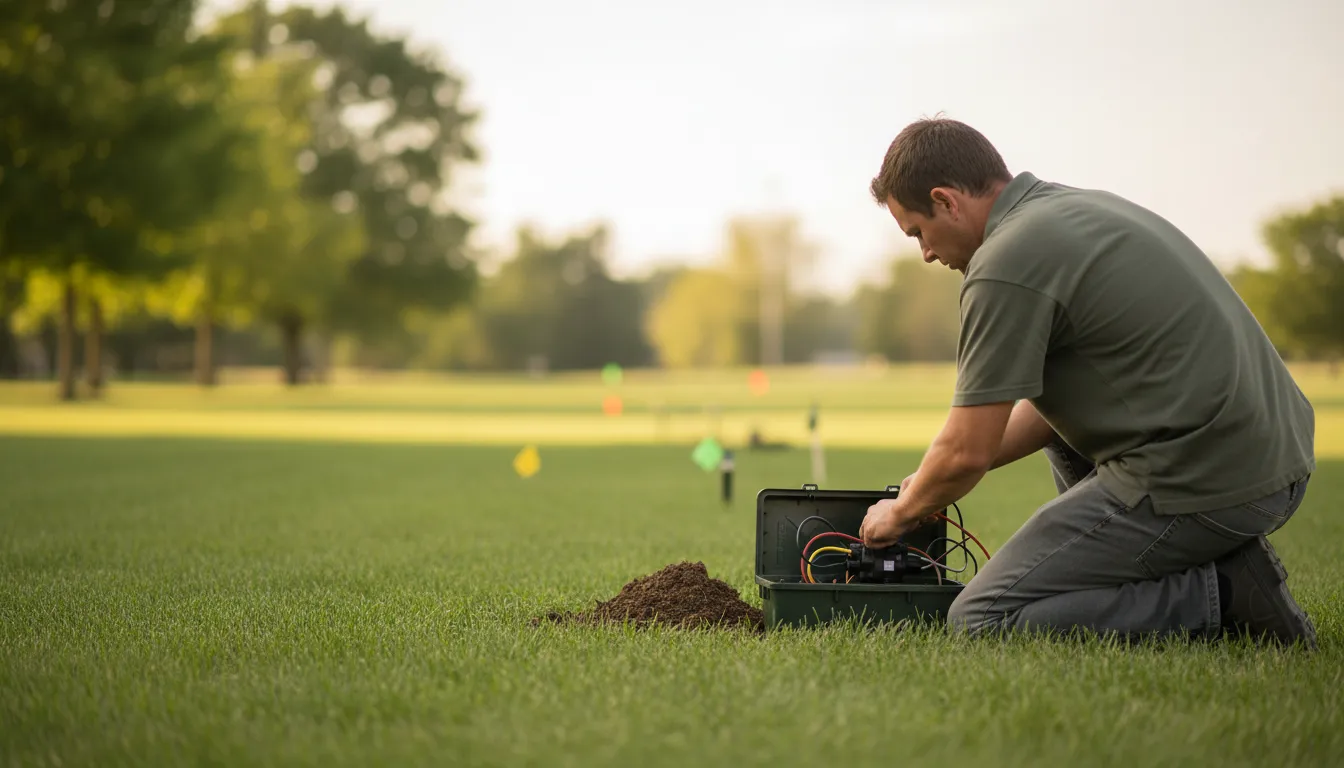
A well-designed sprinkler and irrigation system is more than just convenience; it's a critical tool for maintaining a healthy, vibrant landscape while conserving water in Lancaster's high desert climate. Proper watering systems deliver the right amount of water directly to your lawn and plants, promoting deep root growth and resilience. This guide will help you understand the components, best practices, and local considerations for efficient landscape watering, connecting you with the knowledge to find qualified local professionals for installation, maintenance, and repair.
Williams Sprinkler & Landscape
Santa Clarita, CA
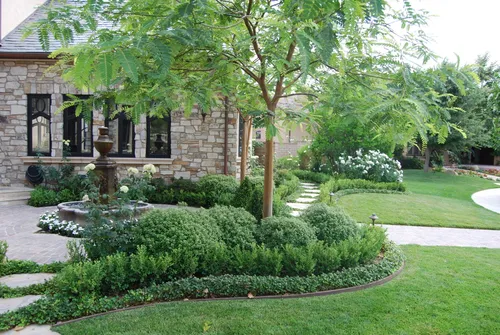
Williams Sprinkler & Landscape is a licensed and insured irrigation and landscape company serving Santa Clarita, CA, and the surrounding Los Angeles areas. With over 40 years of experience since 1982, they offer a wide range of services including irrigation installation and repair, landscape renovations, sod installation, drainage solutions, and low voltage landscape lighting. They focus on irrigation and drainage efficiency, retrofitting old sprinkler systems, and creating sustainable outdoor spaces that enhance property value.

Kathy's Landscaping
Santa Clarita, CA
Kathy's Landscaping is a full-service landscaping company serving Santa Clarita, CA, and nearby areas including Valencia, Castaic, Newhall, Saugus, and Canyon Country. With nearly 20 years of experience, they offer a wide range of services such as lawn care, tree trimming and removal, brush clearing, irrigation installation and repair, hardscaping with block walls and concrete work, and landscape design. They handle both residential and commercial projects and provide emergency services upon request. Their team is committed to environmentally friendly work and delivering personalized, high-quality results.
MP Landscapings
Santa Clarita, CA
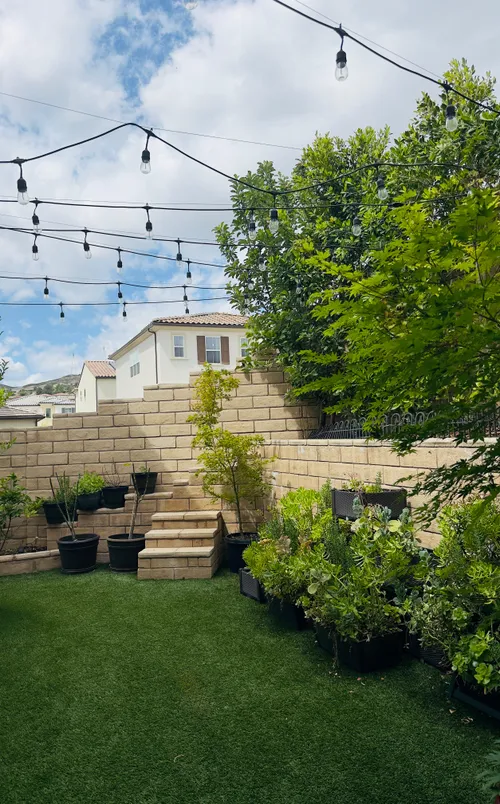
MP Landscapings is a lawn care and landscaping company based in Santa Clarita, CA. They offer a range of services including lawn mowing, hedging, weed removal, sprinkler repair, and lawn repair. Their capabilities include sprinkler system maintenance such as leak fixes, head replacement, and timer adjustments, as well as seasonal clean-up and mulch installation to support garden health.

Eddies Landscaping
27562 Eveningshade Ave, Santa Clarita, CA 91351
Eddies Landscaping is a landscaping company based in Santa Clarita, CA, with over 30 years of experience serving both residential and commercial clients. They offer a wide range of services including landscape design, lawn care, fertilization, weed control, sprinkler installation and repair, fence installation, and hardscaping such as patios, walkways, retaining walls, arbors, and gazebos. Their expertise includes comprehensive landscape design and installation, ensuring outdoor spaces are both beautiful and functional. Eddies Landscaping serves Santa Clarita and surrounding communities such as San Fernando, Beverly Hills, Santa Monica, and Stevenson Ranch, covering a 50-mile radius around Santa Clarita.
Stay Green Inc.
26935 Furnivall Ave, Canyon Country, CA 91351
Stay Green Inc. is a landscaping company serving Santa Clarita, CA, and surrounding Southern California areas. They provide commercial landscape maintenance, tree care, sprinkler installation and repair, and irrigation services. With over 50 years of experience, Stay Green operates from multiple locations across the region, focusing on sustainable landscaping practices and serving a variety of clients including commercial properties, HOAs, municipalities, and educational institutions. Their team is self-performing and committed to delivering tailored landscape solutions while maintaining a strong emphasis on environmental responsibility.
Understanding Your Irrigation System's Core Components
Every automatic watering system is built from four essential parts that work together like a well-oiled machine. Knowing what they are and how they function is the first step to smart water management.
- The Controller: This is the brain of the operation. Modern controllers, especially "smart" models, allow you to program watering schedules by zone, adjusting for day of the week and duration. Smart controllers can even connect to local weather stations or soil moisture sensors to automatically skip watering after rainfall.
- The Valves: Think of valves as the switches. They are electrically activated by the controller to open and close, controlling the flow of water to different zones. One valve typically controls one zone, such as the front lawn or a specific garden bed.
- The Piping Network: This is the circulatory system, a network of PVC or polyethylene pipes buried underground that delivers water from your main supply line to each zone's valves and, ultimately, to the emission devices.
- The Emission Devices: These are the endpoints that deliver water to your landscape. They fall into two main categories: sprinkler heads for turf areas and drip emitters for planting beds, each chosen for specific watering needs.
Designing for Efficiency: Sprinkler Zones vs. Drip Zones
An efficient system divides your landscape into zones based on plant water needs and the type of emitter used. This targeted approach prevents overwatering some areas while underwatering others.
Sprinkler Zones for Lawns: For grassy areas, pop-up spray heads or rotary nozzles are standard. The golden rule for lawn sprinkler layout is achieving head-to-head coverage. This means the water from one sprinkler head should reach the adjacent head, ensuring uniform water distribution without dry spots 1. Different head types produce various spray patterns (full circle, half-circle, quarter-circle) to match the shape of your lawn.
Drip Zones for Gardens and Beds: Drip irrigation is the champion of water conservation for non-turf areas. It uses flexible tubing with built-in emitters that deliver water slowly and directly to the root zone of plants. This method minimizes water loss from evaporation and wind drift, which is especially crucial in Lancaster's dry, often windy environment 2. Drip systems are ideal for shrubs, trees, flower beds, and vegetable gardens.
Smart Watering Principles for the Antelope Valley
Simply having a system isn't enough; how you use it determines its efficiency and your landscape's health. These principles are tailored to local soil and climate conditions.
- Cycle and Soak for Slopes and Clay: Lancaster's soil often contains clay, which absorbs water slowly. Applying water all at once leads to wasteful runoff. The "cycle and soak" method involves running a zone for several short cycles (e.g., 5 minutes) with breaks in between (30-60 minutes), allowing water to penetrate deeply without running off.
- Water Deeply and Infrequently: Encouraging deep root growth is key to drought tolerance. It's better to water thoroughly a few times a week than to give your lawn a light daily sprinkle. Aim to apply about 1 to 1.5 inches of water per week during the peak summer season, adjusting based on temperature and rainfall 3 4.
- Check Soil Moisture: Don't just set it and forget it. Periodically check soil moisture with a screwdriver or soil probe. Water should penetrate 6-8 inches deep for lawns and 12-18 inches for shrubs and trees.
Lancaster's Watering Rules and Best Schedules
Adhering to local regulations is not only mandatory but also aligns with best conservation practices.
The City of Lancaster has a clear mandate: watering with sprinklers is prohibited between 10 AM and 10 PM, year-round 5. This rule is designed to minimize water loss during the hottest, windiest part of the day.
The optimal time to water is in the early morning, between 4 AM and 8 AM. At this time, temperatures are cool, winds are usually calm, and evaporation loss is at its lowest, giving grass and plants time to absorb moisture before the sun gets strong 6. During the cooler months (November through March), you can significantly reduce watering frequency as plant growth slows and evaporation decreases.
Find the perfect sprinkler & irrigation companies for your needs
Get personalized recommendations and expert advice
Installation and Repair: What to Expect
Investing in a new irrigation system or maintaining an existing one involves various factors that influence cost and scope.
New System Installation: The cost for installing a new automatic sprinkler and drip system in Lancaster can vary widely, typically starting around $1,000 and increasing based on property size, the number of zones, the type of equipment (standard vs. smart controllers, drip irrigation complexity), and the difficulty of trenching. A professional installer will design a system that meets local codes, ensures proper coverage, and groups plants with similar water needs together 7.
Common Repairs and Maintenance: Even well-designed systems need occasional attention. Common issues include:
- Clogged or Misaligned Sprinkler Heads: This leads to dry spots or overspray onto sidewalks. Cleaning or adjusting heads is a common fix.
- Leaking Valves or Pipes: Leaks can waste a tremendous amount of water. A leaking valve may constantly seep, while a broken pipe can create soggy areas in the lawn.
- Faulty Controllers: Electrical issues or programming errors can prevent zones from turning on or off.
Repair costs generally correlate with the complexity of the fix. A simple head adjustment or nozzle replacement might range from $75 to $200. Replacing a malfunctioning valve or fixing a lateral line leak often falls in the $200 to $500 range. More significant issues, like a damaged main line or the need for a full controller replacement, can cost $500 to $1,000 or more 8 9. Regular seasonal maintenance-winterizing the system to prevent freeze damage and spring start-up-can help avoid many major repairs.
The Role of Smart Technology and Water Conservation
In a desert community, every drop counts. Integrating smart technology into your irrigation plan is one of the most effective steps you can take.
Smart Controllers are a game-changer. These devices automatically adjust your watering schedule based on real-time local weather data (evapotranspiration or ET). If it rains, they can delay watering. During a heatwave, they might increase runtime slightly. This dynamic adjustment eliminates guesswork and prevents watering during or after adequate rainfall 10 11.
Pairing smart controllers with drip irrigation in planting beds and using high-efficiency rotary nozzles (which apply water more slowly and evenly than traditional spray heads) on lawns creates a comprehensive water-saving strategy. This approach not only benefits the environment and complies with local ordinances but can also lead to significant savings on your water bill over time.
Frequently asked questions
Sources
Footnotes
-
Easy, step-by-step, underground sprinkler system layout guide - https://images.thdstatic.com/catalog/pdfImages/a9/a9564496-8fb7-4141-8758-5f660a7a9310.pdf ↩
-
4 Types of Landscape Irrigation - https://www.sposatoirrigation.com/4-types-of-landscape-irrigation/ ↩
-
Irrigation Scheduling: Choosing the Best Method for Your Farming ... - https://www.mcmullinarea.org/irrigation-scheduling-choosing-the-best-method-for-your-farming-operation/ ↩
-
How long should you water your garden with a sprinkler? - https://www.homesandgardens.com/gardens/how-long-should-you-water-your-garden-with-a-sprinkler ↩
-
Quick Tips on Saving Water | City of Lancaster - https://www.cityoflancasterca.org/our-city/about-us/sustainability/water-conservation/quick-tips-on-saving-water ↩
-
East Bay Region Irrigation Schedules - https://www.bayareagardening.org/Watering-Guide/EastBay.php ↩
-
Understanding the Process of Irrigation System Installation - https://ca-landscapingservices.com/blog/understanding-the-process-of-irrigation-system-installation/ ↩
-
Irrigation and Sprinkler Installation and Repair | Acton, CA - https://www.leafsugreen.com/irrigation-and-sprinkler-installation-and-repair ↩
-
The 5 essential components for an efficient irrigation system - rain.it - https://www.rain.it/en/magazine/5-essential-components-for-an-efficient-irrigation-system/ ↩
-
California Code of Regulations Title 23. Waters ... - Rain Bird - https://www.rainbird.com/sites/default/files/media/documents/2018-05/RainBirdGuidetoMWELO.pdf ↩
-
Landscape Irrigation System Evaluation and Management - https://ucanr.edu/sites/default/files/2011-03/80223.pdf ↩