Find the Best Sprinkler & Irrigation Companies for Your Business
No obligation • Fast responses • Nationwide coverage

Why you can trust Landscape Atlas
Landscape Atlas is a leading United States resource for evaluating landscaping, lawn care, and outdoor service providers. Our team researches each category in depth, focusing on service quality, safety, and customer experience. Listings and rankings are based on independent criteria and user feedback, and companies cannot pay to influence our assessments or recommendations.
Search providers near you
Top Sprinkler & Irrigation Companies in Moreno Valley, California Ranked
An automated sprinkler and irrigation system is a smart investment for any Moreno Valley homeowner looking to maintain a healthy, vibrant landscape while conserving our most precious resource: water. In the Inland Empire's climate, efficient watering isn't just convenient-it's essential for sustainable property care. This guide will help you understand how these systems work, the local considerations for installation and maintenance, and how to find qualified professionals to design, install, or repair your landscape watering setup.
Precision Irrigation
Riverside, CA
Precision Irrigation is a sprinkler maintenance company based in Riverside, CA. They specialize in sprinkler installation, repair, and irrigation services, addressing issues such as broken wires, timers, and water leaks. The company offers a one-year warranty on parts and labor for major repairs including valves and pipe work, ensuring reliable solutions for irrigation system problems. Precision Irrigation aims to help customers maintain healthy landscaping by providing precise watering services.
Houston's Landscaping
29177 Stevens Ave, Moreno Valley, CA 92555
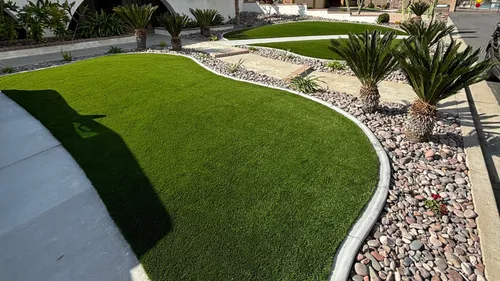
Houston's Landscaping is a family-owned landscaping company serving Riverside, CA, and the Inland Empire. They offer a wide range of services including landscape curbing, artificial turf installation, lawn care, irrigation systems, sod installation, tree and shrub care, and hardscaping. Their team focuses on creating low-maintenance, attractive outdoor spaces tailored to client needs. One notable capability is their landscape curbing, which enhances property aesthetics and reduces maintenance. Houston's Landscaping also emphasizes the benefits of artificial turf for water savings and year-round greenery in the Southern California climate.
BluCrew Landscape
37960 Sawleaf Pl, Murrieta, CA 92562
BluCrew Landscape is a family-owned and operated lawn care and landscaping company based near Irvine, CA. They provide a range of services including lawn mowing, tree removal, stump grinding, sprinkler installation and repair, and general landscaping. Serving Murrieta, Temecula, and nearby communities, BluCrew Landscape has been active since 2014. Their capabilities include comprehensive lawn maintenance and irrigation services, with a focus on consistent scheduling and customer satisfaction.

Bonnett Irrigation
3230 Madison St, Riverside, CA 92504
Bonnett Irrigation is a sprinkler installation and repair company located in Riverside, CA. They provide irrigation services to help maintain efficient and effective watering systems. The company focuses on sprinkler system installation and repair to support local landscaping needs.
Paz Landscape & Concrete
6725 Capistrano Way, Riverside, CA 92504
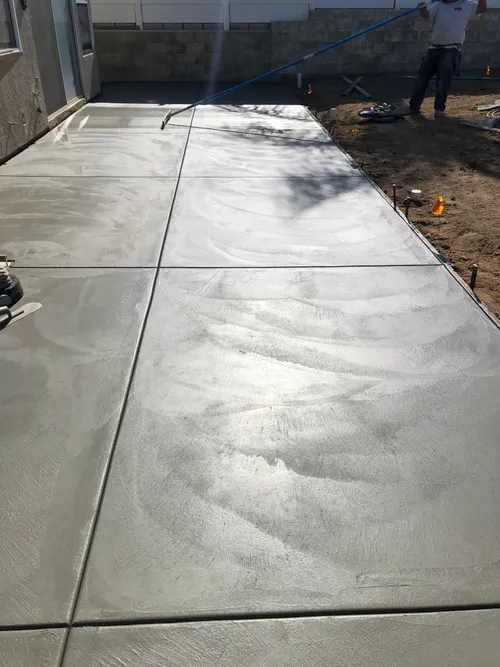
Paz Landscape & Concrete is a landscaping and concrete contractor serving Los Angeles, CA, and surrounding areas. With over twenty years of experience, the company offers a wide range of services including landscape and hardscape design and installation, exterior low voltage lighting, concrete and masonry work, fence and retaining wall construction, and patio design. Their team works closely with clients to create personalized outdoor environments that suit both residential and commercial properties. Paz Landscape & Concrete is known for its skilled crew and organized approach to projects.
How Automated Landscape Watering Systems Work
At its core, an automatic irrigation system is a network of components designed to deliver water to your lawn and plants on a precise schedule with minimal waste. Understanding these parts demystifies the process and helps you communicate effectively with service providers.
The controller, often called the timer, is the system's brain. Mounted on a wall in your garage or on an exterior wall, it allows you to program specific watering days, start times, and duration for different areas of your yard 1. Modern controllers can be Wi-Fi enabled, letting you adjust schedules from your smartphone based on real-time weather data.
When the controller activates, it sends a low-voltage signal to solenoid valves, which are typically housed in valve boxes buried in your yard. These valves act as gates, opening to allow pressurized water from your main line to flow into the underground piping network for a specific zone 2. Zones are crucial; they divide your landscape into sections with similar watering needs (e.g., sunny lawn, shaded shrubs, flower beds) so each area gets the right amount of water.
Finally, the water reaches the sprinkler heads. These are the visible components that distribute water. They come in various types: fixed spray heads for small, regular areas; rotary heads for larger lawns; and drip emitters or micro-sprayers for shrubs, trees, and garden beds, delivering water directly to the root zone with high efficiency 3.
System Design and Layout for Moreno Valley Homes
A one-size-fits-all approach doesn't work for irrigation. Effective system design tailors the layout and components to your property's specific characteristics, which is why professional assessment is key.
Standard Spray and Rotor Zones: These are typically used for turf areas. Spray heads are common for smaller, rectangular lawn sections, while rotor heads are better for covering larger, expansive grassy areas due to their greater throw distance. A well-designed zone ensures even coverage without dry spots or wasteful overspray onto sidewalks and driveways 4.
Drip and Micro-Irrigation Zones: This is where significant water savings are achieved, especially important in our region. Drip irrigation uses flexible tubing with emitters that place water slowly and directly at the base of plants. It's ideal for shrub beds, tree rings, vegetable gardens, and ground cover. It minimizes evaporation and runoff, making it a cornerstone of water-wise landscaping 5. Many local ordinances now strongly encourage or require drip irrigation for non-turf areas.
Water-Wise Design Principles: Beyond equipment, smart design incorporates plant selection and landscape features. This includes grouping plants with similar water needs (hydrozoning), using mulch to retain soil moisture, and selecting native or drought-tolerant plants that thrive with less supplemental water 6. A holistic design considers soil type-common clay soils in the Inland Empire absorb water slowly, requiring shorter, more frequent watering cycles to prevent runoff.
Creating an Efficient Watering Schedule
Programming your controller correctly is as important as the physical system. An improper schedule can waste thousands of gallons of water and harm your plants. Here are guidelines tailored to the Moreno Valley climate.
General Philosophy: The golden rule is to water deeply but infrequently. This encourages roots to grow deeper into the soil, creating more drought-resilient plants. Shallow, daily watering leads to weak root systems and water loss through evaporation.
Seasonal Frequency Adjustments: Your watering needs change dramatically with the seasons.
- Hot Summer (90+°F): Lawns may need watering 3 to 4 times per week. Landscape beds with drip irrigation may need 2 to 3 times per week 7.
- Mild Spring/Fall (70-80°F): Reduce frequency to approximately 3 times per week for lawns.
- Cooler Winter (Below 60°F): Watering needs drop significantly. Once or twice a week is often sufficient, and during rainy periods, you may not need to water at all 8.
Optimal Timing: Always aim to water in the early morning, ideally before 10 AM. This allows foliage to dry during the day, reducing the risk of fungal diseases, and minimizes water loss from wind and evaporation. Watering in the late evening (after 4 PM) is a second-best option, but avoid nighttime watering which can leave grass blades wet for too long 9.
Start Low and Observe: The Eastern Municipal Water District (EMWD) suggests starting with shorter run times (e.g., 10-15 minutes per spray zone, 30-60 minutes for drip zones) and observing your landscape. If plants show signs of stress (wilting, bluish-gray tint), gradually increase the time. Always check for runoff, which is a sign you need to split the watering into multiple, shorter cycles.
Find the perfect sprinkler & irrigation companies for your needs
Get personalized recommendations and expert advice
Installation, Maintenance, and Repair Insights
Whether you're considering a new system or maintaining an existing one, knowing what to expect helps in planning and budgeting.
New System Installation: The cost to install a new in-ground sprinkler system varies widely based on property size, number of zones, type of equipment (drip vs. spray), and soil conditions. For a typical residential property in Moreno Valley, homeowners might invest anywhere from $1,500 for a basic setup to $5,000 or more for a comprehensive, multi-zone system with smart technology and drip irrigation zones. The only way to get an accurate price is through a detailed, on-site quote from a licensed contractor.
Common Repairs and Maintenance: Even well-installed systems require occasional attention. Common issues include:
- Broken or Misaligned Sprinkler Heads: Often damaged by lawnmowers or foot traffic. Replacement is a common fix.
- Leaking Valves or Pipes: Can be caused by wear, shifting soil, or root intrusion.
- Faulty Solenoids or Controllers: Electrical components can fail over time.
Repair costs typically involve a service call fee plus parts. Simple repairs like head replacement or fixing a minor leak might range from $100 to $250. More complex issues involving valve manifold repairs or controller replacement can cost $300 to $800 or more 10 11. Regular maintenance, such as a seasonal start-up and winterization, can prevent costly problems.
Local Regulations and Conservation: Moreno Valley and the State of California operate under the Model Water Efficient Landscape Ordinance (MWELO), which promotes water-wise outdoor design 12. When installing a new system or renovating a significant portion of your landscape, these rules may influence design choices, requiring features like rain sensors, moisture sensors, or specific high-efficiency equipment. Working with a contractor familiar with these local mandates is crucial.
Finding the Right Irrigation Professional
Your landscape is an investment, and its watering system should be installed and serviced by qualified experts. Look for licensed irrigation contractors or landscapers who specialize in irrigation. They should conduct a thorough site evaluation, discuss your goals and plant types, and provide a clear, written estimate. Be sure to ask about their experience with local soil conditions, water district requirements, and water-saving technologies like smart controllers and drip irrigation systems 13 14.
Frequently asked questions
Sources
Footnotes
-
Understanding Your Irrigation System | Santa Rosa, CA - SRCity.org - https://www.srcity.org/3447/Understanding-Your-Irrigation-System ↩
-
Discover the Benefits of Automatic Sprinkler Systems - https://www.rainbird.com/homeowners/blog/anatomy-of-an-automatic-sprinkler-system ↩
-
How Much Should It Cost to Install Home Irrigation Systems in Orlando, FL? - https://www.groundsource.pro/blog/cost-to-install-home-irrigation-systems-orlando-fl ↩
-
How to Design a Sprinkler System - Irrigreen - https://irrigreen.com/blogs/sprinkler-systems/how-to-design ↩
-
Best Management Practice #5: Water-Efficient Irrigation - https://www.energy.gov/femp/best-management-practice-5-water-efficient-irrigation ↩
-
Sprinkler for Small Lawn: Savvy Top 5 - https://bestinirrigation.com/sprinkler-for-small-lawn/ ↩
-
Irrigation System Guides - Metropolitan North Georgia Water ... - https://northgeorgiawater.org/residents-schools-businesses/conserve-our-water/irrigation-system-guides-watering-and-maintenance-guides/ ↩
-
Lawn Watering & Care | Monte Vista Water District, CA - https://www.mvwd.org/191/Lawn-Watering-Care ↩
-
- Water less frequently but more deeply. Think of your soil as a ... - https://www.contracosta.ca.gov/DocumentCenter/View/2221/Saving-Water-in-the-Yard?bidId=
-
How Does a Lawn Irrigation System Work: #1 Best Benefits - https://mcleodlandscaping.com/how-does-a-lawn-irrigation-system-work/ ↩
-
In-Ground Sprinkler System 101 | How Do Sprinklers Work? - https://www.commerciallawnirrigation.com/blog-posts/how-do-sprinklers-work ↩
-
Water Efficiency Landscape Ordinance | San Benito County, CA - https://www.sanbenitocountyca.gov/departments/water-efficiency-landscape-ordinance ↩
-
Suggested Weekly Irrigation Schedule - EMWD - https://www.emwd.org/suggested-weekly-irrigation-schedule ↩
-
CITY OF MORENO VALLEY - http://www.moreno-valley.ca.us/city_hall/departments/pub-works/pdf/landscape/MomentumMoValWater.pdf ↩