Find the Best Sprinkler & Irrigation Companies for Your Business
No obligation • Fast responses • Nationwide coverage

Why you can trust Landscape Atlas
Landscape Atlas is a leading United States resource for evaluating landscaping, lawn care, and outdoor service providers. Our team researches each category in depth, focusing on service quality, safety, and customer experience. Listings and rankings are based on independent criteria and user feedback, and companies cannot pay to influence our assessments or recommendations.
Search providers near you
Top Sprinkler & Irrigation Companies in Danbury, Connecticut Ranked
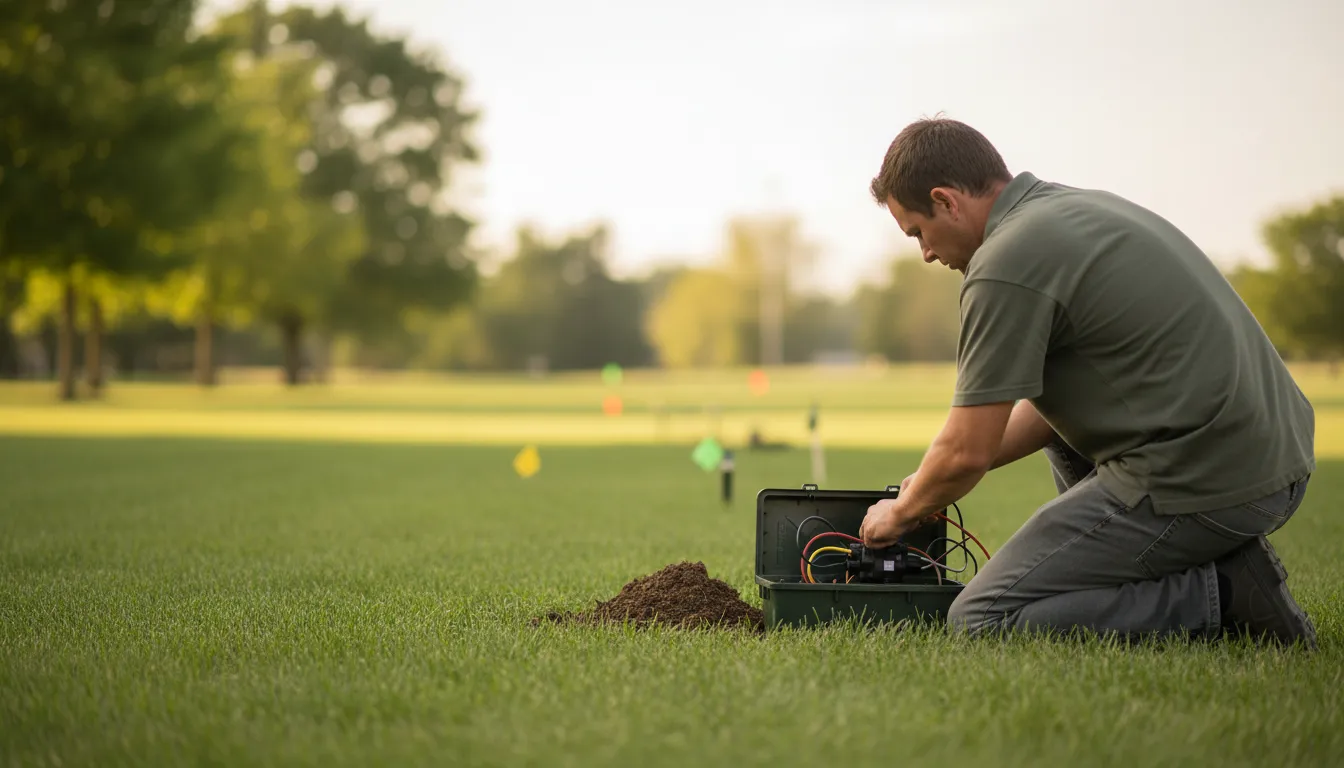
A well-designed sprinkler and irrigation system is the key to a healthy, vibrant landscape in Danbury. Automated watering ensures your lawn, gardens, and plant beds receive the precise amount of water they need, conserving water and saving you time. This guide explains how these systems work, what to consider for your property, and how to connect with local professionals who specialize in design, installation, and maintenance.
Sullivan & Son Landscaping Management
18 Belltown Rd, Stamford, CT 06905
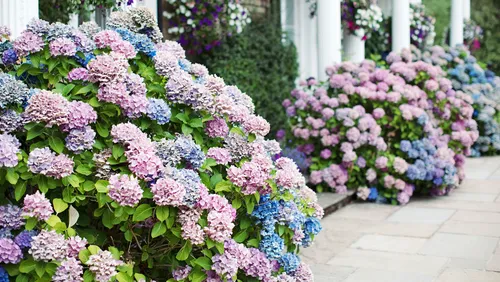
Sullivan & Son Landscaping Management is a landscaping and hardscaping company serving New York, NY, with over 30 years of experience. They provide a wide range of services including lawn care, fertilization, weed control, sod installation, landscape lighting, tree services, yard drainage, sprinkler installation and repair, as well as hardscaping such as pavers and retaining walls. The company specializes in landscape construction and maintenance, offering expertise in retaining walls, patios, walkways, and outdoor living spaces. They also provide snow and ice management and junk removal services. Sullivan & Son is known for their detailed consultations and comprehensive project management to meet customer expectations.
Total Turf Landscaping
16 Schuman Rd, Millwood, NY 10546
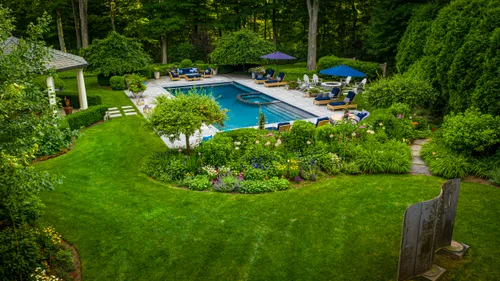
Total Turf Landscaping is a landscaping company serving New York, NY, and surrounding areas including Westchester and Fairfield counties. They offer a wide range of services such as lawn and landscape maintenance, landscape design, hardscaping with masonry and pavers, irrigation system installation and repair, tree care including removal, and landscape lighting installation. One notable capability is their expertise in designing and installing artificial grass putting greens tailored for residential outdoor spaces. Total Turf Landscaping has years of experience delivering sustainable and functional outdoor solutions to their clients.
Bellantoni Landscape
121 Lafayette Ave, White Plains, NY 10603
Bellantoni Landscape is a family-owned landscaping company based near New York, NY, serving Westchester County, NY, and Fairfield County, CT. With over 60 years of experience, they provide a full range of services including lawn care, landscape design, hardscaping, sprinkler installation and repair, irrigation, and pest control. Their team of certified professionals manages projects from design through installation and maintenance, using proven techniques and premium materials to create and maintain outdoor spaces.
How an Automated Watering System Works
An in-ground sprinkler system is more than just pop-up heads. It's a coordinated network of components working together to deliver water efficiently. Understanding the anatomy helps when planning an installation or discussing repairs with a technician.
The system's "brain" is the controller, usually mounted in your garage or basement. This programmable device sends electrical signals to open and close valves according to your schedule. The valves are electrically controlled gates, typically housed in valve boxes in the yard. Each valve controls the water flow to a specific zone. A network of underground piping carries water from your main supply to these valves and out to the sprinkler heads.
A critical safety component is the backflow preventer. This device is legally required in most areas, including Danbury, to ensure contaminated water from your irrigation lines cannot flow back into the public drinking water supply1 2. Finally, sprinkler heads deliver the water. Different types serve different purposes: rotors for large lawn areas, fixed spray heads for smaller sections and borders, and drip irrigation emitters for gardens, flower beds, and shrubs where targeted, low-volume watering is ideal 3.
Designing Your System: Zones and Plant Needs
Effective irrigation is not one-size-fits-all. The core principle of a good design is creating distinct zones. Each zone groups together plants or turf with similar water, sun, and soil requirements. For example, a sunny lawn zone would be programmed differently than a shaded garden bed or a line of drought-tolerant shrubs4.
Planning these zones is a crucial first step. Consider your property's layout: where is the full sun versus deep shade? Where are the planting beds versus turfgrass? Different sprinkler head types are assigned to different zones. Rotating rotor heads are perfect for covering large, open lawns, while fixed spray heads are better for smaller, rectangular areas. For vegetable gardens, perennial beds, or around trees, a dedicated drip irrigation zone is the most efficient choice, delivering water slowly directly to the root zone with minimal evaporation or runoff 5.
A professional installer will perform a site survey to map out these zones, calculate water pressure and flow rate from your source, and design a layout that provides head-to-head coverage (where the spray from one head reaches the next) to eliminate dry spots.
Smart Watering Practices for the Danbury Climate
An automated system is only as good as its schedule. Proper watering practices promote deep root growth, which leads to a more drought-resistant and healthy landscape. The general rule is to aim for about one inch of water per week, including rainfall, for established lawns and many common plants.
Frequency is more important than daily light watering. It's better to water deeply 2-3 times per week, which encourages roots to grow downward. For most zones in Danbury, this might mean running each station for 20-30 minutes per cycle6 7. The timing of watering is also critical. The best window is in the early morning, before 10 AM. Watering at this time reduces loss to evaporation from the sun and wind and allows grass blades to dry quickly, helping to prevent fungal diseases.
Your watering schedule should be flexible with the seasons. During summer heatwaves when temperatures consistently hit 90°F+, you may need to increase frequency to 3-4 times per week. Conversely, in the cooler spring and fall months when temperatures are at or below 60°F, you can scale back to 1-2 times per week8. Many modern "smart" controllers can automatically make these adjustments based on local weather data.
Find the perfect sprinkler & irrigation companies for your needs
Get personalized recommendations and expert advice
Installation and Investment Considerations
The cost to install a new in-ground sprinkler system in Danbury varies significantly based on your property's size, complexity, and the number of zones required. For an average residential property, homeowners can expect a broad range, typically from $2,000 to $4,000 or more9 10. The primary cost drivers are the square footage of the area to be irrigated and the number of zones needed to cover it properly. Each additional zone adds to the material and labor cost11 10.
The process involves detailed design, trenching for pipes, installing valve boxes and heads, connecting the controller, and testing the entire system. It's a significant investment that, when done correctly, adds convenience and value to your property while promoting responsible water use. Getting detailed quotes from local professionals is the best way to understand the specific cost for your landscape.
Maintenance, Winterization, and Repairs
Like any mechanical system, an irrigation system requires regular maintenance to perform efficiently. A common annual service is winterization, or "blow-out." Before the first hard freeze, a professional uses compressed air to force all water out of the pipes, valves, and heads. This prevents freezing and expanding water from cracking the components, which can lead to costly repairs in the spring.
Even with winterization, repairs are sometimes needed. Common issues include:
- Broken or Misaligned Sprinkler Heads: Often damaged by lawn mowers or foot traffic, causing geysers or poor coverage.
- Faulty Valves: A valve that won't open leaves a zone dry, while a valve that won't close completely can cause constant leaking and soggy areas.
- Clogged Nozzles or Filters: Debris in the water line can block the flow.
- Controller Malfunctions: Electrical issues or programming errors.
Repair costs are highly variable. A simple head replacement is relatively inexpensive, while diagnosing and fixing a leak in a main supply line or replacing a valve solenoid requires more labor and cost 12. Establishing a relationship with a local service company for an annual startup check and maintenance can catch small problems before they become big ones.
Finding Local Irrigation Expertise
For homeowners in Danbury, working with a local specialist ensures your system is designed for the local climate and soil conditions. These professionals handle the entire process, from the initial consultation and custom design to expert installation and ongoing service and repair. They understand local codes, including requirements for backflow prevention, and can help you select the right equipment for your needs. When planning your project, consider reaching out to established area providers to discuss your goals and get a detailed assessment.
Frequently asked questions
Sources
Footnotes
-
Anatomy of an Automatic Sprinkler System - Rain Bird - https://www.rainbird.com/homeowners/blog/anatomy-of-an-automatic-sprinkler-system ↩
-
How to Install an In-Ground Sprinkler System - This Old House - https://www.thisoldhouse.com/landscaping/how-to-install-in-ground-sprinklers ↩
-
In-Ground Sprinkler System 101 | How Do Sprinklers Work? - https://www.commerciallawnirrigation.com/blog-posts/how-do-sprinklers-work ↩
-
Garden Sprinkler System Installation: 5 Easy Steps - https://randalllandscaping.com/garden-sprinkler-system-installation/ ↩
-
How To Plan An Irrigation System - Bunnings Australia - https://www.bunnings.com.au/diy-advice/garden/water-irrigation/how-to-plan-an-irrigation-system ↩
-
LAWN IRRIGATION GUIDE - USDA - https://www.nrcs.usda.gov/plantmaterials/idpmsbr5464.pdf ↩
-
How Long to Run a Sprinkler for 1 Inch of Water - Sod Solutions - https://sodsolutions.com/advanced-how-to/how-long-to-run-a-sprinkler-for-1-inch-of-water/ ↩
-
Irrigation System Guides - Metropolitan North Georgia Water ... - https://northgeorgiawater.org/residents-schools-businesses/conserve-our-water/irrigation-system-guides-watering-and-maintenance-guides/ ↩
-
How Much Does Sprinkler System Installation Cost? [2026 Data] | Angi - https://www.angi.com/articles/how-much-does-it-cost-install-sprinkler-system.htm ↩
-
How Much Does a Sprinkler System Cost in 2026? - LawnStarter - https://www.lawnstarter.com/blog/cost/sprinkler-system-price/ ↩ ↩2
-
Lawn Sprinkler Systems Danbury CT | Lawn Irrigation Systems - https://falcolawn.com/lawn-sprinkler-systems-danbury-ct/ ↩
-
Irrigation system maintenance schedule: Best 2025 Guide - https://salcorplandscaping.com/irrigation-system-maintenance-schedule/ ↩