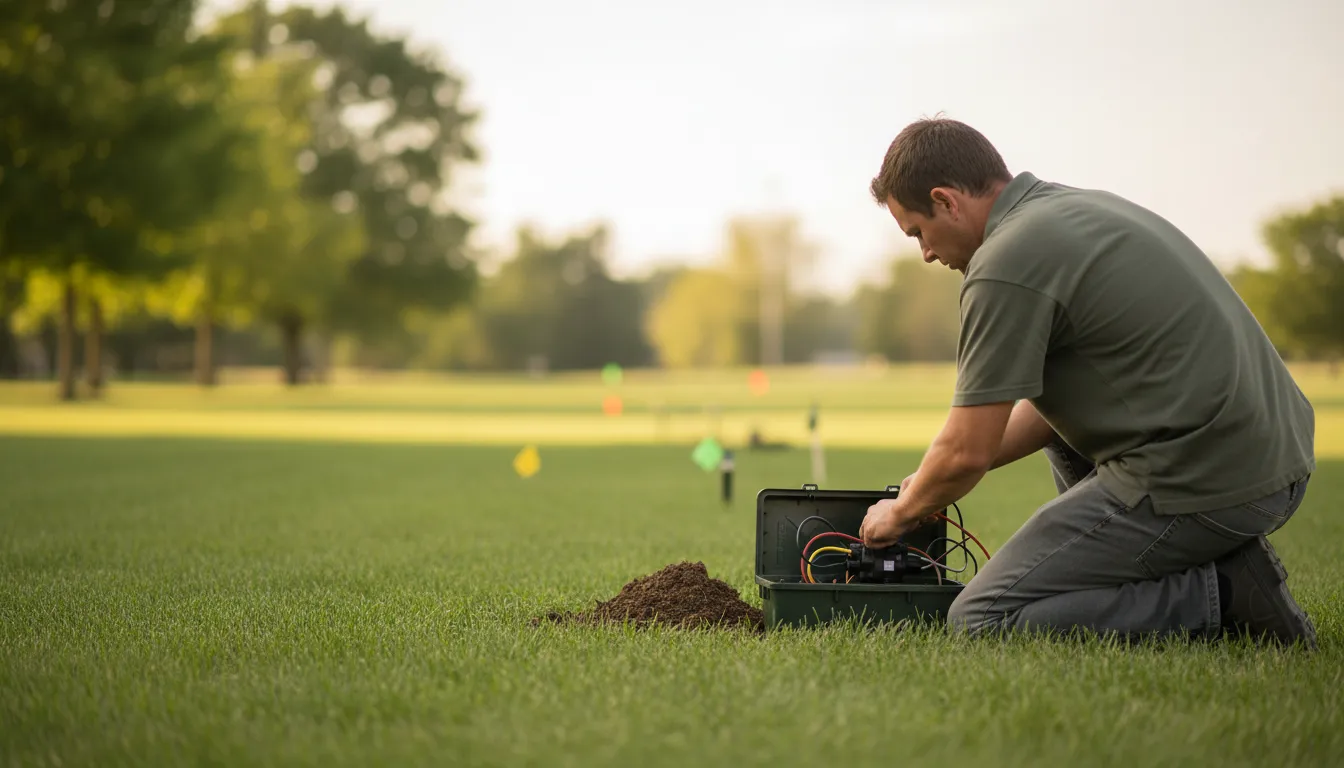
Find the Best Sprinkler & Irrigation Companies for Your Business
No obligation • Fast responses • Nationwide coverage

Why you can trust Landscape Atlas
Landscape Atlas is a leading United States resource for evaluating landscaping, lawn care, and outdoor service providers. Our team researches each category in depth, focusing on service quality, safety, and customer experience. Listings and rankings are based on independent criteria and user feedback, and companies cannot pay to influence our assessments or recommendations.
Search providers near you
Top Sprinkler & Irrigation Companies in Peachtree Corners, Georgia Ranked
A well-designed sprinkler and irrigation system is the cornerstone of a healthy, vibrant landscape in Peachtree Corners. These automated systems deliver precise amounts of water exactly where and when your lawn and plants need it, conserving a vital resource while saving you time and effort. This guide will help you understand how irrigation works, the components involved, and how to find qualified local professionals to design, install, and maintain a system tailored to your property's unique needs.
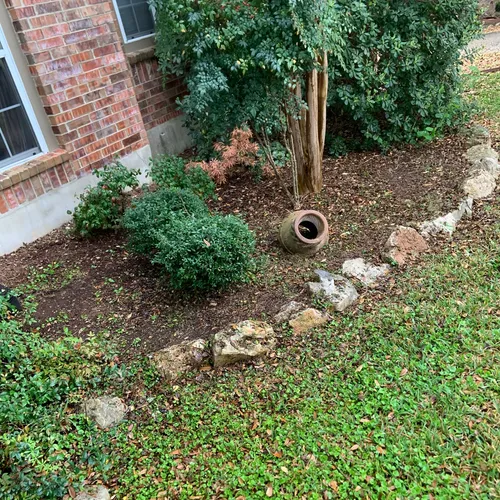
LawnStarter - Atlanta Landscaping
773 Denise Ct SW, Stone Mountain, GA 30087
LawnStarter - Atlanta Landscaping offers a wide range of lawn care and landscaping services in Atlanta, GA. Their services include lawn mowing, landscape lighting installation, sprinkler system installation and repair, hardscaping such as patios and retaining walls, and general landscaping maintenance. They provide solutions tailored to the seasonal needs of Atlanta yards, including sustainable landscaping and smart irrigation systems. LawnStarter connects customers with local landscaping professionals through an easy-to-use platform, covering many neighborhoods in and around Atlanta.
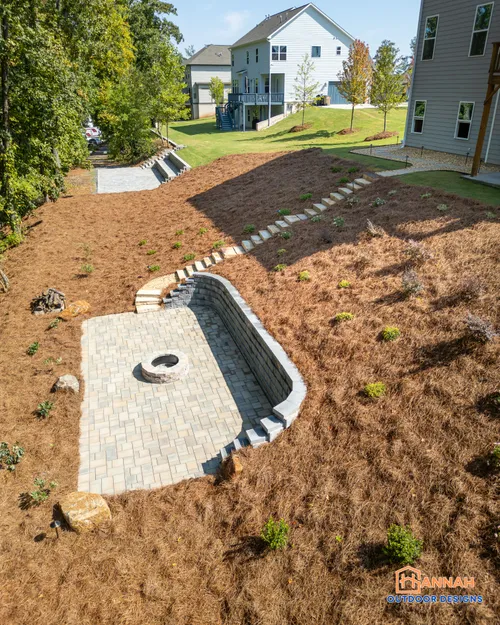
Hannah Outdoor Designs
2400 Herodian Way Suite 220, Smyrna, GA 30080
Hannah Outdoor Designs is a landscaping company based in Atlanta, GA, offering a wide range of services including landscape design, sod installation, irrigation, outdoor lighting, and yard drainage. They create custom 2D and 3D landscape designs and specialize in hardscaping features such as paver patios, walkways, retaining walls, and fire pits. The company holds several industry certifications, including those for retaining walls, soil and water conservation, pesticide application, and professional drainage, reflecting their expertise in outdoor living and erosion control solutions.
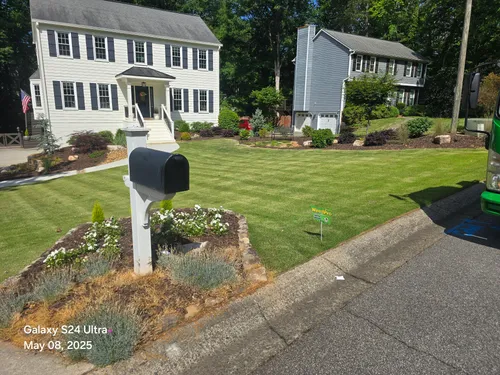
Weed Pro Lawn Care
2705 Holcomb Bridge Rd, Johns Creek, GA 30022
Weed Pro Lawn Care offers specialized lawn care, weed control, and irrigation services in Atlanta, GA. The company focuses on tailored treatments that consider local soil, seasonal weed cycles, and grass types to maintain healthy, green lawns. Their services include sprinkler installation and repair, supporting year-round lawn health with environmentally responsible practices. Weed Pro serves homeowners throughout North Georgia, providing personalized attention to each lawn's unique needs.
Head Adjusters, LLC
Atlanta, GA
Head Adjusters, LLC is an irrigation and outdoor lighting company based in Atlanta, GA. They provide irrigation installation, repair, and maintenance services designed to keep landscapes healthy and well-watered. The company also offers landscape lighting installation to enhance the appearance of outdoor spaces. Their team uses modern techniques and technology to ensure efficient and sustainable irrigation systems. Head Adjusters, LLC is a family-owned business focused on personalized service and customer satisfaction.

Manitos Sprinkler Services, LLC.
1375 Compton Woods Dr, Loganville, GA 30052
Manitos Sprinkler Services, LLC. provides sprinkler installation and repair services in Atlanta, GA. They focus on ensuring irrigation systems work efficiently, offering repairs such as rotor replacements and fixing leaking valves. With over 35 years of combined experience, their team conducts thorough inspections to address any sprinkler system concerns.
How Irrigation Systems Work in Peachtree Corners
Modern lawn sprinkler systems are sophisticated networks designed for efficiency and control. At their core, they operate by dividing your property into distinct zones-areas with similar watering needs, like a sunny front lawn or shaded flower beds. Each zone is controlled by a valve that opens and closes on a schedule set by a central controller. The real intelligence in today's systems comes from smart technology. Smart controllers can connect to local weather data or on-site rain sensors, automatically adjusting or skipping watering cycles to prevent overwatering after rainfall. This zoning and smart adjustment is key to managing Peachtree Corners' variable seasonal weather effectively.
Water is delivered through a series of pipes to various types of emitters. For turf areas, you'll typically find pop-up rotor heads that cover large, rectangular spaces or fixed spray heads for smaller, geometric areas. For landscape beds, gardens, or tree lines, drip irrigation is often the preferred method. This system uses tubing with small emitters that deliver water slowly and directly to the root zone, minimizing evaporation and runoff. Understanding these components-zones, smart controllers, and emitters-is the first step in planning an effective watering system for your home.
Key Components of a Residential System
A reliable automatic sprinkler system is built from several key parts, each playing a crucial role:
- Controller: The "brain" of the system. Modern smart controllers (from brands like Rain Bird, Hunter, or Toro) allow for easy programming and can integrate with Wi-Fi and weather data for automatic adjustments 1.
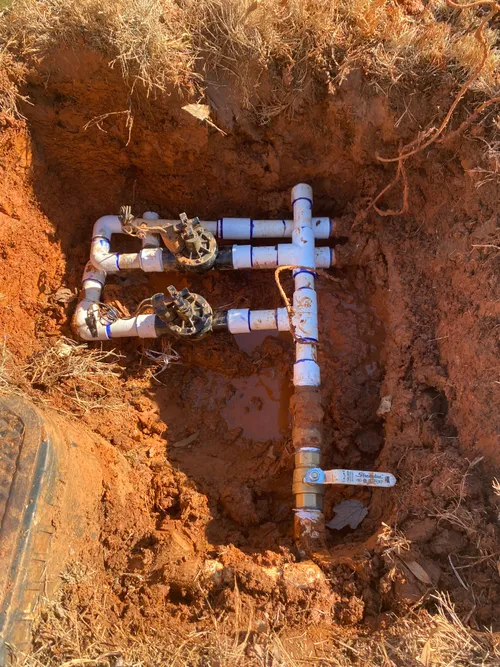
- Valves: Usually housed in valve boxes in the ground, these electrically controlled gates open and close to send water to specific zones as directed by the controller.
- Sprinkler Heads: These are the most visible parts. Rotors are best for large lawn areas, while spray heads are used for smaller zones and tight corners. Proper head selection and placement ensure even coverage without dry spots or overspray onto driveways.
- Drip Irrigation: An essential component for non-turf areas. It consists of polyethylene tubing and emitters that provide a slow, steady trickle of water, which is ideal for conserving water and promoting deep root growth in beds and gardens.
- Sensors: Rain sensors and soil moisture sensors are critical add-ons. They signal the controller to pause watering during rain or when the soil is already sufficiently wet, providing an additional layer of water conservation and protection for your landscape 2.
Designing for Your Landscape: Turf vs. Beds
Effective irrigation design treats different landscape areas according to their specific needs. This tailored approach is fundamental for both plant health and water efficiency.
For turf areas, the goal is broad, even coverage. Rotor heads, which spray streams of water in a rotating pattern, are typically used for larger sections of lawn. Fixed spray heads, which fan out a constant spray pattern, are better suited for smaller, irregularly shaped turf zones near sidewalks or foundations. The spacing and type of head are calculated based on water pressure and the specific area to be covered.
Landscape beds, shrubbery, and garden areas have completely different requirements. Here, drip irrigation is the gold standard. By delivering water directly to the soil at the base of plants, drip systems drastically reduce water loss from wind and evaporation. They also keep plant foliage dry, which helps prevent fungal diseases. This method is not only highly efficient but also simplifies weeding and maintenance in your beds 3 4. A well-designed system will have separate zones for turf and beds, allowing for completely different watering schedules and durations.
Find the perfect sprinkler & irrigation companies for your needs
Get personalized recommendations and expert advice
Smart Watering Schedules for Georgia Seasons
One of the biggest benefits of an automated system is the ability to easily adjust watering to match the seasons. A set-it-and-forget-it approach wastes water and can harm your landscape. Here's a general guide for Peachtree Corners, which should always be fine-tuned by your smart controller's weather data and local conditions 5:
- Summer (Hot & Dry): This is peak watering season. Turf may need 30-60 minutes of total watering per week, typically split over 2-3 days to allow for deep soaking. Watering is most effective in the early morning, before 10 AM, to reduce evaporation and give grass blades time to dry before nightfall, preventing disease 6 7.
- Spring & Fall (Moderate): As temperatures cool, watering needs decrease. Schedules often shift to 20-40 minutes per week, delivered over 1-2 days. Smart controllers will automatically reduce runtime as evapotranspiration rates drop.
- Winter (Dormant): For most turf grasses, irrigation is typically turned off. However, newly planted trees, shrubs, or perennial beds may still need occasional deep watering during extended dry periods to prevent root damage. The system should be properly winterized to protect pipes and valves from freezing temperatures.
Understanding Installation and Repair Considerations
Investing in a new irrigation system or maintaining an existing one involves understanding the scope of work and associated costs. For a typical residential installation in Peachtree Corners, homeowners can expect a range based on property size, complexity, and technology.
A standard installation for an average home, including a smart controller and 4-5 zones covering front and back lawns, often falls within a range of $2,500 to $7,500. This cost encompasses design, trenching, pipe laying, head and valve installation, and programming. Larger properties, complex slopes, or the inclusion of extensive drip irrigation zones will influence the final price. It's always recommended to get detailed quotes from local providers.
Repair and maintenance costs are typically billed per-part plus labor. Common repairs include:
- Sprinkler Head Adjustment/Replacement: Fixing a misaligned head or replacing a broken one can range from $30 to $65.
- Pipe Repairs: Fixing a leak in a lateral line or mainline due to damage or wear can cost between $150 and $300 or more, depending on the location and complexity of the repair.
- Controller or Sensor Upgrades: Installing a new smart controller or adding a rain sensor can range from $175 to $325+ for parts and installation 8.
- Service Calls: Many companies charge a diagnostic or trip fee for minor fixes or reprogramming, which can start around $50-$1509.
Regular maintenance, such as a spring start-up and fall winterization service, can help prevent costly repairs and ensure your system runs efficiently for years.
Finding the Right Local Service Provider
When looking for irrigation services in Peachtree Corners, seek out licensed professionals with experience in local soil conditions and climate. They should offer a comprehensive site evaluation, discuss zoning strategies, and explain the benefits of smart controllers and drip irrigation for different parts of your yard. A reputable provider will be transparent about costs, provide a detailed written estimate, and stand behind their workmanship. They can also advise on local water regulations and best practices for conservation.
Frequently asked questions
Sources
Footnotes
-
Peachtree City, GA Sprinkler Systems | Landscape Irrigation GA - https://georgiasprinklers.com/peachtree-city-ga-sprinkler-systems/ ↩
-
Irrigation System & Lawn Sprinkler Installations Peachtree City ... - https://www.gcolandscape.com/lawn-sprinkler-irrigation-installations/ ↩
-
How to design an irrigation system - https://www.youtube.com/watch?v=DWV-pnt9EJw&t=10 ↩
-
Sprinkler Irrigation System Guide - Atlanta Turf & Tree - https://atlturf.com/sprinkler-irrigation-system-guide/ ↩
-
Peachtree Corners Irrigation & Sprinkler Services - https://www.conservairrigation.com/atlanta/about-us/service-areas/peachtree-corners/ ↩
-
Landscape Irrigation Watering Guide - https://northgeorgiawater.org/wp-content/uploads/2017/02/Landscape-Irrigation-Watering-Guide.pdf ↩
-
Irrigation Zones Explained: Smarter Landscaping for Your Yard - https://structurelandscapes.com/irrigation-zones-explained-smarter-landscaping-for-every-corner-of-your-yard-essential-guide-for-efficient-water-management/ ↩
-
How Much Does it Cost to Have an Irrigation System Installed? - https://www.toplinelandscapes.com/how-much-does-it-cost-to-have-an-irrigation-system-installed/ ↩
-
How Much Does it Cost to Install an Irrigation System ... - https://www.toplinelandscapes.com/how-much-does-it-cost-to-install-an-irrigation-system-installation-in-west-georgia/ ↩