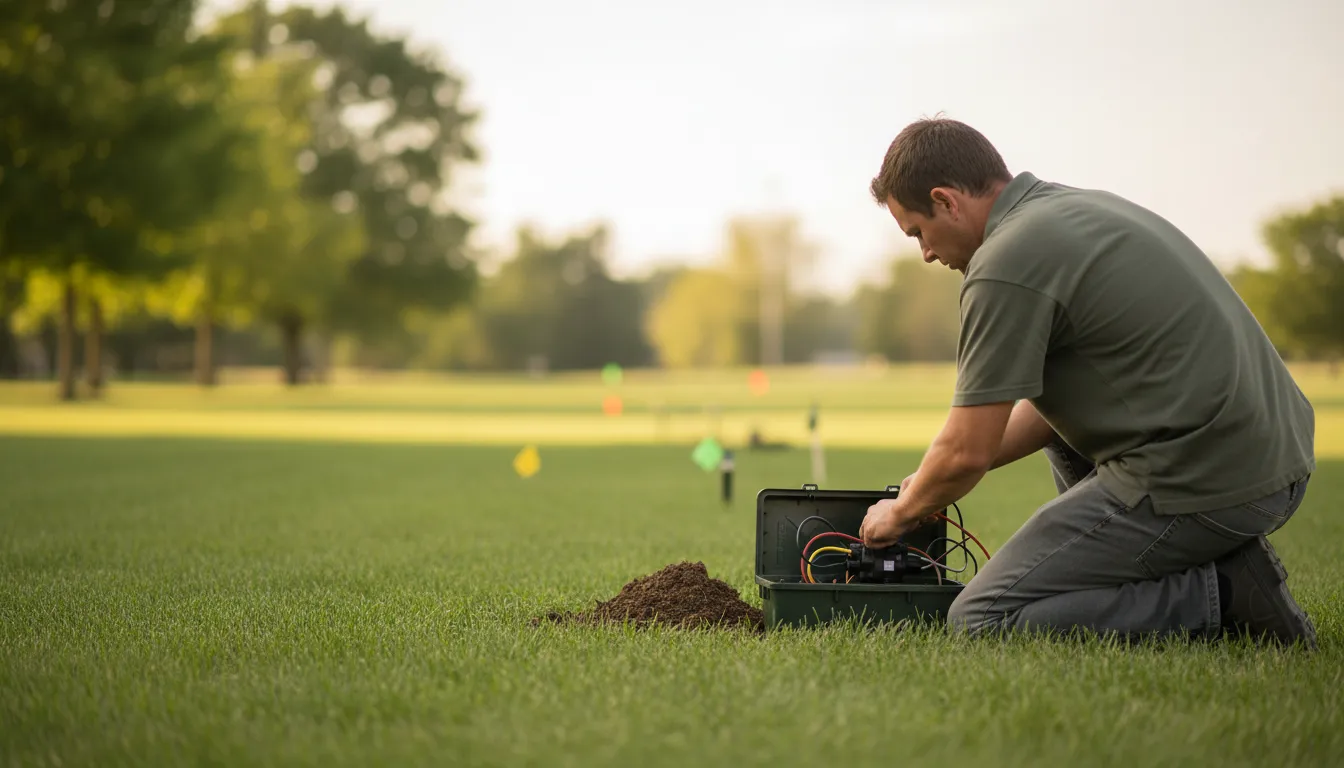
Find the Best Sprinkler & Irrigation Companies for Your Business
No obligation • Fast responses • Nationwide coverage

Why you can trust Landscape Atlas
Landscape Atlas is a leading United States resource for evaluating landscaping, lawn care, and outdoor service providers. Our team researches each category in depth, focusing on service quality, safety, and customer experience. Listings and rankings are based on independent criteria and user feedback, and companies cannot pay to influence our assessments or recommendations.
Search providers near you
Best Sprinkler & Irrigation Companies in Indiana Ranked
A well-designed sprinkler and irrigation system is a practical investment for any Indiana homeowner, ensuring a healthy, vibrant landscape while conserving water and saving time. Whether you're looking to install a new system, repair an existing one, or simply maintain your lawn's lush appearance, understanding your options is key. This guide provides essential information on system types, installation processes, local regulations, and maintenance to help you connect with qualified professionals in your area.
Indy Irrigation Inc
647 Sayre Ct suite b, Greenwood, IN 46143
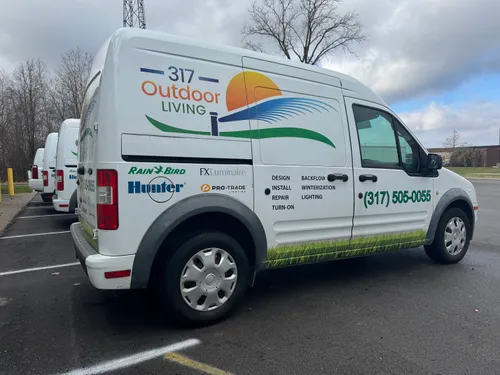
Indy Irrigation Inc is a landscaping and irrigation company serving Indianapolis, IN. They provide irrigation system installation, repair, and maintenance for residential, commercial, and landscaping clients. Their services include sprinkler system revamps, LED landscape lighting installation, and outdoor audio system setup. With 30 years of experience servicing Central Indiana, Indy Irrigation offers comprehensive irrigation care including system opening, backflow testing, and winterization. They also provide an all-inclusive maintenance package covering parts and service calls throughout the year.
Fralich's
959 W 100 N, Greenfield, IN 46140
Fralich's is a landscaping company serving Indianapolis, IN, with over 20 years of combined experience. They offer a wide range of services including lawn mowing, fertilization, weed control, landscape design and installation, yard drainage and grading, sprinkler installation and repair, land clearing, and hardscaping such as pavers and retaining walls. Their team uses professional equipment for land grading to ensure lawns are even and free of standing water. Established in 2006, Fralich's has grown from a one-man operation to a seasonal crew of 15, focusing on both residential and commercial landscaping projects.

Fine Touch Services
12175 Visionary Way Suite 929, Fishers, IN 46038
Fine Touch Services is a landscaping and lawn care company based in Indianapolis, IN. They offer a wide range of services including lawn mowing, fertilization, weed control, sod installation, fence installation, landscape lighting, tree and stump removal, yard drainage, sprinkler system installation and repair, land clearing, and hardscaping such as patios and retaining walls. Serving the Greater Indianapolis area, including Carmel, Fishers, Noblesville, and surrounding communities, Fine Touch provides custom irrigation and drainage solutions along with comprehensive landscape design and installation. Their capabilities include outdoor living spaces, fire pits, water features, and seasonal lawn maintenance.

Haulstr - Patios, Dumpster Rental, Irrigation, Mulch, Landscaping
2117 Burning Tree Ln, Carmel, IN 46032
Haulstr - Patios, Dumpster Rental, Irrigation, Mulch, Landscaping is based in Indianapolis, IN. While Haulstr now focuses on dumpster rentals, its landscaping and hardscaping services are managed through TT Renovations, operated by the same team. They provide landscape design, sprinkler installation and repair, and hardscaping including patios and retaining walls. The team oversees projects from design through installation and final walkthrough, ensuring consistent standards under one ownership.
Conserva Irrigation of North Indianapolis
8481 Bash St #1300, Indianapolis, IN 46250
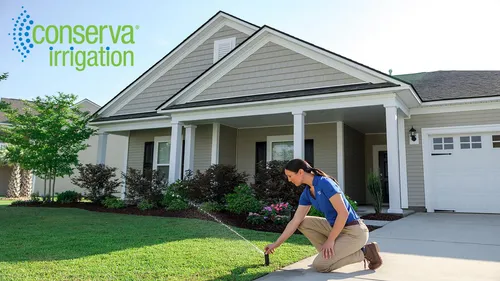
Conserva Irrigation of North Indianapolis provides irrigation system design, installation, repair, and maintenance services in Indianapolis, IN, and surrounding areas including Carmel, Fishers, Noblesville, Westfield, and Zionsville. They specialize in sprinkler system installation and repair, yard drainage, grading, and smart irrigation solutions that help conserve water and improve lawn health. Their services include system inspections, winterization, backflow testing, and upgrades to intelligent controllers and sensors. Conserva Irrigation emphasizes efficient water use and offers comprehensive expertise in irrigation system components and layout. The company has built a reputation for thorough diagnostics and clean repairs, serving the community with a focus on water conservation and system optimization.
Understanding Your Irrigation System Options
Choosing the right type of irrigation system depends on your landscape's layout, plant types, and your personal goals for efficiency and convenience. The main systems used in Indiana homes fall into three broad categories.
Traditional Sprinkler Systems These are the most common systems for lawns, using pop-up spray heads or rotating rotors to deliver water across a large area. They are often more affordable to install initially and are excellent for covering uniform grassy spaces. However, they can be less water-efficient than other methods due to potential evaporation and overspray onto non-target areas like driveways or sidewalks.
Drip Irrigation Systems Drip irrigation delivers water slowly and directly to the root zone of plants through a network of tubes and emitters. This method is highly efficient, minimizing water loss from evaporation and runoff, making it ideal for garden beds, shrubs, trees, and vegetable plots 1. While the upfront cost can be higher, the water savings and targeted watering often make it a cost-effective choice for non-lawn areas.
Manual Systems and Hose Timers For smaller yards or budget-conscious projects, a manual system using soaker hoses or sprinklers attached to a hose bib can be effective. Adding an inexpensive hose-end timer automates the watering schedule to some degree. This is a flexible and low-cost entry point, though it requires more hands-on management and is less comprehensive than an in-ground system 2.
The Installation Process: From Design to Activation
Installing an in-ground irrigation system is a multi-step process best handled by a licensed professional to ensure efficiency, compliance with local codes, and long-term reliability.
- Site Evaluation and System Design: A professional will assess your property's topography, soil type, sun exposure, and plant material. They will then design a zoning plan, grouping plants with similar water needs (like turf, perennials, and shrubs) on separate valves. This zoning is crucial for both plant health and water conservation.
- Permitting and Regulations: Before any digging begins, it's important to check local municipal requirements. Many Indiana cities require a permit for irrigation installation. Crucially, Indiana state law (House Bill 1343) requires that all new automatic irrigation systems installed after 2013 include a rain sensor or other technology that inhibits or interrupts operation during rainfall. Your installer should handle permit acquisition and ensure the system meets all legal requirements.
- Trenching and Pipe Layout: Using specialized equipment, technicians will dig trenches, typically 6 to 12 inches deep, following the designed layout. PVC or polyethylene pipes are then laid in these trenches to form the mainline and lateral lines that feed water to each zone.
- Installing Heads, Valves, and the Controller: Sprinkler heads (spray or rotor) or drip emitters are installed at designated points. Control valves, which act as faucets for each zone, are placed in valve boxes for easy access. The system is connected to an irrigation controller, often a "smart" model that can adjust watering based on local weather data, which is programmed with your customized schedule 3.
- Connection, Testing, and Adjustment: The system is connected to your home's water supply, usually via a backflow prevention device, which is required by code to protect drinking water from contamination. The installer will pressurize the system, test each zone for leaks, and adjust the spray patterns to ensure head-to-head coverage without wasteful overspray 4.
Smart Watering Practices for Indiana Climates
An efficient system is only as good as its schedule. Proper watering practices promote deep root growth and drought resistance while conserving a precious resource.
- Water Deeply and Infrequently: It's better to water less often but for longer durations, encouraging roots to grow deeper into the soil. Light, frequent watering leads to shallow roots and a less resilient lawn.
- Time It Right: The best time to water is in the early morning, typically between 4 a.m. and 10 a.m. Winds are calmer, temperatures are cooler, and evaporation loss is minimal compared to midday watering 5.
- Observe Local Restrictions: Many Indiana communities implement seasonal watering restrictions, especially during dry summer months. These may limit watering to specific days or times. Always check your city or town's website for current ordinances.
- Utilize Technology: Make full use of your system's smart controller and mandated rain sensor. These devices prevent unnecessary watering during and after rain events, which is both wasteful and can promote lawn disease 6.
Find the perfect sprinkler & irrigation companies for your needs
Get personalized recommendations and expert advice
Repair and Maintenance: Protecting Your Investment
Even the best systems require occasional repair and regular maintenance to perform optimally. Common issues include clogged or broken sprinkler heads, leaks in pipes or at connections, malfunctioning valves, and controller problems.
For repairs, especially those involving the backflow preventer or mainline, hiring a licensed Indiana irrigation professional is strongly recommended. They have the expertise and tools to diagnose problems accurately and make lasting repairs without causing further damage.
Preventative maintenance is often more economical than emergency repairs. Many Indiana companies offer annual service packages that typically include:
- Spring Start-Up: Pressurizing the system, checking for winter damage, programming the controller, and testing each zone.
- Mid-Season Checks: Adjusting heads, cleaning filters, and ensuring efficient operation.
- Winterization (Blow-Out): The most critical service for Indiana winters. Using compressed air, a professional removes all water from the pipes, valves, and heads to prevent freezing and cracking, which can cause extensive and costly damage 7.
Understanding Costs in Indiana
Costs for irrigation services in Indiana vary based on system complexity, property size, and materials. Here's a general breakdown:
- New System Installation: Costs are often estimated per square foot. For traditional sprinkler systems, homeowners can expect a range of $1.50 to $4.50 per square foot 8. For a typical quarter-acre lot, a full installation often falls between $2,000 and $5,000 or more 9 10. Drip irrigation systems for planting beds have different pricing, typically based on the scope of the project 11.
- Repairs: Repair costs vary widely, from a minor fix for a single sprinkler head to a major expense for replacing a broken mainline. Getting a professional assessment is the best way to understand specific repair costs.
- Maintenance Services: Seasonal maintenance plans provide peace of mind. Pricing for these annual packages, which include spring start-up and winterization, can vary but often represent a sensible investment to extend your system's lifespan.
Frequently asked questions
Sources
Footnotes
-
RESIDENTIAL SPRINKLER SYSTEM - Hunter Industries - https://www.hunterirrigation.com/sites/default/files/design_guide_Residential_System_LIT-226-US.pdf ↩
-
Landscape Irrigation - Home Water Works - https://home-water-works.org/landscape-irrigation/irrigation ↩
-
Sprinkler System Installation Guide - Turf Unlimited - https://www.turfunlimited.com/2022/11/23/sprinkler-system-installation-guide/ ↩
-
Sprinkler System Installation Guide - Rain Bird - https://www.rainbird.com/homeowners/sprinkler-system-installation-guide ↩
-
Indianapolis Sprinkler Installation: Complete Guide - https://wewatergrass.com/how-to-plan-your-lawn-sprinkler-system-installation-in-indianapolis/ ↩
-
Introduced Version, House Bill 1343 - https://archive.iga.in.gov/2013/bills/IN/IN1343.1.html ↩
-
Indy Irrigation - https://indyirrigation.com/ ↩
-
How Much Does it Cost to Install a Sprinkler System in 2026? - https://lawnlove.com/blog/sprinkler-system-cost/ ↩
-
Drip Irrigation vs Traditional Sprinkler Systems - https://growproslawncare.com/blog/drip-irrigation-vs-traditional-sprinkler-systems/index.php ↩
-
Pros and Cons of Installing a Sprinkler System for Your New ... - https://www.newhomesource.com/learn/pros-and-cons-of-installing-a-sprinkler-system/ ↩
-
How Much Does a Drip Irrigation System Cost to Install? (2025) - https://homeguide.com/costs/drip-irrigation-system-cost ↩