Find the Best Sprinkler & Irrigation Companies for Your Business
No obligation • Fast responses • Nationwide coverage

Why you can trust Landscape Atlas
Landscape Atlas is a leading United States resource for evaluating landscaping, lawn care, and outdoor service providers. Our team researches each category in depth, focusing on service quality, safety, and customer experience. Listings and rankings are based on independent criteria and user feedback, and companies cannot pay to influence our assessments or recommendations.
Search providers near you
Best Sprinkler & Irrigation Companies in North Dakota Ranked
A well-designed sprinkler or irrigation system is a practical investment for any North Dakota property, ensuring your lawn and landscape receive consistent, efficient water even during dry spells. These systems save you time, conserve a vital resource, and protect your investment in your yard. This guide explains the options, processes, and local considerations for installing and maintaining an irrigation system in North Dakota, helping you connect with qualified local professionals for your project.
Understanding Your Irrigation System Options
Choosing the right type of system is the first step toward an efficient and healthy landscape. The primary options serve different purposes and offer varying levels of water conservation.
Traditional Spray and Rotor Systems These are the most common systems for lawns. Pop-up spray heads are ideal for smaller, rectangular areas, while rotor heads cover larger, circular zones with a slower, deeper watering pattern that reduces runoff. Both are typically installed in zones to ensure even coverage across different areas of your yard.
Drip Irrigation For garden beds, shrubs, trees, and vegetable plots, drip irrigation is the gold standard for efficiency. It delivers water slowly and directly to the root zone through a network of tubes and emitters, minimizing evaporation and runoff. This method can use significantly less water than traditional sprinklers and helps prevent weed growth by keeping unplanted areas dry.
Smart Controllers and Sensors Modern technology can dramatically improve your system's efficiency. Smart controllers can adjust watering schedules based on local weather data, skipping cycles after rainfall. Soil moisture sensors take this a step further by watering only when the soil actually needs it. These upgrades are excellent investments for water conservation and can often pay for themselves over time.
The Installation Process: From Plan to Operation
Professional installation ensures your system is reliable, efficient, and compliant with local codes. Here's a general overview of the steps involved.
1. Design and Planning A professional will start with a detailed site plan of your property, noting the location of your water source, property lines, existing landscaping, and sun exposure. This plan determines the number of zones needed-separate areas that water independently based on plant type and sun conditions. A crucial early step is contacting North Dakota One Call (811) to have all underground utilities marked before any digging begins. 1
2. Permits and Water Connection Most North Dakota municipalities require a permit for installing a new irrigation system. A key component of the connection is the installation of a backflow preventer, a device that is legally required to stop contaminated water from flowing back into your home's drinking water supply. This is a non-negotiable safety feature.
3. Trenching and Pipe Installation Once the plan is set and utilities are marked, trenches are dug for the mainline and lateral pipes according to the zone layout. PVC pipes are laid, and control valves for each zone are installed in valve boxes for easy access. Sprinkler heads are then placed and set to grade.
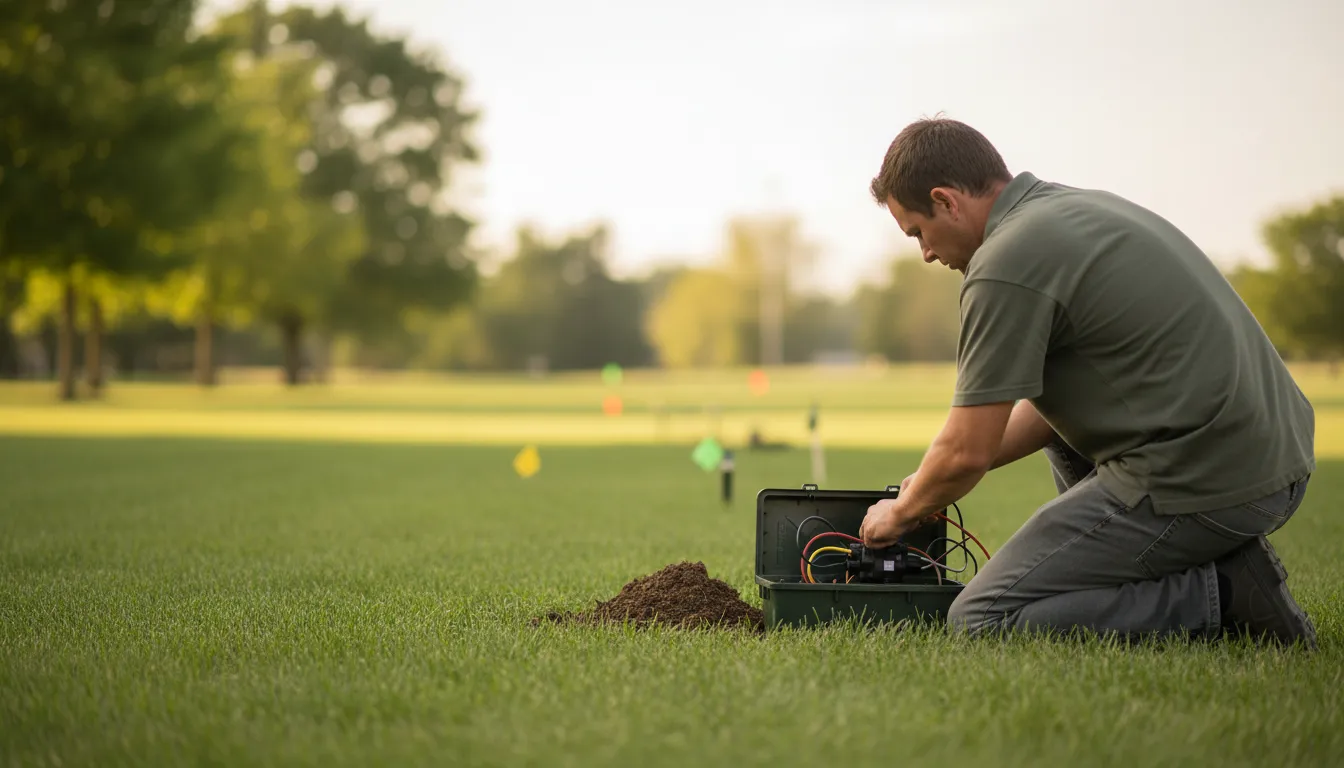
4. Wiring, Controller Setup, and Testing The electronic controller is wired to each zone valve. If included, rain or soil moisture sensors are also connected. The entire system is then pressurized and tested. Heads are adjusted for precise spray patterns and to avoid watering sidewalks or driveways. After a successful test, the trenches are backfilled. 2
Find the perfect sprinkler & irrigation companies for your needs
Get personalized recommendations and expert advice
Navigating North Dakota's Watering Rules and Conservation
Water is a precious resource on the plains, and many North Dakota cities have ordinances to promote responsible use, especially during summer months.
Common Watering Schedules A widespread rule is the odd/even watering schedule, where residents water based on their street address number (e.g., odd-numbered addresses water on odd calendar days). There are also often time-of-day restrictions, limiting irrigation to early morning hours (e.g., 4 AM to 10 AM) when evaporation is lowest and wind is typically calm.
Drought Restrictions During periods of drought or extreme heat, cities may implement further restrictions or temporary bans on lawn watering. It's essential to be aware of these local advisories. A properly zoned system with a smart controller makes it much easier to comply with these rules while still protecting your landscape.
Cost Considerations for Installation and Maintenance
Understanding the potential costs helps in planning your budget. Prices can vary based on property size, system complexity, and soil conditions.
Installation Costs For a typical residential property in North Dakota, a full installation can range from approximately $2,600 to $4,000. Another way to estimate is by square footage, with costs often falling between $0.88 and $2.39 per square foot of irrigated area. The number of zones is a major cost driver, with each additional zone potentially adding $590 to $1,340 to the total. 3
Essential Ongoing Services
- Winterization: This is not optional in North Dakota; it is mandatory. Before the first hard freeze, a professional must perform a "blow-out" service, using compressed air to remove all water from the pipes and heads. Skipping this service will almost certainly lead to costly freeze damage and repairs in the spring.
- Repairs: Costs for repairs vary widely. Fixing a broken sprinkler head or a stuck valve might range from $100 to $500, while repairing a broken mainline pipe due to freezing can be more expensive. 4 5 6
The Critical Importance of Winterization
North Dakota's harsh winters demand specific action for irrigation systems. Simply turning off the water is not enough. Any water left in the underground pipes, valves, or sprinkler heads will freeze, expand, and crack the components. A professional blow-out is a relatively small annual investment that prevents catastrophic system failure. This service should be scheduled for the fall, typically after the last mowing but before nighttime temperatures consistently drop below freezing.
Finding the Right Professional for Your Project
When seeking a provider, look for a licensed professional with specific experience in irrigation. They should be knowledgeable about local city codes, permit requirements, and backflow prevention regulations. Ask for references and examples of past work. A reputable installer will provide a detailed written estimate that includes the design plan, a list of materials (head types, controller model, pipe grade), labor costs, and a clear timeline for the project's completion.
Frequently asked questions
Sources
Footnotes
-
Sprinkler System Irrigation 4-26-2023 - https://www.nrcs.usda.gov/sites/default/files/2023-04/ND%20Sprinkler%20System%20Irrigation%20Planning%20Guide%204-26-2023.pdf ↩
-
How to Install an In-Ground Sprinkler System - This Old House - https://www.thisoldhouse.com/landscaping/how-to-install-in-ground-sprinklers ↩
-
Sprinkler System Installation | Irrigation Installation - https://www.greenscapecompanies.com/sprinkler-irrigation ↩
-
Irrigation Services | Fargo, ND - https://www.sandslandscaping.com/irrigation ↩
-
How Much Does it Cost to Install a Sprinkler System in 2026? - https://lawnlove.com/blog/sprinkler-system-cost/ ↩
-
Irrigation Installation Cost: Top 5 Smart Budget Tips - Steve's Services - https://stevesservicesllc.com/irrigation-installation-cost/ ↩