Find the Best Hardscaping Contractors for Your Business
No obligation • Fast responses • Nationwide coverage

Why you can trust Landscape Atlas
Landscape Atlas is a leading United States resource for evaluating landscaping, lawn care, and outdoor service providers. Our team researches each category in depth, focusing on service quality, safety, and customer experience. Listings and rankings are based on independent criteria and user feedback, and companies cannot pay to influence our assessments or recommendations.
Search providers near you
Top Hardscaping Contractors in Austin, Texas Ranked
Transforming your outdoor space with permanent, non-living elements like patios, walkways, and retaining walls is more than just an aesthetic upgrade-it's an investment in your property's functionality, value, and resilience. In Austin, where the climate and soil present unique challenges, professional hardscape installation is crucial for creating durable, beautiful, and low-maintenance yards. This guide will help you understand the local considerations for masonry, paver, and stonework projects, and how to connect with skilled contractors who can navigate Austin's specific conditions to build a landscape that lasts.
Sprinkler Repair Pros
Austin, TX
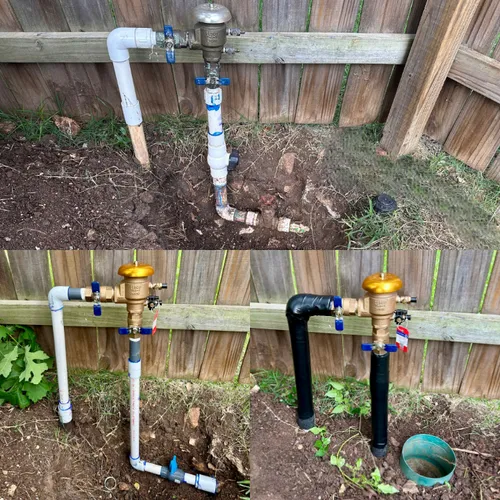
Sprinkler Repair Pros is a licensed irrigation and sprinkler service provider based in Austin, TX, serving the city and Central Texas communities including Round Rock. They offer full-service sprinkler repair, irrigation installation, system upgrades, and outdoor improvements such as sod installation and hardscaping. The team specializes in repairing leaks, broken pipes, and valves, as well as installing commercial-grade irrigation systems designed for water efficiency. Established in 2008, they bring over 14 years of experience and focus on smart water-saving solutions and flexible scheduling to meet customer needs.
Southern Love Landscaping & Design
111 Congress Ave. Suite 400, Austin, TX 78701
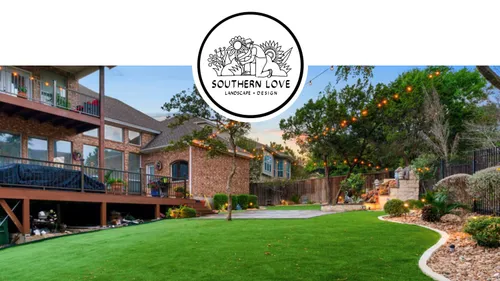
Southern Love Landscaping & Design is a landscaping and outdoor living company based in Austin, TX. They offer a wide range of services including custom landscaping, fire pits, patios, sod installation, irrigation installation and repair, fence installation, retaining walls, and landscape lighting. The company serves Austin and nearby areas such as Cedar Park and Round Rock, providing tailored outdoor solutions that enhance both residential and commercial properties. Their expertise includes building durable retaining walls and designing functional irrigation systems to support healthy landscapes. Southern Love Landscaping & Design emphasizes personalized service and craftsmanship to meet client needs.
Waterloo Turf Austin
1012 Rio Grande St, Austin, TX 78701
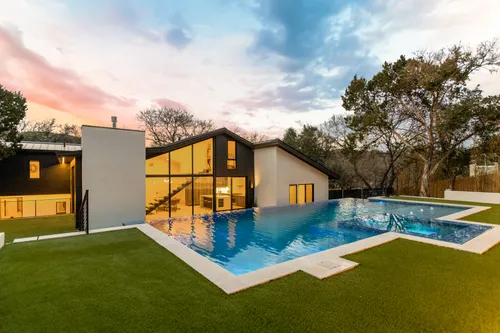
Waterloo Turf Austin is a landscaping company based in Austin, TX, specializing in artificial turf installation, landscaping, and hardscaping services. They provide professional artificial grass installation using premium materials designed for durability and UV resistance, creating low-maintenance, water-conserving lawns. The company has completed over 900 installations and has a team with more than 15 years of collective experience. Waterloo Turf Austin serves residential and commercial clients in the Austin area, focusing on transforming outdoor spaces with artificial turf and complementary hardscaping features like pavers and retaining walls.
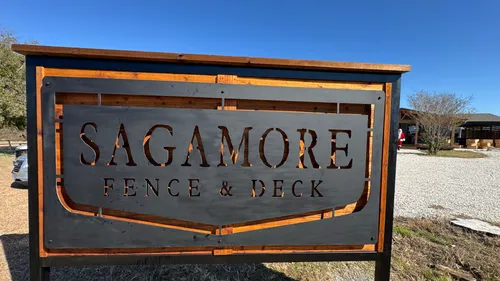
Sagamore Fence & Deck
6550 FM1105, Georgetown, TX 78626
Sagamore Fence & Deck is a fencing and decking contractor based in Austin, TX, serving residential, commercial, and municipal clients. They specialize in fence installation, including security, construction, and animal fences, as well as Trex composite decking and outdoor structures like pergolas and gazebos. The company also offers repair services for fences and decks, ensuring long-lasting outdoor spaces. Sagamore Fence & Deck handles projects of all sizes and manages municipal permitting and installation, with experience supporting government clients and participation in Texas' HUB program.
Alvaro’s Landscaping and Tree service
Austin, TX
Alvaro's Landscaping and Tree Service is a landscaping and tree care company based in Austin, TX. With over 15 years of experience, they offer a wide range of services including landscaping design, tree removal, stump grinding, lawn care, sod installation, sprinkler repair, and fence installation. Their team works with both residential and commercial properties, providing customized solutions to meet client needs. They are fully licensed and insured, prioritizing safety and customer satisfaction throughout each project.
Why Hardscaping is Essential for Austin Properties
Austin's dynamic environment demands more from your outdoor structures than many other regions. The combination of expansive clay soils, intense summer heat, sporadic heavy rains, and occasional winter freezes can wreak havoc on improperly built installations. A well-designed and expertly constructed hardscape does far more than look good; it actively manages these environmental factors. It controls erosion on sloped lots, directs water away from your home's foundation, creates usable flat spaces in hilly terrain, and provides heat-resistant surfaces for outdoor living. Essentially, quality hardscaping turns Austin's landscaping challenges into assets, creating a stable and enjoyable extension of your home.
Navigating Austin's Soil and Climate
The success of any patio, wall, or pathway project begins below the surface. Understanding local conditions is the first step toward a long-lasting installation.
The Challenge of Clay Soil
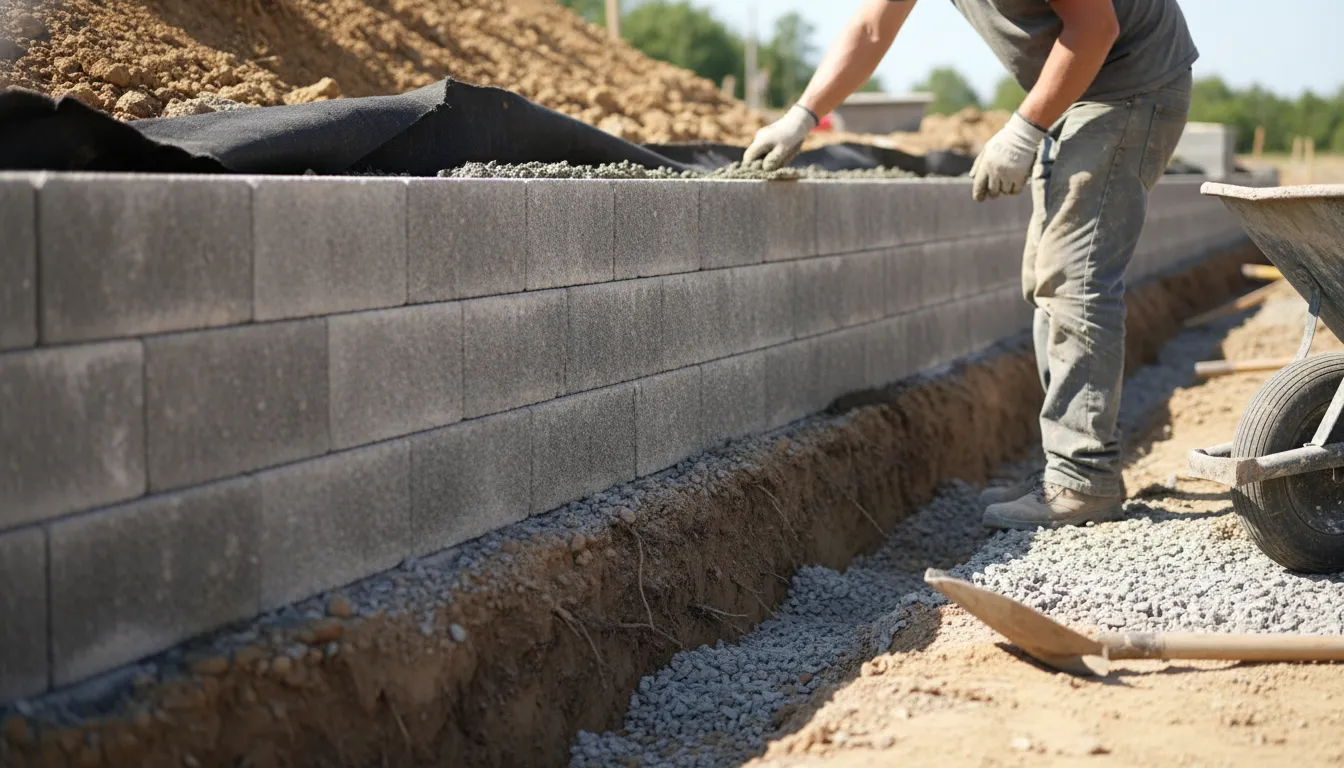
Central Texas is famous for its clay-heavy soil, which expands when wet and contracts during dry periods. This constant movement can cause unanchored or poorly based concrete to crack and pavers to shift and become uneven. For this reason, Austin hardscape contractors emphasize extensive site preparation, including excavation to stable substrate, installing a deep base of compacted gravel, and sometimes using geogrid fabric for reinforcement, especially for retaining walls. This foundational work is non-negotiable for durability.
Managing Water and Slope
Heavy rainfall is a fact of life in Austin, and without proper planning, it can lead to soil erosion, flooded patios, and basement moisture issues. Effective hardscaping integrates drainage solutions from the start. This might mean grading a patio to shed water, incorporating permeable paving materials like certain pavers or decomposed granite, or building retaining walls with built-in weep holes. For sloped yards, terracing-creating a series of leveled tiers using retaining walls-is a popular and functional solution that prevents runoff and creates usable garden beds or seating areas.
Material Durability in the Texas Climate
Materials must withstand both the blazing sun, which can fade colors and cause thermal expansion, and the occasional freeze-thaw cycle. Choosing locally suitable materials is key to avoiding premature deterioration and costly repairs 1.
Choosing the Right Materials for Your Project
The materials you select will define the look, feel, cost, and longevity of your hardscape. Here's a breakdown of common options used by Austin contractors.
For Patios and Walkways
- Concrete: A versatile and cost-effective choice. Stamped and stained concrete can mimic the look of stone or brick at a lower price point. It performs well if properly reinforced and installed with control joints to manage cracking.
- Interlocking Pavers: Extremely popular for their durability, variety of colors and patterns, and flexibility. If the base shifts, individual pavers can be reset, unlike a monolithic concrete slab. They also offer good permeability options.
- Flagstone & Limestone: These natural stones provide a classic, elegant look that blends seamlessly with Austin's native landscape. They are highly durable but typically sit at a higher price point. Limestone, in particular, is a local material that offers excellent longevity 2 3.
- Decomposed Granite (DG): A more informal, permeable, and budget-friendly option for pathways and casual patio spaces. It requires edging to contain it and occasional replenishing.
For Retaining Walls and Edging
- Concrete Block Systems: Engineered retaining wall blocks (like Versa-Lok or Allan Block) are the standard for structural walls. They are designed to interlock, often require no mortar, and are engineered to handle lateral earth pressure.
- Natural Stone: Stacked limestone or other natural stone creates a stunning, timeless look for both structural and decorative garden walls. This method often requires more skilled masonry labor 4.
- Poured Concrete: The strongest option for large, structural retaining walls. It allows for seamless, modern designs but is typically the most expensive due to formwork and labor.
- Avoid For Critical Structures: Softwoods (like untreated pine or cedar) are generally not recommended for long-term, load-bearing walls in Austin due to rot and insect susceptibility. Smooth river rock is also difficult to use in a stable, mortared wall for high-traffic areas.
Find the perfect hardscaping contractors for your needs
Get personalized recommendations and expert advice
Key Design and Engineering Considerations
Beyond choosing materials, several design principles ensure your hardscape is both beautiful and functional.
Integrating Drainage
Every hardscape plan should answer the question, "Where will the water go?" Contractors might integrate French drains (gravel-filled trenches with perforated pipe) behind retaining walls or along paved areas, channel drains across driveway entries, or design dry creek beds as decorative swales to manage runoff 5. Proper slope (typically a 2% grade away from structures) is critical for patios and walkways.
Creating Unity with Softscaping
The best outdoor spaces blend hardscape and softscape (plants, lawns, trees) harmoniously. Use planting beds within patio designs, allow space between pavers for creeping groundcovers, and select plantings that complement the texture and color of your stone or pavers 6 7. Native, deep-rooted plants like muhly grass or salvia can be planted on terraced slopes to provide additional erosion control.
Planning for Scale and Use
Consider how you'll use the space. A patio for dining needs to be large enough to accommodate a table, chairs, and walking room. Pathways should be at least 3-4 feet wide for two people to walk comfortably. Always check local Austin or county codes for requirements on wall height (often anything over 4 feet requires an engineer's stamp) and property line setbacks 8.
Understanding Investment and Value
Hardscaping is a significant investment that pays dividends in property value and quality of life. Costs in Austin vary widely based on materials, site complexity, and labor.
- Patios & Walkways: You can expect a range from $10 to $30+ per square foot installed. Basic poured concrete is on the lower end, while intricate patterns with natural stone or high-end pavers reach the upper end 9.
- Retaining Walls: As a major structural project, walls typically cost $20 to $50+ per square foot of face. The final price depends heavily on the wall's height, length, material (concrete block vs. natural stone), and how difficult the site is to access with equipment 10 11.
- Drainage Solutions: Integrating essential drainage, such as French drains or regrading, can add $1,500 to $4,000 or more to a project, but it is critical for protecting your investment 12.
Remember, the cheapest bid is rarely the best value. Expert site preparation, proper engineering, and quality materials from a reputable contractor prevent costly failures down the road, making your hardscape a lasting asset.
Frequently asked questions
Sources
Footnotes
-
Choosing the Right Materials for Hardscape Projects in Texas - https://letusdoitlandscaping.com/choosing-the-right-materials-for-hardscape-projects-in-texas/ ↩
-
Comparing Different Types of Paving Materials for Austin Yards - https://austinconcretepavers.com/2025/06/comparing-different-types-of-paving-materials-for-austin-yards/ ↩
-
Choosing the Right Materials for Long-Lasting Hardscaping in ... - https://structurelandscapes.com/choosing-the-right-materials-for-long-lasting-hardscaping-in-austin/ ↩
-
Hardscaping - Austin Native Landscaping - https://austinnativelandscaping.com/austin-landscape-design/hardscaping/ ↩
-
Designing Sloped Yards: Smart Terracing & Drainage with ... - https://urbanoasiscontracting.com/slope-landscaping-austin-smart-terracing-drainage-plants/ ↩
-
Learn How to Blend Landscaping With Natural Austin TX Terrain - https://southernlovelandscaping.com/2025/11/17/learn-how-to-blend-landscaping-with-natural-austin-tx-terrain/ ↩
-
Hardscape vs Softscape: 7 Powerful Tips for Stunning Yards 2025 - https://mcleodlandscaping.com/hardscape-vs-softscape/ ↩
-
Complete Guide to Hardscaping in Austin, TX - https://austinrenohub.com/blog/guide-hardscaping-austin-tx/ ↩
-
The Complete Guide to Patio Materials - https://shadefx.com/blog/guide-to-patio-materials/ ↩
-
The Best Types of Materials for Retaining Walls in Austin TX - https://southernlovelandscaping.com/2025/12/08/the-best-types-of-materials-for-retaining-walls-in-austin-tx/ ↩
-
Landscape Hardscapes 101 - https://lisalapaso.com/2021/10/29/landscape-hardscapes-101/ ↩
-
How much does it cost to landscape a backyard? - https://cutterslandscape.com/how-much-does-it-cost-to-landscape-a-backyard/ ↩